



Apparel manufacturing decisions are easier to control when buyers define the garment, end use, target customer, customization level, and commercial objective before requesting prices. For polos, those early decisions affect fabric sourcing, pattern work, logo methods, minimum order quantities, sampling time, and the consistency a buyer can expect in bulk production.
For buyers developing premium uniforms, clubwear, or golf programs, custom polo shirt manufacturing support for premium uniform and golf projects can connect the brief to practical decisions on piqué or jersey selection, collar construction, logo placement, private labels, size grading, and bulk production planning. The most useful starting point is a clear product brief rather than a request for a generic polo quote.
Start Apparel Manufacturing With a Decision-Ready Product Brief
A strong brief gives the factory enough information to assess feasibility before sampling starts. At minimum, it should state who will wear the polo, where it will be worn, the expected price position, estimated quantities by color and size, and the required decoration or branding.
In our apparel production work, vague requests such as “a high-quality polo” usually create avoidable revisions. Quality can mean a heavier hand feel, a more refined collar, better color retention, a tailored fit, or a more durable logo. These are different requirements with different material, construction, and cost implications.
- Use scenario: corporate uniform, golf apparel, hospitality, retail staff, school, club, or promotional use.
- Performance needs: moisture management, stretch, odor control, sun exposure, frequent washing, or indoor comfort.
- Product architecture: short or long sleeve, two- or three-button placket, side vents, rib collar, self-fabric collar, pocket, contrast details, or tipped trims.
- Brand requirements: artwork files, logo positions, woven labels, heat-transfer neck labels, hangtags, bags, folding instructions, and carton marks.
- Commercial plan: target quantity, colorways, size range, launch date, replenishment potential, and target cost range.
Key takeaway: A product brief does not need to be long, but it must convert brand intent into decisions a pattern maker, fabric team, and production line can act on.
Choose Polo Fabric by Wear Scenario, Not by Composition Alone
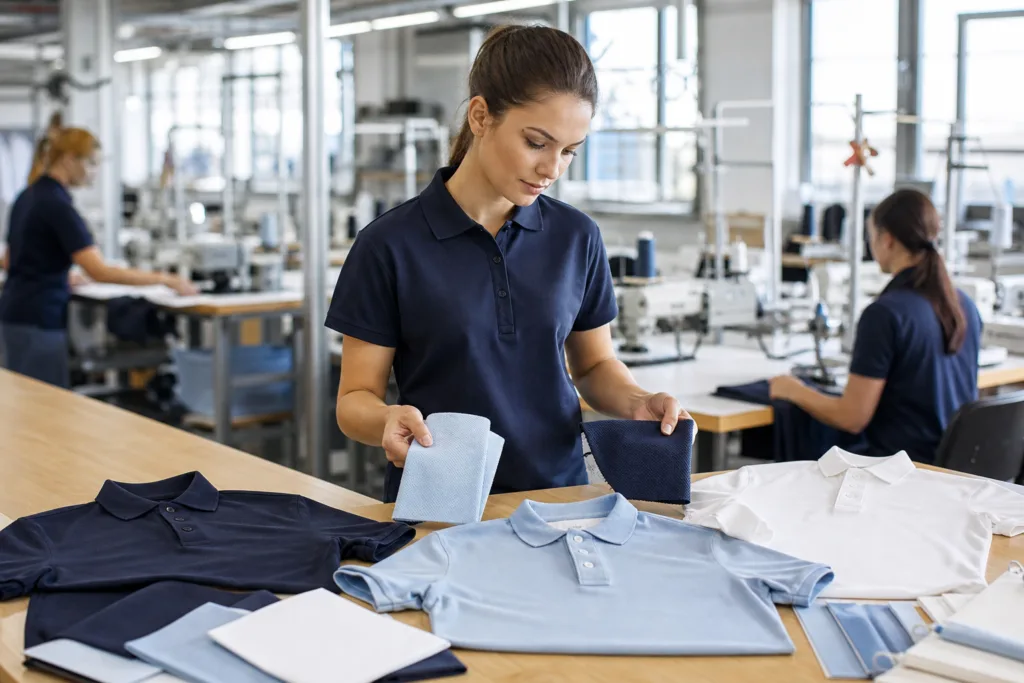
The right polo fabric is the one that supports the intended wearer experience and the production budget together. Cotton content may improve familiar softness and natural comfort, while polyester can improve durability, moisture movement, and color stability. Blends often balance these traits, but the blend ratio is only one part of the decision.
Fabric structure, yarn type, finish, weight, and color all influence the final result. A 220 GSM cotton-rich piqué and a 220 GSM polyester piqué can feel, drape, shrink, and perform very differently. Buyers should request swatches or sample yardage before approving a bulk direction whenever hand feel is central to the product promise.
| Fabric direction | Typical strengths | Best-fit applications | Buyer watchpoint |
|---|---|---|---|
| Cotton piqué | Natural hand feel, breathable texture, classic appearance | Premium casual polos and lifestyle uniforms | Confirm shrinkage control and colorfastness expectations |
| Polyester piqué | Durability, quicker drying, stable color, performance focus | Golf, active staffwear, and outdoor teams | Assess hand feel and decoration compatibility |
| Cotton-polyester blend | Balanced comfort, resilience, and cost control | Corporate and retail uniform programs | Review the actual blend ratio and wash test result |
| Stretch piqué or jersey | Mobility and a closer performance fit | Golf and modern athleisure-inspired polos | Check recovery after repeated wear and washing |
Use GSM as a comparison tool, not a quality score
GSM describes fabric weight per square meter; it does not automatically indicate better quality. Lighter constructions can suit warm climates and active use, while heavier fabrics may give a more substantial hand feel and improved opacity. However, a heavier polo may also dry more slowly and feel less suitable for humid conditions.
For performance-oriented programs, buyers exploring custom golf polo shirt options for performance-focused collections should review stretch, recovery, breathability, snag resistance, and collar behavior alongside GSM. A fabric that looks good on a swatch but curls, bags, or retains moisture during wear is not the right production choice.
Fit, Pattern Development, and Size Grading Determine Repeatability
Fit is often the difference between a polo that is merely branded and one that users want to wear repeatedly. A factory should work from an approved measurement chart, intended fit description, and reference garment or technical pack when available. Terms such as regular, slim, relaxed, and athletic are useful, but they are not universal specifications.
For a uniform project, ease through the chest and armhole may matter more than a fashion-forward silhouette. For golf, shoulder mobility, body length during movement, and sleeve balance deserve closer attention. Pattern changes should be recorded after every sample round so the approved fit can be reproduced in bulk.
- Specify the base size used for sample approval.
- Define finished garment measurements and tolerances.
- Confirm whether measurements are taken flat, before wash, or after wash.
- Review chest, body length, shoulder, sleeve opening, placket length, and collar dimensions.
- Approve a size grading rule rather than assuming every point grows equally.
At Ninghow, we recommend treating size-set review as a production control step, particularly where broad size ranges are required. A sample in one size can look correct while the smallest and largest graded sizes reveal proportion or balance issues that should be corrected before cutting begins.
Match Logo Application to Fabric, Detail Level, and Order Plan
Logo decoration should be selected before bulk pricing is finalized because it affects labor, setup, placement limits, lead time, and minimum quantity. Embroidery offers a dimensional, durable result that suits many uniforms and club polos, but dense designs can stiffen lightweight fabrics or cause puckering if backing, thread tension, and stabilizing are not planned correctly.
Screen printing can work well for larger simple graphics, while heat transfer may suit detailed small logos, names, or variable data. For all methods, the buyer should provide vector artwork where possible and specify placement dimensions rather than relying only on a visual mockup.
| Method | Most suitable for | Production consideration |
|---|---|---|
| Embroidery | Chest logos, crests, premium staffwear | Digitizing, stitch count, backing, and fabric puckering require approval |
| Screen printing | Bold graphics and larger artwork | Screen setup and color count influence cost and MOQ |
| Heat transfer | Fine details, small runs, names, and numbers | Test adhesion, stretch response, and wash durability |
| Woven badge or patch | Heritage branding and structured identity | Edge finish and attachment method affect comfort and appearance |
For a refined uniform finish, review embroidered polo shirt details for polished team branding during the sample stage. The best method is not just the one that looks good in artwork; it is the one that remains stable on the selected fabric and supports the intended order structure.
Plan MOQ and Lead Time Around Real Production Variables
MOQ is not a single factory number. It is shaped by fabric availability, color development, trim sourcing, decoration setup, number of SKUs, and whether the buyer is using an existing construction or requesting a fully custom design. A stock fabric in an available color may support a more flexible quantity than a custom-dyed fabric with proprietary collar tipping.
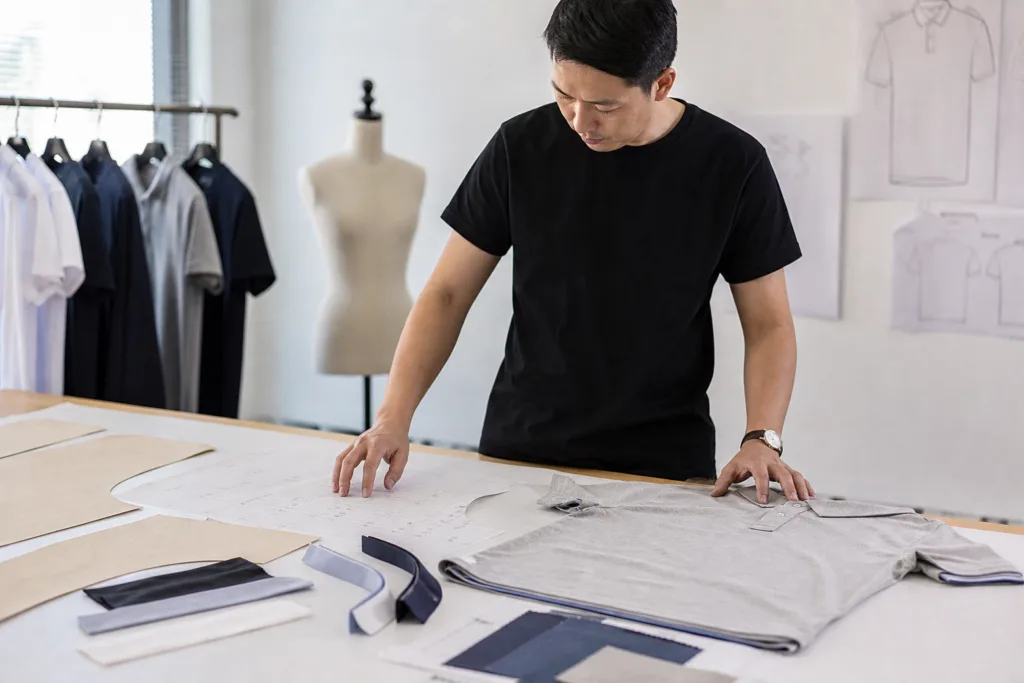
Lead time also starts earlier than sewing. It includes material confirmation, lab dips or color approval when needed, pattern development, sample feedback, logo setup, trim approvals, production scheduling, inspection, packing, and shipment preparation. A compressed launch date can be possible only when decisions are made quickly and the material path is realistic.
- Reduce colorways before reducing quality-critical construction details.
- Use standard available buttons or base fabrics when a lower initial quantity is important.
- Consolidate artwork positions where the visual result still meets the brief.
- Approve samples in writing, including measurements, color, trim, and logo details.
- Build time for a pre-production sample when the project has multiple custom elements.
Corporate buyers often need consistency across departments and repeat orders, not simply a low opening quantity. In that situation, corporate polo shirt development for elevated staff uniforms should account for replacement orders, controlled color standards, and stable logo placement from the outset.
Build Quality Control Into the Production Plan
Effective quality control begins with a written approval standard, not a final inspection alone. Fabric should be checked for shade variation, defects, weight, hand feel, and relevant performance expectations before cutting. During sewing, critical points include collar shape, placket alignment, seam quality, measurement control, thread trimming, and correct label placement.
For U.S.-bound products, material selection and quality planning should also include review of applicable product requirements. The U.S. Consumer Product Safety Commission provides guidance on the general wearing-apparel flammability standard; buyers should determine which requirements apply to their specific product and market rather than assuming a standard polo requires no compliance review.
| Checkpoint | What to verify | Risk reduced |
|---|---|---|
| Pre-production | Approved fabric, trims, artwork, measurements, and packing instructions | Wrong materials or misunderstood specifications |
| First-off-line | Collar, placket, logo location, measurements, and workmanship | Systematic line errors |
| During production | Shade grouping, sewing consistency, print or embroidery quality | Variation across the order |
| Final inspection | Appearance, measurement sampling, labels, packing, and carton counts | Shipment errors and avoidable claims |
Key takeaway: Bulk consistency comes from agreed checkpoints and documented approvals, not from expecting inspection to repair unclear specifications at the end.
Common Mistakes That Delay Polo Production
The most common delay is changing several variables after a sample is already in progress. Switching fabric, collar shape, logo size, and fit together makes it difficult to identify what improved or worsened the sample. Change one clearly documented group of variables at a time when possible.
Another mistake is approving a digital mockup as though it were a physical production standard. A mockup cannot confirm fabric transparency, embroidery stiffness, collar recovery, wash shrinkage, or the balance of a graded size range. A physical sample remains the better decision tool for any buyer building a durable branded program.
- Do not rely on color names; approve a color standard or lab dip where color is critical.
- Do not assume a previous supplier’s size chart will translate directly to a new pattern.
- Do not leave label content, barcode needs, folding, or polybag instructions until final production.
- Do not approve artwork without checking its real scale on the garment.
- Do not treat a low quote as comparable unless fabric, trims, decoration, and packing are aligned.
How Buyers Can Prepare for a Smoother Bulk Order
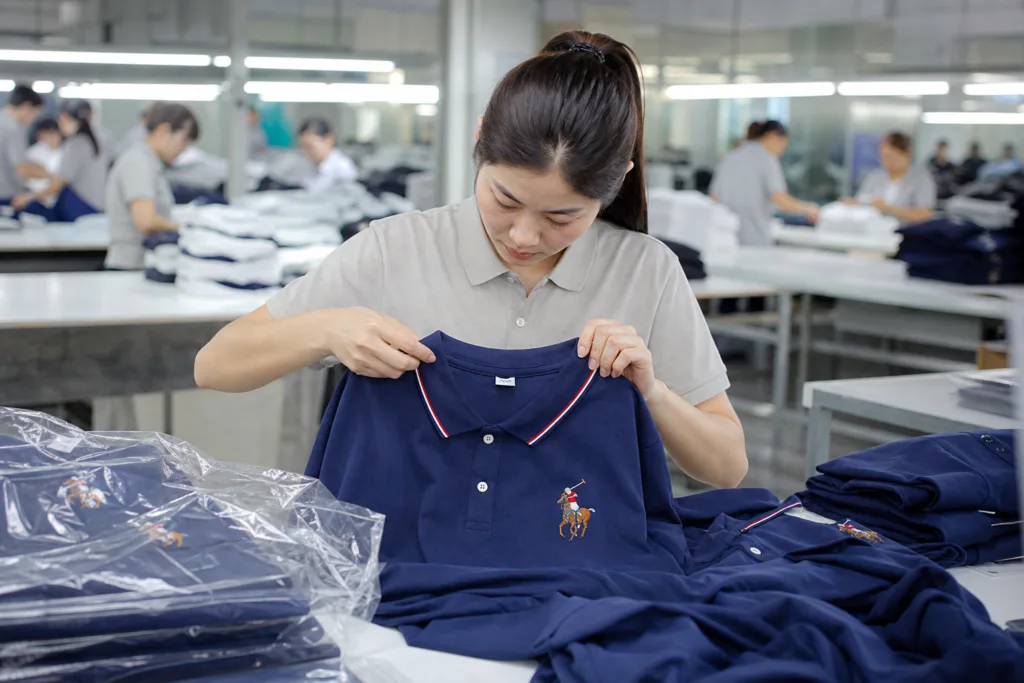
The best preparation is a single source of truth for the garment. This may be a technical pack, a detailed specification sheet, or a structured approval file. It should bring together the approved sample comments, measurement chart, fabric and trim references, artwork, packaging rules, and order breakdown.
From a manufacturer perspective, a buyer who can answer the following questions will receive more useful feedback and a more reliable production plan:
- Which features are essential to the brand and which can use standard components?
- Is the priority premium hand feel, technical performance, durability, or entry cost?
- How many colors and sizes are needed for the first order?
- Which markets will receive the goods and what label information is required?
- What must be approved before bulk cutting can start?
Apparel manufacturing is most successful when sourcing, design, and quality decisions move together. For a polo program, this means aligning fabric behavior, fit, decoration, branding, packaging, and replenishment needs before the bulk schedule is locked. The result is a product that is easier to quote accurately, sample efficiently, and repeat with confidence.
Frequently Asked Questions
What information should I send to an apparel manufacturer for a custom polo quote?
Send the intended use, estimated quantity by color and size, fabric preference, target fit, logo artwork, decoration method, label and packaging needs, target delivery timing, and any reference images or tech pack. If some details are undecided, identify them clearly so the manufacturer can explain which choices affect cost, MOQ, and lead time.
What fabric is best for corporate polo shirts?
A cotton-polyester piqué blend is often a practical corporate option because it can balance comfort, durability, and manageable care, but the best choice depends on climate, wearer activity, and brand position. Request fabric swatches and a wash-tested sample to judge hand feel, shrinkage, collar performance, and logo appearance before bulk approval.
Can a low MOQ work for custom polo manufacturing?
Low MOQ can work when the project uses available fabrics, standard trims, and limited colors or decoration setups. Fully custom fabric dyeing, special collar knitting, multiple size-color combinations, and detailed packaging usually increase the production commitment needed to run the order efficiently.
How many samples are usually needed before bulk production?
Many projects need at least one development sample and one final approval or pre-production sample, although the exact number depends on how custom the garment is. More rounds may be needed if fit, fabric, color, logo method, or construction changes significantly after the first sample.
How do I prevent inconsistent sizing in a bulk polo order?
Prevent inconsistent sizing by approving a measurement chart with tolerances, confirming the base size and grading rules, and reviewing a size set when the range is broad. The factory should use those approved specifications for in-line measurement checks rather than comparing each unit only to a general visual expectation.
What should be checked before approving bulk apparel manufacturing?
Before approval, check the physical sample against the approved fabric, color, fit, measurements, collar, placket, logo placement, labels, packaging, and workmanship standard. Confirm the final quantity breakdown, delivery plan, and any compliance or market-specific requirements so production does not begin with unresolved assumptions.