








Choosing the best products for private label clothing is usually more important than chasing the newest trend. For a new brand, the first category affects your MOQ exposure, sampling cost, fit risk, branding flexibility, and how quickly you can move from concept to repeatable bulk production. In our manufacturing experience, the most successful first launches are usually built around products that are easy to explain to customers, practical to sample, and realistic to control in production.
If your launch plan still needs category comparison, fit refinement, logo placement planning, and packaging decisions, it helps to review private label apparel development options before locking your first style. That is especially useful for founders deciding between basics and more technical garments, because the right development path can simplify fabric selection, label setup, sampling rounds, and bulk planning from the start.
What new private label brands should evaluate before choosing a product
The first question is not which garment is most fashionable. The first question is which garment your market will actually reorder, understand, and accept at your target price.
Before we recommend a starting product, we normally ask buyers to define five things clearly: target customer, budget range, brand positioning, planned customization, and selling channel. A T-shirt for online direct-to-consumer launch has a different risk profile from a polo program for school uniforms or a hoodie drop for streetwear.
- Target market: casual fashion, teamwear, golf, fitness, school, workwear, or streetwear
- Budget: not only unit price, but also sampling, trims, packaging, and logo application costs
- MOQ tolerance: whether you can support fabric minimums, color variety, and size splits
- Branding needs: print, embroidery, woven labels, heat transfers, hangtags, and custom packaging
- Selling channel: e-commerce, retail, distributor, team sales, or corporate programs
Key takeaway: The right first product is the one your brand can explain clearly, sample correctly, and reorder profitably without excessive production complexity.
Why T-shirts are often the safest starting product
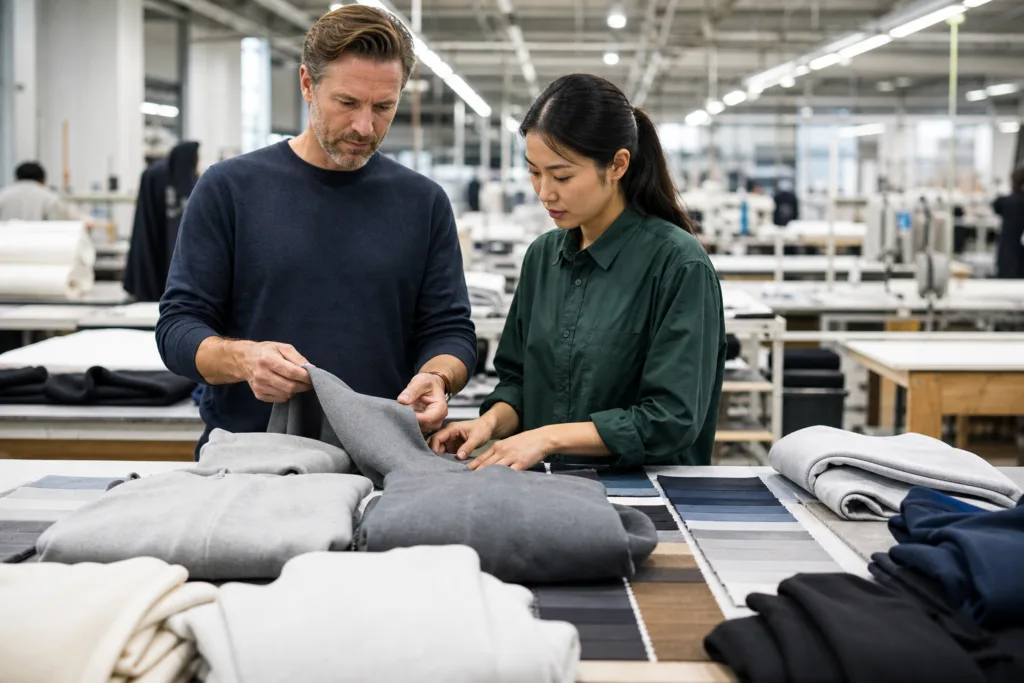
T-shirts are often the safest answer for new brands because they combine broad demand, straightforward construction, and flexible customization. They are not automatically easy to sell, but they are usually easier to develop and control than more technical categories.
For founders comparing the best products for private label clothing, T-shirts often create the lowest barrier to entry. Fabric, neckline, fit, print placement, and finishing still matter, but the overall development path is simpler than garments with technical stretch, heavy brushing, lining, or complex trims.
Buyers exploring custom T-shirt manufacturing options for new brands usually benefit from starting with one core silhouette, one or two fabrics, and controlled color choices. That approach keeps sample revisions manageable and helps avoid early inventory fragmentation.
What makes T-shirts practical for first launches
- Broad demand: T-shirts work across fashion, promotional, streetwear, school, and lifestyle markets.
- Simple construction: fewer panels and fewer specialized trims reduce production variables.
- Flexible decoration: screen printing, embroidery, heat transfer, and neck label options are all realistic.
- Easier fit testing: core body measurements are simpler to evaluate than technical compression or tailored garments.
- Lower launch risk: initial sample and bulk planning are generally more predictable.
The main limitation is competition. A basic T-shirt is easy to understand, so buyers need a reason to choose yours over many alternatives. In practice, that means fabric hand feel, GSM choice, fit accuracy, collar quality, and print execution become your real differentiators.
| T-shirt Decision Point | Lower-Risk Choice | Higher-Risk Choice |
|---|---|---|
| Fabric | Single jersey cotton or cotton blend | Unproven specialty fabric with unclear shrinkage |
| Fit | One clear standard or oversized block | Too many fit variations in first launch |
| Decoration | 1 to 2 consistent print positions | Many placements across many colors |
| Color plan | Core commercial shades | Wide range with small size splits |
Why hoodies offer stronger perceived value and margin room
Hoodies are a strong private label option when a brand needs higher perceived value and more visible branding space. Customers usually accept a higher selling price for hoodies than for T-shirts, which gives more room for packaging, embroidery, and premium finishing.
That said, hoodies are more demanding in production. Heavier fabric, rib matching, pocket alignment, hood shape, and fit consistency all need closer control, especially when buyers want a premium hand feel.
Brands reviewing hoodie production support for early private label drops should pay particular attention to fabric GSM, brushed versus unbrushed interior, rib recovery, and wash stability. These details affect both comfort and perceived quality.
Where hoodies work well
- Streetwear launches: large logo area and stronger identity building
- Lifestyle brands: easy to position as premium basics
- Club or team merchandise: practical product with strong gift and repeat potential
- Cool-season programs: higher-value layering piece
The challenges are real. Heavy fleece costs more, shipping costs more, and measurement tolerance control matters more. Sleeve length, shoulder drop, hood opening, and body length can all change how customers judge the product, so sample approval must be stricter than many first-time buyers expect.
Key takeaway: Hoodies can support better margins, but only if the fit, fabric weight, and finishing are controlled carefully enough to justify the higher selling price.
Why polos work for corporate, golf, school, and premium casual lines
Polos are often a smart starting category for brands serving organized buyers rather than purely trend-driven consumers. They work especially well for corporate apparel, golf, schoolwear, hospitality, and premium casual programs where clean presentation and repeat orders matter.
From a manufacturer’s perspective, polos sit between T-shirts and more structured garments. They are still practical to develop, but collar construction, placket balance, and shrinkage control need more attention than many first-time buyers expect.
For buyers considering polo shirt manufacturing paths for brand launches, the biggest decision is usually fabric direction: pique cotton, cotton blend, or performance knit. Each option affects appearance, drape, breathability, embroidery performance, and care expectations.
Why polos can be a reliable starter category
- Structured look: more polished than a basic tee
- Embroidery-friendly: ideal for chest logos and institutional branding
- Repeat-order potential: suitable for uniforms, schools, clubs, and events
- Balanced positioning: can serve premium casual and professional use
The product is still less forgiving than it appears. A poor collar instantly lowers perceived value. Uneven plackets, curling collars, and post-wash shrinkage can turn a promising sample into a weak bulk result if the development stage is rushed.
Even for simpler starter categories, launch readiness still includes labeling and care compliance. For brands selling into the U.S. market, a practical reference is this U.S. apparel compliance guide, which helps explain fiber content, care labeling, country-of-origin, and related product information that should be checked before bulk production.
When shorts are a good first category
Shorts can work well as a launch category for sportswear, athleisure, resort, school, and teamwear brands. They also support easy line building because one shorts style can often pair naturally with a T-shirt, hoodie, tank, or warm-up top.
The opportunity is strong when the brand has a clear use case. Running shorts, casual jersey shorts, training shorts, and uniform shorts all serve different customers, so the style must be selected with purpose rather than as a generic add-on.
Why shorts are attractive for new brands
- Practical product: easy for customers to understand and use
- Set-building potential: pairs well with tops for coordinated launches
- Range extension: can open the door to teamwear or active collections
- Decoration flexibility: print, embroidery, drawcord color, and label options are available depending on the fabric
The main difficulty is sizing and performance expectations. Waist comfort, inseam preference, pocket construction, liner choice, and movement range all affect customer satisfaction. If the shorts are for active use, buyers will also expect suitable breathability, recovery, and durability from the fabric.
| Shorts Type | Typical Strength | Main Development Concern |
|---|---|---|
| Casual fleece shorts | Easy extension from hoodies or sweat sets | Waist comfort and shape retention |
| Jersey shorts | Simple casual or teamwear option | Fabric recovery and pocket stability |
| Woven training shorts | Performance positioning | Fit, lining, and movement testing |
| Uniform shorts | Repeat institutional demand | Color consistency across reorders |
Why activewear can be profitable but is usually a more advanced first launch
Activewear can be profitable, but it is usually a more advanced starting point for a new private label brand. The category offers strong identity potential, but it requires more technical decision-making and tighter quality control.
Buyers interested in custom activewear manufacturing for fitness-focused labels should expect closer discussions around stretch ratio, squat opacity, moisture handling, seam construction, and logo method compatibility. Those factors make the category more demanding than a standard cotton basic.
In our production work, activewear problems often come from fabrics that look good in a first swatch but underperform during wear. Recovery, pilling resistance, sheerness under extension, and seam comfort all need testing before bulk approval.
What makes activewear attractive
- Performance positioning: clear use case can strengthen brand identity
- Growing demand: customers often buy for both exercise and daily wear
- Set potential: leggings, bras, shorts, tees, and jackets can build coordinated collections
- Premium pricing room: technical perception can support stronger selling prices
Why activewear is harder for first-time buyers
- Technical fabrics: wrong composition can affect comfort and durability
- Sewing complexity: flatlock, coverstitch, binding, and elastic applications must be controlled
- Stricter QC: seam strength, stretch recovery, and transparency issues matter more
- Fit sensitivity: small grading problems are more visible on body-hugging garments
Key takeaway: Activewear is attractive when the brand has a clear technical vision, but it is rarely the lowest-risk first category for a buyer still learning fit control and fabric performance planning.
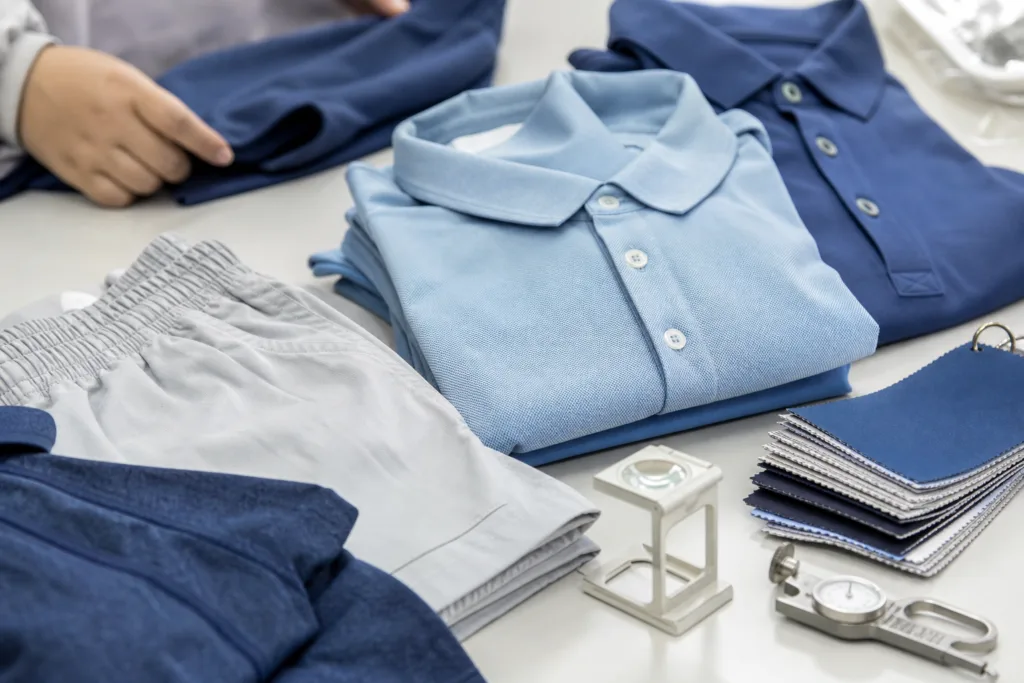
Which category is most suitable by brand type
The right answer depends on the market you want to serve. A product that works for a streetwear launch may be a poor first choice for a schoolwear or corporate program.
| Brand Type | Most Suitable First Category | Why It Fits |
|---|---|---|
| Startup fashion basics brand | T-shirts | Simple development, broad demand, manageable risk |
| Streetwear label | Hoodies or heavyweight T-shirts | Strong identity, good logo surface, higher perceived value |
| Corporate or school apparel project | Polos | Embroidery-friendly, structured look, repeat-order potential |
| Sportswear startup | Shorts or training tees first, advanced activewear later | Practical entry point before technical compression items |
| Teamwear project | Polos or shorts depending on use | Clear function and easier reorder planning |
How fabric and construction affect product success
Fabric choice is often where first launches succeed or fail. The same silhouette can feel entry-level or premium depending on GSM, composition, surface finish, and recovery.
For T-shirts, GSM influences drape, opacity, and positioning. A lighter jersey may suit hot climates and promotional use, while a heavier fabric can support a more premium or streetwear presentation. For hoodies, fleece weight and brushing affect warmth, bulk, and cost. For polos, knit structure affects appearance and shrinkage behavior. For shorts and activewear, stretch, breathability, and abrasion resistance are more central.
| Product | Fabric Priorities | Construction Priorities |
|---|---|---|
| T-shirts | GSM, hand feel, shrinkage, colorfastness | Neck rib, shoulder tape, hem consistency |
| Hoodies | Fleece weight, softness, rib recovery | Hood shape, cuff balance, pocket alignment |
| Polos | Pique or knit stability, shrinkage control | Collar quality, placket clean finish, side vents |
| Shorts | Breathability, durability, stretch if needed | Waistband comfort, pocket structure, inseam balance |
| Activewear | Stretch recovery, opacity, moisture handling | Seam strength, coverstitch quality, panel accuracy |
From our manufacturer perspective, buyers get better results when they define the intended hand feel in plain language. Instead of asking only for cotton or polyester, describe whether you want soft and drapey, dry and structured, brushed and warm, or smooth and compressive. That saves time during sourcing and sample revision.
Which customization methods make sense for a first launch
The simplest decoration method is not always the right one, but early-stage brands should avoid decoration plans that create unnecessary complexity. The starting point should match your product category, quantity, and brand identity.
- Screen printing: usually effective for T-shirts and hoodies with larger artwork and stable repeat orders
- Embroidery: strong option for polos, hoodies, caps, and premium brand marks
- Heat transfer: useful for smaller runs, sports applications, and detailed logo work
- Sublimation: relevant mainly for polyester performance garments and all-over graphics
- Woven labels and neck labels: important for private label identity across most categories
- Hangtags and packaging: support brand presentation, but should stay aligned with price positioning
At Ninghow, we usually advise new buyers to simplify the first launch: one main logo method, one label system, and packaging that fits the selling channel. Over-designed packaging or too many decoration techniques can absorb budget that would be better spent on fabric and fit.
How to reduce launch risk before bulk production
The safest way to reduce launch risk is to treat sampling as a decision process, not as a formality. A sample should confirm fit, fabric behavior, branding execution, and construction details before quantity is committed.
We recommend that buyers check the following during development:
- Measurement accuracy: compare the sample against the approved spec sheet
- Fabric response: assess shrinkage, twist, recovery, and hand feel after washing if relevant
- Logo execution: confirm placement, size, edge quality, and color consistency
- Wear testing: check movement, comfort, opacity, and shape retention
- Label review: verify fiber, care, size, and brand information before bulk setup
For first orders, small-batch logic is often smarter than broad assortment logic. A narrower launch with fewer colors and fewer silhouettes usually gives stronger control over fit, QC, and inventory performance.
What MOQ and lead time planning should look like for first orders
MOQ is not just a factory rule. It is usually connected to fabric availability, dyeing minimums, trim sourcing, decoration setup, and production efficiency.
Basic T-shirts and polos may allow more flexible entry depending on fabric availability and customization requirements. Hoodies often require more commitment because heavier fabric and matching rib are more specific. Activewear can become more restrictive when custom fabrics, specialty elastics, or multiple panels are involved.
| Category | Typical MOQ Pressure | Lead Time Sensitivity | Main Driver |
|---|---|---|---|
| T-shirts | Low to moderate | Moderate | Fabric stock and print setup |
| Hoodies | Moderate | Moderate to high | Heavy fabric and trim matching |
| Polos | Moderate | Moderate | Fabric stability and collar components |
| Shorts | Moderate | Moderate | Waist trims and fabric type |
| Activewear | Moderate to high | High | Technical fabric and sewing complexity |
Key takeaway: Low MOQ is most realistic when the style, fabric, color count, and trim requirements stay controlled. Complexity increases minimums faster than many first-time buyers expect.
Common mistakes that make first private label launches harder
The most common mistake is starting with a category that looks exciting but does not match the buyer’s current development capacity. A technical product is not wrong, but it becomes risky when fit specs, fabric standards, and testing expectations are still unclear.
- Choosing overcomplicated styles: too many panels, washes, trims, or decoration methods in the first drop
- Weak fit planning: no clear target measurements or poor grading logic
- Poor fabric choice: selecting by price alone without checking hand feel and performance
- Unrealistic pricing: expecting premium appearance with entry-level materials and construction
- Too many colors too early: fragmented MOQ and harder inventory planning
- Rushing bulk approval: skipping sample comments, wear testing, or label checks
In practical terms, the best products for private label clothing are usually the ones you can repeat consistently. Consistency matters more than launching too many styles at once.
How to choose the right manufacturer for your first category
The right manufacturer should fit your category, not just your price target. Buyers should look for clear communication on fabric, sampling, MOQ logic, and bulk quality checkpoints.
Ask specific questions about pattern development, size grading, label setup, testing approach, and how sample comments are handled. A good factory discussion should help you identify where risk sits in the product, whether that is collar shrinkage on polos, recovery on activewear, or hand feel consistency on T-shirts.
For new brands, it is also useful to work with a manufacturer that can explain trade-offs clearly. For example, changing fabric GSM, simplifying a trim package, or reducing color options may improve MOQ flexibility and bulk consistency without weakening the brand concept.
How to make the final product choice with a practical framework
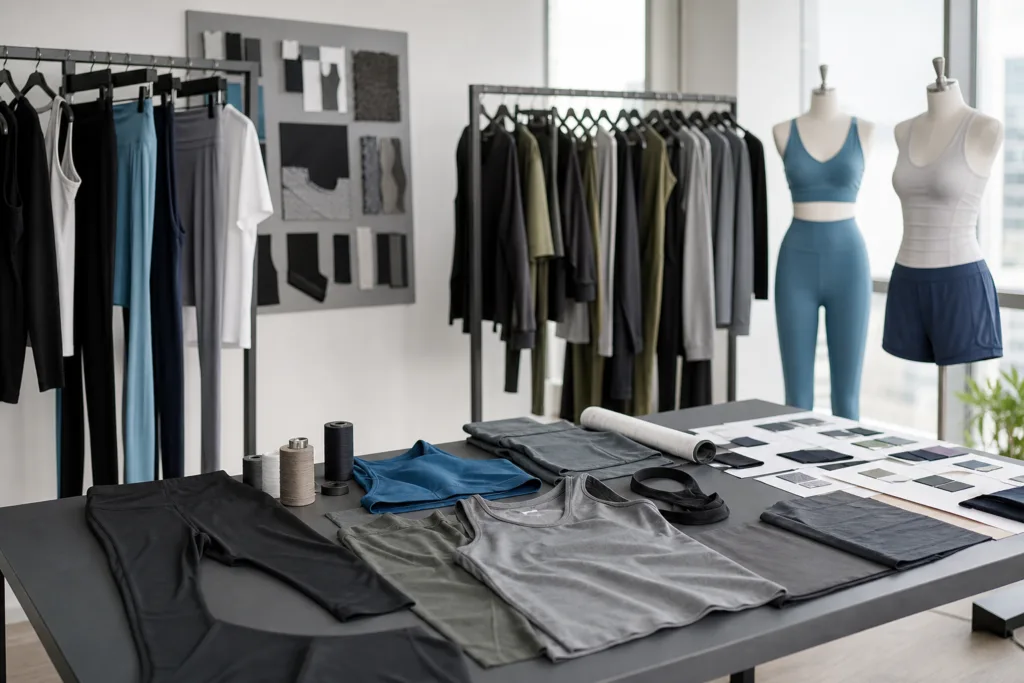
If you need a straightforward recommendation, start with T-shirts when you want the simplest path, hoodies when you need stronger perceived value, polos when you target organized repeat buyers, shorts when you are building sports or seasonal sets, and activewear only when your technical requirements are already well defined.
That framework is more useful than copying another brand’s launch mix. The right opening category is the one that balances market fit, development simplicity, branding potential, and reorder confidence.
For many new labels, a focused first range beats a broad first range. One strong category, supported by correct fabric choices, clear fit standards, disciplined branding, and realistic MOQ planning, usually creates a better foundation for bulk production and future expansion.
FAQs
What is the safest first product for a new private label clothing brand?
T-shirts are usually the safest first product because they combine broad demand, simpler construction, flexible customization, and lower development risk than more technical categories. They still require good fabric and fit decisions, but the path from sampling to bulk production is often more manageable for first-time buyers.
Are hoodies better than T-shirts for private label margins?
Hoodies can offer better margin room because customers often accept a higher selling price and the product has stronger perceived value. However, the production cost, fabric weight, fit control, and shipping cost are also higher, so better margins depend on disciplined development and clear positioning.
When should a new brand start with polos instead of casual basics?
Polos are a better starting point when the brand targets corporate buyers, golf customers, schools, clubs, or premium casual markets that value a structured and embroidery-friendly product. They can also support repeat orders well, provided collar quality, placket finish, and shrinkage control are handled properly.
Is activewear too risky as a first private label category?
Activewear is not automatically too risky, but it is usually more demanding because technical fabrics, stretch recovery, seam comfort, and fit precision matter much more. New brands can still launch it successfully, but they should expect more sample review, testing, and quality control work than with simpler cotton basics.
How many styles should a first private label launch include?
A first private label launch usually works better with a small and focused range, often one main category and limited color options. This keeps MOQ, sample revisions, packaging setup, and inventory planning under better control while allowing the brand to learn from real customer feedback before expanding.
What should buyers prepare before asking for private label samples?
Buyers should prepare logo files, target measurements, fit direction, fabric preferences, color ideas, label requirements, packaging expectations, and estimated order quantity before requesting samples. Clear starting information helps the manufacturer recommend suitable fabrics, identify MOQ constraints, and reduce unnecessary sampling delays.