






Polo shirt production problems usually do not come from one single mistake. In bulk manufacturing, defects tend to appear when fabric behavior, pattern execution, trimming, sewing control, embroidery handling, and wash performance are not aligned early enough. For buyers, that means a polo shirt that looked good in the sample stage can still develop collar roll, placket imbalance, color variation, shrinkage, logo distortion, or measurement inconsistency in bulk if the factory does not manage risk step by step.
If your project needs polo shirt manufacturing support for bulk buyers, it is important to work with a factory that can guide fabric selection, collar and placket construction, embroidery planning, sample refinement, and production QC before bulk cutting starts. At Ninghow, we usually see better results when buyers treat polo development as a controlled process rather than a simple repeat order, especially for private label programs with custom fabric, trims, labels, and branding details.
The good news is that most recurring polo defects are predictable. When a manufacturer confirms the pattern, checks incoming materials, approves a first article, monitors the sewing line, and applies final random inspection, many common failures can be prevented before they become expensive bulk claims.
What are the most common polo shirt production problems buyers should watch for?
The most common issues are collar deformation, crooked plackets, button spacing errors, fabric shade variation, shrinkage after washing, logo puckering, skipped stitches, seam twisting, measurement inconsistency, and mismatch between approved sample and bulk fabric.
These problems matter because the polo shirt is a structured knit garment. It looks simple, but the collar, placket, sleeve opening, body balance, and branding area all need tighter control than a basic T-shirt. A small error in one area can make the whole garment look off.
| Problem | What the Buyer Sees | Likely Root Cause | Main Prevention Method |
|---|---|---|---|
| Collar shape failure | Collar looks soft, waves, or rolls | Wrong rib quality, poor fusing choice, unstable construction | Collar material testing and construction approval |
| Placket misalignment | Front opening looks crooked or uneven | Inaccurate marking, sewing drift, poor pressing control | Template use and in-line placket checks |
| Color variation | Shade differences between panels or cartons | Mixed dye lots, poor fabric segregation | Lot control and panel matching rules |
| Shrinkage | Garment becomes shorter or narrower after wash | Unstable knit fabric, no wash test validation | Pre-production shrinkage testing |
| Embroidery distortion | Logo puckers or pulls fabric | Wrong backing, density, or hoop tension | Embroidery sample approval and line settings |
| Stitching defects | Open seams, skipped stitches, loose thread | Needle, tension, operator, or machine setup issues | Line QC and seam setting verification |
| Sample mismatch | Bulk hand feel or GSM differs from sample | Fabric substitution or loose approval standards | Fabric swatch sealing and bulk lot review |
Key takeaway: Most polo shirt production problems are not random. They usually come from preventable control gaps between sample approval and mass production.
Why does the collar lose shape or fail to stay crisp?
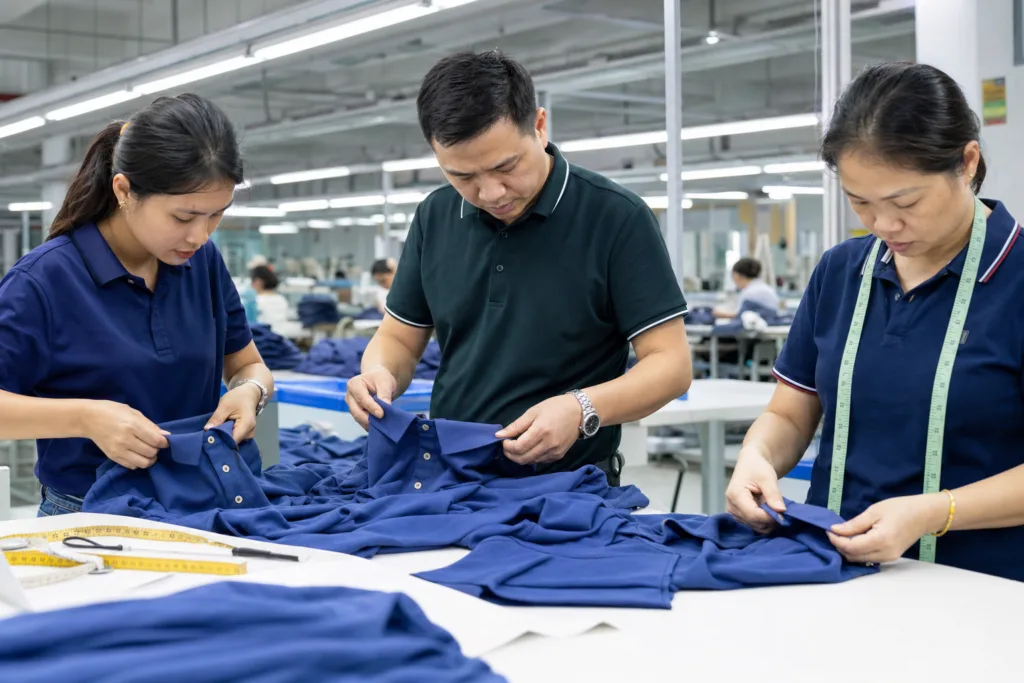
Collar problems are among the first issues buyers notice because the collar frames the entire polo. If it curls, collapses, or loses symmetry, the garment immediately looks lower in quality.
The cause is often a combination of rib structure, yarn quality, collar weight, interlining choice if used, and the way the collar is joined to the neckline. A collar that feels acceptable in a fresh sample may react very differently after pressing, packing, shipping, or washing.
From our manufacturing perspective, collar control starts before sewing. We check whether the collar fabric and body fabric have compatible recovery, whether the collar edge remains clean after washing, and whether the neckline seam is feeding evenly without stretching one side.
- Confirm rib density and elasticity before bulk approval.
- Test collar appearance after pressing and after washing.
- Check collar points and collar spread on the pre-production sample.
- Control neckline sewing tension to avoid stretching during attachment.
- Review packing method so collars are not crushed in cartons.
A buyer should also pay attention to intended use. A fashion polo may prioritize a softer collar hand feel, while a uniform or golf polo often needs better collar retention over repeated wear and laundering.
What causes crooked plackets and button spacing issues?
Crooked plackets usually come from inaccurate folding, unstable knit handling, poor template control, or sewing operators feeding the front opening unevenly. Once the placket shifts, the buttons and buttonholes will often amplify the visual defect.
This area is sensitive because polo fronts combine structure with stretch. Unlike a woven shirt, the knit body can distort while the placket is being attached. If the factory is not controlling tension and alignment, the left and right sides may no longer sit evenly.
To reduce this risk, we prefer clear placket construction standards during the apparel sampling process for fit and construction review. That includes placket length, finished width, button count, button spacing, topstitch position, and whether the style uses a hidden, standard, or reinforced placket.
In bulk, the sewing line should check:
- Center front alignment against the pattern and marker
- Placket length tolerance
- Distance between each button and buttonhole
- Symmetry after topstitching and pressing
- Front appearance on a buttoned garment, not just flat panels
If the first few pieces show placket drift, production should pause and correct the folding guide or operator method immediately. This is not a defect to sort out only at final inspection.
How do color variation and dye lot inconsistency happen in bulk polo production?
Color variation is common when bulk fabric comes from multiple dye lots, when replacement panels are cut from a different lot, or when collars and cuffs are not matched carefully to the body fabric. Even a small shade shift can be visible on polos, especially in dark navy, black, red, and corporate brand colors.
Buyers sometimes assume Pantone approval alone solves the issue. In reality, shade control also depends on lab dip approval, bulk dyeing consistency, lot segregation, cutting discipline, and inspection under suitable lighting conditions.
For projects with strict color standards, custom dye planning matters as much as sewing quality. When a brand has repeat programs or sensitive corporate colors, a process such as custom fabric dyeing for color consistency can help create a more controlled approval path before bulk production.
| Color Risk | Typical Cause | Factory Prevention |
|---|---|---|
| Body shade difference | Mixed dye lots in cutting | Separate and label each lot clearly |
| Collar/cuff mismatch | Trim knit dyed separately without proper matching | Approve body and rib together |
| Panel-to-panel shading | Fabric face direction or roll variation | Use same lot and controlled lay planning |
| Repeat order mismatch | Loose color record and approval standards | Keep sealed standard and production history |
Key takeaway: Shade consistency is a process issue, not only a dyeing issue. Factories need lot discipline from incoming inspection through cutting and packing.
Why do polo shirts shrink or become dimensionally unstable after washing?
Shrinkage is one of the most important technical risks in knit polo production. If the fabric relaxes too much after washing, garment length, chest width, sleeve opening, and placket appearance can all change.
This happens when knit structure, yarn composition, finishing quality, and garment construction are not validated against wash performance. Cotton-rich polos are especially sensitive, but blended fabrics can also shift if compaction or finishing is inconsistent.
Before bulk approval, manufacturers should perform shrinkage and dimensional stability testing so expected wash change is understood in advance. That allows the pattern to be adjusted if needed and helps the buyer approve realistic measurement tolerances instead of relying only on unwashed sample dimensions.
At Ninghow, we prefer not to treat shrinkage as a final inspection surprise. We check fabric test results before cutting, compare them with the target measurement chart, and confirm whether the approved sample already reflects expected after-wash behavior.
- Review fiber content and knit structure.
- Test fabric before production, not only finished garments after sewing.
- Adjust the pattern when known shrinkage requires compensation.
- Define whether buyer specs are based on before-wash or after-wash measurements.
- Keep wash method consistent when evaluating sample and bulk results.
What logo and embroidery problems are common on polo shirts?
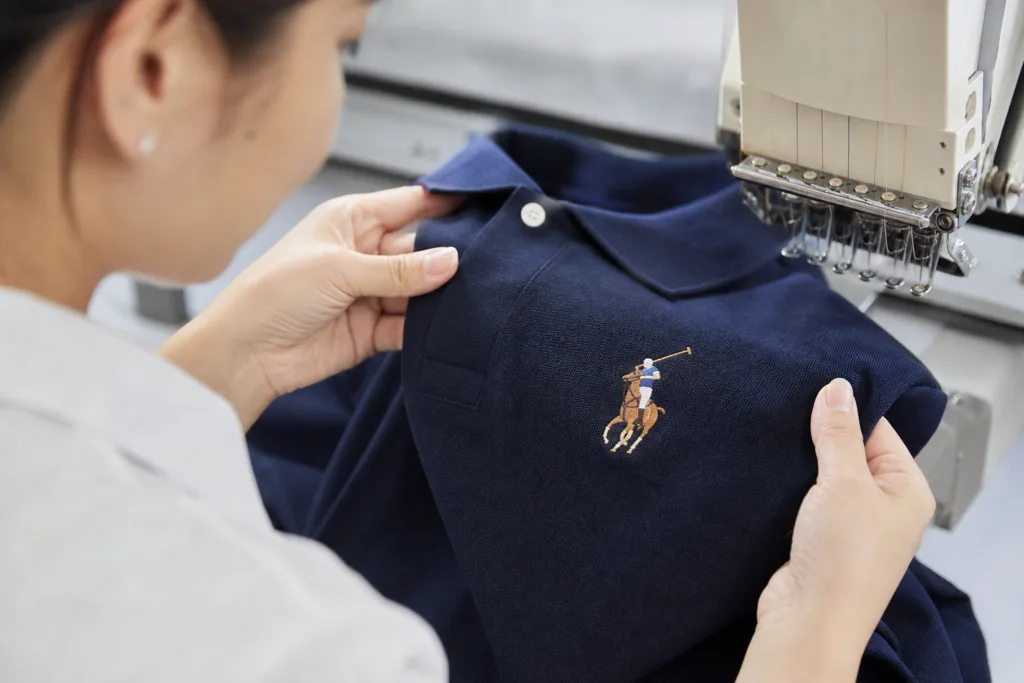
The most common embroidery issues are misplacement, puckering, fabric distortion, thread breaks, loose thread tails, and inconsistent logo size between pieces. Because many polos use left chest embroidery, even a small logo error becomes highly visible.
The risk increases when the base fabric is lightweight, stretchy, or textured pique. If stitch density is too heavy or backing choice is wrong, the logo can pull the fabric and create waves around the chest area.
Buyers developing branded polos should review custom embroidered polo shirt options early, including logo dimensions, embroidery position from high point shoulder or center front, backing type, thread sheen, and whether the style would actually perform better with print or patch application.
We usually prevent embroidery defects by approving a strike-off on the actual fabric, not only a digital logo file. That makes it easier to evaluate stitch count, pull, edge clarity, and how the logo behaves after pressing.
- Approve embroidery placement with a measurable reference point.
- Use the actual body fabric for logo testing.
- Match backing and tension to fabric weight and stretch.
- Control hoop pressure to avoid permanent marks.
- Recheck logo appearance after washing and pressing.
How do stitching and seam defects develop in polo shirt production?
Uneven stitching, skipped stitches, seam puckering, seam popping, and twisted side seams usually point to setup or process discipline problems. Needle choice, thread tension, machine speed, operator handling, and seam specification all influence the final result.
Polo shirts often combine flat knit body fabric with more structured areas such as plackets, collars, and cuffs. That means seam behavior changes across the garment. A sewing line that uses one setting for everything may create defects in at least one area.
Good factories build seam and stitching quality control around correct seam type, stitch density, and machine setup, supported by recognized references for seam and stitching quality control. In practice, that means checking not only appearance but also seam recovery, durability, and consistency from operator to operator.
We also find that in-line checks matter more than end-line repair. If skipped stitches begin because of a worn needle or poor tension, the defect can spread through dozens of pieces very quickly.
Why can bulk fabric GSM and hand feel differ from the approved sample?
A sample mismatch usually happens when the approved development fabric is not the same as the bulk fabric source, finish, or final GSM range. Buyers often experience this as a bulk polo that feels thinner, stiffer, heavier, or less stable than the sample they signed off on.
This is especially common in fast development calendars where the sample is made from available fabric while bulk is planned separately later. Unless the factory and buyer define acceptable GSM tolerance, finishing method, and hand feel expectation, confusion is likely.
The safest method is to seal key references before mass production:
- Approved fabric swatch with composition and GSM
- Color standard
- Hand feel expectation
- Wash result expectation
- Approved collar and cuff quality
Key takeaway: A signed garment sample alone is not enough. Polo consistency improves when the fabric approval standard is documented separately and matched to bulk sourcing.
How do manufacturers prevent polo shirt production problems before mass production starts?
Prevention starts with pattern confirmation and pre-production sample approval. If the pattern is off, the collar balance is unstable, or the placket spec is vague, the factory will be trying to correct design problems during sewing, which is much more expensive and less reliable.
That is why we recommend a disciplined sequence: confirm the tech pack, review size specs, test the fabric, approve trims, build the pre-production sample, and lock the construction details before cutting bulk fabric. A well-run factory should not treat these as formalities.
Buyers who want fewer surprises in production should expect documented standards for:
- Measurement chart and tolerance
- Collar shape and finished size
- Placket construction details
- Button type and spacing
- Logo artwork, size, and placement
- Label positions and packaging method
When a project is still evolving, the factory should slow down and clarify rather than rushing into cutting. At Ninghow, we find that one extra round of technical confirmation is usually cheaper than one round of bulk rework.
What should be checked during incoming material inspection?
Incoming inspection should verify the actual materials before they enter cutting and sewing. This includes fabric, rib, buttons, thread, labels, care labels, polybags, and cartons if packaging presentation matters to the buyer.
For polos, incoming fabric inspection should cover shade consistency, GSM, usable width, visible knitting defects, hand feel, and roll identification by lot. Trims should also be checked because poor buttons, unstable rib, or incorrect labels can delay production or create claims later.
A practical incoming inspection checklist includes:
- Fabric lot separation and shade review
- GSM confirmation against approved standard
- Defect review for holes, slubs, barre, oil marks, and streaks
- Rib collar and cuff color match to body fabric
- Button size, thickness, color, and attachment hole consistency
- Label text, size mark, and placement confirmation
- Thread color matching and performance suitability
This is also the right stage to confirm whether the bulk materials still match the approved sample package. If they do not, production should stop for clarification instead of assuming the difference is minor.
What is first article inspection and why does it matter for polos?
First article inspection means reviewing the first finished pieces from the actual production line before mass output continues. It is one of the most effective control points for a polo shirt because it reveals whether the approved sample is being executed consistently under real factory conditions.
The first article should be checked for measurements, collar shape, placket alignment, button spacing, logo position, seam quality, pressing appearance, and overall balance on a hanger and on a body form if available. This review should happen before hundreds of garments are completed.
If any issue appears here, the correction is still manageable. If the same issue is only discovered at final inspection, the factory may face expensive sorting, repair, or even remake pressure.
How should in-process QC work on the sewing line?
In-process QC should be active, not passive. For polos, that means line checks at cutting, panel matching, embroidery, collar attachment, placket sewing, buttoning, finishing, and packing rather than waiting until finished goods are stacked at the end.
We usually recommend a control structure that combines operator self-check, line supervisor review, and independent QC verification. The goal is to catch drift early, especially on repetitive but visible details like plackets, chest logos, and collar points.
For teams building their own inspection standards, a dedicated reference such as this polo shirt quality checklist for bulk production can help organize checkpoints across measurements, visual standards, trims, and finishing.
Useful in-process checkpoints include:
- Cut panel measurement and notching accuracy
- Fabric lot control through bundling
- Embroidery placement before and after sewing
- Collar attachment smoothness and symmetry
- Placket width and front balance
- Button security and buttonhole cleanliness
- Thread trimming and seam appearance before pressing
What happens during final inspection and AQL-style random sampling?
Final inspection is the last structured chance to confirm that the shipment meets agreed standards. In many B2B orders, this uses random carton sampling with defect classification and measurement review rather than checking every single garment.
The purpose is not only to find obvious defects. It is also to verify whether the production process remained stable across the order. A batch with acceptable embroidery but poor measurement consistency, or good sewing but mixed color lots, can still fail buyer expectations.
Final inspection should cover visual defects, measurements, workmanship, shade grouping, labeling, folding, assortment, and packaging accuracy. Strong apparel quality control checkpoints earlier in production make final inspection more reliable because fewer hidden process issues remain unresolved.
What bulk production risks usually increase defect rates?
Several operational risks make polo defects more likely: late material arrival, unapproved fabric substitution, rushed line changes, weak size specs, multiple factories sharing one order, excessive rework, and unclear sample comments.
Another common risk is treating the bulk order as identical to the sales sample without reviewing what changed. If the collar supplier changed, the embroidery machine setup changed, or the dye lot changed, the order needs new controls even if the style number is the same.
- Compressed lead time reduces correction time.
- Loose approval language creates interpretation gaps.
- Mixed material sourcing raises shade and hand feel risk.
- High operator turnover can reduce consistency on detailed operations.
- Poor production records make repeat orders less stable.
Key takeaway: Defect rates often rise when planning discipline drops. Buyers should look beyond garment appearance and ask how the factory manages production changes and approval history.
How can buyers reduce risk with better tech packs and approval standards?
Buyers can reduce a large share of polo shirt production problems by giving the factory clearer technical inputs. A strong tech pack does not need to be complicated, but it does need to remove guesswork from the most visible and risk-sensitive details.
The most helpful documents are a full measurement chart with tolerances, collar and placket construction notes, logo placement dimensions, label artwork, packaging instructions, approved color references, and comments from previous sample rounds. If a point is important to the brand, it should be written down.
We also suggest that buyers define which approvals are binding:
- Fabric swatch approval
- Lab dip or color approval
- Pre-production sample approval
- Logo strike-off approval
- Packaging approval
- Measurement tolerance standard
That clarity helps the factory work faster while still protecting quality. It also reduces disputes later because both sides are using the same reference package.
What should a reliable polo shirt supplier do before, during, and after production?
A reliable supplier should do more than quote price and lead time. The factory should be able to explain how it controls risk from development through shipment and where it will stop production if a standard is not being met.
| Stage | What a Reliable Supplier Should Do |
|---|---|
| Before production | Review tech pack, verify fabric and trims, test shrinkage, approve pre-production sample, confirm measurement and logo standards |
| During production | Control dye lots, inspect cut panels, verify first article, run in-process QC, track defects by operation |
| After production | Perform final random inspection, verify packing, keep approval records, support claim review with production data if needed |
For buyers comparing factories, the real question is not whether a supplier says it can make polo shirts. The better question is whether the supplier can explain its prevention method for the specific polo risks in your program.
How should buyers choose a factory that can consistently prevent polo shirt quality issues?
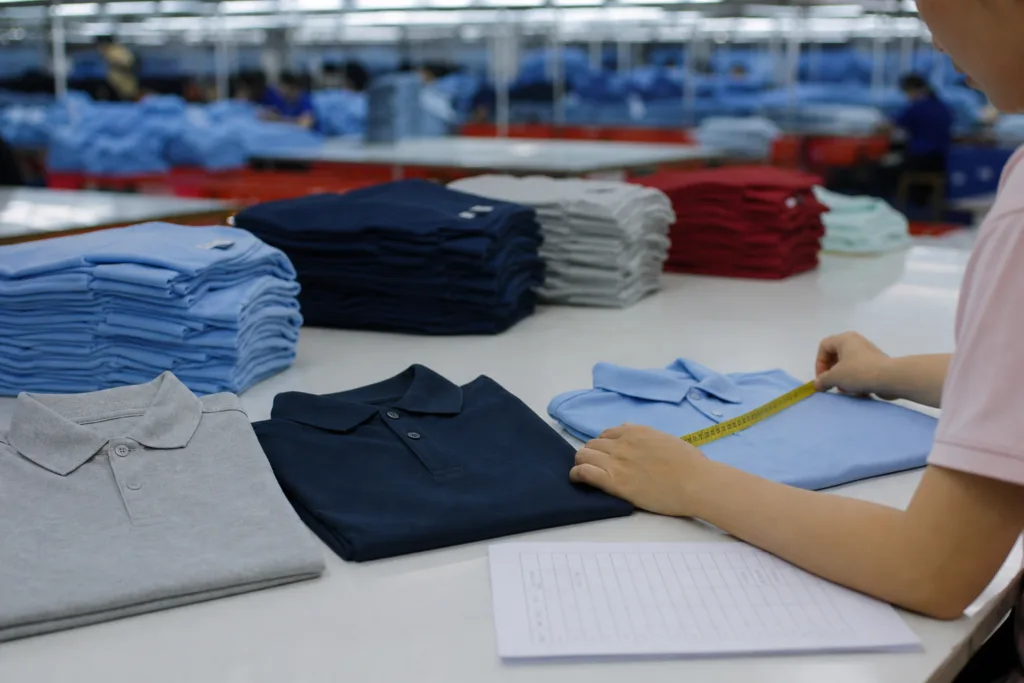
Choose a factory that can connect product development, material control, line execution, and inspection into one clear system. That matters more than generic promises because polo quality depends on many small technical decisions being managed consistently.
Ask how the factory handles collar testing, placket templates, shade lot control, wash shrinkage, embroidery approval, first article sign-off, and random final inspection. If the answers are specific, process-based, and easy to verify, the factory is more likely to deliver stable bulk results.
Common polo shirt production problems are manageable when prevention starts early. For private label brands, sourcing teams, and uniform buyers, the best outcomes usually come from a manufacturer that treats sample approval, incoming inspection, first article review, in-process QC, and final inspection as connected control points rather than isolated tasks.
FAQs
Why are polo shirts harder to produce consistently than basic T-shirts?
Polo shirts are harder to control because they combine knit fabric with structured details such as collars, plackets, buttons, and often chest logos. Those features create more opportunities for distortion, alignment problems, and measurement inconsistency, so the factory needs tighter controls during sampling, sewing, and finishing.
What is the biggest cause of polo shirt production problems in bulk orders?
The biggest cause is usually weak control between sample approval and mass production rather than one isolated sewing defect. When fabric behavior, shrinkage, logo application, collar construction, and measurement standards are not locked clearly before cutting, defects can spread quickly across the order.
How can buyers check if bulk polo fabric matches the approved sample?
Buyers should compare the bulk fabric against a sealed approved swatch for composition, GSM, color, texture, and wash behavior before production moves too far forward. It also helps to confirm whether the approved sample used the same bulk fabric source or only a development substitute.
When should embroidery be approved for custom polo shirts?
Embroidery should be approved before bulk production on the actual garment fabric, not only from a digital mockup. This allows the buyer and factory to confirm placement, stitch clarity, backing choice, thread color, and whether the logo causes puckering or distortion on the polo body.
What measurements should be watched most closely on polo shirts?
The most important measurements usually include chest width, body length, shoulder width, sleeve length, sleeve opening, collar size, and placket length. These points affect both fit and visual balance, so they should be checked during pre-production, first article review, and final inspection.
How do manufacturers reduce claims after polo shirt shipment?
Manufacturers reduce claims by documenting approvals, checking materials before cutting, inspecting first articles, monitoring sewing and finishing during production, and completing final random inspection before shipment. Good records also help both sides review any issue quickly if a claim appears after delivery.