




Choosing the right polo shirt fabric starts with the end use, not just the fabric name. If you are comparing options for staff uniforms, golf apparel, workwear, or promotional giveaways, the same polo pattern can perform very differently depending on fiber content, knit construction, GSM, finish, and decoration method. In our manufacturing experience, buyers who understand how to choose polo shirt fabric by use case usually get better wear performance, more consistent branding results, and fewer problems during bulk production.
If your project is still at the supplier comparison stage, it helps to review polo shirt manufacturing options with fabric capability in mind. For B2B polo programs, the right manufacturing support should cover fabric selection, sampling, logo application planning, collar and placket construction, private label details, and bulk quality control so the final garment fits the actual wearing environment instead of looking good only on the first sample.
The challenge is that “good polo fabric” means different things for different buyers. A corporate office may want a clean surface, stable collar, and low-maintenance care. A golf brand may prioritize stretch, moisture management, and a softer performance hand feel. A workwear buyer often needs durability through repeated washing, while a promotional order may focus more on acceptable presentation value at controlled cost.
This guide explains how we evaluate polo fabrics for those different scenarios and what buyers should check before approving samples. The goal is practical: help you choose a fabric direction that matches budget, appearance, comfort, and production reliability.
Why the same polo fabric does not suit every order
The short answer is that fabric performance is situational. A cotton-rich pique that looks excellent in a reception team uniform may not be the best choice for hot-weather golf use, and a lightweight promo polo may not hold up well in industrial laundering or heavy daily wear.
From our production perspective, we first ask how the polo will be worn, how often it will be washed, what climate it will be used in, and what branding method is required. Those four questions usually eliminate unsuitable fabrics very quickly.
| Order scenario | Main fabric priority | Secondary priority | Common risk if chosen badly |
|---|---|---|---|
| Corporate uniforms | Neat appearance and comfort | Easy care and collar stability | Garment looks untidy after repeated wear |
| Golf polos | Breathability and movement | Stretch and quick drying | Fabric feels heavy or restrictive |
| Workwear polos | Durability and wash resistance | Color retention and shape holding | Fast wear-out or fading in service |
| Promotional polos | Cost control and branding readiness | Light comfort and acceptable finish | Fabric feels too cheap or prints poorly |
Key takeaway: The right polo fabric is the one that performs well in the buyer’s real use environment, not the one with the most appealing fabric name on a quotation sheet.
The four most common polo order scenarios buyers compare
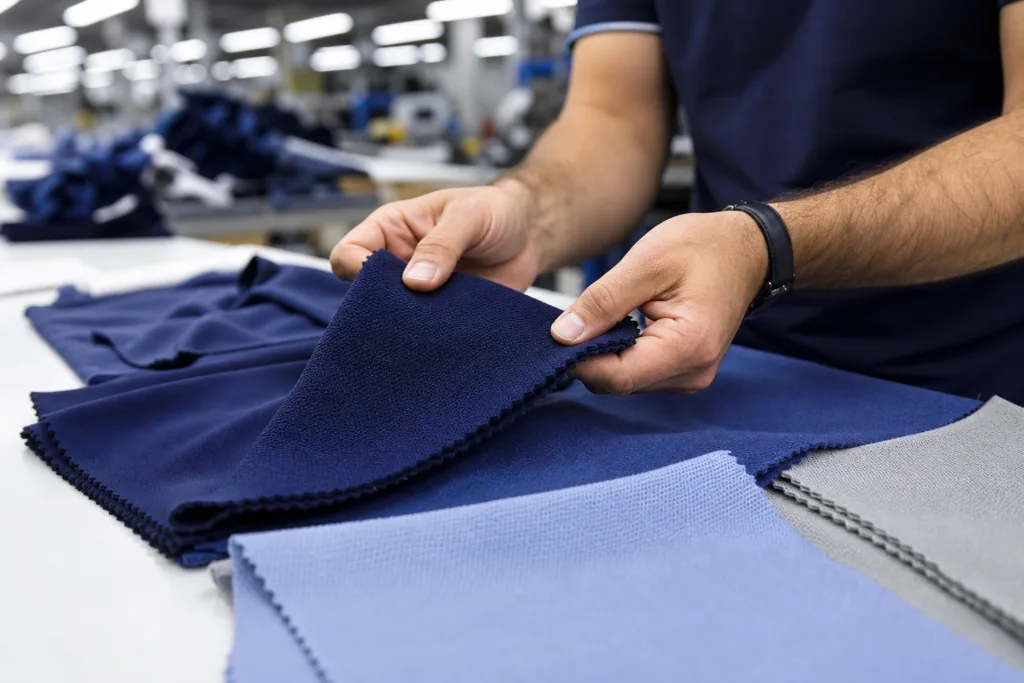
Corporate polos
Corporate uniforms usually need a more polished look than a casual giveaway polo. Buyers often want a balanced fabric that looks structured enough for front-desk, retail, sales, hospitality, or office teams, but still feels comfortable for all-day wear.
This is where custom corporate polo shirt development often focuses on the details around surface cleanliness, placket appearance, collar support, and anti-wrinkle performance rather than on sporty features alone.
Golf polos
Golf polos are movement-driven garments. Players and golf brands usually want better moisture handling, lower cling, and more stretch recovery than a standard uniform polo. Softness matters too, because the garment is worn for long hours and often in warm conditions.
For those projects, custom golf polo shirt production usually benefits from testing several performance knit options rather than choosing only by composition label.
Workwear polos
Workwear polos need to survive repeated use and washing. Fabric must hold shape, maintain color reasonably well, and resist excessive pilling or abrasion. In many cases, function matters more than a luxury hand feel.
That is why work polo shirt manufacturing support typically includes more discussion about durability testing, seam strength, stain visibility, and replacement consistency across reorders.
Promotional polos
Promotional polos are usually cost-sensitive, but they still need to present your brand acceptably. Buyers may need a fabric that is light, easy to decorate, and efficient for larger quantities. The best choice is not always the cheapest fabric per kilogram, because poor print behavior or unstable sizing can create hidden cost.
What buyers should compare before choosing polo shirt fabric
When buyers ask us how to choose polo shirt fabric, we usually break the decision into practical checkpoints instead of starting with fiber names. That makes comparison easier across supplier quotations and sample rounds.
- Comfort: softness, breathability, and whether the fabric feels dry or clingy on the body
- Durability: resistance to abrasion, pilling, shrinkage, and repeated washing
- Structure: whether the knit gives enough body for the required brand image
- Appearance retention: collar stability, placket neatness, and surface smoothness after wear
- Color performance: colorfastness in washing, sweat exposure, and sunlight when relevant
- Decoration compatibility: whether the fabric supports embroidery, screen printing, heat transfer, or sublimation cleanly
- Care needs: wrinkle resistance, drying speed, and ease of maintenance for end users
For performance-sensitive programs, buyers should evaluate fabric with testing logic, not hand feel alone. Standards-based properties such as pilling, abrasion, dimensional change, and colorfastness are commonly assessed through ASTM textile testing standards for abrasion, pilling, shrinkage, and colorfastness, which is useful when comparing fabrics intended for different service conditions.
How to choose corporate polo shirt fabric
For corporate use, the best fabric direction is usually one that balances presentation and practicality. Buyers often do well with cotton-polyester blends or refined polyester performance knits that keep a neat look, resist wrinkles better than pure cotton, and hold color more consistently across repeat washes.
Pique is common here because it gives visual texture and a classic polo identity. But not every pique is equal. Some are crisp and structured, while others feel coarse or too open. If the role is customer-facing, we usually suggest checking whether the fabric keeps the collar and placket area tidy without feeling stiff.
Corporate buyers should pay attention to:
- Whether the surface looks clean enough for embroidery placement
- How the collar fabric and body fabric work together
- Whether the shirt becomes transparent in light colors
- How much shrinkage is expected after washing
- Whether the fabric creases heavily during daily wear
A common safe range for office and team uniforms is a medium-weight knit with enough body to look substantial, but not so heavy that the wearer overheats indoors or during commuting.
Best fabric directions for golf polo shirt fabric
Golf polos usually perform best with lightweight to medium-weight performance knits that offer breathability, quick drying, and some stretch. Polyester-rich blends, often with spandex, are common because they help manage movement and moisture better than many standard cotton constructions.
Knit structure matters here as much as fiber content. Research on moisture management and knit-structure performance in polo shirts supports what we often see in sampling: yarn type and knit construction can change air permeability, drying behavior, and next-to-skin comfort significantly, even when two fabrics appear similar on a spec sheet.
For golf use, we usually recommend comparing swatches while asking these questions:
- Does the fabric stretch and recover cleanly at the shoulder and upper back?
- Does the inside feel smooth enough for direct skin contact in warm weather?
- Will the knit snag easily in active use?
- Does the fabric hold a premium look after logo application?
- Will the chosen color show sweat or cling too obviously?
Buyers should also remember that very soft fabrics can sometimes lose structure at the collar if the collar design is not engineered properly. Fabric and trim decisions must be made together.
How to choose work polo shirt fabric
For workwear, durability usually comes first. That does not always mean choosing the heaviest fabric, but it does mean selecting a knit and blend that can tolerate frequent laundering, repeated wear, and a more demanding environment.
Polyester-cotton blends are often practical for this segment because they can combine acceptable comfort with stronger color retention and lower shrinkage risk than 100% cotton. In some work settings, a denser knit with a firmer hand feel also helps the garment look more consistent over time.
Areas to examine carefully include elbow abrasion, side seam distortion, collar curling, and pilling on friction points. If the buyer expects the polo to be part of a repeat program, consistency across future fabric lots matters as much as the first bulk order.
In our apparel production work, we also advise buyers to discuss stain visibility early. Dark colors may hide dirt better but can show fading if dye performance is weak. Light shades may fit the brand image better but may need more careful evaluation for transparency and visible staining.
How to choose promotional polo shirt fabric
Promotional polos are usually selected under budget pressure, but the garment still needs enough value to represent the brand well. A low-cost fabric can work if the order purpose is short-term event use, but it still should pass basic checks for fit stability, decoration readiness, and acceptable hand feel.
This is where printed polo shirt customization options become important, because some cost-driven fabrics print better than they embroider, and some lightweight knits can distort if the logo area is not stabilized correctly.
For promotional orders, the best approach is to define the minimum acceptable standard first:
- How neat does the polo need to look on first wear?
- How many wash cycles matter for the campaign?
- Is the logo printed, embroidered, or heat applied?
- Does the buyer need many colors or only core shades?
- Is the order a one-time event or a repeat item?
Key takeaway: For promotional polos, the right fabric is often the one that reaches the target image and branding need efficiently, not the one with the absolute lowest quoted material cost.
Fabric construction comparison for polo shirts
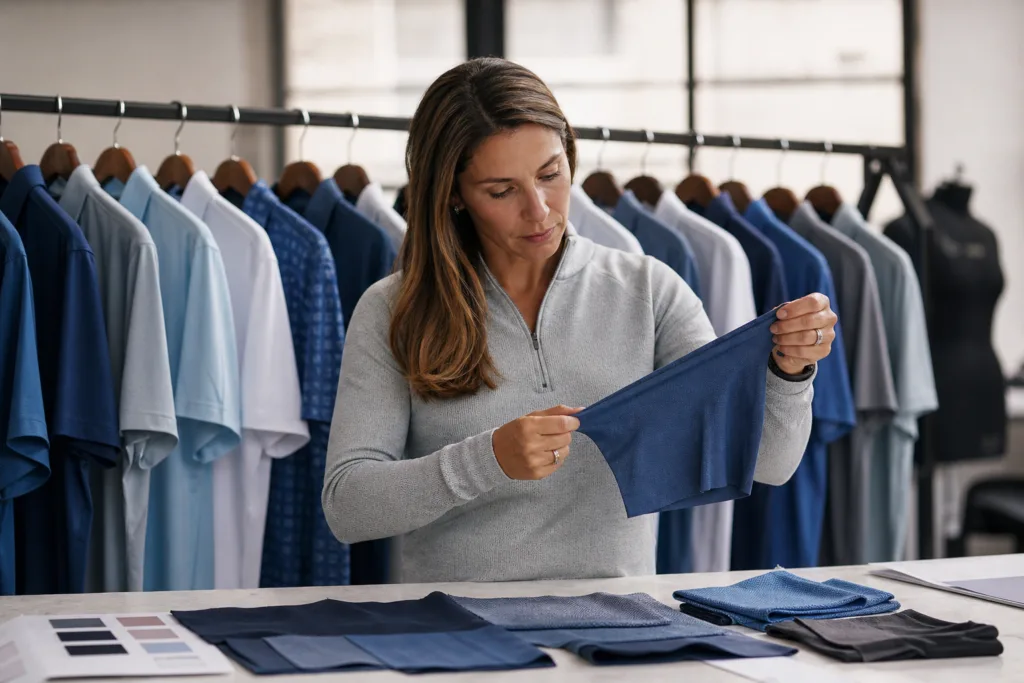
Fabric construction changes both appearance and performance. Two polos with the same cotton-poly blend can behave differently if one is pique and the other is jersey.
| Construction | Typical feel | Best suited for | Watch-outs |
|---|---|---|---|
| Pique | Textured, classic polo look | Corporate, uniforms, some workwear | Can feel coarse if yarn quality is low |
| Jersey | Smoother, softer surface | Promotional, casual corporate, some golf | May show body outline more easily |
| Interlock | Dense, smooth, stable | Premium corporate, refined performance polos | Usually costs more and can feel warmer |
| Performance knit | Light, technical, quick-dry | Golf, active uniforms | Must confirm snag resistance and logo method |
| Poly-cotton pique | Balanced structure and practicality | Corporate, workwear | Blend ratio affects softness and shrinkage |
| Poly-spandex knit | Stretchy, sporty | Golf and movement-focused polos | Needs good recovery and heat-safe finishing |
When buyers compare quotations, they should ask for knit construction details, not just composition. A fabric listed simply as “65/35 polo fabric” does not tell you enough about appearance, breathability, or branding performance.
How fiber choice changes comfort and performance
Cotton
Cotton offers natural softness and familiarity. It is often preferred where a classic hand feel matters. But pure cotton can shrink more, dry more slowly, and hold wrinkles more easily than many blends.
Polyester
Polyester generally improves color retention, shape stability, and drying speed. It is widely used for golf and workwear polos, especially when easy care is important. The trade-off is that low-grade polyester can feel less natural against the skin.
Spandex
Spandex adds stretch and movement support. Even a small percentage can noticeably improve golf or active uniform comfort. However, buyers should confirm recovery performance, because stretch without recovery can make a polo lose shape over time.
Blends
Blended fabrics are often the most commercially practical because they balance comfort, durability, and cost. At Ninghow, many polo programs end up using blends because they reduce risk across both wear and production.
GSM and fabric weight: what buyers should actually look for
GSM affects drape, opacity, structure, and temperature comfort. Lighter GSM may feel cooler and be more cost-efficient, but it can also feel less substantial or become too transparent in light colors. Higher GSM can improve body and durability perception, but may feel warm or rigid if the knit is too dense.
For technical comparison, buyers should make sure GSM is being measured consistently using recognized fabric weight and GSM measurement standards such as fabric weight and GSM measurement standards. This matters because sample swatches, finished garments, and conditioned fabric can show differences if the method is unclear.
| GSM direction | General effect | Best use case | Possible issue |
|---|---|---|---|
| Lightweight | Cooler, lighter, lower material use | Promotional, hot-weather golf | Less opacity or structure |
| Medium weight | Balanced drape and coverage | Corporate, golf, general uniforms | Needs good finishing to avoid average feel |
| Higher weight | More body and perceived durability | Workwear, structured corporate | Can feel warm or bulky |
In sample review, GSM should never be judged alone. A lighter, well-engineered performance knit can outperform a heavier basic knit for golf, while a heavier workwear fabric may still fail if pilling or shrinkage control is poor.
What affects fit, shape retention, and final appearance
Fabric choice directly affects how the polo fits and how it keeps that fit after washing. Some fabrics drape close to the body, while others hold a more boxy shape. Neither is automatically right or wrong; the answer depends on the target customer and brand image.
Buyers should examine:
- Collar curling after washing
- Placket waviness after sewing and pressing
- Body torque or twisting
- Shrinkage in body length and chest width
- Pilling under arm and side seam areas
- Whether the fabric hangs cleanly in the chosen fit block
These issues often appear only after wash testing. A polo that looks perfect before laundering may reveal instability later, especially if the knit finishing is inconsistent.
Which decoration methods work best on different polo fabrics
Decoration compatibility should be decided with the fabric, not after it. The same logo can look premium on one fabric and problematic on another.
| Decoration method | Works well on | Best for | Potential concern |
|---|---|---|---|
| Embroidery | Pique, interlock, medium-weight blends | Corporate logos, long-term uniforms | Can pull lightweight fabric |
| Screen printing | Smooth jersey, cotton blends, some poly blends | Promotional or larger graphic areas | Texture can affect print clarity |
| Heat transfer | Performance knits, smooth synthetic fabrics | Names, numbers, small logos | Heat sensitivity must be checked |
| Sublimation | Polyester-rich light-color performance fabric | All-over or high-detail graphics | Not suitable for cotton-rich fabrics |
If the buyer wants a very small chest logo, embroidery is often the safe choice for corporate programs. If the project needs sharp multicolor branding on a cost-sensitive promo polo, printing may be more efficient. The main point is to confirm decoration behavior on the exact sample fabric.
Easy-care expectations for bulk polo orders
Most B2B buyers need easy care, even if they do not state it first. End users usually want polos that wash simply, dry reasonably fast, and hold shape without special treatment.
For bulk programs, we usually recommend discussing these care expectations before fabric approval:
- Expected shrinkage tolerance
- Whether wrinkle resistance is required
- If quick drying is important for daily rotation
- Whether industrial or home laundering applies
- If the buyer expects anti-pilling or anti-snag performance
These requirements influence not only fabric choice, but also finishing, pattern allowance, and trim selection.
Buyer checklist for matching polo fabric to budget and use
If you need a simpler decision path, use this checklist before final sampling:
- Define the real wearing environment: indoor, outdoor, active, or industrial
- Set the priority order: image, comfort, durability, branding, or cost
- Choose the decoration method before fabric is locked
- Ask for composition, knit type, and GSM together
- Review light and dark color behavior separately
- Wash test the sample before bulk approval
- Confirm shrinkage, pilling, and colorfastness expectations in writing
- Check whether the fabric is realistic for repeat orders
Key takeaway: The best sourcing decisions happen when budget, brand image, and service conditions are defined together instead of one by one.
Common sourcing mistakes when selecting polo shirt fabric
The most common mistake is choosing by hand feel alone. Softness can be attractive in the showroom, but it does not tell you enough about wash durability, collar performance, or logo compatibility.
Other frequent mistakes include:
- Approving a body fabric without confirming collar and cuff matching quality
- Comparing prices without matching GSM and knit construction
- Ignoring how light colors affect opacity
- Using embroidery on fabric that is too light or unstable
- Skipping wash tests because the pre-production sample looks fine
- Assuming all polyester performance polos have the same moisture behavior
From a manufacturer standpoint, many avoidable disputes come from unclear sample approval standards rather than from sewing issues alone.
What to ask a custom polo shirts manufacturer before sampling approval
Before approving fabric or moving into bulk production, buyers should ask direct technical questions. Clear answers make future quality control much easier.
- What is the exact composition, knit construction, and GSM?
- What shrinkage range should be expected after washing?
- How does the fabric perform for pilling and colorfastness?
- What logo methods are recommended on this fabric?
- Will the same fabric be available for repeat orders?
- Is the collar made from the same fabric family or a separate rib source?
- What sample changes may affect MOQ or lead time?
When a buyer is unsure, we usually advise approving the fabric only after all of those points are documented on the sample or development sheet.
How to test polo fabric before bulk production
Sample evaluation should include both visual and practical checks. In our experience, bulk risk drops significantly when buyers treat fabric approval as a performance decision instead of a color-only approval.
- Check hand feel in the real use climate if possible
- Wash the sample and measure dimensional change
- Observe collar and placket after laundering
- Rub stress points to assess pilling tendency informally
- Review logo area distortion after decoration
- Compare dark and light shades for appearance consistency
- Confirm that the approved sample reflects the intended bulk finish
This stage is especially important for private label programs where fit, packaging, labels, and brand presentation all need to align before quantity commitment.
Final selection guide: recommended fabric direction by order type
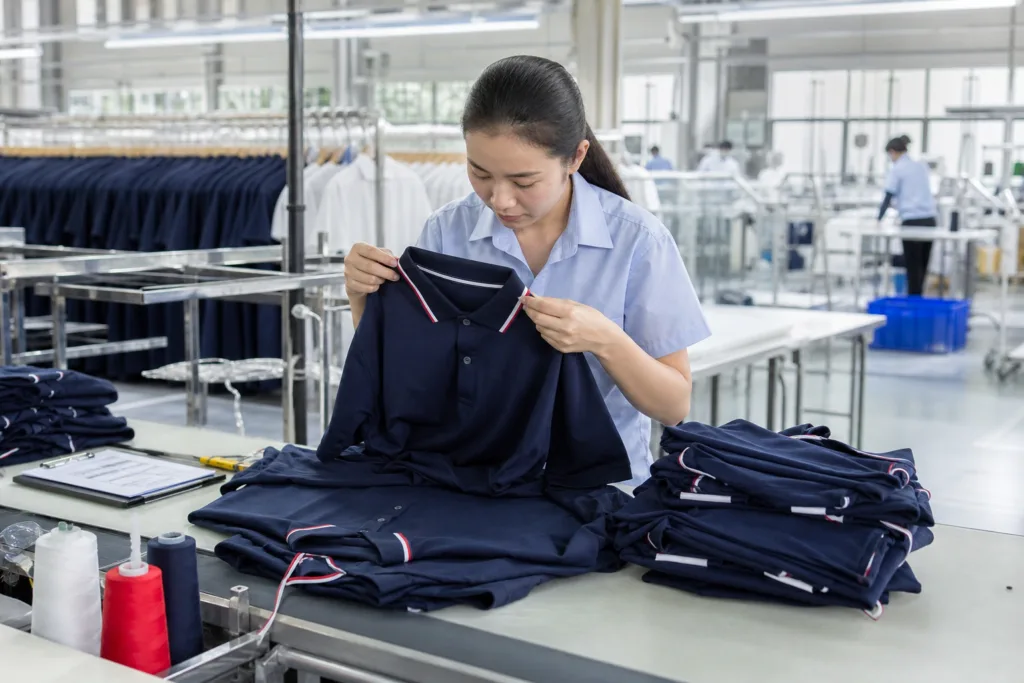
For corporate polos, medium-weight pique or refined poly-cotton blends are often a reliable balance of structure, comfort, and easy care. For golf polos, lightweight performance polyester blends with controlled stretch are usually the better direction. For workwear polos, durable poly-cotton or stable synthetic blends often make more sense than soft-first fabrics. For promotional polos, lightweight cost-efficient knits can work well if branding and first-wear appearance are tested properly.
That is the practical answer to how to choose polo shirt fabric: match the fabric to the job, then confirm it through sampling, testing, and decoration review. When buyers do that early, the final polo program is easier to cost, easier to repeat, and much less likely to disappoint in bulk.
If your team is developing custom polos, prepare your target use case, logo method, size direction, care expectations, and reorder plans before requesting samples. That gives the factory a much better starting point for recommending the right fabric and building a stable production plan.
FAQs
What is the best fabric for corporate polo shirts?
The best fabric for corporate polo shirts is usually a medium-weight pique or smooth blend that looks neat, feels comfortable, and stays presentable after repeated washing. Buyers should prioritize collar stability, wrinkle resistance, embroidery friendliness, and a surface that supports a polished brand image for daily staff use.
Are polyester polo shirts better than cotton for golf?
Polyester-rich polo shirts are often better for golf when moisture management, quick drying, and movement comfort are the priority. Cotton can feel natural and soft, but many golf buyers prefer polyester or poly-spandex performance knits because they usually handle heat, perspiration, and repeated active wear more effectively.
What GSM is good for a polo shirt?
A good GSM for a polo shirt depends on the use case, because lighter fabrics suit hot-weather or promotional use while medium to higher weights often give more structure for corporate or workwear programs. Buyers should compare GSM together with knit construction, opacity, hand feel, and wash performance instead of treating one number as a universal quality benchmark.
Is pique or jersey better for polo shirts?
Pique is often better when the buyer wants a classic polo look with more texture and structure, while jersey is often better when a smoother, softer, or more print-friendly surface is needed. The better choice depends on whether the order prioritizes corporate appearance, promotional comfort, golf performance, or decoration behavior.
How do I test polo fabric before placing a bulk order?
You should test polo fabric before placing a bulk order by reviewing hand feel, washing the sample, checking shrinkage, observing collar and placket shape, and confirming how the logo method behaves on the actual fabric. Even a simple sample wash test can reveal issues with pilling, distortion, opacity, and dimensional stability before they become expensive bulk problems.
What should I ask a polo shirt manufacturer before approving a sample?
You should ask for the exact composition, knit type, GSM, expected shrinkage, decoration recommendation, and whether the fabric can be repeated consistently in future orders. Buyers should also confirm collar construction, colorfastness expectations, and any sample changes that could affect MOQ, price, or production lead time.