


Introduction: Balancing Uniformity and Freshness in Gym Set Collections
For brands building coordinated gym set collections, achieving genuine harmony across leggings, bras, shorts, and tops requires careful planning. The challenge isn’t only about creating matching elements – it’s about avoiding the pitfall of repetitive looks while ensuring brand identity, production efficiency, and clear assortment differentiation. As a garment manufacturer serving brands and sourcing teams, Ninghow understands how thoughtful development of matching gym sets across multiple colorways and fabric platforms can fuel commercial success. This guide dives into practical tactics for building a collection that’s visually unified, versatile, and anything but monotonous.
For readers comparing manufacturing options, a useful next step is to find the right manufacturers for your gym wear. This resource helps clarify factory capabilities, custom category scope, and production references for those preparing their next sourcing move.
Why Gym Set Collections Tend Toward Repetition
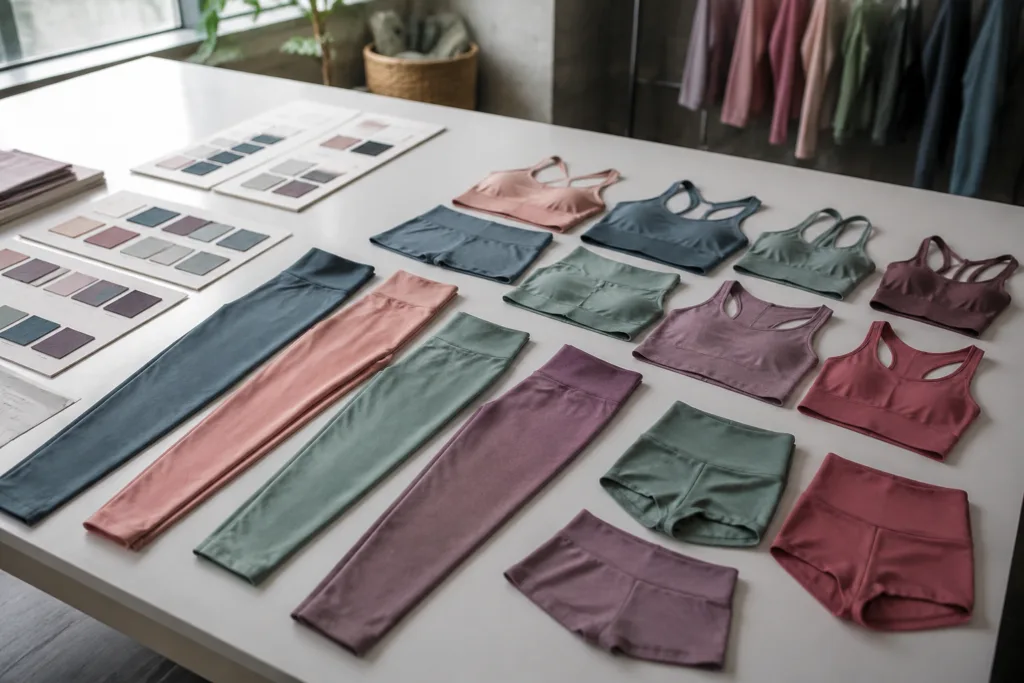
Many brands fall into the trap of producing matching gym sets that feel uninspired or repetitive. Copy-paste color schemes, little style variation, or fabric choices that blend into each other can make the collection blend into the background for buyers and consumers. Understanding this tendency is the first step in breaking the cycle.
Core Pillars for Distinctive, Coordinated Gym Sets
Building a standout range requires balancing several pillars: color theory, fabric platform, silhouette variation, and branding strategy. These elements are at the heart of purposeful collection planning.
Collection Mapping: Leggings, Bras, Shorts, and Tops
Successful gym sets target a full range of coordinates. Start by mapping how leggings, sports bras, shorts, and tops interact across colorways and fabrics. Distinct but compatible pieces allow for easy mix-and-match while giving the collection depth.
Colorway Strategy for Lasting Visual Interest
A strong colorway plan lifts the entire collection. Brands should select 3–6 signature colors per season, deploying them thoughtfully across garments rather than flooding every piece with every color. For example, reserve bold colors for hero items (like a statement bra), while mainstay pieces (leggings, shorts) run in versatile tones with limited pops.
Color Placement: Accent vs Full-Garment
Strategic accent placement – such as piping, waistband inserts, or logo details – can unify sets across the collection without making every piece identical. This allows buyers more flexibility in mixing items while preserving a matching feel.
Fabric Platform Diversity: Beyond Single Material
One of the most impactful ways to combat repetitiveness is introducing fabric platform diversity. Rather than relying exclusively on basic poly-spandex blends, brands can add textured knits, mesh panels, or organic cotton to their gym set strategy.
Platform Rotation: When and Why to Change Fabrics
Switching between high-compression and soft-stretch fabrics based on garment function ensures sets coordinate but don’t blend together visually or tactilely. For example, sports bras can use power mesh overlays while leggings stick to brushed polyester for comfort.
Silhouette and Pattern Variation Inside Matching Sets
While keeping the core fit standards, brands can leverage subtle silhouette shifts to add depth to their gym sets. Twist-front bras, high-coverage tops, or cropped-length shorts offer visual differentiation within a matching color/fabric theme.
Patternplay: Paneling, Side Inserts, and Seam Lines
Creative panel layouts, asymmetrical seaming, and side inserts can provide a signature look even with matching color/fabric. Factory teams often experiment with pattern cutting during sampling to maximize uniqueness without affecting production cost.
Branding Tactics: Logos, Labels, and Coordinated Detailing
Effective branding is another layer of coordination that avoids repetition. Brands can alternate logo placements (front, side, back), use woven labels, or implement tonal embroidery for subtle differentiation across a matching set.
Collection Planning: Cross-Style Compatibility Grids
Build a compatibility grid as part of collection planning. List all core garments and map which colorways, fabrics, and trims will coordinate without becoming visually repetitive. This helps allocate both design and production resources.
Production Efficiency: Minimizing Complexity Without Sacrificing Variety
Brands often worry that diverse, coordinated collections will increase factory complexity and cost. With thoughtful planning, however, grouping production by shared trims or fabric platforms, and rotating style details, can preserve efficiency while boosting variety.
Batch Scheduling: How Factories Efficiently Produce Varied Sets
Ninghow, as a manufacturer, frequently recommends scheduling matching sets with grouped color/fabric runs and then applying differentiated trims or pattern tweaks in the later stages. This supports visual diversity with minimal lead-time impact.
Samples and Prototyping: Testing for Harmony and Difference
Early sampling allows brands and factories to check the harmony-versus-difference balance. Practical feedback on silhouette, fit, and panel variety lets teams fine-tune before full production begins.
Coordinating Across Multiple Collection Drops
For brands planning multiple drops, carry forward signature elements (such as logo, seam detail, or key color) to tie the timeline together. Introduce new accent colors, prints, or trims in each drop to maintain freshness.
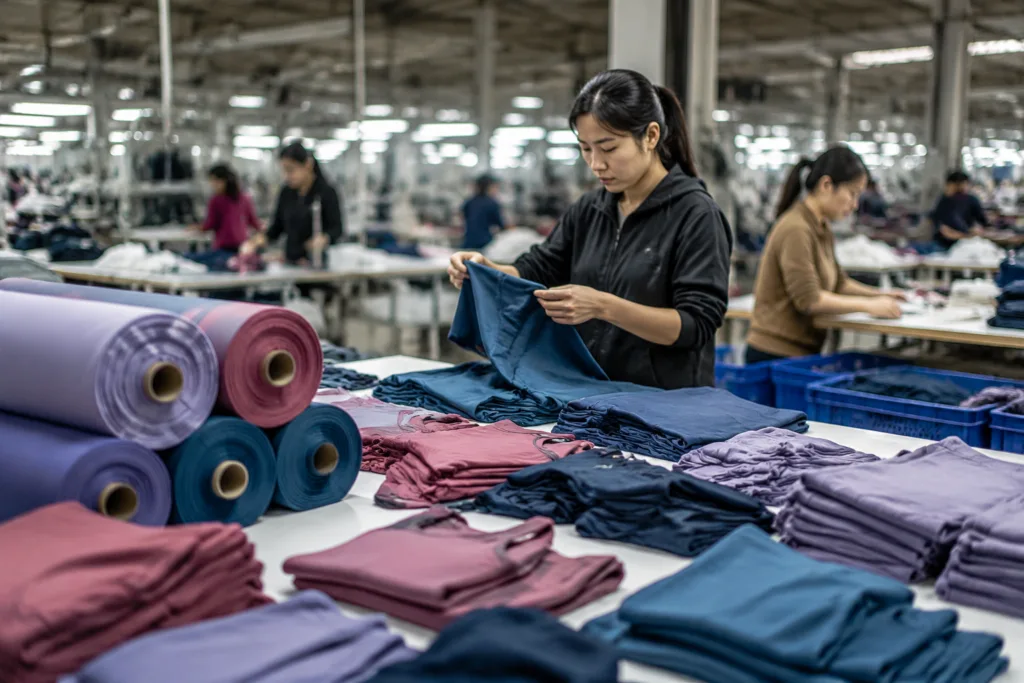
Efficient Bulk Production: Working with Factory Partners
Close collaboration with manufacturers ensures collection planning and production schedules align. Factories like Ninghow emphasize the value in solid tech packs, clear compatibility maps, and realistic MOQ expectations when producing coordinated but varied gym sets.
Trend Integration: Adding On-Brand Prints and Graphics
Brands can incorporate new prints (floral, geometric, gradient) for limited-edition matching sets. Before launching, it’s helpful to explore ideal printing methods to ensure production feasibility and durability.
Lean Inventory Planning: SKU Count vs Collection Depth
Balance collection depth with SKU control. By rotating features (like length, pattern, or color detail), brands can maintain a fresh appearance without inflating inventory costs or complexity.
Sustainable Coordination: Eco-Friendly Materials and Processes
Integrating organic cotton, recycled polyester, and biodegradable trims gives coordinated gym sets an edge for sustainability. You can learn about sustainable gym clothing development to plan a greener matching assortment that doesn’t compromise style or distinctiveness.
Visual Coordination: Lookbooks and Line Sheets for Buyers
Compelling lookbooks and line sheets outline the collection’s compatibility, colorway thinking, and variation planning. Use visual grids to demonstrate mixing possibilities without repetition, helping buyers grasp the cohesive vision.
MOQ and Lead Time: Balancing Customization Across Pieces
Factories set minimum order quantities to optimize production flow. Brands should prioritize signature color/fabric combos for core styles and allocate smaller MOQs for specialized pieces (like printed shorts). Lead times are typically most predictable with coordinated runs.
Quality Control: Maintaining Consistency and Differentiation
QC teams pay attention to color matching, fabric stretch, logo application, and seam durability across a coordinated range. It’s important for manufacturers to maintain consistency while supporting design-driven differentiation within matching sets.
Packing and Shipping: Coordinating Presentation with Collection Planning
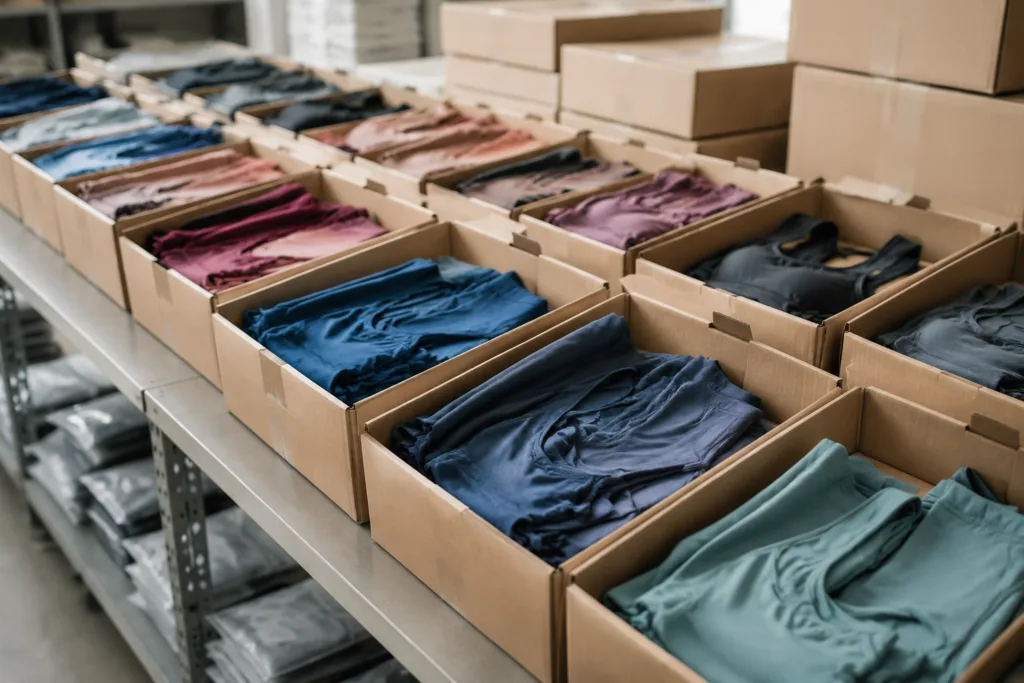
Matching gym sets require coordinated packaging so buyers and stores can easily display compatible pieces. Clear labeling and sorting by colorway and platform, rather than only by style, prevents confusion and improves perceived collection value.
Global Distribution: Adapting Coordination Strategies for Different Markets
Brands targeting multiple regions may need to adjust color palette or silhouette strategies based on local preferences. Factories often consult on how to develop matching sets without repeating the same visuals across markets, adapting collection grids for global reach.
How to Develop Matching Gym Sets Without Making the Collection Look Repetitive
To truly achieve coordinated yet distinctive gym sets, start with cross-category compatibility grids, strategic colorway allocation, and varied fabric platforms. Use visual accents, panel layouts, and branding tweaks to differentiate pieces inside matching lines. Factory teams should schedule production in grouped batches for efficiency, apply creative pattern variations, and test samples early. Balance SKU depth with inventory control, integrate sustainable materials, and adapt coordination strategies for each market. The result: cohesive collections with fresh appeal that support both buyer confidence and production practicality.
Conclusion: Building Unique Gym Sets That Stand Out
Brands that prioritize thoughtful planning, efficient production, and creative coordination can build gym sets that are instantly recognizable and commercially strong – never repetitive. Leveraging colorway strategies, fabric variation, and subtle design tweaks across core garments gives your collection both unity and distinction. Working closely with trusted manufacturers ensures smooth bulk production and quality control. By mapping compatibility grids, planning lean SKUs, and listening to buyer feedback, your collection evolves in fresh directions every season.
Frequently Asked Questions
How can brands avoid gym set repetition?
Focus on varied color placements, diverse fabric platforms, and subtle silhouette differences. Strategic collection mapping keeps the range visually fresh.
What’s the best way to coordinate matching sets in bulk manufacturing?
Group production by shared fabrics or trims, then differentiate through style details, print accents, or branding as scheduling allows.
Are sustainable materials easy to integrate in matching gym sets?
Yes, with proper planning. Organic cotton and recycled polyester coordinate well across varied styles without sacrificing collection harmony.
How important is prototyping for avoiding repetitive collections?
Extremely. Sampling lets brands and manufacturers test pattern, color, and fit differences to ensure the collection feels distinctive.
Can brands mix prints with solids without losing cohesion?
Absolutely. Reserve prints for hero pieces and integrate accents on solid items for balance. Compatibility grids help plan these combinations.
What’s the role of MOQs in coordinated gym sets?
Minimum order quantities support efficient production. Prioritize MOQs for core colorways and allocate smaller runs for specialty or trend items.