



SERP Analysis Summary for cheap polo shirts, wholesale polo shirts, bulk polo shirts, cheap polos, bulk order polo shirts
Dominant Content Types: Most top results are product landing pages from wholesale suppliers, factory-style category pages, and a smaller number of buyer guides. A few pages are comparison-based shopping pages with filters, while some are simple SEO-driven sales pages.
Common Formats: The strongest pages usually include product grids, basic specification tables, MOQ details, and short FAQ blocks. Long-form educational content is less common, but where it appears, it usually covers sizing, fabric choices, and bulk ordering basics.
Observed Angles: The search intent is strongly commercial. Most pages speak to buyers looking for a low price, but the better pages also explain fabric weight, print methods, and order quantities. The winning angle is practical buyer guidance with a supplier mindset, not fashion storytelling.
Cheap Polo Shirts for Bulk Orders: What Actually Drives Cost
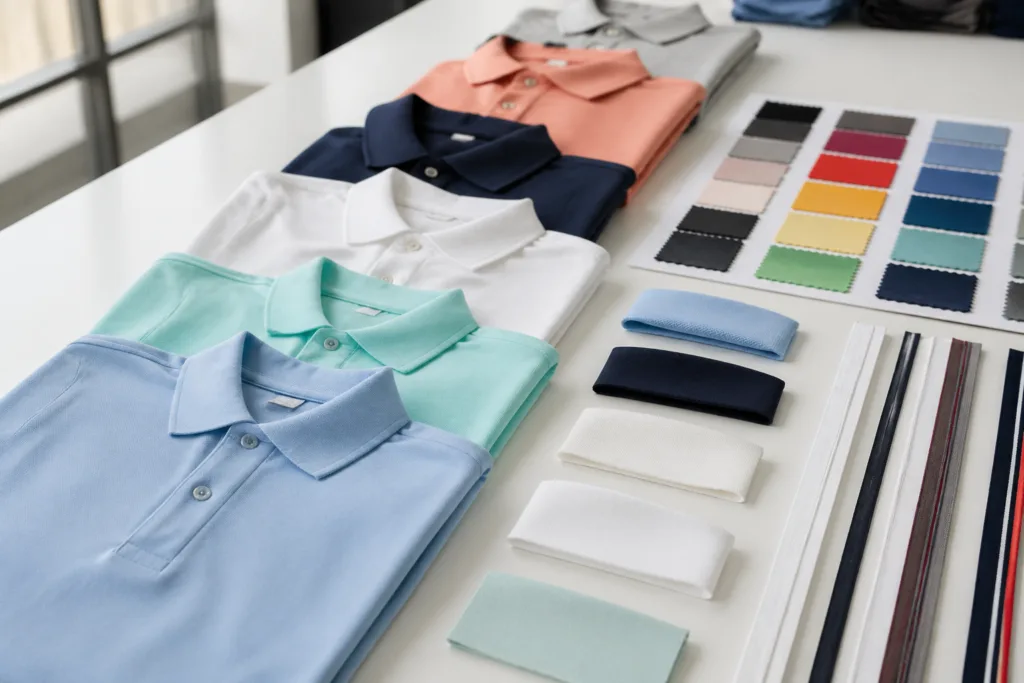
When buyers search for cheap polo shirts, they usually want one thing: a lower unit price that still looks clean, fits well, and lasts through use. From a manufacturer’s side, that balance is possible, but only if you understand what changes the price. The biggest mistake we see is treating all wholesale polo shirts as the same. They are not. Small decisions on fabric, construction, decoration, and packaging can move the cost more than many buyers expect.
In practice, the best bulk order polo shirts are not the absolute cheapest ones. They are the ones built around the right trade-offs for the job. If the shirts are for staff uniforms, event giveaways, school programs, or promotional wear, the quality target should match how often people will wear them and how far they need to travel in the supply chain. That is where smart cost control starts.
For readers comparing manufacturing options may also want to review the polo shirt manufacturer page, because a focused factory reference helps buyers judge production scope, customization range, and the level of support behind the quote.
Why the Lowest Quote Is Not Always the Lowest Cost
A low quote can hide weak stitching, poor shrinkage control, thin collars, or unstable dye lots. Those problems often show up after the order ships, when it is too late. Cheap polos that fail early can create reorders, complaints, and wasted time. So the real goal is not just a low number on paper. It is the best cost per usable shirt.
That mindset is important in bulk order polo shirts because small differences add up fast. A few cents saved on fabric can be lost if the return rate climbs. A cheaper print method can fail faster. A thinner collar may save money today but make the garment look tired after a few washes. Good sourcing means looking at total value, not just the first invoice.
The Main Cost Drivers in Wholesale Polo Shirts
Most cost changes in wholesale polo shirts come from a handful of variables. Once buyers understand these, they can build a better specification without overspending.
| Cost Driver | How It Affects Price | Budget-Friendly Move |
|---|---|---|
| Fabric composition | Poly-cotton blends are often cheaper than premium cotton | Choose a balanced blend for uniforms |
| Fabric weight | Heavier fabric uses more yarn and costs more | Pick a practical GSM, not the heaviest option |
| Dyeing | Complex shades and special dye processes raise cost | Use standard colors with stable production runs |
| Logo method | Embroidery usually costs more than simple print | Match decoration to wear life and budget |
| Packaging | Individual folding, inserts, and custom bags add labor and material | Use simpler bulk packaging where possible |
| Order structure | Too many sizes, colors, or mixed styles reduce efficiency | Consolidate the order to improve production flow |
Fabric Choices That Keep Cheap Polo Shirts Acceptable
Fabric is the biggest place to save money without damaging the final result. For cheap polo shirts, the question is not “What is the best fabric?” It is “What fabric fits the use case?” If the shirts are for daily staff wear, cotton-rich blends often give a better balance of feel, breathability, and cost. If the goal is quick-dry performance or lower shrinkage, polyester-heavy options can work well.
From a factory point of view, the safest approach is to match the fabric to the job. A restaurant uniform needs a different hand feel than a trade show giveaway. A school program may need durability and easy washing more than softness. That is why buyers should compare wholesale polo shirts by performance, not by fabric name alone.
Common Fabric Options and Their Cost Logic
- Cotton pique: Comfortable and classic, but usually higher in cost and can shrink if not controlled well.
- Poly-cotton blend: A common choice for bulk order polo shirts because it reduces cost and helps with shape retention.
- Polyester pique or jersey: Often lower cost, easy to care for, and useful for uniforms or active wear.
- Combed cotton: Smoother and cleaner in hand feel, but usually priced above standard cotton.
If you need help balancing material quality and manufacturing efficiency, Ninghow often sees buyers succeed when they keep the fabric spec simple, then tighten the details around fit and finishing. That is usually a smarter use of budget than chasing a premium fabric that the end user may not notice.
Fabric Weight and Why GSM Matters
Fabric weight, often measured in GSM, has a real impact on cost. Higher GSM usually means more material per shirt, which raises the price. But heavier is not always better. Very heavy shirts can feel hot, reduce comfort, and increase freight weight. For cheap polos used in bulk, a middle-range GSM is often the sweet spot.
Buyers should think about the wearing environment. Indoor staff may prefer lighter shirts. Outdoor teams may want slightly more body. The right answer depends on use, season, and budget. That is the kind of practical decision that keeps bulk polo shirts usable without pushing them into unnecessary cost.
Logo, Decoration, and Branding Choices in Bulk Polo Shirts
Decoration can change the quote more than many buyers expect. Embroidery, screen print, heat transfer, woven labels, and custom packaging all carry different cost levels. For bulk polo shirts, the best method depends on how the shirt will be used and how polished the final look must be.
Embroidery gives a strong corporate feel and usually holds up well, but it is slower and more expensive than a simple print. Small, clean logos often work well in embroidery. Larger graphics or multi-color designs may be better as print. The key is to avoid overbuilding the garment. Too many decorative details can turn cheap polos into expensive polos very quickly.
Best Cost-Control Rules for Decoration
- Keep logos small when possible.
- Limit the number of thread colors or print passes.
- Avoid large back prints if a chest logo is enough.
- Choose one decoration method instead of combining several.
- Standardize placement across the whole order.
We have seen many buyers reduce cost by simplifying the branding plan before production starts. A clean left-chest logo often does the job better than a complicated layout that slows production and raises risk. This is one of the easiest ways to keep wholesale polo shirts within budget while still looking professional.
How Order Structure Changes the Price of Cheap Polo Shirts
Order structure has a bigger effect than many new buyers realize. The more fragmented the order, the higher the cost tends to be. Mixed colors, mixed fabrics, many size ratios, and too many art versions all make production less efficient. Factories spend more time setting up, checking, and sorting, and that labor shows up in the price.
When buyers ask for cheap polo shirts, the best way to protect the budget is often to simplify the order. One style, one fabric, one decoration method, and a tight size ratio can lower the unit price without cutting quality. That may sound basic, but it is one of the most effective sourcing rules in bulk apparel.
Ways to Make the Order Easier to Produce
- Use fewer colors in one style.
- Keep trims and labels standard.
- Reduce size runs to the most needed sizes.
- Order deeper quantities in the same colorway.
- Confirm artwork early to avoid revisions.
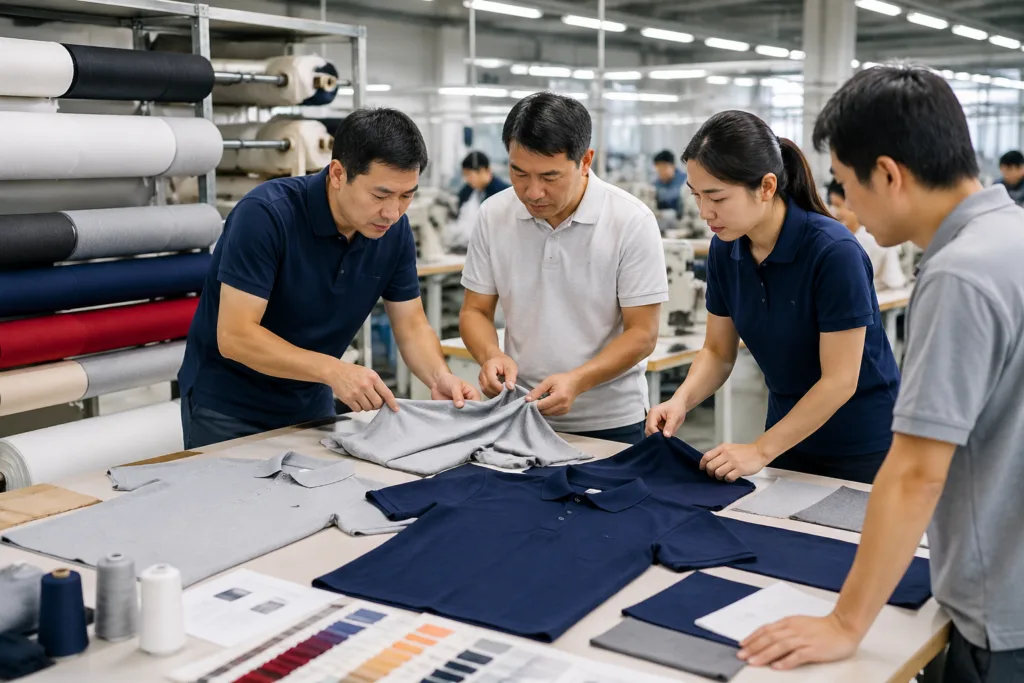
For buyers managing their first production run, the sampling process is where many cost problems are prevented. A good sample shows how the fabric, collar, fit, and branding will actually look before bulk production starts.
Packaging, Polishing, and the Hidden Costs Buyers Forget
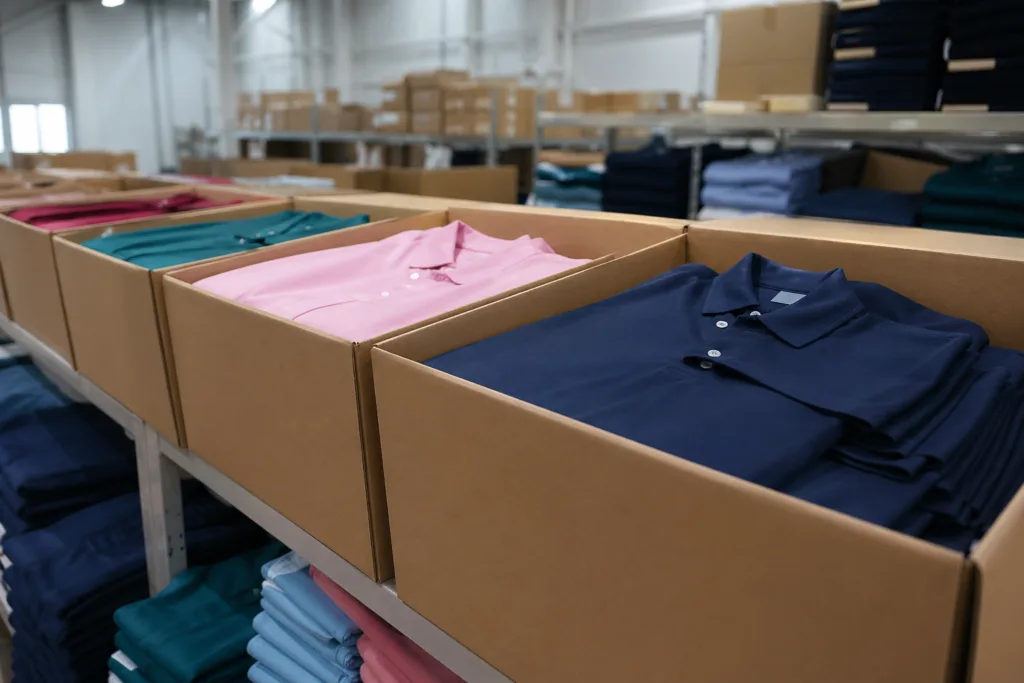
Packaging may look small, but it adds real cost across a bulk order. Individual polybags, size stickers, hangtags, tissue paper, carton marking, and carton inserts all create material and labor expenses. For cheap polo shirts, packaging should match the purpose. Retail-ready packaging is different from simple uniform packing.
If the shirts are for internal staff use or event distribution, a simpler pack-out is often enough. If the shirts are for resale, then presentation may matter more. The right move is to spend on the items that the end customer actually sees. That is how buyers keep bulk order polo shirts inside target cost without making the product look rough.
Where Packaging Can Be Simplified
- Use standard fold-and-pack methods.
- Avoid custom inserts unless they are needed.
- Keep carton labeling practical and readable.
- Combine size stickers only when necessary.
- Use basic bulk packing for non-retail use cases.
How to Lower Cost Without Losing Quality
The trick to cheap polos is not to strip everything down. It is to remove waste and keep the parts that matter. Buyers can usually lower cost without losing quality by making careful choices in five areas: fabric, weight, decoration, packaging, and order structure. That approach keeps the shirt dependable while protecting the budget.
Here is a simple way to think about it:
| Decision Area | Save Money By | Risk to Watch |
|---|---|---|
| Fabric | Choosing a practical blend | Too much shine or poor hand feel |
| Weight | Using a mid-range GSM | Too light for heavy use |
| Decoration | Keeping logos simple | Branding may look too plain if overcut |
| Packaging | Using basic packing | Less shelf appeal for retail |
| Order structure | Reducing variation | Less flexibility for mixed needs |
The best wholesale polo shirts usually come from clear priorities. If durability matters, protect the sewing and collar. If presentation matters, protect the finish and branding. If price matters most, simplify the spec and remove nonessential extras. That is the real formula for acceptable quality at a lower cost.
Quality Checks That Should Never Be Skipped
Even when the target is a budget program, some checks should stay in place. The most important ones are size accuracy, collar shape, color consistency, stitch quality, and wash performance. These are the basics that make cheap polo shirts acceptable rather than problematic.
- Check measurement tolerances before bulk cutting.
- Review shrinkage after washing.
- Inspect collar stiffness and seam balance.
- Confirm color match across production lots.
- Test logo placement before full approval.
Good factories build these checks into the process, not as an afterthought. That is also why buyers should judge a supplier by how they manage quality control, not just by the first quote. A cheap price with weak control is usually not cheap for long.
Buying Cheap Polo Shirts for Different Use Cases
Not every order needs the same quality target. The right bulk order polo shirts for a golf promotion may differ from the right shirts for a warehouse team or a school event. Use case matters because wear time, wash frequency, and brand exposure all affect what “good enough” means.
Staff Uniforms
For staff uniforms, comfort, shape retention, and color stability matter most. A mid-weight fabric with a simple logo is usually enough. The shirt should look neat after repeated washing, since this type of order is often worn often.
Promotional Giveaways
For giveaways, cost control is usually the priority. A light to mid-weight shirt with simple branding can work well. Buyers should avoid overbuilding the garment because the shirt may not be worn as heavily.
Retail or Resale Programs
For retail, even cheap polos need stronger finishing. Presentation, packing, and size consistency become more important. The product must survive consumer scrutiny, not just internal approval.
Workwear and Field Use
For workwear, durability comes first. Buyers may need stronger stitching, better colorfastness, and slightly more body in the fabric. If the job is rough, saving a little on fabric can backfire quickly.
What Buyers Should Ask Before Approving Bulk Polo Shirts
Before placing an order, buyers should ask a few direct questions. These questions help sort a real manufacturing quote from a vague one.
- What fabric composition is included in the quote?
- What is the GSM or fabric weight?
- What decoration method is being used?
- What is the MOQ by color and size?
- What are the lead times for sample and bulk?
- What quality checks are included?
These questions are simple, but they reveal a lot. A strong supplier will answer clearly. A weak one will stay vague. For buyers moving from sample to production, the way a factory handles the sampling process often tells you how the bulk run will go.
Practical Cost-Control Checklist for Buyers
Use this checklist when planning cheap polo shirts for bulk orders:
- Choose the right fabric for the end use.
- Keep the GSM practical, not excessive.
- Limit the number of colors and logo locations.
- Use standard trims and labels.
- Decide early on the packaging level you really need.
- Consolidate the order structure where possible.
- Approve a sample before bulk production.
- Check quality control steps before shipment.
This approach helps buyers control cost without chasing the lowest possible spec. It also reduces surprises during production. In our experience, that is what keeps bulk order polo shirts on budget and on time.
Frequently Asked Questions
What makes cheap polo shirts cost less?
Cost usually comes down to fabric choice, fabric weight, decoration method, packaging, and order size. Simpler specs and fewer variations usually lower the unit price.
Can wholesale polo shirts still look professional?
Yes. A clean fabric choice, stable collar shape, and simple logo placement can create a professional look even at a lower price point.
Is polyester always cheaper than cotton?
Not always, but polyester-based fabrics are often more cost-efficient than premium cotton options. The final price depends on fabric type, finishing, and order scale.
How can I avoid poor quality in bulk order polo shirts?
Use a sample, check measurements, confirm shrinkage, and review stitching and logo quality before bulk approval. Strong quality control prevents many problems.
What is the easiest way to save money on branding?
Keep the logo simple, reduce the number of colors, and avoid unnecessary decoration placements. A small chest logo is often enough for uniforms and promotions.
Why does the order structure affect price so much?
Multiple colors, mixed styles, and complex size runs slow production and raise labor costs. A simpler order is easier to produce and usually more affordable.
Conclusion
Cheap polo shirts do not have to mean weak quality. The best results come from smart trade-offs, not aggressive cutting. When buyers focus on the right fabric, practical weight, simple decoration, clean packaging, and a streamlined order structure, they can lower cost without creating future problems.
For brands, teams, and sourcing managers, the real job is to define what “acceptable quality” means for the use case. Once that is clear, the factory can build a better solution around it. That is how wholesale polo shirts become both affordable and dependable.