


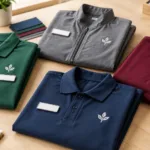

Custom polo shirts for schools succeed or fail on specification, not design inspiration. Before requesting quotes, define 4 things: the fabric and weight for daily wear, sports, or events; the decoration method for the logo; the size run for students and staff; and the order structure, including quantities by size, decoration locations, and delivery date. This brief lets buyers compare suppliers on MOQ, sample availability, quality control, and total landed cost instead of comparing unit price alone. A custom polo shirt manufacturing guide can help organize those inputs before a supplier discussion.
What Schools Need to Specify Before Ordering Custom Polos
A school polo is a procurement item, not only a design project. The same garment may need to serve classroom uniforms, staff identification, club activities, athletic travel, or a one-off school event. Each use changes the acceptable balance between comfort, appearance, decoration durability, inventory risk, and price.
Build a quote-ready garment brief
- End use: State whether the polos are for repeated uniform wear, occasional events, staff use, outdoor activity, or a club. Include expected washing and whether the garment must coordinate with an existing dress code.
- Quantity structure: Give the total estimate and a preliminary split by youth and adult sizes. Separate student, staff, team, and event quantities when they will be managed or replenished differently.
- Fabric preference: Specify fibre composition, approximate fabric weight, surface appearance, colour requirements, and whether a softer hand feel, easier care, or moisture management matters most. Fabric weight is often described in GSM, meaning grams per square metre; it is useful for comparison but does not describe the complete wearing experience.
- Decoration plan: Supply the logo artwork, intended colour count, decoration locations, approximate dimensions, and whether names or numbers are required. A left-chest logo and a large back graphic may need different methods.
- Fit and size coverage: Identify whether the programme needs youth sizes, adult sizes, or both. Record preferred fit, body-length expectations, and whether the school wants 1 shared style or separate options for students and staff.
- Order controls: State the approval date, required delivery date, packing or sorting instructions, labelling needs, and the person authorized to approve a sample or colour. A clear approval route reduces changes after production begins.
Ask the supplier to return the quotation in the same structure. Otherwise, a low quote may simply exclude a second decoration location, individual personalization, packaging, larger sizes, or delivery-related charges. Buyers comparing school programmes with club or team requirements may also use guidance on team apparel manufacturing for schools and clubs while keeping the school’s own size and approval process explicit.
Fabric Selection for School Polo Shirts
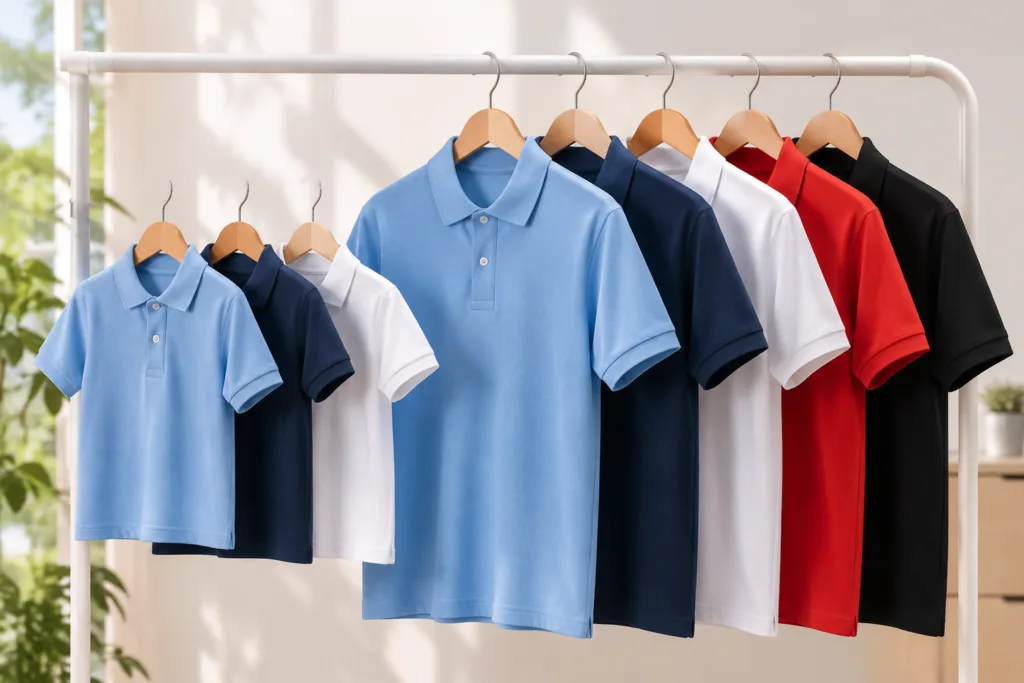
There is no single best polo fabric for every school. The right choice depends on how often the garment is worn, how it will be washed, the climate, the expected activity level, and whether the priority is a natural hand feel, quick drying, colour consistency, or simplified care.
Compare the main fabric directions
- Cotton or cotton-rich fabric: Often considered when hand feel and a more natural surface are priorities. Buyers should ask how the fabric is expected to respond to repeated washing, shrinkage control, colour retention, and drying instructions.
- Polyester or performance-oriented fabric: Often considered for active use, outdoor events, or situations where moisture management and quick drying are important. The knit, finish, weight, and colour can affect comfort, appearance, and decoration compatibility, so the fibre name alone is not enough.
- Cotton-polyester blend: Used when the buyer wants a compromise between the feel associated with cotton and some easy-care or durability characteristics associated with polyester. The exact ratio and construction still need to be confirmed because blends do not behave identically.
Fabric weight should be treated as a comparison input rather than a quality score. A heavier fabric may feel more substantial but can be less suitable for hot conditions or active programmes. A lighter fabric may improve comfort in warm weather but may not deliver the desired opacity or structure. Request a fabric description, finished measurements, care information, and a physical sample where fit, colour, surface, and decoration can be assessed together.
Match fabric to the programme
| Option | Best For | Durability Profile | Design/Color Considerations | Cost Behavior at Volume | Questions to Ask Supplier |
|---|---|---|---|---|---|
| Cotton or cotton-rich knit with embroidery | Classroom uniforms and staff polos where a traditional appearance matters | Depends on fabric construction, embroidery density, and care | Small chest marks usually suit the surface; check puckering and colour matching | Setup and stitch complexity may affect the total more than colour count | What fabric weight, shrinkage guidance, backing, and logo size are proposed? |
| Polyester or performance-oriented knit with printed decoration | Sports, outdoor activity, and event use where a lightweight feel may matter | Depends on knit, finish, print method, and washing conditions | Useful for larger or multi-colour artwork; confirm colour appearance on the actual fabric | Repeated artwork can become more efficient at volume, subject to setup and method | How will the print be applied, and what care instructions protect it? |
| Blend knit with embroidery | General school programmes seeking a balance of hand feel and practical care | Depends on fibre ratio, construction, and decoration placement | Confirm whether the surface supports clean detail without excessive stiffness | Decoration complexity and size distribution can influence the total order cost | Which blend ratio, GSM, fit, and sample approval process apply? |
| Any suitable knit with heat transfer | Individual names, numbers, or smaller personalization groups | Depends on transfer material, application, fabric, and laundering | Can support variable details; confirm font, colour, placement, and repeatability | Individual application can add handling even when the base artwork is simple | How will names be submitted, checked, sorted, and matched to garments? |
Embroidery vs. Printing for School Logos
Embroidery is commonly considered for a durable-looking left-chest logo or a restrained school mark, but very small text and dense artwork may lose clarity or make the garment feel heavier at the decoration area. Ask for a digitized artwork preview or sample and confirm the backing and placement.
Screen printing can suit larger graphics and repeated artwork, especially when the design uses broad shapes or several planned colours. It may be less suitable for fine detail or individual names unless the supplier proposes an appropriate process. Clarify setup, colour separation, print location, curing or application requirements, and care guidance.
Heat transfer can be practical for variable names, numbers, or smaller groups, but every personalized garment adds an order-control task. The school must provide an accurate roster, approved spelling, size, decoration location, and packing method. For any method, approve the actual garment and decoration combination before authorizing the bulk order. A corporate comparison can be useful for contrast, but school buyers should adapt it to mixed sizes, student privacy, and repeated reorders, as explained in this corporate polo buying guide.
Logo Placement, Personalization, and School Design Decisions
Placement should follow how the polo will be used and viewed. A left-chest mark is a practical choice for uniforms and staff identification because it keeps the design restrained. A back graphic may work better for events, clubs, or team activities where visibility from a distance matters. Sleeve decoration can identify a programme or add a secondary detail, but it introduces another location to approve and price.
Keep the artwork appropriate to the chosen garment surface. Fine lettering, narrow lines, and dense fills should be reviewed at the intended decoration size rather than judged only on a screen. Supply vector artwork when available, state the approved colour references, and identify which elements are essential if the design must be simplified. A school polo shirt design should also account for dress-code rules, student age groups, staff preferences, and whether the same artwork will be reordered later.
Names and numbers require a separate order-control process. The buyer should submit a final roster with the exact spelling, garment size, decoration location, font, colour, and any identification code used for sorting. The supplier should confirm how the roster will be checked against the garments before production. Individual personalization can affect handling, packing, replacement planning, and the feasibility of small reorders, so it should be quoted as a defined part of the order rather than added informally.
Sizing Programs for Mixed Student and Staff Orders
Mixed school orders are easier to manage when sizing is treated as a collection programme. Start with the people who will receive the polos, separate students from staff and activity groups, and record the preferred size using the supplier’s measurement chart. Do not rely on age or a previous garment label alone, since size names and proportions can vary between styles.
Build the size list before requesting final quantities
- Use measurements: Share chest, body-length, and other relevant measurements from the supplier’s chart. Note whether measurements describe the body or the finished garment.
- Separate fit requirements: Record whether the programme needs a unisex, regular, slim, youth, or adult fit. Ask whether the proposed style uses the same proportions across the full size range.
- Organize by group: Keep student, staff, club, team, and event quantities distinct when they have different delivery dates, decoration, or replenishment plans.
- Plan uncertain sizes: For undecided recipients, use a documented fitting process, sample garments, or a controlled size exchange policy agreed before the order is placed.
- Protect the inventory record: Match each quantity to a size, colour, decoration, and recipient group. This reduces sorting errors when cartons arrive.
Ask for a size chart and sample fit before locking the distribution. Review shoulder width, chest ease, sleeve length, body length, and fabric behaviour on representative wearers. If students and staff need different silhouettes, compare the added complexity with the benefits of clearer fit coverage. A consistent shared style may simplify replenishment, while separate options may improve fit; the correct choice depends on the school’s population and administration capacity.
Bulk Ordering Process: Samples, MOQ, Lead Times, and Quality Control
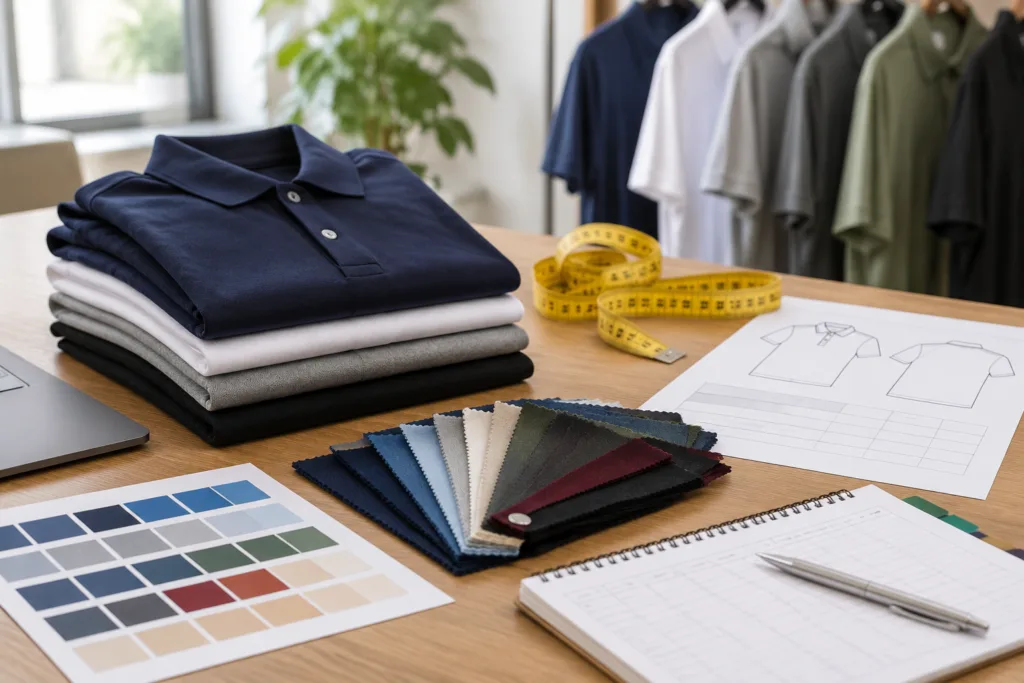
A dependable order sequence moves from written brief to quotation, sample review, approval, production, inspection, packing, and delivery. The buyer should ask the supplier to state any minimum order quantity by style, colour, fabric, decoration method, or personalization format. MOQ terms can differ across these variables, so a general statement about bulk ordering is not enough for comparison.
Sampling should verify the actual garment and decoration combination. Review fabric hand feel, colour, measurements, fit, logo scale, placement, spelling, and the appearance of any names or numbers. Record the approved version with dated artwork, measurements, colour references, size information, packing instructions, and authorized sign-off. Changes after approval should be documented because they can affect the quotation, production plan, or delivery date.
For lead-time planning, provide the required arrival date and ask the supplier to identify the stages that control it, including sample approval, material preparation, decoration, inspection, packing, and shipping. Do not plan from a generic production estimate when the order includes mixed sizes, several decoration locations, or individual personalization. Confirm what happens if artwork, sizing, or shipment information changes.
Quality control should be discussed in observable terms. Ask how the order will be checked against the approved sample, including measurements, colour, decoration position, spelling, garment count, and carton sorting. Buyers sourcing performance garments can use this moisture-wicking polo fabric sourcing guide to identify questions about fabric construction and intended use, while keeping the final specification tied to the sample being approved.
How to Vet a School Polo Manufacturer or Supplier
Evaluate the supplier on the quality of the discussion as well as the quoted price. A useful response should reflect the school’s end use, size structure, decoration plan, approval route, and delivery requirements. It should also identify exclusions, assumptions, setup charges, personalization handling, packing rules, and any conditions attached to minimum quantities.
- Communication: Can the supplier restate the brief accurately and answer technical questions without hiding important assumptions?
- Sample discipline: Is there a clear way to review, revise, and approve the actual garment and decoration?
- Production control: Will the supplier explain how approved measurements, colours, artwork, and quantities are checked?
- Documentation: Are care labels, fibre content, size labels, packaging, and market-specific requirements addressed before production? Buyers with branded or distributed school apparel can review labeling requirements for school apparel orders as part of this checklist.
- Reorder support: Can the supplier retain a clear record of the approved specification so future orders can be compared consistently?
Care and Longevity of Custom School Polos
Care instructions should match the actual fabric and decoration rather than relying on a generic garment note. Confirm washing temperature, drying method, ironing limits, and any restrictions related to embroidery, printing, or transfer decoration. Share those instructions with staff, families, and club coordinators, especially when the same polo will be washed frequently.
Before distribution, check that care labels and size information are legible and that personalized garments are matched to the correct recipients. Keep the approved artwork, sample images, size chart, fabric description, care guidance, and final quantity record together. That file gives the school a practical reference for replenishment and helps prevent small changes from becoming inconsistent future orders.
When the brief is ready, Request a Quote with the product brief, intended use, quantity, material direction, decoration, and sampling requirements clearly listed.
How many polo shirts do schools typically need to order for bulk pricing?
There is no universal quantity because minimums and price structure vary by supplier, style, colour, fabric, and decoration. Submit a size-and-use breakdown and ask for the applicable MOQ, price tiers, setup charges, and replenishment terms.
Is embroidery or screen printing better for school polo shirts?
Embroidery often suits restrained chest marks, while screen printing can suit larger or broader graphics. Compare artwork detail, garment surface, decoration location, expected use, setup, and care requirements on an approved sample.
Can we order samples before committing to a full school polo order?
Ask the supplier to confirm sample availability, sample charges, timing, and what the sample includes. The review should cover fabric, fit, colour, decoration, placement, and personalization where relevant.
How do we handle sizing when ordering for both students and staff?
Collect measurements against the supplier’s chart, separate youth and adult or other fit requirements, and keep quantities organized by group, colour, decoration, and recipient. Approve representative samples before finalizing the size mix.
How long does a bulk custom polo order take from approval to delivery?
Timing depends on material preparation, sampling, order complexity, decoration, personalization, inspection, packing, and shipping. Give the required arrival date and request a stage-by-stage schedule tied to written approval.
Can individual student or staff names be added to each polo?
Ask whether the proposed decoration process supports individual names, then provide an approved roster with spelling, size, placement, font, colour, and sorting instructions. Confirm the additional handling and review process before production.
Related guidance: labeling requirements for school apparel orders.