






Custom rugby polo shirts are collared sportswear garments influenced by the visual language and construction of rugby jerseys. For a B2B buyer, the key specification is not only the appearance: define the collar, placket, fabric, fit, stripe or panel layout, decoration, labels, size range, sample approvals, and commercial requirements before requesting a quote. A rugby-inspired polo can be developed for retail, teamwear, uniforms, casualwear, or a private-label program, but its suitability depends on the confirmed design, fabric, and intended use. For a related process overview, review custom polo shirt manufacturing planning.
Start by turning the concept into a manufacturer-ready brief. A useful custom polo shirt manufacturing planning process helps separate decisions that affect the garment itself from decisions that affect branding, packaging, and the order. This reduces the risk of comparing supplier quotes that describe different products.
What Is a Rugby Polo Shirt?
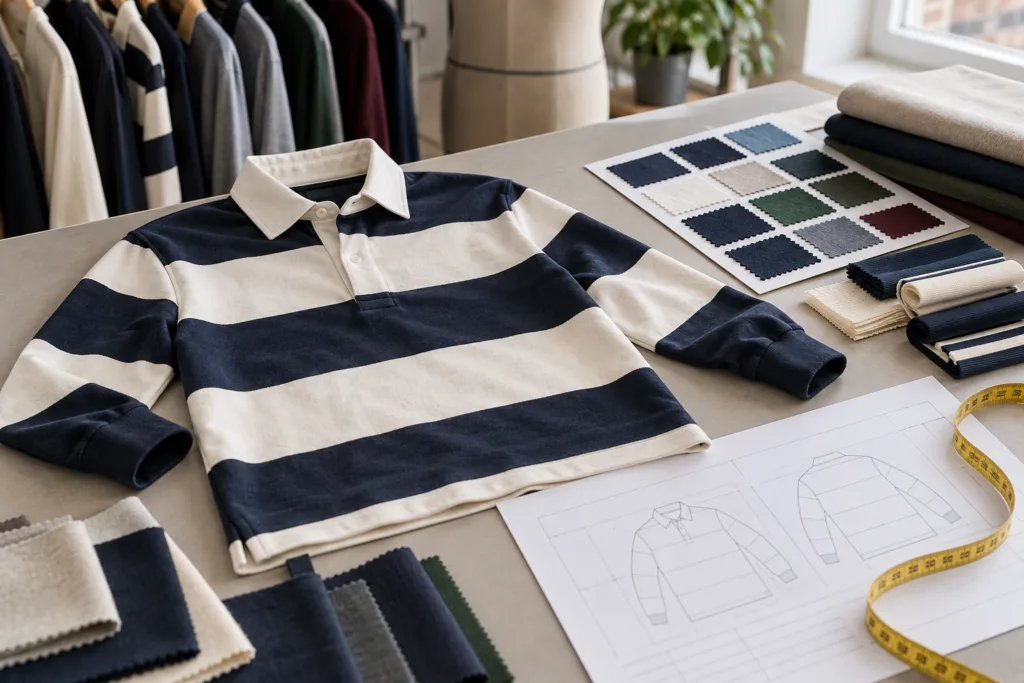
A rugby polo shirt combines a polo-style body with selected rugby-inspired details. These may include a collar, a button or partial-button placket, contrast stripes, color-blocked panels, a more visibly structured body, or trims associated with sportswear. None of these features should be treated as universal. A supplier needs a sketch, reference garment, or technical specification showing exactly which details belong in the product.
The distinction from a standard polo is usually one of design direction and construction intent. A standard polo may use a simpler collar, placket, and body treatment for everyday branding. A rugby-inspired polo may ask for stronger visual contrast, wider stripe placement, a different collar proportion, or a fabric with more body. Those choices can affect pattern pieces, sewing operations, decoration placement, and the way the garment sits on the wearer.
The distinction from a purpose-built rugby jersey is equally important. A rugby jersey is normally specified around its intended sporting use and related movement, abrasion, or teamwear requirements. A rugby polo may borrow visual cues without being intended for competition. State the end use clearly so the supplier does not infer performance or construction requirements that were never approved.
Rugby Polo Design Details That Affect Production
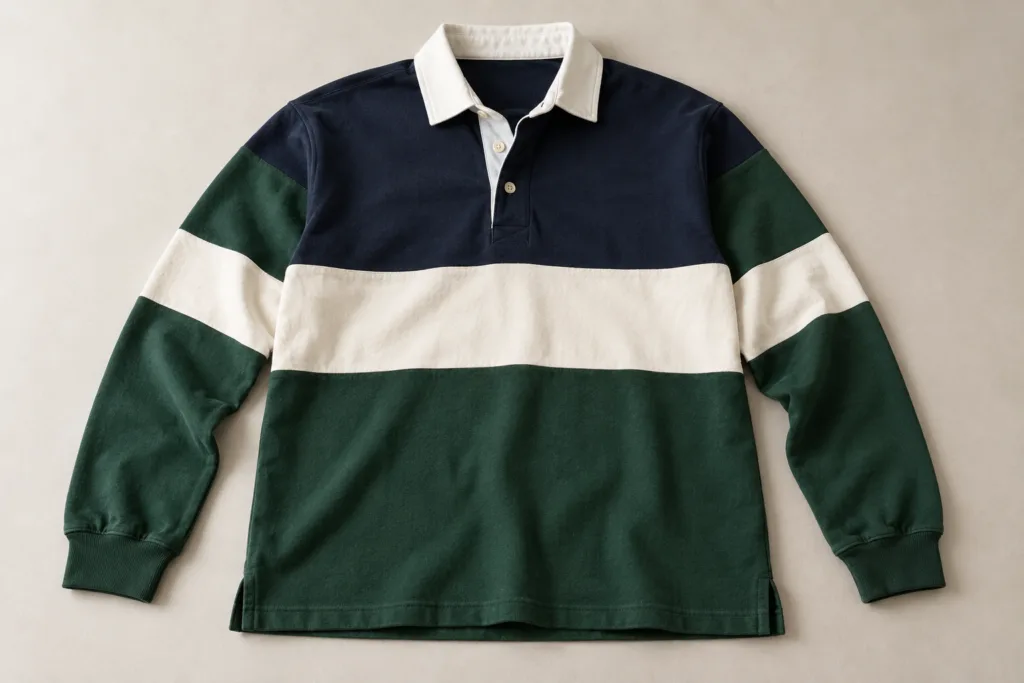
Before discussing price, identify every visible component that could change the pattern or production method. The collar needs a defined shape, proportion, material direction, and color relationship with the body. The placket needs its opening length, button details, reinforcement, and whether it matches or contrasts with the collar. A stripe should be shown with its position, width, direction, and relationship to seams; otherwise, artwork may not align consistently across sizes.
Body panels can alter both the appearance and the number of cut pieces. Cuffs, sleeve ends, side panels, hem treatments, buttons, eyelets, and other trims should be listed separately rather than left inside a general instruction such as “rugby style.” If a heavier-looking structure is wanted, specify whether that impression should come from fabric body, panel construction, rib or trim selection, color contrast, or a combination. The visual result and the physical fabric choice are related but not identical.
| Decision area | Options or examples | What it changes in the garment or order | Buyer input required | Evidence or approval needed |
|---|---|---|---|---|
| Design details | Collar, placket, stripes, panels, cuffs, hem | Pattern pieces, sewing details, trim use, and artwork placement | Sketch, reference garment, dimensions, and color layout | Approved technical drawing or development sample |
| Material direction | Cotton, blend, polyester, or another confirmed fabric option | Hand feel, structure, stretch, care expectations, and decoration suitability | Fiber preference, intended climate, end use, and fabric requirements | Supplier fabric information and approved swatch or sample |
| Branding | Embroidery, printing, woven label, buttons, hangtag, packaging | Placement, appearance, added components, and order preparation | Artwork files, dimensions, locations, and label or packaging instructions | Decoration sample and approved branding artwork |
| Fit and sizing | Relaxed, regular, or another defined fit intent | Pattern balance, grading, measurements, and size assortment | Base measurements, size chart, tolerances, and wearer profile | Approved measurement chart and pre-production sample |
For accurate quoting, send the same specification to each rugby polo shirt manufacturer. Include the number of colorways, stripe or panel artwork, trim selections, size range, expected order split, and whether the product is for retail, teamwear, uniforms, or casualwear. The quote should identify what is included and what still requires confirmation.
Choosing Fabric for Comfort, Structure, and Use
There is no universally correct fabric for every custom rugby polo. Compare options by end use rather than by a fabric name alone. Fiber composition is only 1 part of the decision; construction, thickness, stretch, finish, color requirements, care expectations, and decoration compatibility also affect the finished product.
- Cotton-led options: may support a natural hand feel and casual positioning, but the buyer should confirm shrinkage expectations, care requirements, and color performance for the selected construction.
- Blended options: can balance different comfort, recovery, care, or appearance priorities, but the actual result depends on the fiber ratio and fabric structure.
- Polyester or performance-oriented options: may suit active or teamwear briefs when the selected fabric and finish provide the required behavior. Do not assume moisture management, breathability, or durability without product-specific evidence.
When moisture management is central to the brief, compare the fabric evidence and decoration limitations rather than treating a product label as proof. The guidance on custom moisture-wicking polo shirts is relevant for that type of requirement, but a rugby-inspired design still needs its own confirmation for fabric, fit, trims, and branding.
Ask for the available fabric composition, construction description, weight or thickness information where provided, stretch behavior, care guidance, and any relevant supplier documentation. If the buyer requires shrinkage, pilling, colorfastness, or moisture-related performance limits, those requirements should be written into the brief and confirmed for the specific fabric rather than assumed from a general category.
Customization and Private-Label Branding Options
Customization can cover color blocking, stripes, panels, embroidery, printing, woven labels, buttons, trims, hangtags, and packaging, subject to confirmation for the chosen fabric and order. A logo-led program should specify artwork files, decoration method, placement, dimensions, color references, and approval responsibility. The approach used for custom company polo shirts can help organize branding inputs, while a rugby polo requires additional control of stripe, collar, placket, and panel alignment.
Private-label buyers should also state the main label, care label, size label, hangtag, folding method, individual packaging, carton markings, and any destination requirements. Do not leave these items until after the sample is approved: labels and packaging can affect pattern space, sewing sequence, decoration placement, and the final quotation. An apparel sourcing center may provide broader sourcing context, but the rugby polo brief should remain specific to this garment and its approved specifications.
Fit, Sizing, and Buyer Inputs
Rugby polo shirt sizing should be treated as a product specification, not a late-stage grading task. Before sampling, define the intended wearer, fit direction, base size, size range, and regional sizing assumptions. Terms such as relaxed or regular are useful only when supported by measurements and a reference garment.
Send a measurement chart that identifies points of measure, units, finished dimensions, and acceptable tolerances. Useful points may include chest, body length, shoulder width, sleeve length, collar dimensions, placket length, and hem width, depending on the construction. State whether measurements are taken flat or around the garment. If stripes, panels, or logos must align at particular points, show those relationships on the technical drawing.
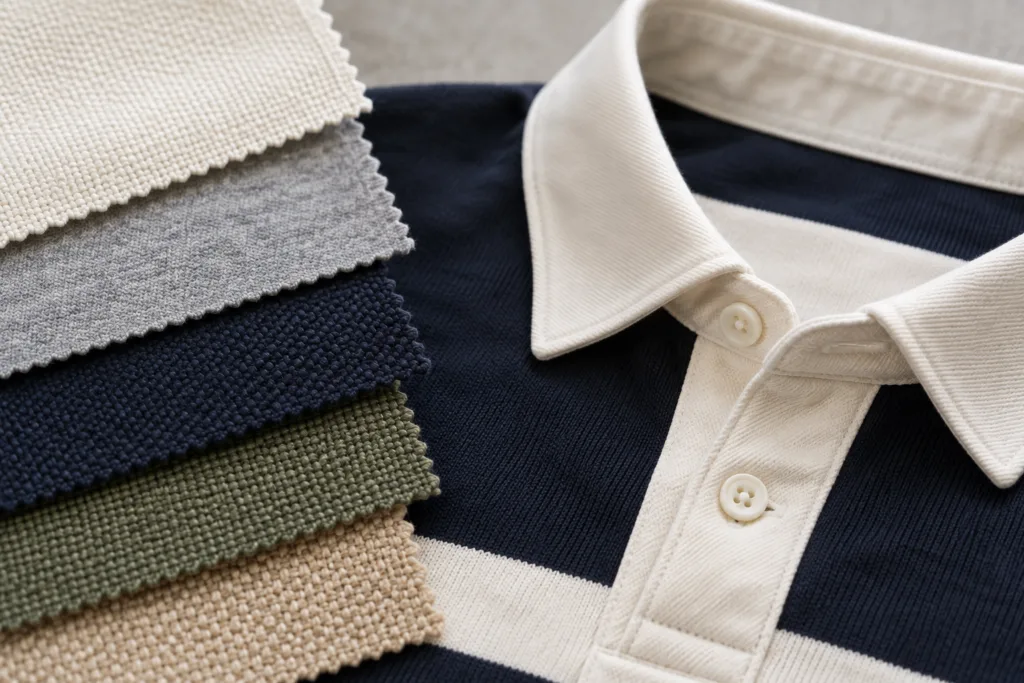
A fit sample should be reviewed for balance, comfort, collar behavior, sleeve proportion, placket position, hem shape, and the relationship between the body and any contrast panels. Record comments by size or measurement point so the approved changes can be carried into grading. A sample that fits one person well does not by itself establish a complete size range or bulk consistency.
Sampling, Quality Control, and Bulk Approval
Agree the approval sequence before development begins. Depending on the project and confirmed supplier process, this may include a design or construction review, fabric and trim review, decoration sample, fit sample, revised sample, and pre-production approval. Not every project requires the same stages, so list the stages that apply and identify who approves each one.
During sample review, compare the garment with the brief rather than relying on overall appearance. Check collar shape and symmetry, placket opening, button placement, stripe width and alignment, panel joins, cuff or sleeve-end treatment, hem finish, label position, decoration scale, and loose or uneven stitching. Measure the approved points against the chart and record deviations against the agreed tolerance policy.
Before bulk approval, confirm the fabric identity, color references, trims, artwork, labels, packaging instructions, folding method, and carton or marking requirements. Keep dated comments and an approved specification so production teams are working from the same version. If testing, inspection, or third-party review is required, define the scope, method, and responsible party in writing; do not assume that a supplier’s general process covers every project requirement.
MOQ, Wholesale Sourcing, and Quotation Checklist
A usable wholesale quotation depends on comparable inputs. Send the style reference, number of colorways, fabric direction, stripe or panel artwork, size range, decoration, labels, packaging, estimated quantity, destination, and requested commercial terms. Ask the supplier to state whether any minimum order quantity applies by style, color, size, fabric, or decoration, because these conditions can differ by project.
Request separate clarification on sample charges, production timing, price basis, payment terms, shipping terms, artwork requirements, packaging inclusions, and any assumptions behind the quote. Lead time should remain supplier-confirmed and should identify whether it starts after artwork, fabric, sample, or order approval. Capacity statements and inspection scope should also be treated as project-specific information requiring confirmation.
For a program that includes sport, teamwear, or performance requirements, custom sportswear manufacturing may provide useful context, but the quotation still needs to describe the rugby polo’s own construction, fabric, fit, decoration, and approval requirements. This prevents a general sportswear description from being mistaken for a confirmed product specification.
How to Prepare a Custom Rugby Polo Brief
Before contacting a supplier, assemble a concise brief with these inputs:
- End use: State whether the garment is intended for retail, casualwear, uniforms, teamwear, or another defined use, and describe the expected wearer and climate.
- Design: Include sketches or reference images showing collar, placket, stripes, panels, cuffs, hem, buttons, trims, and seam relationships.
- Material: Give the preferred fiber direction, construction or weight preference where known, stretch expectation, care direction, and any evidence-based performance requirement.
- Branding: Supply artwork, decoration method preference, placement, dimensions, color references, main and care label artwork, hangtag details, and packaging instructions.
- Fit: Provide the base size, measurement chart, size range, grading direction, tolerances, fit intent, and reference garment or fit comments.
- Commercials: State estimated quantity, color and size assortment, destination, delivery requirement, and quotation questions about MOQ, sampling, pricing, payment, and shipping.
- Approvals: Identify the decision-maker for fabric, color, fit, decoration, packaging, and pre-production release, with 1 controlled version of the specification.
When these details are ready, contact Ninghow with the product brief, intended use, quantity, material direction, decoration, and sampling requirements so the rugby polo can be assessed against the information supplied.
Can a rugby polo shirt be customized for a private-label apparel brand?
Yes, a private-label brief can specify the design, fabric direction, colors, decoration, labels, trims, packaging, fit, and size range, subject to confirmation for the selected construction and order.
What fabric options should I compare for custom rugby polo shirts?
Compare cotton-led, blended, polyester, or other confirmed options by fiber content, construction, weight, stretch, care, intended use, and evidence for any required performance behavior.
What information does a supplier need to develop a rugby polo sample?
Provide design drawings or references, fabric direction, color and stripe artwork, trims, branding files, measurements, size range, labels, packaging instructions, intended use, and sampling requirements.
How should rugby polo shirt sizing be specified for bulk production?
Use a measurement chart with points of measure, units, finished dimensions, size grading, tolerances, fit intent, and an approved sample or reference garment.
What should I inspect before approving custom rugby polos for wholesale?
Review fabric and color, collar, placket, stripes, panels, seams, hems, decoration, labels, measurements, workmanship, packaging, and all recorded changes against the approved specification.
How do MOQ and decoration choices affect a rugby polo quotation?
They may affect material purchasing, color and size assortment, setup or component requirements, labor, packaging, and the commercial basis of the quote, so request project-specific confirmation.