






Introduction: Business Polo Shirts in Today’s Workplace
Business polo shirts have become a staple in modern workwear. Blending comfort with professionalism, these shirts fit perfectly in business casual environments. With smart styling and practical features, polos suit offices, client meetings, hospitality, retail, and company events. Their popularity reflects a shift away from stiff dress codes toward business attire that’s both polished and wearable.
What Are Business Polo Shirts?

A business polo shirt is more than just a top with a collar and buttons. It’s designed with quality fabrics, precise fits, and often subtle branding. Compared to sport or leisure polos, business polos use tailored cuts, consistent sizing, and elegant finishes. The typical features include a ribbed collar, two or three-button placket, and sometimes a discrete logo either embroidered or printed. Companies like Ninghow supply OEM/ODM corporate polos with strict quality control, ensuring fit consistency and work-ready durability across every batch.
Key Elements of a Business Polo Shirt
- Collar shape: classic ribbed style maintains sharpness throughout the day
- Fabric: combed cotton (20s/24s), recycled polyester blends, or modal for breathability and a smooth handfeel (usually 180–220 gsm)
- Decoration: logo embroidery or subtle printing for team identity
- Color: chosen for brand harmony, often through Pantone matching for consistency
How Are Business Polo Shirts Different from Golf and Uniform Polos?
| Type | Main Use | Fabric & Finish | Best-Use Scenario |
|---|---|---|---|
| Business Polo Shirt | Office, retail, events | Combed/modal cotton, blended piqué, anti-pilling, 180–220 gsm | Business casual, brand building |
| Golf Polo Shirt | Sport, outdoor | Performance polyester, moisture-wicking, UPF, 160–200 gsm | Active comfort, athletic fit |
| Uniform Polo Shirt | Teams, staff, promo giveaways | Budget cotton, polycotton, fade/stain resistant, 160–200 gsm | Durability, easy care, high volume |
Business Polo Shirts: Blending Comfort and Professionalism
With their flexible design, business polo shirts let teams look confident and approachable. The best polos use premium knits, such as single jersey or piqué, which offer breathability and structure. High-quality companies favor combed, ring-spun, or organic cotton for a soft touch, plus recycled polyester (rPET) for fewer wrinkles. Advanced finishes—like moisture-wicking, antimicrobial treatments, or UPF protection—improve comfort during long work hours.
Why Comfort Matters at Work
- Reduces distractions from itchy or stiff fabrics
- Keeps staff cool and focused
- Promotes mobility for active roles
Fit and Sizing: Getting it Right
Fit shapes perception. A business polo should drape cleanly, sitting comfortably on shoulders and tapering at the waist. Manufacturers use graded size sets, tech packs, and tight tolerances for accurate measurement from XS to 5XL. Brands like Ninghow test shrinkage, seam strength, and colorfastness for long-lasting quality, ensuring shirts fit reliably after repeated washing.
When Are Business Polo Shirts Appropriate?
Business polo shirts are suitable where dress codes allow business casual or smart casual. Offices in tech, retail, insurance, consulting, and hospitality often favor polos over formal button-downs. They also work in customer-facing sales, help desks, and event staffing. Polos may not suit boardroom presentations or strict suit-and-tie roles but fit almost everywhere else in the modern workplace.
Examples of Use
- Company meetings and presentation days (smart, approachable)
- Retail staff and customer service (comfortable, brand-promoting)
- Trade shows and events (custom colors, logo visibility)
- Work-from-home dress—as a step above tees but less formal than shirts
Dress Code Tip
“Pair polos with tailored chinos or trousers for a crisp business casual look. Avoid oversized fits and bold graphics in formal settings.”
Customizing Company and Corporate Polo Shirts
Customization elevates polos from basic attire to powerful branding. Embroidered logos, special colorways, and custom cuts help businesses stand out. Apparel manufacturers follow these steps for bulk customization polo shirts:
- Design & Tech Packs: Create clear artwork, logo placement guides, and graded size specs.
- Fabric Selection: Choose the build—single jersey, pique knit, or blended fabrics depending on brand vision.
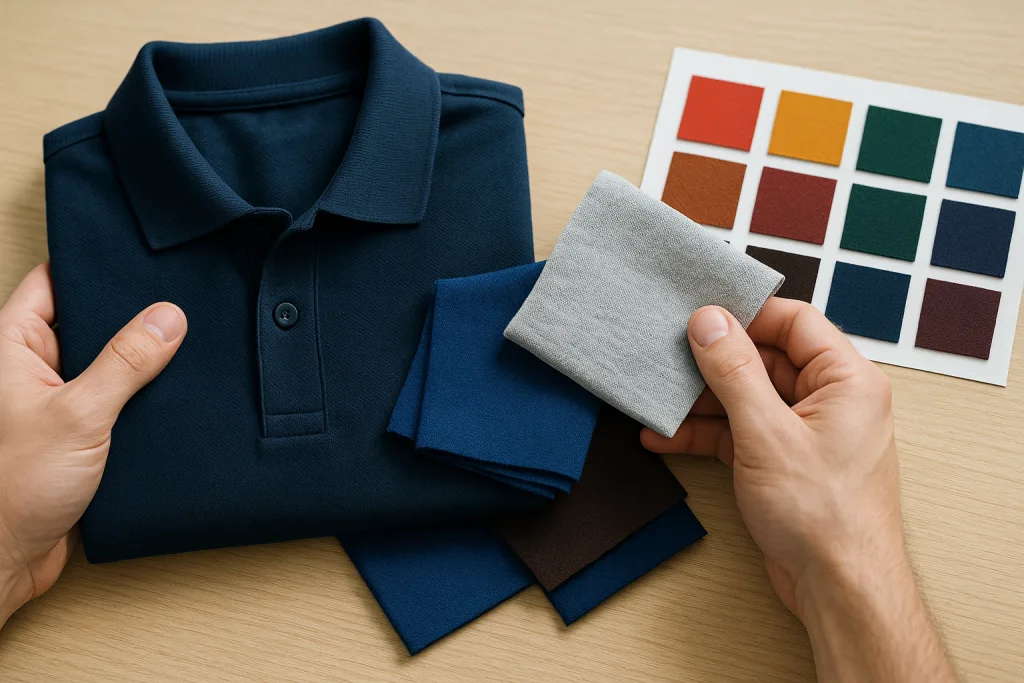
- Sampling: Approve fit, color (strike-offs or lab dips), and decoration before bulk.
- Production: Use automatic cutting for precision, ISO-standard stitching for seams, and inline/endline QC checks.
- Packing & Logistics: Pack by size ratio, mark cartons, and barcode each item for accurate shipment.
Options for Logo Embroidery and Printing
- Direct embroidery: Durable, 3D effect, best for simple logos
- Screen printing: Flat, vibrant for large graphics
- DTF/DTG or heat transfer: Full color, smooth finish for small batch runs
Choosing the Right Colors
Brand color consistency is vital. Most manufacturers use Pantone matching and lab dips to confirm shades. Bulk color approval and batch control prevent mismatches between shipments. Choose colors that fit your brand personality—classic navy, grey, and white for professionalism; brighter tones for energy and uniqueness.
Business Polo Shirts: The Foundation of Uniform Branding
A corporate polo uniform does more than look neat—it signals the company’s values and presence. Staff in branded polos are instantly recognizable to clients and the public. The polo’s style, fabric, and logo choice together echo the brand’s standards. Reliable supply partners like Ninghow deliver on uniform programs by providing QC-driven production, sustainable material options, and flexible customization.
Uniform Polo Best Practices
- Choose wrinkle-resistant fabrics for front-line workers
- Ensure fit and sizing consistency across teams (with graded size sets)
- Pick decoration methods suitable for high-frequency washing (embroidery recommended)
- Keep designs clean and color schemes professional
How Polos Reinforce Brand Identity
Every detail of a business polo matters for brand impact. Balanced fit, color, logo application, and even packaging reflect company image. Embroidered chest logos or sleeve patches communicate professionalism. Standardized uniforms build team unity and trust. When clients see staff in matching, sharp polos, it signals reliability and care.
Manufacturing Excellence: Behind the Scenes
Quality business polo shirts require precision throughout manufacturing. Ninghow and leading manufacturers use tech packs for exact patterns, automatic and manual cutting for grainline control, and advanced sewing (lockstitch, coverstitch hems, bartacks for stress points, ribbed collar attachment). Inline and endline quality control checks follow AQL and measure key specs: length, width, chest, sleeve. Needle detection ensures safety if required. Labels comply with ISO 3758 care symbols. Finished shirts go through wash testing and pilling assessments before shipment. Sustainable materials (organic cotton, recycled polyester), compliance with OEKO-TEX, and responsible packaging support brand values.
Compliance and Responsibility
Companies sourcing polos for staff or events should check for: BSCI/WRAP/SEDEX certification for ethical production; GOTS for organic cotton; REACH and CPSIA compliance when importing to the EU or US. For events or promotions, confirm ink and accessory safety to avoid recalls.
Buying Guide: What to Look For in Business Polo Shirts
Choosing the right business polo shirts for your company isn’t just about looks. Consider these factors:
- Fabric Quality: Opt for combed cotton or modal blends for softness and breathability. If activewear is needed, look for moisture management and UV protection.
- Fit and Comfort: Ask for measurement tables and try size samples. Check GSM for appropriate weight.
- Decoration: Embroidery is best for everyday wear; screen print or DTF for short-term events.
- Color Fastness: Confirm lab testing and Pantone matching for batch consistency.
- Minimum Order Quantity (MOQ): Factor in team size and event requirements.
- Lead Time & Logistics: Request clear sample-to-bulk workflow and real packing specs.
Steps to Order
- Gather logo files and brand guidelines
- Share preferred colors, decoration method, and fit
- Approve single sample, then a pre-production (PP) sample
- Finalize order and delivery details (EXW/FOB/DDP as required)
Business Polo Shirts: The Smart Workwear Choice
Business polo shirts combine comfort, quality, and branding into one versatile garment. Whether you need business casual polos, company staff uniforms, or coordinated apparel for events, the right polo adds polish and boosts your brand. Pick a partner who emphasizes fit consistency, thoughtful fabric selection, precise decoration, and reliable logistics—qualities Ninghow is known for among B2B customers. Take the next step by requesting samples and unlocking uniform programs tailored to your company culture.
The Complete Guide to Business Polo Shirts: From Office Style to Uniform Branding

This article has covered what sets business polo shirts apart—their tailored fit, professional fabrics, and endless customization options. They’re essential for brands that value comfort, unity, and a clean image. Making the right choices in fabric, fit, and decoration elevates your team and connects your brand values to every interaction.
Frequently Asked Questions
What is the ideal fabric for business polo shirts?
Combed cotton blends or modal offer comfort and durability, while recycled polyester adds wrinkle resistance and easy care for active settings.
Can company logos be embroidered on any polo shirt?
Yes, most business polo shirts support embroidery, provided the fabric is stable and not too thin or stretchy. Embroidery lasts longer and looks more professional.
How should business polos fit?
A good business polo should sit comfortably on the shoulders, lightly taper at the waist, and allow free movement—neither too tight nor baggy.
Are polos acceptable for business casual dress codes?
Yes, in most industries, polos are approved for business casual. Pair them with chinos, dress pants, or skirts for a sharp, professional look.
How does logo color stay consistent between batches?
Manufacturers use Pantone matching, lab dips, and batch control, along with strike-off approvals, to ensure brand color consistency on all bulk runs.
What are typical lead times for custom business polo shirts?
Lead times vary by supplier, but standard production takes four to six weeks after sample approval. Express service is available for urgent bulk needs.