



Introduction: Decoding Private Label Hoodies for Fitness Brands
Private label hoodies have become a staple in many fitness brands’ apparel lines, offering unique branding opportunities, tailored fit, and the chance to stand out. But when does it make strategic and financial sense for a fitness brand to invest in private label hoodies—and when should you reconsider? As a clothing manufacturer, Ninghow works directly with brands, buyers, and sourcing teams to clarify the realities of custom production, material choice, and how design decisions impact cost and minimum order quantity (MOQ). In this article, we’ll explore what’s possible with private label hoodies, what’s worth the investment, and where brands should tread carefully.
For a more focused look at production capabilities in the fitness apparel sector, readers planning their next sourcing step may want to explore how manufacturers present this category on custom gym clothing manufacturers. This resource provides practical insight into the range of custom options, factory standards, and current trends shaping gym clothing manufacturing.
Why Hoodies Matter in Fitness Apparel Collections
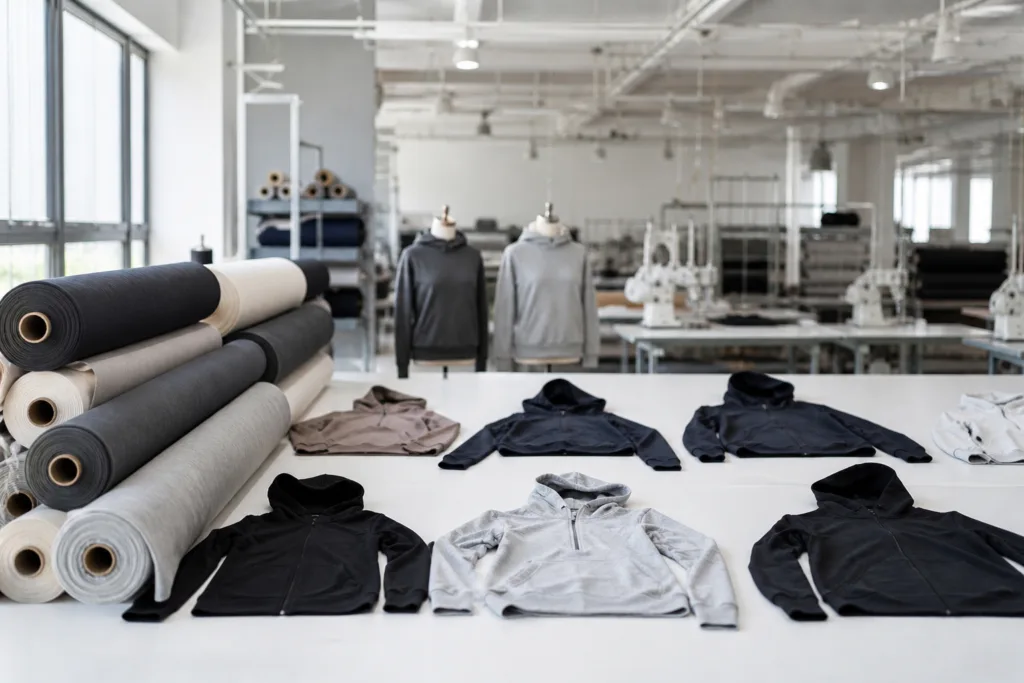
Hoodies aren’t just casual wear—they deliver functional benefits for athletes and fitness enthusiasts. Their versatile design bridges workout, recovery, and streetwear. Fitness brands often use hoodies as a go-to layering piece with branded details, helping reinforce their identity in every collection.
The Functional Role of Hoodies in Gym Wear
Hoodies provide warmth, comfort, and protection during warmups, cooldowns, or chilly outdoor training. The added coverage serves both practical and aesthetic needs, contributing to a positive customer experience.
Key Design Considerations: Fit, Fabric, and Branding
Fitness hoodies are designed with movement in mind, often favoring ergonomic cuts (raglan sleeves, stretch panels) and moisture-wicking materials. Customization decisions—such as fit, fabric weight, and logo placement—directly influence the brand’s value proposition and production cost.
Private Label Hoodies: The Basics Explained
Private label hoodies are produced by manufacturers like Ninghow for brands looking to imprint their identity on the garment, either through custom tags, colors, trims, or personalized decoration. This approach differs from generic white label hoodies, which offer minimal branding and less customization.
OEM vs. ODM: Understanding Manufacturing Models
OEM (Original Equipment Manufacturer) allows for full customization, while ODM (Original Design Manufacturer) leverages pre-designed hoodie templates with partial adjustments. The choice affects price, lead time, and MOQ.
When Does a Private Label Hoodie Make Sense?
Launching a private label hoodie line is suitable when the brand has clear requirements, a defined target audience, and enough demand to meet the manufacturer’s MOQ. For fitness brands, hoodies make sense if:
- The brand wants unique materials or finishes, like high-tech fleece or moisture-wicking blends.
- You need custom sizing, pattern, or a signature fit.
- Branding via embroidered logo, custom drawcords, or printed graphics is strategically valuable.
- Your channel (retail, online, or distributor) requires exclusivity or differentiation.
Advantages of Custom Hoodies for Fitness Brands
- Brand loyalty: Distinctive, well-made hoodies reinforce your unique style.
- Targeted functionality: You can tailor the garment for group training, HIIT sessions, or athleisure.
- Seasonal flexibility: Adjust fabric weight and design details for varying climates or product drops.
When It Does Not Make Sense: Common Pitfalls
Private label hoodies may be less viable when:
- The brand is new and cannot meet standard MOQs—often 200+ units per style/color.
- Budget or cash flow doesn’t allow for upfront sampling, bulk production, and promotional inventory.
- Customization requests (e.g., unique fabrics, complex prints), push up costs or cause delays without clear ROI.
- Market research shows insufficient demand for the hoodie style or material you plan to launch.
Level of Customization: What’s Realistic for Fitness Brands?
A manufacturer’s customization scope covers fit, fabric, trims, decoration methods, packaging, and labeling. But each adjustment affects MOQ, price, and timeline.
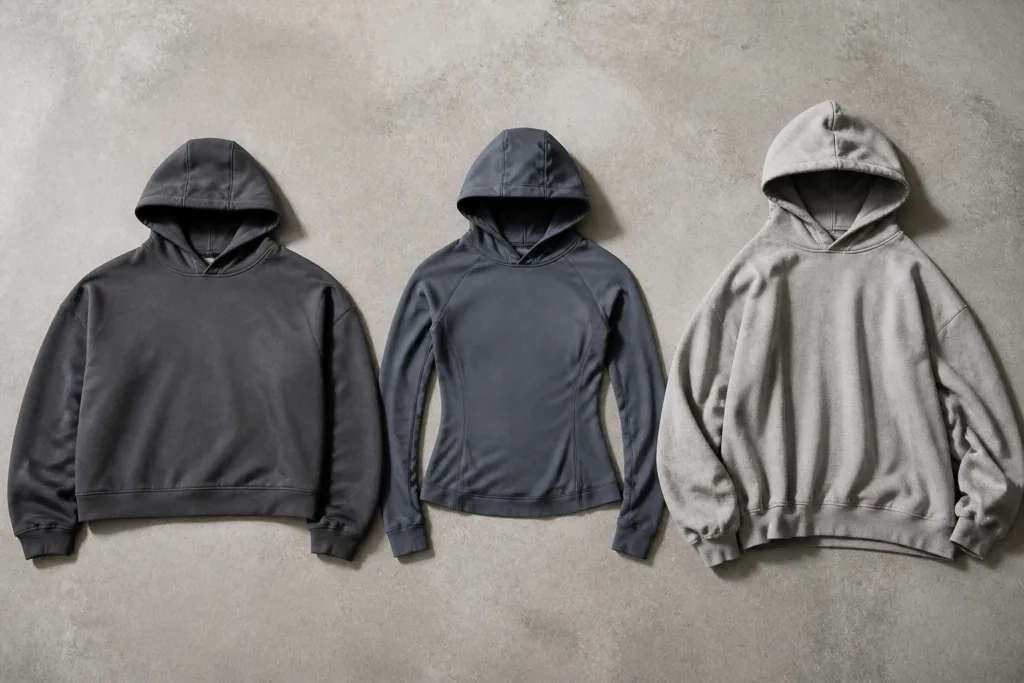
Fit Options: Boxy, Athletic, Oversized?
Fitness brands often request boxy or oversized fits for relaxed styles, or athletic cuts for performance. Patterns must be adjusted during sampling, impacting lead time. For a deeper dive, see key manufacturing differences for hoodies.
Fabric Choices: Weight, Fleece, Technical Blends
Material options range from classic cotton fleece to polyester blends, French terry, or technical knits. Heavier fabrics suit winter collections, while lightweight fleece is popular year-round. The choice of fabric impacts pricing, sourcing lead time, and minimums.
| Fabric Type | Weight (GSM) | Performance | MOQ Impact |
|---|---|---|---|
| Cotton Fleece | 300-350 | Warmth, soft feel | Standard MOQ |
| Poly/Cotton Blend | 250-320 | Durability, moisture-wicking | Slightly higher MOQ |
| French Terry | 220-280 | Lightweight, breathable | Low MOQ possible |
| Technical/Performance Knit | 200-260 | Sweat-wicking, stretch | MOQ varies, often higher |
Decoration Methods: Embroidery, Printing, Applique
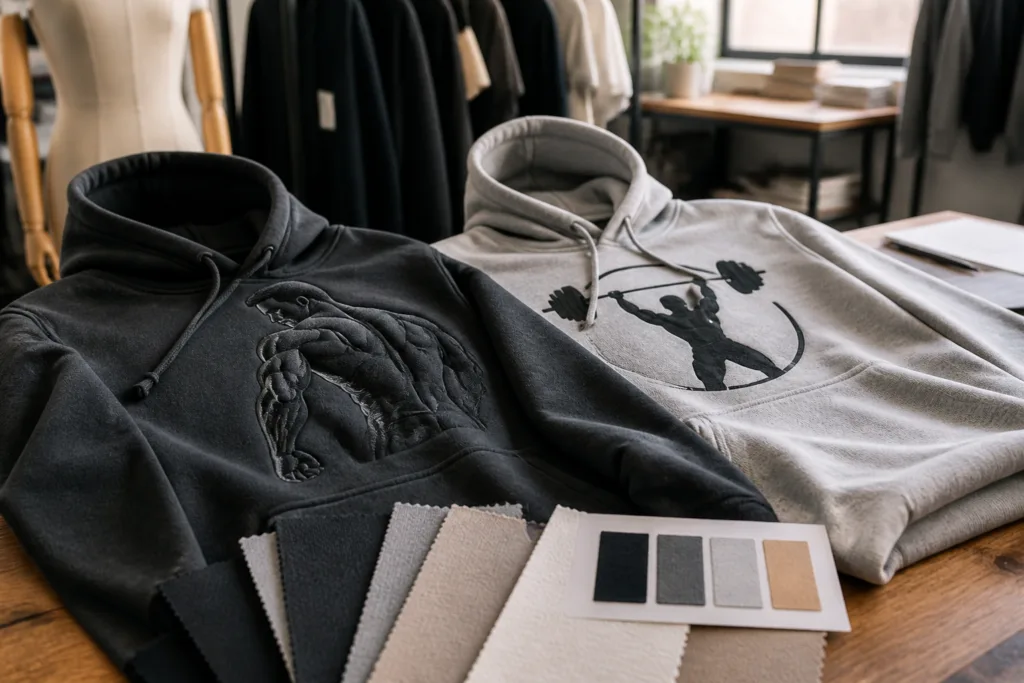
Brand logos can be added via embroidery, screen printing, digital printing, applique, or patchwork. Generally, embroidery requires a slightly higher MOQ and setup costs but offers durability. Screen printing is flexible for small runs, but color choices may be limited. Applique and patchwork deliver a premium look, but cost and complexity rise quickly.
Understanding MOQ: Minimum Order Quantities and Cost Drivers
MOQ is the smallest quantity a manufacturer can produce per style, fabric, or color. It’s determined by bulk fabric sourcing, dyeing, decoration method, and production logistics. For most private label hoodies, typical MOQs range from 200 to 500 per color/design.
How Fabric Choice Changes MOQ
Specialty performance fabrics or unique fleece finishes may require larger bulk purchasing, boosting the minimums. Standard cotton or poly blends allow for more flexible MOQs.
The Impact of Decoration and Trims
Custom decorations like large embroidered logos, multicolor prints, or metal trims may require higher MOQs due to factory setup and sourcing economics. Brands must weigh the trade-off between uniqueness and inventory risk.
MOQ vs Price: What to Expect
Bulk orders drive down unit price, but increasing customization raises cost per piece. The balance depends on the brand’s budget, growth plans, and retail positioning.
| Customization Level | MOQ (Range) | Unit Price Impact |
|---|---|---|
| Standard Hoodie | 200-300 | Economical pricing |
| Custom Color/Fabric | 300-500 | Moderate price increase |
| Complex Decoration | 400-800 | Higher costs |
| Technical Performance Features | 500+ | Premium pricing |
White Label vs Private Label: Making the Right Choice
White label hoodies are pre-made and offer limits on branding—usually just tags or simple prints. Private label provides greater design freedom, but with higher MOQs and development costs. New fitness brands may start with white label, then graduate to private label as sales grow.
Pros and Cons: Quick Comparison
| Criterion | White Label | Private Label |
|---|---|---|
| Customization | Low | High |
| MOQ | Low (50-100) | Medium-High (200+) |
| Price per unit | Higher | Lower (in bulk) |
| Brand presence | Limited | Strong |
| Lead time | Short | Longer |
How Fabric Weight and Fleece Finish Affect Performance and Price
For fitness hoodies, the choice of fabric weight and fleece finish determines warmth, breathability, and price. Thicker fleece means greater insulation and cost, while lightweight French terry is budget-friendly and suited for layering.
- 300gsm+ heavy fleece: For warmth and durable feel, ideal for winter or post-workout.
- 220-250gsm French terry: Lightweight, flexible, quick-drying—good for most seasons.
- Performance fleece blends: Available for brands seeking advanced moisture-wicking or athletic stretch.
Decoration Decisions: Their Effect on MOQ and Unit Price
Choosing between print, embroidery, applique, or high-density logo techniques affects the complexity of the production line. Embroidery and complex prints may require larger MOQs and higher setup costs. Simple screen prints are scalable and cost-effective for smaller runs.
Cost Breakdown: Decoration Types
| Decoration Type | MOQ Requirement | Pricing Impact |
|---|---|---|
| Screen Print | Flexible (100+) | Low to moderate |
| Embroidery | 200+ | Moderate to high |
| Applique/Patch | 300+ | Premium |
| DTG (Direct to Garment) | Flexible | Moderate |
Decoration Trends: What Fitness Brands Are Asking For
Popular choices include bold embroidered chest logos, sleeve prints, and reflective patches for visibility during outdoor training. Many brands blend minimal branding with technical details, athletic drawcords, and hidden pockets to boost appeal.
Sampling Process: Getting the Fit, Material, and Branding Right
The sampling phase is crucial; it lets brands test fit accuracy, material feel, decoration, and construction. Experienced manufacturers like Ninghow advise taking time with samples—focusing on adjustments and real feedback from athletes before scaling up.
Practical Sampling Tips for Fitness Brands
- Request swatches for fabric and fleece finish before committing to large orders.
- Work closely with pattern makers to tailor the athletic or relaxed fit.
- Test embroidery and print durability on sample units.
Quality Control: Ensuring Consistency in Bulk Hoodie Production
Quality control covers stitching, fabric density, logo placement, and dimensional accuracy. Brands must clarify their tolerance levels at the outset. Ninghow emphasizes the benefit of factory QC checkpoints—especially for custom hoodies, where small inconsistencies can affect brand reputation.
Production Lead Time: Expectations vs Reality
Lead times depend on fabric selection, sampling rounds, decoration complexity, and factory workload. Custom fabric dyeing, for example, can add 2–4 weeks; standard fabric and simple decoration allow faster production. Brands should set realistic timelines, buffering for adjustments and bulk logistics.
Pricing Strategy for Private Label Hoodies
Unit price is determined by fabric, customization, decoration method, order quantity, packaging, and logistics. Brands need to plan margin targets, balancing the unique value of their hoodie with competitive market pricing. High customization means higher per-unit costs, but also stronger differentiation.
Factory Capability and Sourcing Decisions
Brands evaluating private label hoodies should assess factory capabilities (pattern development, fabric sourcing, decoration methods), MOQ flexibility, and communication clarity. For further reading, see navigating private label gym clothing manufacturing—an in-depth guide for buyers and sourcing teams.
Private Label Hoodies for Fitness Brands: When It Makes Sense and When It Does Not
Ultimately, private label hoodies are most effective when a fitness brand has the volume, budget, and creative direction to truly personalize the product. Careful planning around fabric, fit, decoration, and factory selection is key. Brands must weigh the benefits of customization against inventory risk, cash flow, and production realities—and make decisions that serve both their business and their customers.
Frequently Asked Questions
What is the typical minimum order quantity (MOQ) for private label fitness hoodies?
Most manufacturers set the MOQ between 200 and 500 units depending on fabric choice, customization, and decoration complexity.
How does fabric weight impact hoodie price?
Heavier fabrics (higher GSM) cost more due to extra material and sourcing requirements, while lighter blends are more budget-friendly.
Can a small fitness brand start with a private label hoodie?
Yes, but only if they can meet MOQ requirements and accept sampling and setup costs. Smaller brands often begin with white label until demand grows.
Is full customization always available for fitness hoodies?
Full customization is possible, but each adjustment (fit, fabric, decoration) may increase MOQ, price, and production time. Manufacturers advise balancing creativity with practicality.
What decoration methods are most durable for gym wear?
Embroidery and high-quality screen prints are durable, withstanding frequent washing and workout use. Direct-to-garment printing is suitable for lighter branding.
How long does it take to produce custom hoodies?
Lead times range from 4–12 weeks based on fabric sourcing, sampling rounds, decoration methods, and bulk production schedules.