



A suitable custom polo shirt manufacturer should translate the intended use, target wearer, fabric behavior, fit, branding, quantity, and packaging requirements into an approved sample and documented bulk-production specification. For casual polos, begin with the product’s role: a retail garment, event item, team layer, distributor program, or branded workwear piece. Then define the hand feel, silhouette, decoration, quantity split, approval checkpoints, and care requirements so suppliers quote the same product. For a broader process reference, review custom polo shirt manufacturing planning for brands.
What Makes a Casual Polo Suitable for Wholesale Production?
Wholesale suitability is not determined by the word “casual” alone. A polo for a private-label collection may need a different silhouette and finishing approach from one intended for an event, team, distributor, or branded workwear program. Define the wearer, sales channel, expected use, climate, care expectations, target price position, size range, color range, and decoration requirements before requesting pricing.
Turn those decisions into a casual-polo brief covering the garment type, intended market, reference images, fabric direction, fit, measurements, collar and placket details, logo placement, labels, packaging, quantity by color and size, and required approval stages. The useful question is not simply whether a supplier makes polos; it is whether the supplier can quote and sample the exact casual specification you intend to buy.
Compare quotations by included specification, not unit price alone. Confirm the fabric construction, trims, decoration method, packaging, sampling scope, and commercial assumptions attached to each price. A casual polo can change substantially when any of those inputs changes.
| Buyer decision | Options to define | What it affects | Evidence or approval needed | Question to ask the manufacturer |
|---|---|---|---|---|
| Fabric | Fiber composition, piqué or jersey, weight, stretch, finish | Hand feel, drape, care, decoration, cost | Supplier specification, fabric swatch, approved sample | Which composition and construction will be quoted, and how will it be identified in the order? |
| Fit | Regular, relaxed, slim, structured; size range | Measurements, silhouette, grading, wearer suitability | Measurement chart, graded specifications, fit sample | Which points of measure and tolerances will be controlled? |
| Construction | Collar, placket, buttons, sleeves, hem, side slits | Appearance, movement, durability, sewing complexity | Tech pack, reference sample, pre-production approval | Which construction details are included in the quotation? |
| Branding | Embroidery, print, transfer, woven label, hangtag, neck branding | Logo appearance, placement, handle, packaging | Artwork file, placement guide, decoration sample | Which artwork formats, dimensions, and placement limits are required? |
| Order planning | Quantity, color split, size split, packaging, revisions | Quotation accuracy and production coordination | Order matrix, packaging brief, written revision record | Which commercial and production inputs must be confirmed before sampling? |
Choose the Fabric by End Use, Not by Label Alone
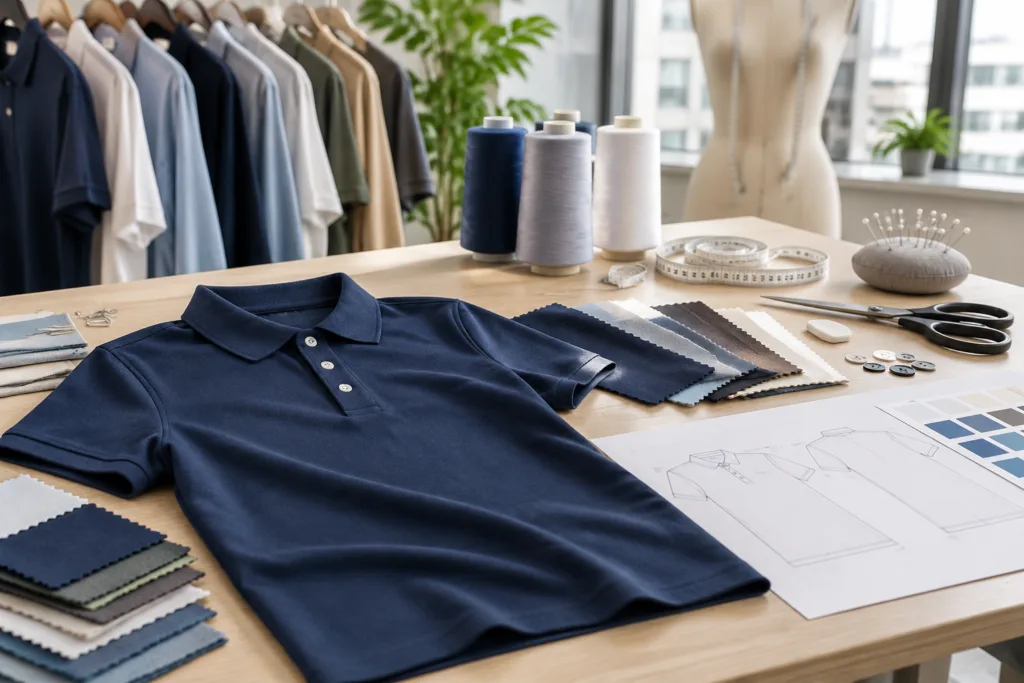
Fiber content and fabric construction are separate specification fields. A fiber label alone does not establish the finished garment’s hand feel, weight, stretch, shrinkage behavior, pilling resistance, colorfastness, moisture behavior, or care requirements. Request the composition, knit construction, finished weight or stated weight basis, finishing details, color references, and any available test method or result before selecting a fabric.
Match construction to the intended product
Piqué and jersey should be compared as construction options rather than universal quality categories. Ask the supplier to identify the knit structure, yarn or blend composition, weight, finishing, and expected appearance in the submitted swatch. If a textured surface, smoother drape, stretch, or particular hand feel is important, write that preference into the brief and verify it against the sample.
Blends and performance-oriented fabrics also require documented inputs. Moisture behavior, drying speed, stretch, color retention, pilling resistance, and shrinkage can vary with composition, knit structure, finishing, garment treatment, and test method. A buyer comparing casual polos with custom moisture-wicking polo shirts for performance applications should first decide whether active-use properties are actually required or whether everyday appearance and hand feel take priority.
Before approving fabric, compare the swatch and decoration sample with the intended care routine. Ask whether the submitted sample reflects the final composition, color, weight, trims, finishing, and garment treatment. Request the applicable care-label basis and any documented test information rather than treating a generic fabric name as evidence of performance.
For category terminology, types of polo shirts by fabric, fit, and use can help organize the options, while the buyer’s end-use requirements should control the final selection.
Define the Fit and Polo Construction
Choose the silhouette from measurements and target-market expectations, not from labels alone. Regular, relaxed, slim, and structured describe intended proportions, but none has a universal measurement meaning. Provide a garment measurement chart, target measurements, grading rules, tolerances, and a reference garment when consistency matters.
The specification should identify chest, body length, shoulder, sleeve length, sleeve opening, collar dimensions, and any other points needed to reproduce the intended shape. State the measurement method and acceptable tolerances. Check a sample across the intended size range where practical, because a satisfactory base size does not establish that grading works across all sizes.
Construction details also define the casual product. Specify collar shape and height, collar rib or fabric, placket length, button count and material, sleeve finish, bottom hem, side slits, reinforcement, and seam appearance. Note whether the desired result is a cleaner business-casual appearance or a softer everyday silhouette. These choices affect appearance, movement, decoration placement, sewing operations, and quotation scope.
Before bulk approval, compare the sample with the measurement chart, approved fabric, artwork, labels, buttons, and construction notes. Record revisions in one controlled document so the final order does not rely on informal messages or memory.
Select Style Variations for Casual, Business-Casual, or Team Use
Style decisions should support the sales channel and intended wearer. A casual private-label polo may use a clean single-color body, while a team or event program may need contrast panels, sleeve details, or a more visible color break. Business-casual positioning may call for restrained trims, a consistent collar, and a controlled decoration area. Define the design through approved artwork, color references, garment measurements, and construction notes.
Specify the base color, contrast colors, collar treatment, placket finish, sleeve detail, hem treatment, button appearance, and side slits. Color names alone can be interpreted differently, so provide physical references or a documented color standard where accurate matching matters. Confirm whether contrast details use the same fabric, a different knit, or a separate trim because that choice can affect appearance, handling, and production complexity.
Keep use-case boundaries clear. A casual polo for everyday retail is not automatically suitable for active programs, golf, rugby, schoolwear, or workwear. Buyers comparing everyday garments with custom company polo shirts for branded workwear should define the actual wearer, environment, decoration exposure, and care expectations before borrowing details from another category.
Plan Branding and Private-Label Customization
Branding should be selected alongside the fabric and garment construction. Embroidery, screen printing, transfer printing, woven labels, printed neck branding, hangtags, and packaging each create different requirements for surface, placement, artwork, and approval. Do not approve a logo method from a digital mock-up alone. Request a physical or production-representative decoration sample on the selected fabric and color.
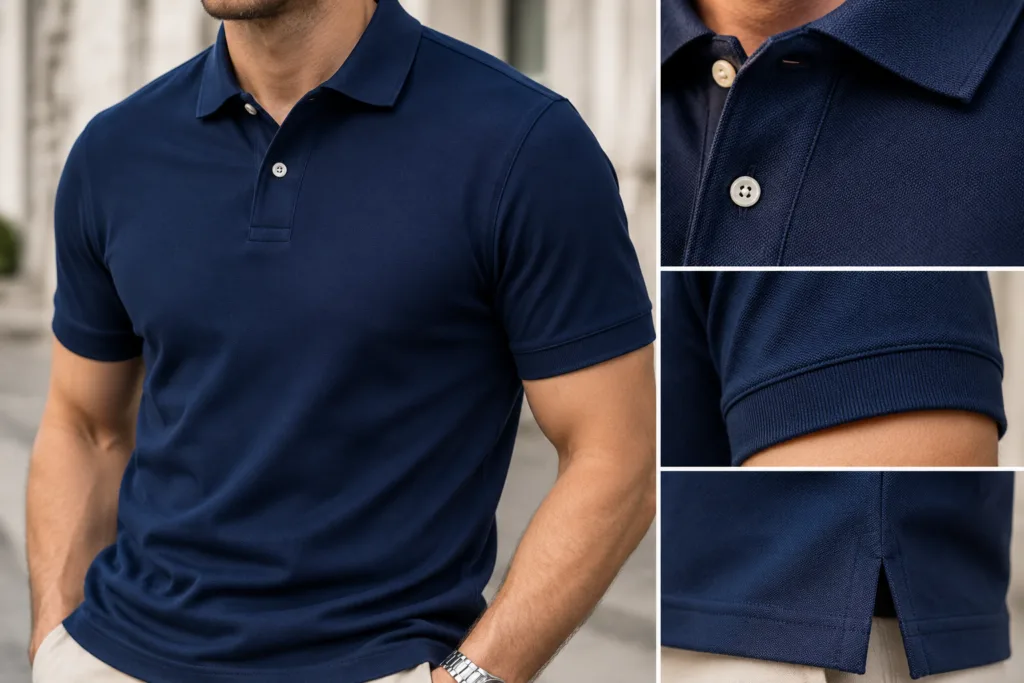
The branding brief should state the artwork file format, logo dimensions, placement from defined garment points, color references, decoration method, thread or ink direction where relevant, and restrictions on fine detail. Identify whether the mark belongs on the chest, sleeve, back, placket, hem, label, or packaging. Placement should be measured from fixed points rather than described only as “left chest” or “center back.”
Private-label requirements need a separate label and packaging section. Specify the brand label, size label, care label, country-of-origin information where required, hangtag, folding method, polybag or carton instructions, barcode details, and assortment by size or color. Ask the manufacturer to confirm which items are included in the quotation and which require separate artwork, sampling, or approval.
Use a Casual-Polo Approval Checklist
Before approving a pre-production sample, compare the garment against one controlled specification. Check fabric composition, construction, stated weight, color, hand feel, measurements, grading, collar dimensions, placket length, button position, sleeve opening, hem, side slits, seam appearance, labels, decoration, and packaging presentation. Record each result as approved, revised, or awaiting confirmation.
For bulk production, keep those casual-specific checkpoints visible in the inspection plan. Review representative garments across the size and color range. Check that the approved fabric and trims are being used, the logo is placed consistently, the collar and placket match the approved sample, and packaging follows the written brief. If a deviation appears, document the issue, affected quantities, required correction, and approval owner before production continues.
The comparison point is a controlled product specification: fabric and construction, fit and measurements, decoration, labels, packaging, quantity split, and approval records. Broader supplier-selection considerations are covered in how to choose a custom clothing manufacturer for bulk apparel; this page keeps its focus on converting a casual polo concept into an approvable product.
Prepare the Wholesale Order for Quotation
Send commercial questions with the casual-polo brief. State the total quantity, quantity by color, quantity by size, target delivery window, destination, packaging format, decoration requirements, and whether the order will repeat. Ask the manufacturer to confirm any MOQ by style, color, fabric, or decoration because the applicable threshold may depend on the product configuration.
Request a clear breakdown of sample fees, sample revisions, fabric or trim sourcing, decoration setup, packaging, shipping terms, and other quotation assumptions. Ask which sample represents the final fabric, color, measurements, labels, decoration, and packaging. Request a written lead-time estimate tied to the approved specification, order confirmation, material availability, and approval dates rather than assuming timing from a general product page.
Confirm the payment schedule, size and color split, order revision deadline, approval sign-off, inspection responsibility, carton or packing-list requirements, and process for handling nonconforming goods. Keep the final quotation, approved sample, tech pack, artwork, measurement chart, order matrix, and revision record together.
For a project-specific next step, buyers can Request a Quote with the product brief, intended use, quantity split, fabric direction, branding details, sampling requirements, and packaging instructions.
Care and Styling Guidance That Supports the Brief
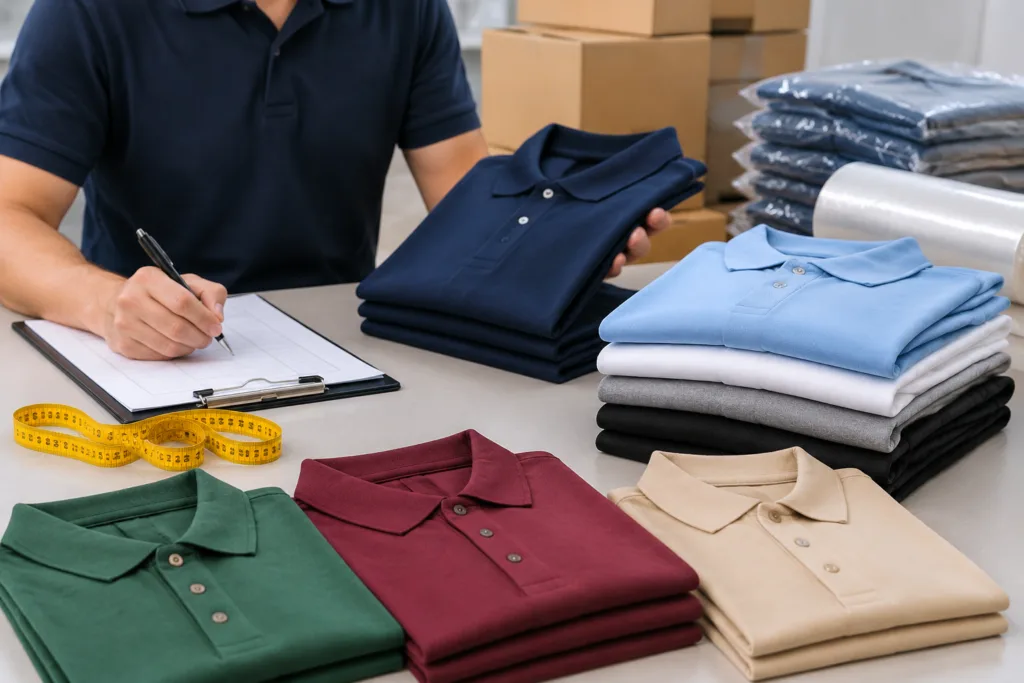
Care instructions should be based on the final fiber composition, trims, decoration, and required care label. Confirm washing, drying, ironing, and storage guidance against the approved garment instead of copying generic directions.
Styling references can remain practical and use-case specific: jeans or shorts may suit an everyday casual program, chinos may support a business-casual direction, and tailored trousers may suit a more structured retail presentation. These are styling options, not evidence that every polo suits every wearer or setting.
Frequently Asked Questions
What should I include in a custom casual polo shirt manufacturing brief?
Include the intended use, target wearer, fabric composition and construction, weight direction, fit, measurement chart, construction details, color references, artwork, decoration placement, labels, packaging, quantity by color and size, sampling needs, delivery target, and approval process.
Which fabric is best for custom casual polo shirts?
There is no universal best fabric. Compare cotton piqué, jersey, blends, or other constructions against the required hand feel, drape, stretch, decoration, care routine, color behavior, and end use, then approve the final fabric specification and sample.
What is the difference between a regular-fit and slim-fit custom polo?
Regular and slim describe different intended proportions, but the labels have no universal measurements. Use a garment measurement chart, points of measure, grading rules, tolerances, and a fit sample to define the actual silhouette.
Which logo and private-label options can be used on a casual polo?
Possible options include embroidery, screen printing, transfer printing, woven labels, printed neck branding, hangtags, and specified packaging. Suitability depends on the fabric, artwork, placement, detail level, and approval sample.
What should I ask a manufacturer about samples, MOQ, and bulk production?
Ask about sample fees and revisions, the sample’s material and decoration, MOQ by style or color, size and color splits, quotation inclusions, lead-time assumptions, payment terms, inspection responsibilities, packaging, and revision control.
How should custom casual polos be cared for?
Use care instructions based on the final fiber composition, trims, decoration, and required care label. Confirm washing, drying, ironing, and storage guidance against the approved garment.