




No, you do not always need a complete tech pack before contacting a clothing manufacturer. A sketch, reference garment or clothing idea brief can start the discussion, provided you explain the intended product and identify what is still undecided. This startup clothing tech pack sample or idea brief guide separates the information needed for an initial review from the specifications required for sampling and repeatable production.
Do You Need a Tech Pack Before Contacting a Clothing Manufacturer?
The right answer depends on your project stage. A manufacturer can usually discuss a concept before every measurement and construction detail is fixed, but each missing decision creates an assumption to confirm. A complete tech pack becomes increasingly important when you need a reliable sample, controlled approvals and consistent bulk production.
Think of the handover in 3 readiness levels:
- Clothing idea brief: a direction for discussion, with a sketch or reference image, intended use and basic commercial context.
- Reference sample: a physical garment that communicates proportion, hand feel or construction cues, supported by measurements and written change requests.
- Production-ready tech pack: an organized specification covering measurements, tolerances, materials, construction, decoration, labels and packing.
Can you start with a sketch? Yes, if the sketch is accompanied by the garment type, target wearer or use, approximate quantity, size range, fabric direction, decoration, intended delivery market and any important deadline. A concept image alone cannot reliably confirm fit, construction, material selection, decoration results or final packing requirements.
For an initial conversation, the goal is not to prove that every detail is finished. The goal is to give the manufacturer enough context to identify the development path and ask useful questions. Preliminary comments remain subject to confirmation because feasibility, sampling requirements and commercial terms depend on the actual specifications.
| Starting point | Buyer inputs | Manufacturer can assess | Open questions | Next step |
|---|---|---|---|---|
| Idea brief | Sketch or images, garment category, use, size range, quantity estimate and market | Product direction and information needed for development | Fabric, fit, construction, decoration and packaging | Clarify the brief and agree what must be developed |
| Reference sample | Physical garment, measured points, retained details and written changes | Proportion, construction cues, material direction and requested changes | Ownership, tolerances, final fabric, grading and decoration files | Convert observations into executable specifications |
| Tech pack | Specification pages, measurement chart, tolerances, materials, artwork and packing details | Sampling inputs and approval checkpoints | Any unresolved options or project-specific requirements | Review the specification and prepare the sample plan |
Two hypothetical readiness checks
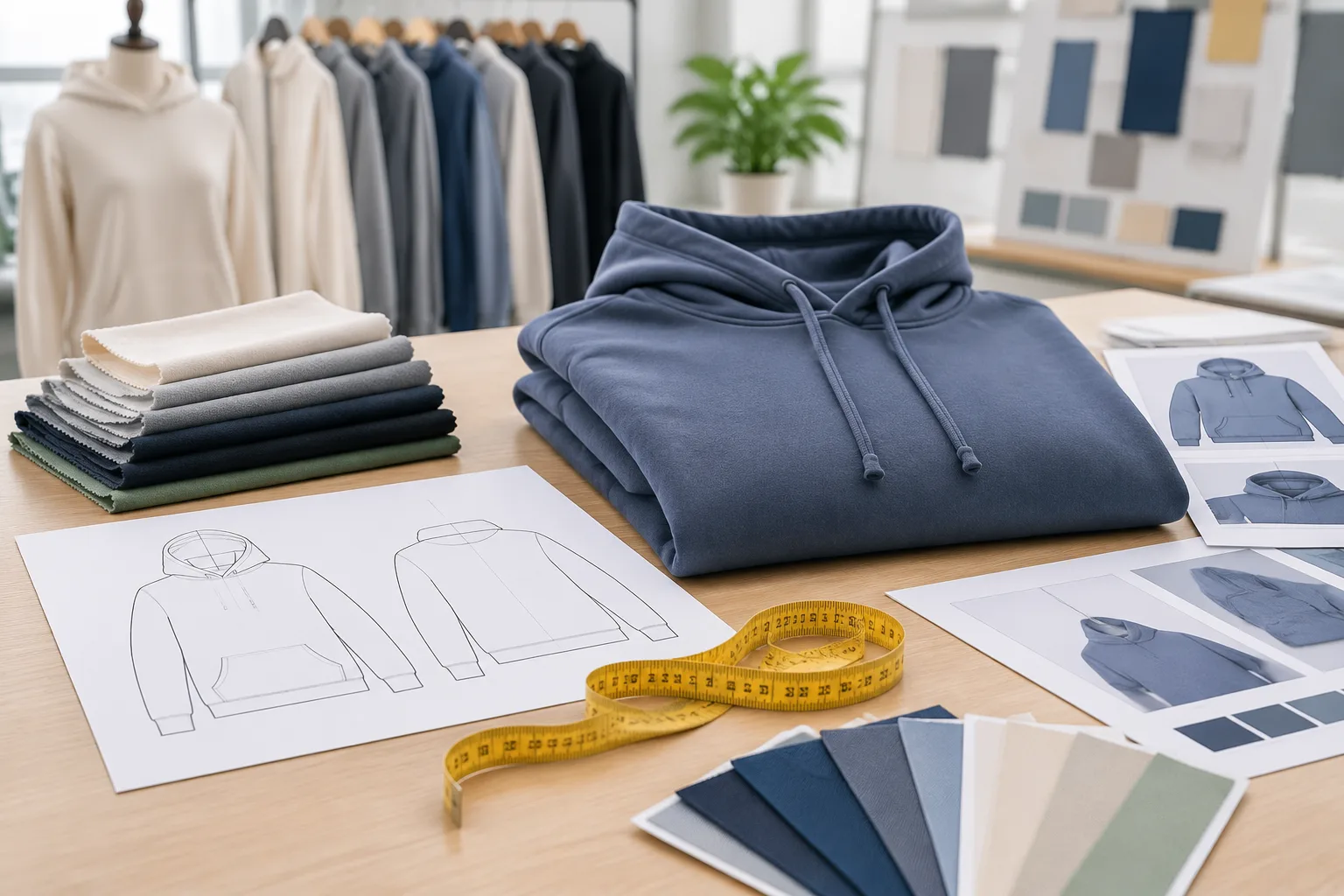
- Startup founder with a sketch: The buyer has a hoodie sketch, intended casual use, an approximate quantity, a proposed size range and a target market. The available evidence supports an initial discussion, but there is no fabric decision, measurement chart, decoration file or physical sample. The evidence gap is whether the silhouette, fit and construction can be translated into a sample without further choices. Outcome: Go for a manufacturer conversation, but Clarify the missing technical decisions before sampling.
- Established brand with detailed files: The buyer has graded measurements, tolerances, fabric composition and weight details, construction notes, approved artwork files and packing instructions. The available evidence is suitable for a more focused sampling review. The remaining evidence gap may be project-specific confirmation of the sample version, approval owner or any unresolved material option. Outcome: Go for a technical review and Clarify any open approval points before development begins.
For buyers requesting OEM production, the buyer generally supplies the decisions and specifications that define the product. For ODM support, the manufacturer may assist with product-development choices, but design ownership, material decisions, pattern responsibility and approvals should still be documented rather than assumed. A tech pack is therefore not merely a file format; it is a record of who has decided what.
What to Send in a Minimum Useful Clothing Manufacturer Brief
A minimum useful brief should make the first enquiry easy to review without pretending that unresolved details are already approved. Separate confirmed requirements, preferences and open decisions. This lets the manufacturer respond to the actual scope instead of filling gaps silently.
First-contact checklist
- Garment category and intended use, such as a T-shirt, hoodie, uniform top or outer layer.
- Target customer, wearer group or working environment.
- Sketches, reference images or a physical sample, with notes on what must be retained, changed or newly developed.
- Approximate quantity, expected size range and any size or color variants under consideration.
- Preferred fabric direction, including composition, weight, stretch, hand feel or performance priorities where known.
- Base colors, color references and decoration method, artwork dimensions, placement and color versions.
- Brand labels, care labels, hangtags, packaging preferences and any barcode or carton information already available.
- Target market, delivery destination and target approval date.
Quantity, size range and decoration versions help define the scope of the discussion, but they do not establish a price, minimum order quantity or delivery date. Those points require project-specific review. Ninghow’s public sampling guidance identifies garment specifications, measurements, tolerances and decoration details as useful preparation inputs; treat this as scoped website guidance, not a universal contract condition.
Turn a vague request into a usable brief
Instead of writing “make this hoodie,” write: “Develop a pullover hoodie for adult casual wear. Use the attached front and back sketches as the design direction. Review a medium-weight cotton-blend option, with a relaxed fit and a defined size range. Place the supplied artwork at the center front in the stated dimensions. Confirm fabric options, measurement points, hood construction, rib details, label requirements and packing assumptions before sampling.”
That wording still leaves decisions open, but it makes the questions visible. Name files clearly, state the version date and identify the person who can approve changes. When a reference garment is supplied, list which dimensions, trims, construction details and appearance characteristics are intended to remain, and which are only examples.
Idea Brief, Reference Sample or Tech Pack: Which Starting Point Fits Your Project?
Choose the handover format according to how much of the product has already been decided. An idea brief is appropriate when you are testing a direction. A reference sample is useful when physical proportion, hand feel or construction is difficult to communicate in images. A tech pack is the strongest starting point when repeatability, measurement control and approval traceability matter.
| Format | Best used when | Buyer should define | Manufacturer needs to clarify |
|---|---|---|---|
| Idea brief | The silhouette or product direction is still exploratory | Purpose, wearer, visual direction, priorities and constraints | Development assumptions, material options and information gaps |
| Reference sample | A physical comparison is important | Measured dimensions, retained features, requested changes and usage rights | How the sample will be translated into a pattern, specification and approval sample |
| Tech pack | The design is defined and must be repeated consistently | Measurements, tolerances, materials, construction, artwork, labels and packing | Any conflicting instructions, missing files or project-specific alternatives |
A reference sample is not the same as a tech pack. It can show proportion and physical details, but it does not automatically communicate every measurement, tolerance, grading rule or approved change. Convert the sample into written specifications, and identify what the buyer owns, what may be modified and what requires approval.
Also confirm that the buyer has permission to use the supplied branding, artwork and design references. A reference garment may guide development, but it is not automatic permission to reproduce another party’s protected branding or design.
When working with an OEM or ODM partner, document the division of responsibility. State whether the buyer is supplying the pattern, fabric direction, artwork and complete tech pack, or asking the manufacturer to support some product-development choices. The more decisions remain open, the more important it is to record assumptions and approval points before sampling.
What a Manufacturer Needs Before Sampling Can Begin
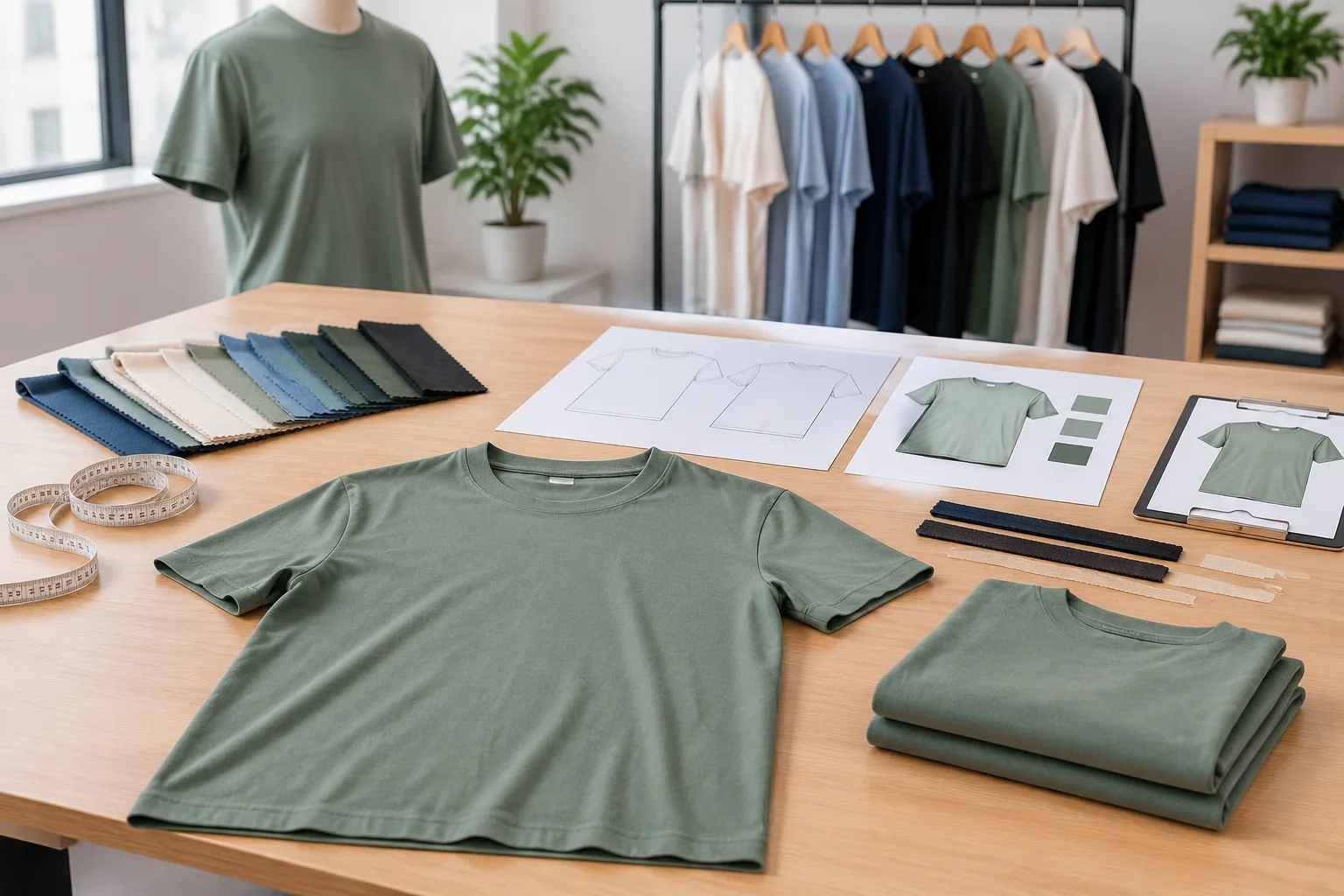
Before sampling, turn the open decisions into confirmed requirements or clearly labelled development questions. A manufacturer can help develop some choices within an agreed OEM or ODM scope, but the buyer should still identify who owns each decision and who approves the result.
Pre-sampling specification checklist
- Product identity: Record the style name, version, garment category, intended use, size range and target market.
- Measurements: Provide a measurement chart with defined points of measure, units, size range and tolerances. A garment image alone does not explain where a measurement starts and ends or how much variation is acceptable.
- Fabric and color: State the preferred composition or fabric direction, weight where relevant, color references, surface appearance and hand-feel requirements. Mark any material choice that remains open.
- Construction: Describe panels, seam types, hems, closures, pockets, lining, reinforcement, rib or elastic details and other features that affect the pattern or sewing method.
- Decoration: Attach usable artwork files and specify the decoration method, placement, dimensions, colors and any required approval view. Artwork size, placement and color can require separate review for embroidered details, even on the same base garment.
- Labels and packaging: List brand labels, care information, size labels, hangtags, folding requirements, barcode files, carton marks and any packing instructions that are already decided.
- Sample target: Name the intended stage, such as a development sample, fit sample, size set or pre-production sample. Identify the reviewer and the criteria that will determine approval.
Ready-to-sample gate
A project is generally ready to enter sampling when the manufacturer has enough information to identify the garment, build or adapt the pattern, select or confirm the material direction, apply the decoration and measure the result. Missing preferences can be developed; missing requirements must be clarified first.
Use version numbers, revision dates and marked-up files whenever a decision changes after sampling. Keep one named approver responsible for confirming which file, artwork and comment set is current. This prevents an old measurement chart or decoration placement from being mixed with a newer instruction.
How Tech-Pack Completeness Affects Estimates, Sampling and Bulk Production
Tech-pack completeness affects the quality of the commercial conversation because every unresolved specification creates an assumption. An early estimate may be useful for comparing options, but it should be read as conditional when fabric, construction, decoration, packaging or sample requirements are not confirmed.
A production quote requires a clearer basis: the garment specification, quantity and size range, decoration and label requirements, packing instructions, destination and other commercial conditions should be identified or listed as open items. This does not mean a tech pack removes every uncertainty. Physical sample review, measurement checking, decoration approval and order-specific confirmation remain necessary.
Where incomplete information creates questions
- Material and pattern: An undecided fabric direction can affect the pattern, appearance, hand feel and later approval discussion.
- Construction: Unclear closures, seams, pockets or finishing details can change development work and the way the garment is reviewed.
- Decoration: Missing artwork dimensions, locations, colors or method can prevent a reliable sample brief. Each logo version should be tied to the correct garment, size and placement.
- Labels and packing: Missing label files, size ratios, barcode information or carton instructions leave important production and receiving decisions unresolved.
- Inspection and approval: Measurements, decoration, labels and packing information should correspond with the approved specification. Public quality guidance may describe these as final-check items, but the exact inspection and acceptance process must be agreed for the order.
Attach an assumptions-and-questions list to the enquiry. For each open item, record the current status, consequence if unresolved, responsible person and approval evidence. This gives the buyer a practical decision framework without treating a preliminary estimate as a fixed production commitment.
Use this decision framework
- Go: The product identity, main measurements, material direction, decoration intent, quantity and approval contact are clear enough for the requested review.
- Clarify: One or more decisions could change the sample or commercial basis, but the buyer can assign an owner and expected confirmation.
- Pause: The buyer cannot confirm the intended garment, use the artwork, approve the sample target or define the requirements that make comparison meaningful.
This approach helps both early-stage and experienced buyers. A detailed tech pack reduces interpretation risk, while a well-controlled brief makes gaps visible instead of hiding them inside a request for a quote.
Buyer-Ready Tech Pack and Enquiry Checklist
Use the following handover check before contacting a manufacturer or moving from discussion to sampling. The goal is not to create paperwork for its own sake; it is to make the current product definition, remaining questions and approval route easy to understand.
Buyer-ready enquiry checklist
- Style name, product category and current version
- Intended use, target wearer and size range
- Garment measurements, points of measure, units and tolerances
- Fabric composition or direction, weight where relevant, color reference and appearance requirements
- Construction notes covering panels, seams, hems, closures, pockets and lining
- Artwork files, decoration method, placement, dimensions and colors
- Brand, care and size-label requirements
- Quantity by style, color and size where available
- Packaging format, barcode or carton information and delivery destination
- Reference sample notes, including details to retain and details to change
- Named technical reviewer, commercial contact and final approver
- Open questions, assumptions and evidence required before approval
Control the files
Use consistent filenames with a style code, version and revision date. Link the artwork to the correct garment version, mark changed measurements or comments, and identify any reference sample by what it represents. Keep one approved specification available to the manufacturer and remove superseded files from the active handover set.
Control the sample approval
Review fit and measurements against the chart and tolerances. Then check construction, fabric appearance and hand feel, decoration placement and quality, labels, packaging and unresolved comments. Record each change, assign responsibility and identify whether the next sample is a fit check, size set or pre-production confirmation.
Packaging should reflect the downstream receiving and replenishment model. Prepacked size ratios can support a defined distribution pattern, while open-size packing can preserve more flexibility for allocation. The suitable choice depends on how inventory will be received, allocated and replenished, so confirm the packing method and sample before production.
A buyer does not need every detail resolved before an initial conversation. The buyer does need to distinguish confirmed requirements from preferences and open decisions. That distinction lets a manufacturer assess the available information and identify the next approval needed.
Qualified buyers can share the available garment specification, reference sample details, style and size information, artwork or logo files, quantity by version, packaging needs, destination and unresolved questions with Ninghow for project review. Include the current file version and identify the person responsible for technical approval.
Frequently Asked Questions
Can I start with a sketch when contacting a clothing manufacturer?
Yes. A sketch can start the conversation, especially when it is accompanied by the intended garment type, use, target quantity and key design preferences. Before sampling, the sketch must be developed into confirmed measurements, materials, construction, decoration and approval requirements, or the missing decisions should be clearly assigned for clarification.
Do I need a tech pack to get an initial clothing manufacturing estimate?
No. An initial estimate can be requested with a clothing idea brief, reference sample or partial tech pack. Its usefulness depends on how clearly the buyer states assumptions and open decisions. A production quote needs a more defined specification, including quantity, materials, decoration, labels, packing and other order-specific conditions.
What is the difference between a clothing idea brief and a tech pack?
A clothing idea brief explains the product concept, intended use and main preferences. A tech pack translates that concept into executable specifications, including measurements, tolerances, fabric, construction, artwork, labels and packaging. The brief supports early discussion; the tech pack supports controlled sampling and repeatable production decisions.
Can a reference sample replace a tech pack?
A reference sample can guide development, but it does not automatically replace a tech pack. The manufacturer still needs the buyer to identify which details must be retained, changed or measured, along with usage authorization. Convert the sample into dimensions, construction notes, material direction, decoration requirements and approval criteria.
What must be confirmed before sampling?
Before sampling, confirm the garment identity, size range, measurement points and tolerances, material and color direction, construction, decoration, labels, packaging and sample stage. Also name the reviewer and approval owner. Any unresolved requirement that could change the pattern, sample appearance or production basis should remain an explicit open item.
What measurements and tolerances should a garment tech pack include?
Include defined points of measure, units, all intended sizes and tolerances for each relevant measurement. Identify where each measurement begins and ends, and state whether the chart applies to the finished garment or another reference. Add fit comments and grading expectations where applicable, rather than relying on a garment image alone.