
To find a clothing manufacturer with ChatGPT, first define the product and hard sourcing constraints, then use AI to discover candidates, organize evidence, and flag unanswered questions. It cannot prove that a supplier is suitable. Buyers still need to verify identity, production role, relevant capabilities, MOQ conditions, and supporting documents. This complements the broader process used to choose custom clothing manufacturer private label bulk suppliers.
How to Use ChatGPT to Find and Verify a Clothing Manufacturer
Treat ChatGPT as a research assistant, not a supplier auditor. It can expand search terms, find candidate websites, compare stated capabilities, and expose missing information. An AI clothing supplier shortlist is not verified merely because the names, URLs, or summaries look credible.
Apply product-fit requirements before ranking candidates: garment category, construction, fabric route, decoration, quantity profile, destination, and required documentation. Then trace each important claim to a dated public source or a supplier document that can be reviewed. Unknown claims should remain marked as unknown.
| Research stage | Output required |
|---|---|
| Define | Product brief and hard constraints |
| Discover | Candidate names and original URLs |
| Screen | Product-fit gaps and production roles |
| Verify | Dated sources and requested documents |
| Shortlist | Comparable candidates ready for RFQ |
Copyable shortlist checklist:
- Company identity and contracting entity identified
- Production role stated but not assumed
- Relevant garment capability supported by product-specific evidence
- MOQ basis and customization conditions recorded
- Missing documents and questions listed for follow-up
Write a Product-Specific Sourcing Brief Before Prompting ChatGPT
A clothing manufacturer sourcing brief prevents ChatGPT from optimizing for broad claims such as “full service” or “best quality.” Separate nonnegotiable requirements from preferences so a candidate with the wrong construction or material route does not rank highly because its website is polished.
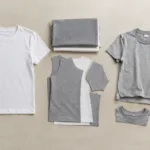
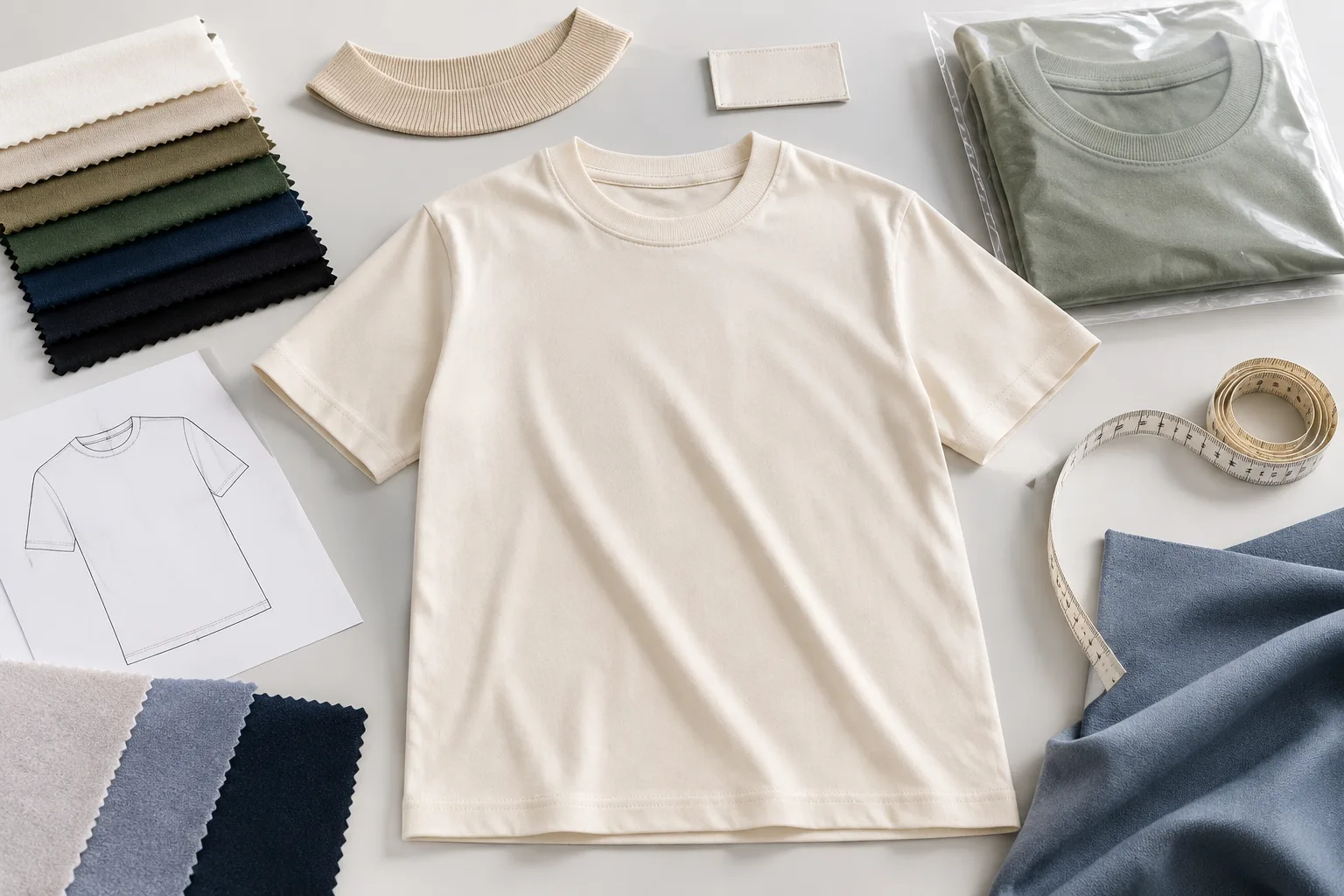
Hypothetical project brief: a buyer needs a unisex heavyweight knit T-shirt for retail, with a rib collar, screen-printed front graphic, woven main label, recyclable individual packaging, sizes XS–3XL, 2 colors, and delivery to Los Angeles. The brief should also state target quantities by style, color, and size; fabric composition and weight requirements; measurement tolerances; testing or documentation needs; target timing; and whether an available fabric may replace custom development.
Product-specific research matters even within one category. A buyer reviewing t shirts manufacturers should still check whether each candidate supports the required knit structure, fabric sourcing route, decoration process, size range, and order profile.
Ask suppliers to separate minimums for finished garments, custom fabric, dyeing, printing, labels, and other trims. If an MOQ has no source or clear basis, record it as unverified and ask for written, project-specific confirmation. “Low MOQ” is not a universal quantity: feasibility can change with style count, colors, size allocation, customization, and material setup. For an early order, concentrating demand in a leading style and shared materials may reduce complexity, but the choice remains project-dependent.
Prompt ChatGPT with Search Constraints and Separate Discovery from Proof
Prompt ChatGPT with the brief and request candidates by product category, construction, material route, decoration, destination market, and order profile. Avoid asking only for the “best manufacturers in a country,” which encourages generic rankings rather than product-fit analysis.
A useful prompt is: “Create a candidate table for this sourcing brief. Include supplier name, official website, stated production role, relevant product evidence, source URL, page date if available, missing information, and verification status. Do not infer unknown facts. Distinguish manufacturers, sourcing agents, wholesalers, trading companies, and hybrid suppliers.”
Follow with challenge prompts: “Which claims lack an original source?” “Do any pages contradict the stated production role?” and “Which candidates show evidence for this exact garment rather than generic custom apparel?” Require original URLs instead of relying on AI summaries.
Directories can support discovery and cross-checking, but a listing is not an endorsement. For example, the US International Trade Administration’s official textile and apparel manufacturer directory covers roles including cut-and-sew, printing, finishing, spinning, and weaving. Its disclaimer also says participation is voluntary and listing does not guarantee compliance.
Keep a dated research log and refresh time-sensitive findings before outreach. Websites, certificates, product pages, and business roles can change. Public company claims, supplier-provided documents, and independent verification should remain separate evidence categories.
Compare the Production Route: Factory, Trading Company, or Hybrid Supplier
A trading company is not automatically unsuitable, and a factory label does not automatically provide better control. The relevant question is who performs and owns each step for the proposed order.
| Buyer need | Role to clarify | Evidence to request | Risk if unclear |
|---|---|---|---|
| Direct process control | Production site and line management | Site details and order workflow | Limited production visibility |
| Product development | Pattern and sample owner | Written development responsibilities | Slow or inconsistent revisions |
| Material sourcing | Fabric and trim purchaser | Supplier and approval process | Unapproved substitutions |
| Quality resolution | Inspection and corrective-action owner | Inspection plan and escalation route | Disputed accountability |
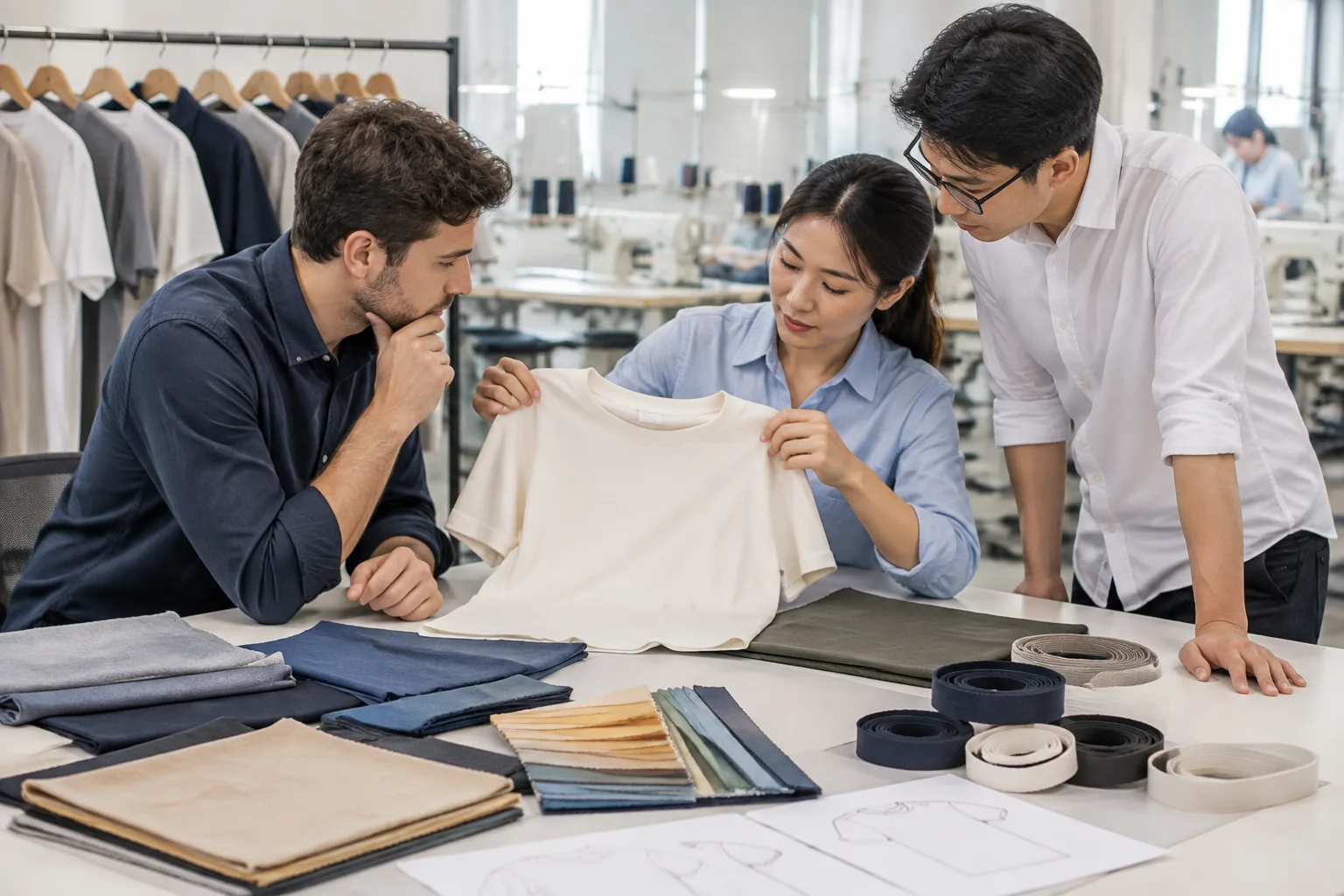
A direct factory may suit buyers who require close access to production decisions. A trading company may coordinate multiple specialized sources or provide consolidated communication. A hybrid supplier may combine internal functions with partner production. In every model, request a written role map covering the contracting entity, pattern development, sampling, fabric and trim purchasing, decoration, sewing, inspection, packing, shipping, and corrective action.
Also ask which production site or partner is proposed for the order and whether any critical operation will be subcontracted. Confirm the answer in the RFQ and contract rather than relying on a website label.
For example, Ninghow publicly describes itself as an apparel manufacturer headquartered in Shenzhen, China. That first-party description is useful background, but it is not an independent factory audit and does not identify the contracting legal entity or prove where every order would be produced. Buyers should verify those details for the specific project. Transparent responsibility and matching documentation matter more than forcing every supplier into a simple factory-versus-trader category.
Verify Supplier Claims at the Claim Level
That distinction should guide the next step: verify each important supplier claim separately instead of assigning one overall trust score. A candidate can have a credible website but still leave the contracting entity, production site, or product fit unclear.
Match the Entity to the Order
Record the company name shown on the website, the proposed contracting entity, business address, contact route, and the name that would appear on the quotation or invoice. These should be reconciled before sampling. A brand name, factory name, and trading-company name may describe different parties, so ask who is responsible for production, quality decisions, payment, and corrective action.
Also compare the stated address and contact details across the supplier’s official pages, quotation, company documents, and other authoritative sources available for the relevant market. A directory listing can support discovery, but voluntary listing is not an endorsement or proof of order-specific performance.
Check Capability Against the Garment
Broad category language is not enough. Compare the supplier’s product pages, construction details, development examples, and sample information with the actual garment: fabric type, weight or hand feel, silhouette, seams, trims, decoration, labels, packaging, and sizing. Ask the supplier to identify which operations are performed directly and which are assigned to partners.
Request evidence tied to the claim being made. Useful records may include relevant development samples, material or trim information, production-role explanations, quality-control documents, and current commercial terms. The evidence should describe the proposed garment or a genuinely comparable process, not merely show unrelated product photos.
Verify Certifications by Scope
For a certification claim, record the certificate number, certified legal entity, site or facility, certification body, scope, and validity. Check those details through the issuing organization’s official system or directory. A logo, badge, or screenshot does not establish that the certificate covers the proposed factory, material, process, or finished garment.
For example, the Textile Exchange certified-company directory can help confirm scope-certificate information within its stated system. Finding a company in a directory still does not prove that every product or facility is covered. Keep the certificate evidence separate from the supplier’s general marketing claims.
Keep a Claim-Level Record
For every material claim, record the source, verification date, status, open question, and consequence if the evidence is missing. Mark the item as verified, partly supported, clarification required, or paused. This prevents a strong sample, fast reply, or attractive price from masking an unresolved identity or certification issue.
Send One Consistent RFQ and Test the Shortlist Through Sampling
Once the evidence is organized, send the same specification to each remaining candidate. Comparable inputs are essential: otherwise, different quotations may describe different garments and cannot support a useful decision.
Use One RFQ Brief
Include sketches or reference images, measurements, fabric composition and performance needs, color references, decoration artwork, labels, packaging instructions, quantity by style, color, and size, destination, and required documents. State which details are fixed and which alternatives may be proposed.
Ask every supplier to list assumptions, exclusions, material substitutions, MOQ basis, sample stages, approval points, quality checks, and production responsibilities. Require separate clarification for garment MOQ, fabric or dyeing minimums, trims, and color quantities where those conditions differ. If an MOQ has no source or definition, treat it as unresolved rather than as a confirmed commercial term.
Compare Like With Like
Review quotations only after confirming that each supplier priced the same garment, decoration method, packaging, quantity structure, destination, and delivery requirement. A lower headline quote may exclude development, special materials, decoration, packaging, or other required operations. Keep those exclusions visible in the comparison record.
For an early-stage order, ask whether focused styles and available material routes can simplify the project. Ninghow’s public low-MOQ guidance describes feasibility as dependent on fabric, customization, and production setup rather than a universal threshold. That is a project discussion point, not a guaranteed MOQ, price, capacity, or lead time.
Use Sampling as a Process Test
Review the sample against the approved specification, not only its appearance. Check construction, measurements, fabric hand feel, decoration placement, label application, packaging instructions, and the supplier’s response to corrections. Record each deviation and whether it was corrected in the next approval stage.
A responsive quotation or attractive sample does not by itself prove bulk-production suitability. Before selecting a supplier, retain unresolved risks for the contract and pre-production review, including responsibility for outsourced operations, material substitutions, quality ownership, and final approval.
Use a Buyer Decision Framework Before Selecting the Manufacturer
Make the final selection with a decision record that gives evidence and product fit more weight than AI visibility or a low initial quote. The shortlist is useful only when each candidate can pass the requirements that would materially affect the order.
Apply Hard Gates First
- Product fit: Can the supplier show relevant capability for the garment, materials, construction, decoration, and packaging?
- Role clarity: Is the contracting entity known, and is the production route documented, including important subcontracted operations?
- Evidence quality: Are claims supported by dated, relevant records rather than general website language?
- Commercial feasibility: Are MOQ conditions, assumptions, exclusions, and quantity structures written clearly?
- Sample control: Were measurements, construction, artwork, labels, and corrective actions reviewed against the specification?
- Quality responsibility: Does the supplier identify who owns checks, approvals, and corrections?
Pause or disqualify a candidate when a critical claim cannot be traced, the contracting entity remains unclear, certification scope does not match the requirement, or MOQ assumptions are unexplained. A pause is useful when the issue may be resolved with specific evidence; disqualification is appropriate when a hard requirement cannot be met or confirmed.
Document the Selection
For the chosen supplier, record why each hard gate passed and list every condition that must be confirmed before bulk production. Keep the final specification, written quotation, sample approvals, artwork approvals, MOQ answers, certification records, and production-role map together. This creates a practical reference if the order changes or a different contact becomes involved.
ChatGPT can help organize this comparison, identify missing questions, and summarize supplied evidence. It should not replace the buyer’s review of documents, samples, contracting terms, or project-specific confirmations.
For a project review, send the garment style or reference, expected quantity by style and color, size breakdown, fabric or material requirements, logo or decoration artwork, packaging needs, and delivery destination. Include any required certifications or documents and identify which details are fixed. Ninghow can assess the request against the specifications provided; project terms remain subject to confirmation.
Frequently Asked Questions
Can I trust an AI-generated clothing manufacturer list?
No. Treat an AI-generated list as a discovery lead, not supplier proof. ChatGPT may surface relevant names or summarize public pages, but you still need to verify the contracting entity, production role, product fit, certification scope, MOQ basis, and sample evidence through current, claim-specific records.
How should I prompt ChatGPT to find apparel suppliers for a specific garment?
Give ChatGPT a product-specific brief: garment type, construction, fabric needs, quantities, sizes, decoration, destination, documents, and hard exclusions. Ask it to separate discovery from proof, identify the source for each claim, flag missing evidence, and compare suppliers only when they meet the same constraints.
Is a trading company always unsuitable for clothing production?
No. A trading company may be suitable when it clearly manages production, quality, communication, and approved manufacturing partners. The key questions are who contracts with you, who controls the order, which operations are outsourced, and what evidence supports the proposed production route. Labels alone do not settle suitability.
What evidence should I request to verify an apparel manufacturer’s production role?
Request the proposed contracting entity, business address, production-role explanation, relevant capability materials, development or sample evidence, quality-control documents, and written responsibility for subcontracted operations. Match those records to the garment being ordered. Website category pages or unrelated product photos are weaker evidence than order-relevant documentation.
How can I verify whether a clothing certification applies to the right company and facility?
Check the certificate number, certified legal entity, facility or site, certification body, scope, and validity through the issuing organization’s official system or directory. Confirm that the scope matches the required material, process, facility, or product. A logo or company listing alone does not prove coverage of every garment.
What if a clothing manufacturer’s MOQ has no clear source or definition?
Mark the MOQ as unresolved and ask for its basis in writing. Confirm separate minimums for finished garments, fabric or dyeing, trims, colors, and customization where relevant. Do not compare quotations as equivalent until the supplier explains the quantity structure and confirms which assumptions apply to your project.