
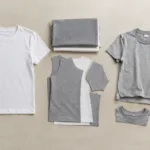
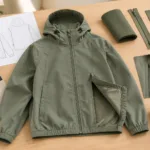
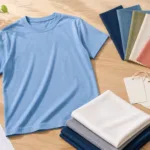
If you plan to start a small clothing business from home, choose print-on-demand when testing demand and outsourcing individual-order fulfillment matters more than controlling the garment itself. Choose custom manufacturing when fit, fabric, construction, labels, packaging, or a repeatable product specification defines the offer. Neither route is universally better: the right choice depends on what must be customized, who will hold inventory, and how orders will reach customers.
Print-on-Demand vs Custom Apparel Manufacturing: Which Launch Route Fits Your Brand?
Print-on-demand, or POD, commonly combines an available base garment with decoration after an order is placed. The provider’s catalog determines the available garments, colors, sizes, print methods, packaging, and fulfillment options. Confirm the exact scope because POD services differ.
Custom apparel manufacturing starts with a buyer’s product brief. Development may cover the pattern, measurements, fabric, construction, decoration, labels, and packaging, subject to manufacturer review. It requires more buyer involvement but is the more relevant route when the garment—not only its graphic—is proprietary.
| Launch priority | Route to investigate first | Critical check |
|---|---|---|
| Test artwork with uncertain demand | POD | Is the available base garment acceptable? |
| Outsource direct-to-customer routing | POD | Who handles returns and service issues? |
| Develop a distinctive silhouette | Custom manufacturing | Are measurements and construction defined? |
| Control labels and packaging | Custom manufacturing | Can each detail be sampled and approved? |
2 hypothetical launch decisions
Hypothetical 1 — Go with POD for the test. Situation: A founder wants to test 3 graphic T-shirts with uncertain demand. Available evidence: An acceptable blank, finished artwork, and a provider offering order-by-order fulfillment. Evidence gap: Actual print appearance, return handling, and size availability have not been verified. Outcome: Go with a limited test only after ordering representative samples and confirming fulfillment terms.
Hypothetical 2 — Clarify custom production. Situation: A private-label brand needs a shortened body, revised sleeves, custom labels, and branded packaging. Available evidence: A reference garment and initial sketches. Evidence gap: No measurement chart, fabric specification, grading rules, or approved packaging details. Outcome: Clarify the specification with a manufacturer before approving samples or planning production.
Initial order size alone should not decide the route. Demand confidence, SKU count, fulfillment model, quality-control involvement, and the importance of product differentiation all matter.
Compare Inventory Risk, Cash Exposure and Fulfillment Responsibility
Apparel inventory risk includes more than unsold finished goods. Buyers should identify who owns blank garments, decorated products, packaging, and rejected or returned items at every stage. The following table describes common operating models, not universal supplier terms.
| Decision area | Typical POD route | Typical custom route | Buyer question | Launch implication |
|---|---|---|---|---|
| Finished goods | Produced after customer orders | Produced to a planned order | When does ownership transfer? | Changes cash exposure and storage needs |
| Size and color depth | Limited by provider availability | Planned in the order breakdown | Which variants must remain available? | More SKUs increase planning complexity |
| Fulfillment | Often routed by the POD provider | Buyer arranges storage and distribution unless otherwise agreed | Who picks, packs, ships, and handles exceptions? | Defines operational workload |
| Packaging | Selected from available options | Can be specified, subject to review | What can be customized and validated? | Affects brand consistency |
| Returns | Depends on provider terms | Depends on the buyer’s sales and logistics model | Who receives, inspects, and records returns? | Creates handling and replacement obligations |
| Restocking | Depends on blank and decoration availability | Requires production planning | What triggers replenishment? | Stockouts remain possible under either route |
Avoiding finished-goods inventory does not eliminate artwork setup, sampling, product limitations, or fulfillment failures. Model demand uncertainty, launch frequency, SKU count, and replenishment triggers before comparing routes.
For a first custom order, concentrating demand in focused styles and shared material routes can reduce unnecessary complexity, but it does not guarantee lower cost or eliminate inventory exposure. A hybrid sequence may also work: test a narrow graphic concept through POD, then evaluate custom development if demand and differentiation justify a defined product.
Customization Limits: Blank T-Shirts, Cut-and-Sew Fit and Brand Details
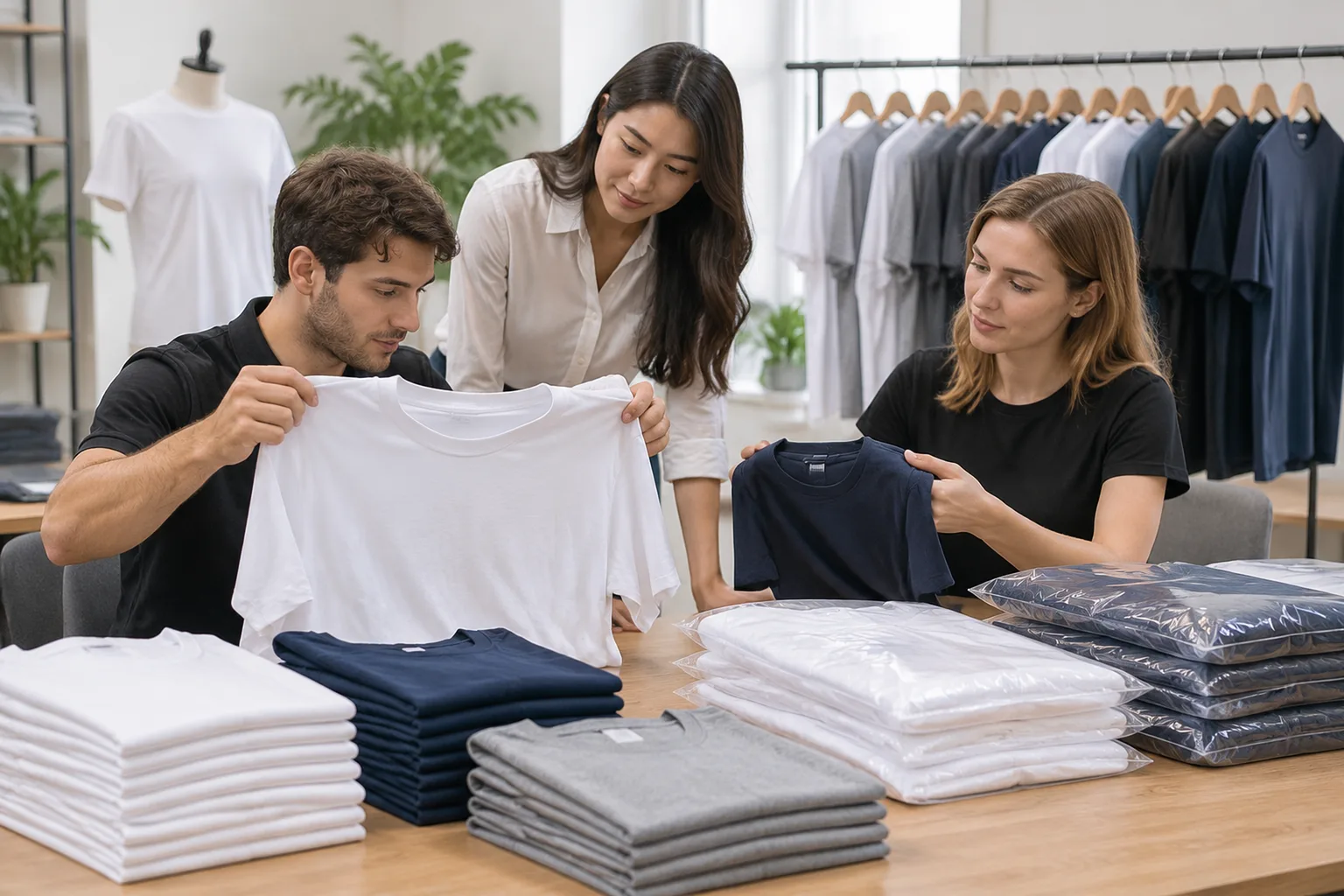
Can POD produce a custom fit? Only when the required fit already exists among the provider’s base garments or selectable fit options. Printing artwork on a blank changes its appearance, not its pattern, proportions, grading, or seam construction. A genuinely new fit normally requires development and supplier confirmation.
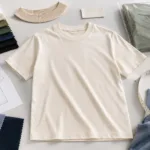
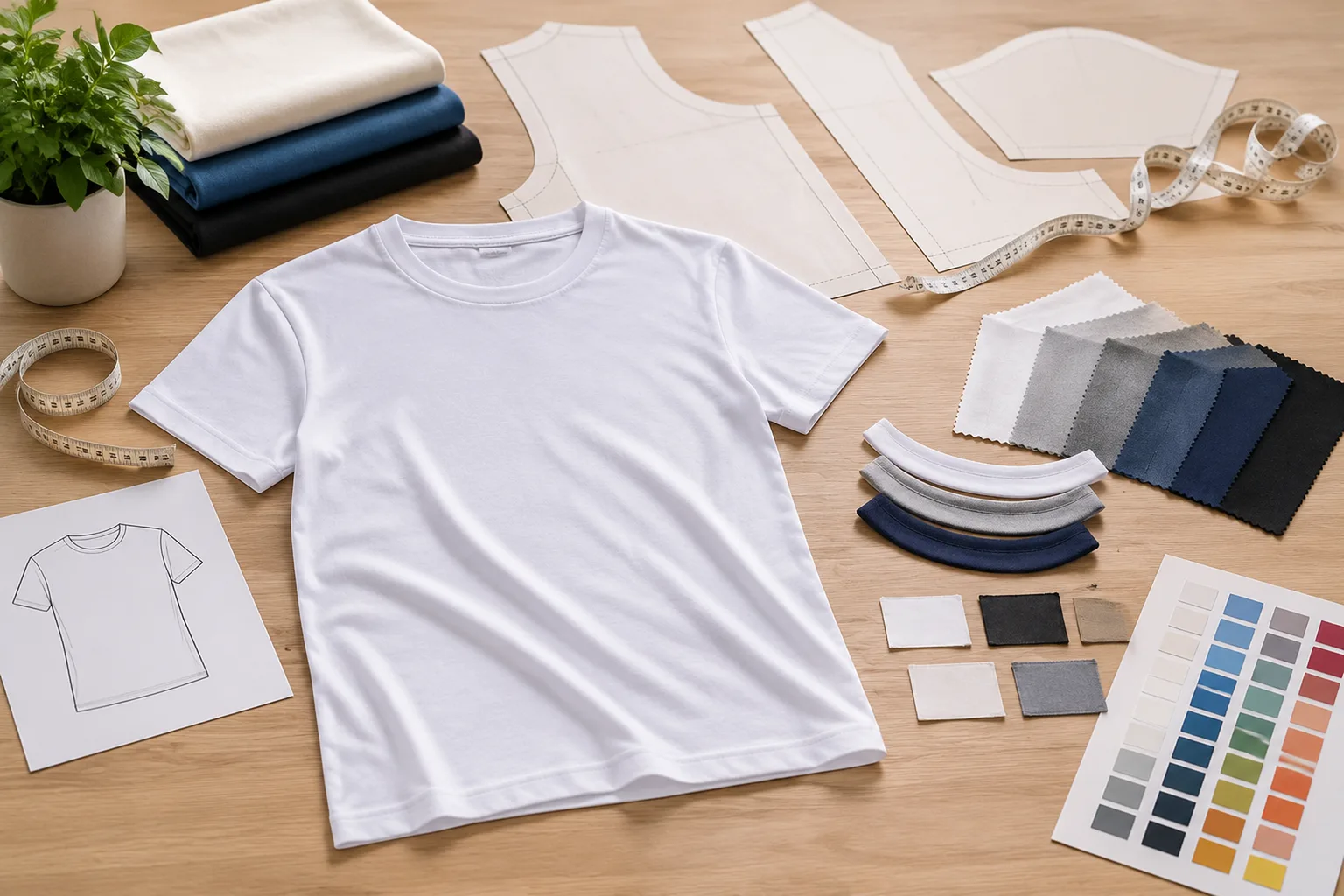
This is the central distinction in blank T-shirts vs cut-and-sew apparel. With a blank, buyers select from existing body lengths, sleeve shapes, necklines, fabrics, and size ranges. Cut-and-sew development can address those elements individually, but each choice must be converted into measurable requirements.
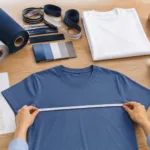
- Fit: finished garment measurements, tolerances, size range, grading, and intended ease.
- Construction: neckline or collar shape, placket where relevant, seam type, hems, and reinforcement points.
- Materials: composition, weight or construction description, surface, color, stretch behavior, and care expectations.
- Brand details: artwork placement, label content and position, hangtags, folding, and packaging.
Choose POD when an available garment is acceptable and the graphic is the main differentiator. Investigate custom manufacturing when the silhouette, fabric behavior, construction, or coordinated brand system is central. Buyers comparing decorated blanks with custom development can use the t shirts manufacturers page as a starting point for discussing fit, fabric surface, artwork, sizes, and labels; all project details still require confirmation.
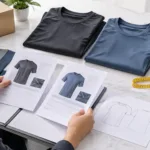
A reference sample can support development, but it is not a complete specification or permission to copy another party’s design. Record which details to retain, which to change, measured dimensions, construction observations, and relevant design authorization. Pair that record with a tech pack or measurement chart before drawing conclusions about feasibility.
Fabric, Decoration and Quality Checks That Change the Decision
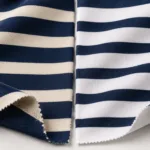
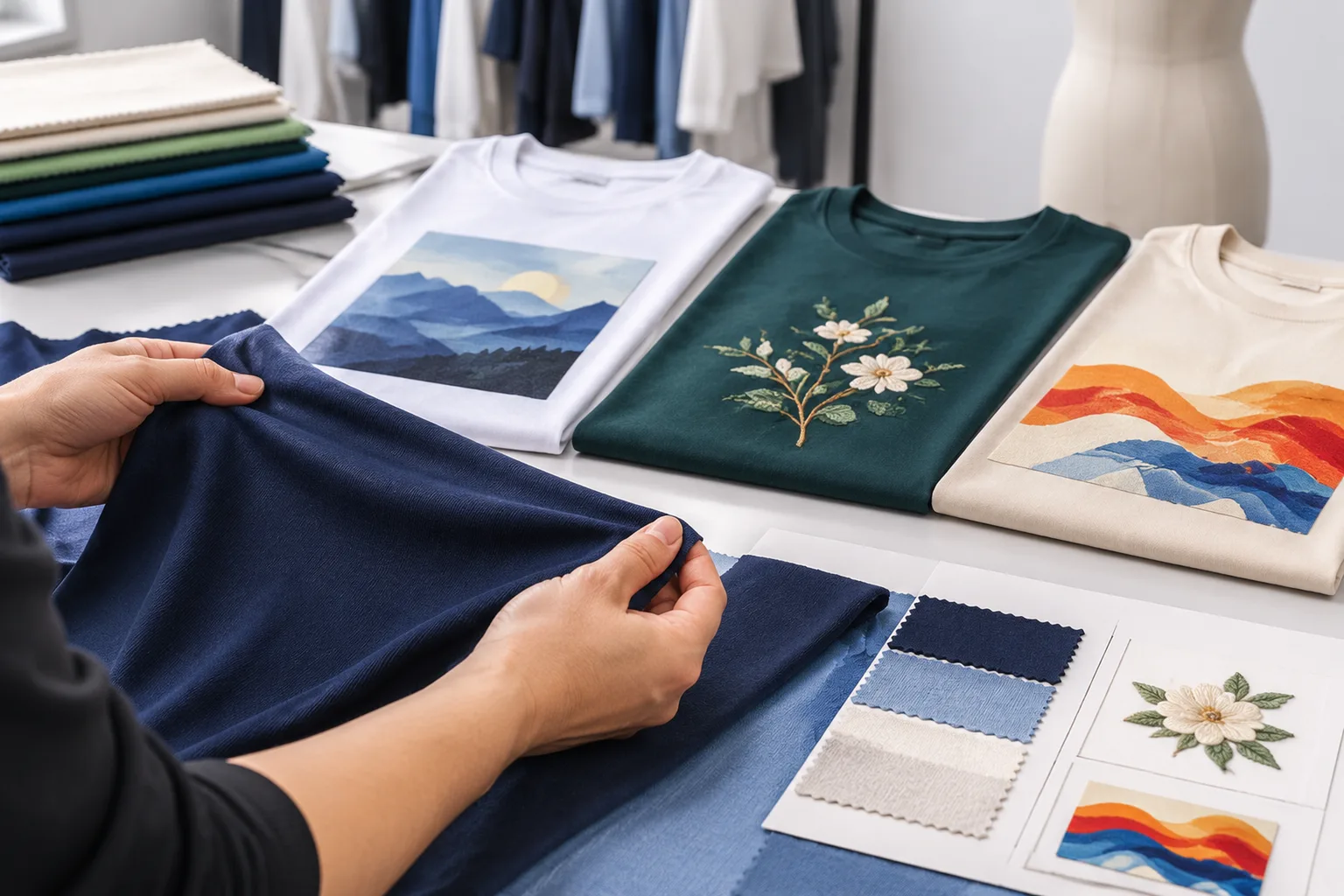
That specification should also define how the garment and decoration will be evaluated. Fabric hand, stretch, opacity, surface texture, coatings, and wash-care needs can change which decoration route is suitable. A digital mockup cannot show how artwork will interact with the actual material.
Screen printing, sublimation, embroidery, and heat transfer are possible decoration routes, but none is universally superior. Review the proposed method on the intended fabric using the actual artwork size and colors. Check placement, edge definition, fabric distortion, surface feel, color appearance, and the result after the agreed care trial. Suitability remains project-dependent.
Record comparable sample evidence
- Garment area and fabric or construction tested
- Decoration method, artwork dimensions, and colors
- Intended use and wash-care plan
- Lighting, movement, stretch, and review conditions
- Observed result, reviewer, date, and unresolved issues
For light-colored or fitted garments, assess opacity on a representative garment under consistent lighting, movement, and reasonable stretch. Fabric weight alone does not establish opacity. For uniforms, event apparel, or active use, add a structured wearer trial and separate personal fit preferences from movement restrictions, measurement problems, and functional defects.
A sample supports decisions about the defined combination of garment, fabric, artwork, and conditions. It does not prove that every color, size, fabric, or style will perform identically, and it is not a substitute for order-specific testing or agreed acceptance criteria.
How the Production Path Changes from Launch Test to Bulk Order
The move from POD to planned production should be driven by product readiness and demand confidence, not by a universal sales threshold. Consider bulk when fit, measurements, grading, decoration placement, labels, packaging, size range, and acceptance criteria are approved—and when expected demand supports the inventory commitment.
A controlled transition path
- Define the launch objective: Decide whether the next order is still testing artwork and demand or establishing a repeatable product.
- Select the product route: Confirm whether an available base garment remains acceptable or whether a buyer-defined pattern and construction are required.
- Prepare the specification: Document measurements, materials, colors, construction, decoration, labels, packaging, and care requirements.
- Review development evidence: Evaluate a development sample for fit, movement, measurements, appearance, and decoration behavior.
- Approve the production reference: Resolve comments and approve the relevant pre-production sample and written specification.
- Confirm the order plan: Agree quantities, color and size breakdowns, destination, responsibilities, inspection points, packaging, and approval gates in writing.
- Release production: Proceed only after commercial terms and unresolved risks have been reviewed for that order.
Switching too early can reproduce unresolved fit, grading, color, print, label, or packaging problems across finished inventory. Switching too late may limit launch planning or replenishment options. A brand whose available blank and artwork remain adequate can continue with POD while demand and priority SKUs become clearer. A buyer with an approved sample, repeatable specification, and defined delivery plan can evaluate planned production after supplier confirmation.
Keep an early custom range focused when possible: fewer priority styles and shared material routes can reduce first-order complexity. Any MOQ, production capacity, lead time, or replenishment arrangement must still be confirmed for the specific order. Sample approval also does not guarantee bulk consistency; written inspection responsibilities and acceptance criteria remain necessary.
Buyer Specification Brief: What to Send Before Requesting a Manufacturing Review
A manufacturer can give a more useful project review when the enquiry separates buyer requirements from assumptions about supplier capability. Use the following brief to organize the handover.
Product and use
- Garment category, intended use, target wearer, and selling market
- Reference images or a physical sample, with details to retain and details to change
- Design ownership or authorization where relevant
Fit and construction
- Measurement chart, tolerance expectations, size range, and grading requirements
- Silhouette, seams, neckline or collar, placket, pockets, reinforcements, and other critical construction details
- Fit concerns identified during wearer trials or previous sampling
Materials, color, and decoration
- Required fiber information, preferred fabric weight or hand if known, stretch, opacity, surface, and wash-care expectations
- Color references and the conditions under which appearance should be reviewed
- Artwork files, dimensions, placement, colors, and decoration route to test
- Main labels, care labels, size labels, hangtags, and other branding components
Commercial and approval plan
- Estimated initial quantity with size and color breakdown
- Target launch date, destination, and expected replenishment pattern
- Who will own inventory, storage, customer fulfillment, and returns
- Folding, bagging, carton, and other packaging requirements
- Required sample stages, measurement checks, decoration checks, wearer feedback, inspection responsibilities, and unresolved risks
Confirm destination-specific labeling, packaging, and regulatory obligations separately with appropriate specialists. Sending a brief does not establish feasibility, price, MOQ, capacity, lead time, or project acceptance.
If fit, the base garment, decoration, and fulfillment model are still undefined, POD may provide a simpler test. If those details are essential to the product identity, request a custom development review using a documented specification.
For a project review, send Ninghow the garment category, intended use, reference design or sample, fit and material requirements, artwork, labels and packaging needs, estimated quantity with size and color breakdown, target date, and delivery destination. Supplier capability and order terms remain subject to confirmation.

Frequently Asked Questions
Can POD produce my custom fit?
POD can meet your fit requirement only when a suitable fit already exists among the provider’s available base garments or options. Printing on a blank does not create a new pattern, body length, sleeve shape, grading system, or construction. Those changes generally require custom cut-and-sew development.
When should I switch to bulk?
Consider switching when demand supports planned inventory and the fit, measurements, grading, fabric, decoration placement, labels, packaging, size range, and acceptance criteria are approved. Confirm order-specific quantity, timing, capacity, inspection, and replenishment terms before release; an approved sample alone does not guarantee bulk consistency.
Is print on demand better for testing a new apparel idea?
POD can be useful for testing artwork, customer response, and priority SKUs while limiting finished-goods inventory exposure. It is less conclusive when the idea depends on a proprietary fit, fabric, construction, or coordinated packaging. Test the parts POD can actually represent rather than treating sales as validation of an undeveloped garment.
What is the difference between blank T-shirts and cut-and-sew apparel?
A blank T-shirt is an existing garment that receives decoration and possibly limited branding changes. Cut-and-sew apparel is developed from specified materials, patterns, proportions, grading, and construction. The second route offers greater product control but requires clearer specifications, sampling, approvals, and inventory planning.
Who owns inventory in a print-on-demand versus custom manufacturing model?
In a common POD model, the provider manages available blanks, decorates after an order, and may fulfill directly, although responsibilities vary. In custom manufacturing, the buyer commonly commits to finished inventory and arranges storage and fulfillment. Confirm ownership of blanks, finished goods, packaging, returns, stockouts, and damaged units contractually.
Can a custom apparel manufacturer handle labels, packaging and decoration?
A custom manufacturer may offer decoration, labels, hangtags, folding, and packaging, but availability and suitability depend on the project. Provide fabric details, artwork dimensions and colors, care requirements, label files, packaging specifications, quantities, and destination. Obtain written confirmation rather than assuming every option applies to every fabric or order.