


Apparel MOQ per color is based on how many units sit in each colorway or variant, not simply on the total order. A 100-unit order in 2 colors may mean 50 units per color before the manufacturer reviews the clothing size breakdown, fabric route, trims, decoration, and production setup. This low moq clothing manufacturer guide shows how to separate those quantities and what to confirm before requesting a project-specific assessment.
How Apparel MOQ per Color Works: A 100-Unit Example
Apparel MOQ per color means the quantity a manufacturer evaluates for each colorway or variant. It is not automatically the total quantity across every color, style, and size.
Hypothetical example: imagine 1 style ordered in 2 colors for a total of 100 units. Before reviewing the size allocation, the order may need to be considered as:
- Color A: 50 units
- Color B: 50 units
If each color is divided across 4 sizes, that does not mean 12.5 units of every size. The buyer must provide an intended size ratio, such as a heavier allocation in medium and large and fewer units in the smallest and largest sizes. The exact ratio depends on the intended market and sales plan.
This distinction matters because each color may involve its own fabric route, color development, trim matching, decoration approval, or production setup. A larger headline order can still contain color batches that are too small for a particular material or setup. Conversely, a focused order with fewer colorways may be easier to evaluate even when its total quantity is similar.
Ninghow’s public low-MOQ guidance describes feasibility as project-specific and connected to fabric, customization, and production setup rather than a universal threshold. Treat the 100-unit calculation as a planning example, not as a production limit or quoted MOQ. For an RFQ, show the quantity per style, quantity per color, size ratio, materials, and customization details together.
Separate Style, Color, and Size Quantities Before Comparing MOQ
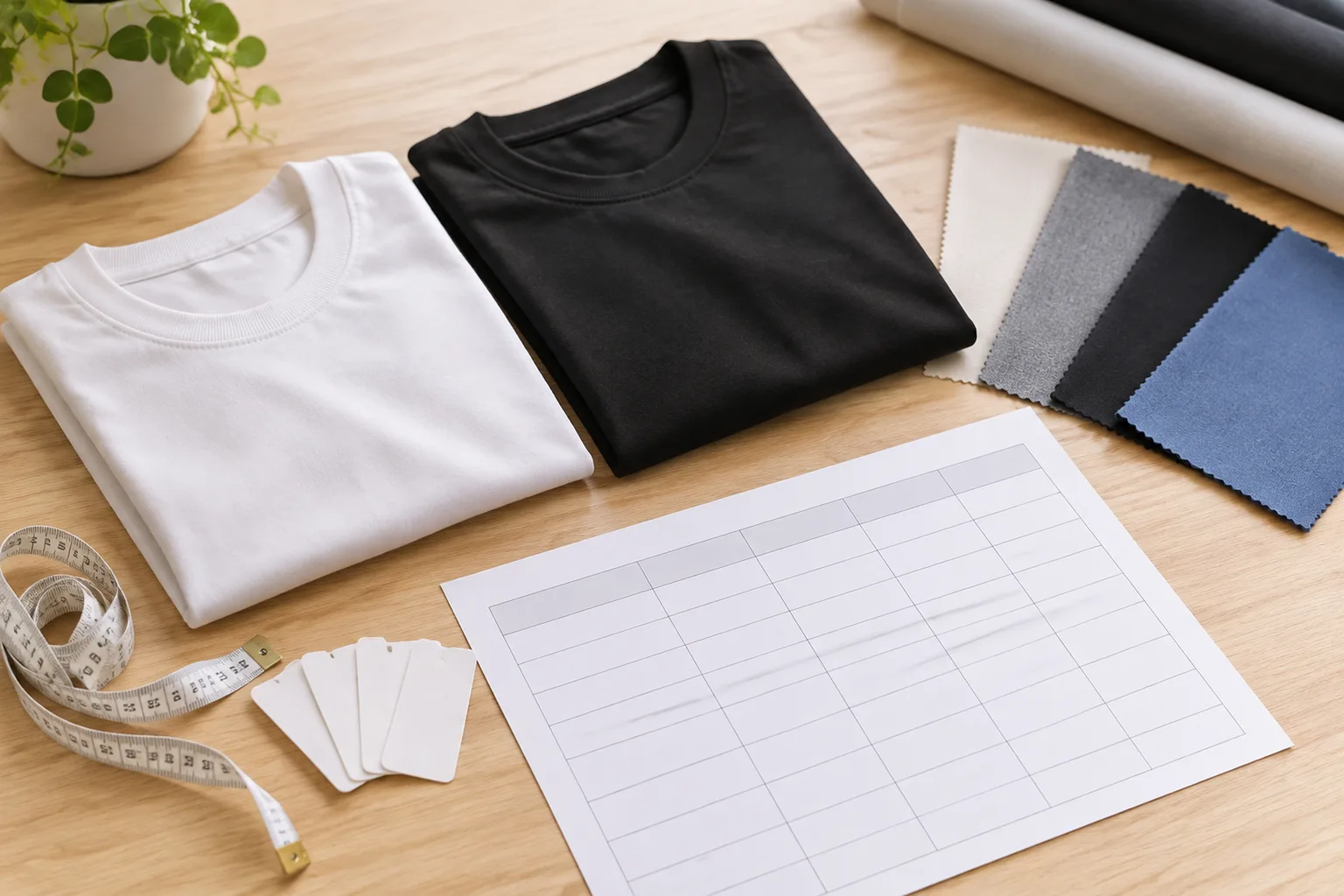
Before comparing an apparel MOQ, break the order into practical variant lines. The first distinction is quantity per style: how many units belong to one garment design. The second is quantity per color: how many of those units use one specific colorway. Size quantities sit underneath each style-color line.
Two styles with 1 color each are not automatically equivalent to 1 style with 2 colors. They may use different patterns, fabric consumption, trims, labels, decoration files, or sewing operations. Even when the base fabric appears similar, the manufacturer should confirm whether the material can be purchased or planned together while keeping each garment’s production quantity separate.
| RFQ field | What to record | Why it matters |
|---|---|---|
| Style | Unique design or pattern reference | Separates garment construction and production requirements |
| Colorway | Color name or approved reference | Shows the quantity evaluated for each color |
| Total units | Units for that style-color line | Prevents the full order total from hiding small batches |
| Size breakdown | Units by size, not only the size range | Supports material, sampling, allocation, and checking decisions |
| Material route | Fabric specification and whether it may be shared | Allows fabric conditions to be reviewed separately |
| Trim and label variant | Thread, rib, zipper, label, or packaging differences | Identifies variant-specific purchasing and approval questions |
| Decoration | Artwork, placement, technique, and version | Separates approval and setup requirements |
| Order status | Firm quantity, forecast, or replenishment plan | Clarifies which quantities are committed and which are assumptions |
Use one row for each unique style-color combination and place the size quantities inside that line or in a linked schedule. Also identify whether material is intended for an initial run, a repeat program, or both. A manufacturer can then review garment quantity, fabric minimums, and trim requirements as separate questions instead of treating the order total as one production number.
For a buyer-ready submission, confirm these fields before comparing quotations:
- Every style and color has a stated unit quantity.
- Every style-color line has a size ratio or exact size allocation.
- Shared fabric is described by composition, construction, weight, width, color, and finish.
- Decoration, label, and packing differences are identified by variant.
- Firm quantities are separated from forecasts and possible replenishment units.
Why Colorways Can Change Fabric, Trim, and Decoration Requirements
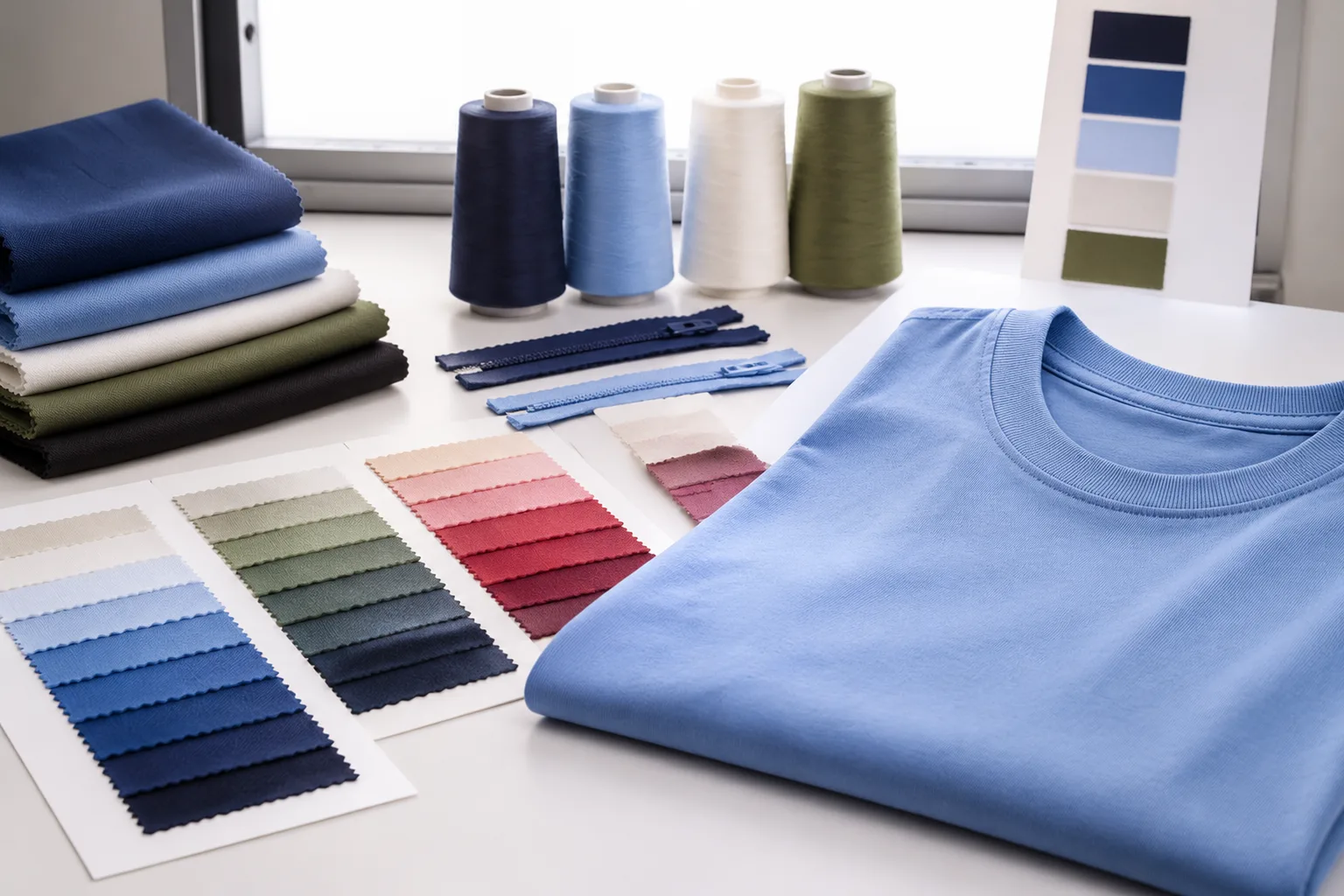
Colorways can change more than the appearance of a garment. Fabric color development, dye-lot planning, usable width, shrinkage assumptions, and pattern consumption can all affect the material calculation. The correct inputs should come from the actual fabric specification and size mix rather than a general estimate based on garment weight.
A color identifier alone also does not prove that the physical fabric, trim, and decoration will match. Color perception can vary with lighting and material, and color perception can vary with lighting and material. Buyers should define the reference standard, review physical approvals where applicable, and consider the lighting used for the main fabric and visible trims. Do not assume that a color name or code establishes an absolute match.
Review color-sensitive components separately. These may include thread, rib, labels, zippers, buttons, patches, packaging components, or other visible trims. The relevant question is not whether every component must create a separate MOQ, but whether its purchasing, matching, and approval conditions differ by colorway.
Decoration creates another layer. Embroidery, printing, and patches may require separate approval when artwork size, placement, or colors change, even on the same base garment. Artwork versions should therefore be listed by style and color rather than described only as “logo included.”
Can 2 styles share a fabric order? Potentially, if the fabric composition, construction, weight, usable width, color, finish, and purchasing conditions align. That does not automatically combine the garment quantities into 1 MOQ line. Each pattern may consume fabric differently and still require separate cutting, sewing, decoration, and size planning. Ask the manufacturer whether the 2 styles can be grouped for a fabric purchase while keeping material consumption and garment quantities separate for each style.
Does Adding Sizes Increase MOQ? Separate Size Mix from Variant MOQ
Does adding sizes increase MOQ? Not automatically. Adding sizes usually changes the clothing size breakdown within each style-color line; it does not by itself create a new color MOQ. However, a broader size range can change the material calculation, sample coverage, allocation plan, and production review.
For example, 1 color spread across 5 sizes presents a different planning question from 5 colors offered in 1 size each. The first case requires a size ratio and enough information to assess the pattern and material needs across sizes. The second case creates more color-specific material and approval lines. Neither should be judged from the total unit count alone.
Submit the actual size ratio instead of only writing “sizes XS–XL.” A manufacturer needs to know whether the order is evenly distributed or concentrated in certain sizes. A small allocation in a less common size may also affect how the buyer plans samples, checks measurements, and verifies the finished shipment.
Size grading, marker efficiency, fabric width, and consumption should be confirmed against the applicable pattern and material. Do not assume that more sizes always raise MOQ, price, or lead time, and do not assume that adding sizes has no effect on feasibility. The reliable basis is the approved style-color-size matrix reviewed with the selected fabric and customization details.
Ninghow’s public quality-control guidance places size ratios and measurements within final checks. That makes the size breakdown important at both ends of the order: it supports the initial quotation and production review, then provides a reference for checking the quantities and measurements delivered. Confirm the style-color-size quantities before sampling or quotation rather than relying on a generic size-count rule.
Two Hypothetical Buyer Scenarios: Focused First Run or Broader Assortment
That approved style-color-size matrix also reveals whether an assortment is concentrated enough to be practical. The following scenarios are hypothetical planning examples, not customer cases, production commitments, or confirmed MOQ offers.
Scenario A: Focused first run
A startup plans 100 units of 1 style in 2 colors. Shared construction keeps the product range focused, but each color has only 50 units before the clothing size breakdown is applied. If demand is uncertain, the buyer could prioritize 1 core color, reduce the number of low-demand sizes, or use an available material route. The manufacturer still needs the quantity for every style-color-size combination.
Scenario B: Broader uniform assortment
A uniform buyer plans 2 styles in several sizes, with different logos and delivery destinations. A shared fabric order may be possible if composition, construction, color, finish, usable width, performance requirements, and purchasing conditions align. However, combining fabric demand does not automatically combine the garment MOQ, quantity per style, decoration setup, labels, or packing requirements.
| Buyer objective | Quantity structure | Likely questions | Simplification option | Required before approval |
|---|---|---|---|---|
| Test initial demand | 1 style, 2 colors, 100 units total | Does each 50-unit color line work after size allocation? | Focus colors and sizes | Per-color size ratio, fabric route, trims, decoration |
| Supply teams or locations | 2 styles, multiple sizes, logos, and destinations | Can fabric be shared without merging garment requirements? | Standardize compatible materials and labels | Fabric specifications and complete variant matrix |
In both cases, the headline total is only a starting point. Scenario A should prioritize a focused color and size plan. Scenario B should confirm fabric compatibility and map every logo, label, and destination before assuming consolidation.
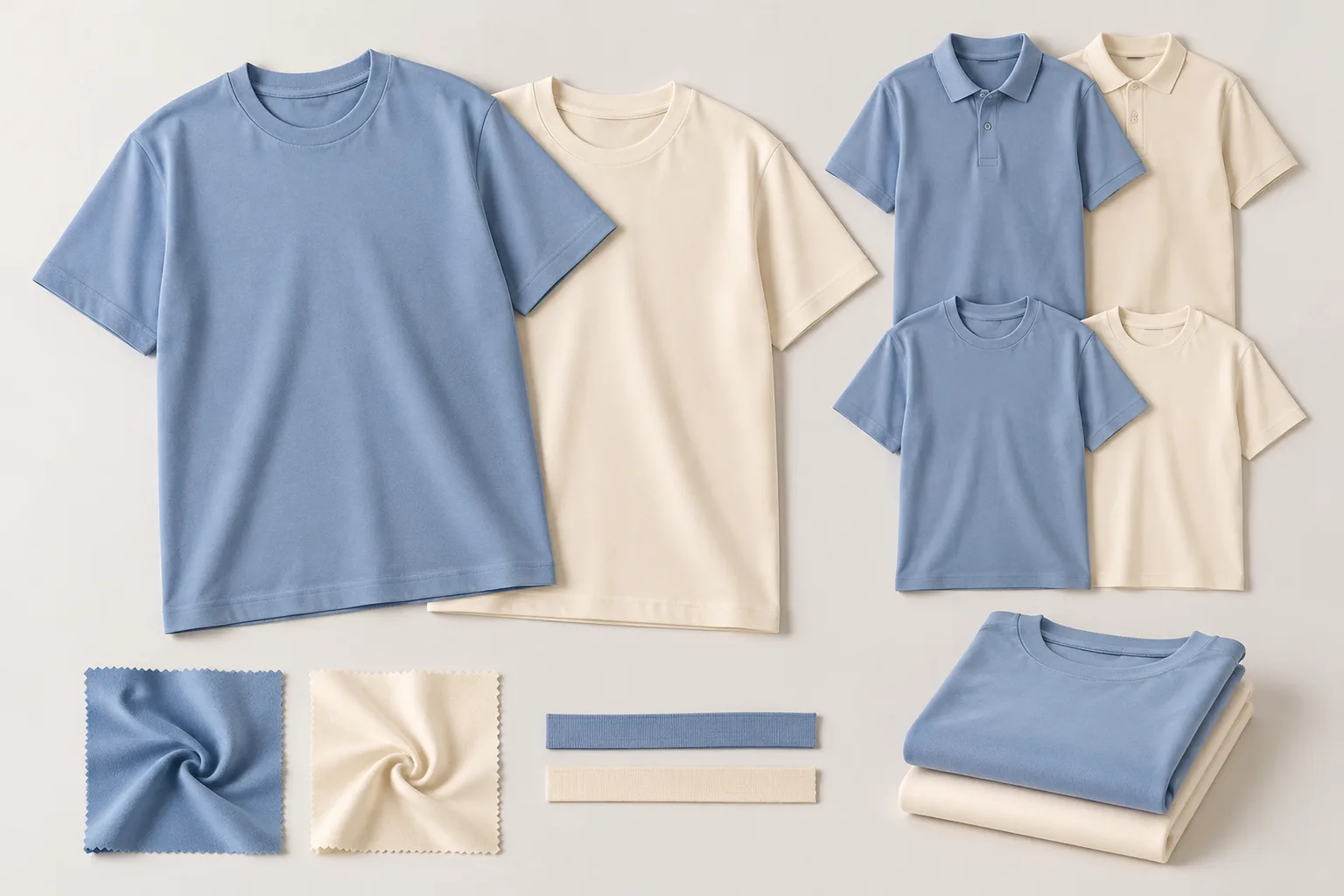
A Manufacturer-Ready MOQ Confirmation Process
A manufacturer-ready RFQ should make every quantity assumption visible. Use this sequence before treating an apparel MOQ per color as confirmed:
- Define each variant. List every style, colorway, logo or artwork version, label version, and delivery destination. Assign a unique reference wherever a combination must be produced, approved, packed, or allocated separately.
- Enter quantities. Show the total quantity, quantity per style, quantity per color, and clothing size breakdown for every variant. Identify whether figures represent an initial order, a repeat order, or a nonbinding forecast.
- Attach specifications. Provide the tech pack or specification brief, including fabric composition and construction, color reference, trims, decoration, measurements, labels, packaging, and destination requirements.
- Separate the minimums. Request written clarification of garment MOQ, fabric or dyeing minimums, trim minimums, and decoration setup. If 2 styles may share material, identify the exact specification and ask whether the purchasing conditions permit consolidation.
- Define approvals. Record the required samples and approval points for physical color, decoration placement, size-set coverage, labels, and packing. A color identifier alone does not establish a physical match across different materials or lighting.
- Document the agreement. Put accepted totals, per-color quantities, size ratios, approved substitutions, and allocation rules into the quotation or purchase documents. Do not leave them only in informal messages.
For repeat programs, clarify whether core material can be reserved, who owns it, the applicable lot, the reservation period, and how unused stock or substitutions will be handled. Material reservation is a commercial term to document, not an assumed free service or capacity guarantee.
Check Quantity, Size, Decoration, Labels, and Packing by Variant
Before shipment, reconcile the approved variant matrix with the purchase order, production records, decoration versions, label files, and packing list. Matching the total carton quantity is not enough if units have been assigned to the wrong size, logo, or destination.
- Confirm units for every style-color-size line.
- Check measurements against the agreed specification and tolerance.
- Match each decoration version, placement, and approved reference.
- Verify main labels, care labels, size labels, barcodes, and any destination-specific versions.
- Compare individual packing, prepack ratios, carton marks, and destination allocations with the approved packing sample.
- Retain approved color references and material-lot information for replenishment where fabric and trims must remain visually compatible.
Choose prepacks when fixed ratios support downstream allocation; choose open-size packing when receivers need more flexibility by size. Either method requires agreed ratios, barcode data, carton requirements, and a packing sample before bulk packing. This is a planning choice, not evidence that every manufacturer provides every fulfillment service.
Ninghow’s published quality-control guidance includes size ratios, measurements, decoration, labels, and packing-list consistency in final checks. The project-specific inspection plan and acceptance rules still need confirmation. Keep quantity variance, measurement tolerance, and defect acceptance as separate contractual topics: satisfying one does not establish compliance with the other 2, and an inspection pass does not mean every individual unit was examined or found identical.
For a project review, send Ninghow the garment type, tech pack, quantity per style and color, clothing size breakdown, fabric and trim requirements, logo files and placements, label and packing details, delivery destination, and target timing. The applicable MOQ and material-sharing options can then be evaluated against the actual specification.
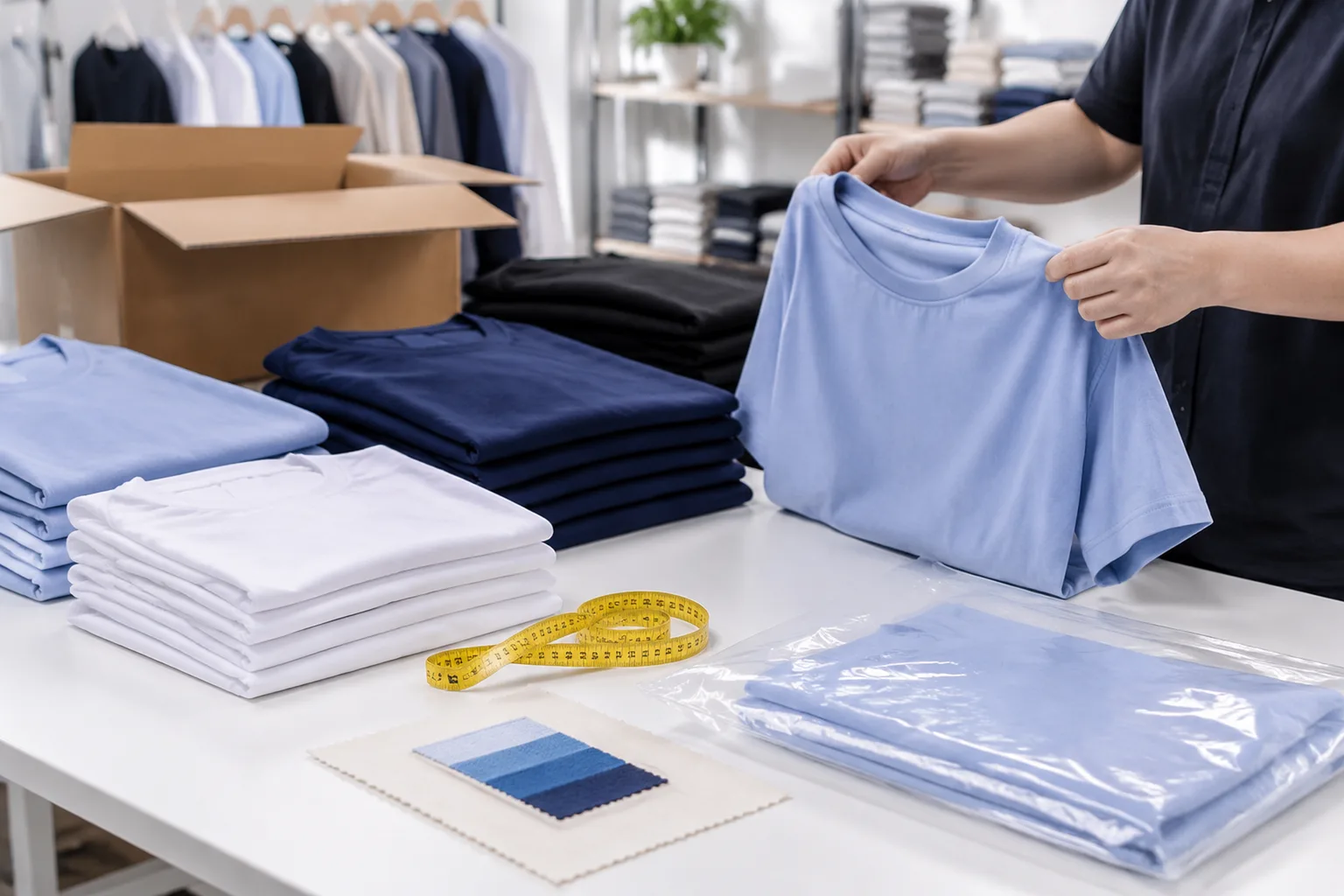
Frequently Asked Questions
What does apparel MOQ per color mean?
Apparel MOQ per color is the minimum quantity a manufacturer or material supplier evaluates for each colorway, rather than for the order only. A 100-unit order split across 2 colors may therefore be reviewed as 2 lines of 50 units before sizes, trims, decoration, and material conditions are considered.
Is apparel MOQ calculated per style, per color, or for the total order?
It can involve all 3 levels. Manufacturers may evaluate the total order, quantity per style, and quantity per color separately, while fabric, trims, or decoration can have their own minimums. Buyers should request a written breakdown instead of assuming that combined units across unrelated styles or colors satisfy every requirement.
Does adding sizes increase MOQ?
Adding sizes does not automatically create a new color MOQ, but it changes the clothing size breakdown and may affect fabric consumption, pattern coverage, sampling, marker planning, or feasibility. The effect depends on the garment, material, size range, and quantities, so there is no reliable universal size-count rule.
Can two styles share a fabric order?
Two styles may share a fabric order when their composition, construction, color, finish, usable width, performance requirements, and purchasing conditions are compatible. This must be confirmed for the selected material. Shared fabric demand does not automatically combine garment MOQ, decoration, trim, labeling, or quantity-per-style requirements.
Does each color need separate fabric or trim approval?
Separate approval may be needed when colors, substrates, trims, or decoration methods differ. A color code alone does not prove that fabric, rib, thread, print, and labels will appear matched under relevant lighting. Confirm physical references, approval conditions, and any permitted variation for the actual materials.
How should I show a clothing size breakdown in an apparel RFQ?
Show sizes as quantities within every style-color line, such as style reference, color, XS, S, M, L, XL, and line total. Add logo version, label version, packing method, and destination where applicable. Check that each row and column reconciles with the stated total order quantity.