

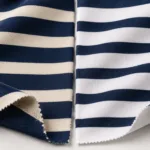
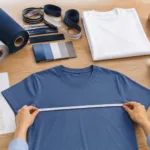

For a small apparel order, choose stock fabric when an available material and color meet the brief; choose custom fabric when distinctive color, hand feel, construction, or performance is worth additional development and approval. This stock fabric vs custom fabric low moq apparel decision should account for both the first order and future replenishment. Stock can reduce setup complexity, but it does not guarantee identical reorders. Custom color or fabric can provide greater control, but its material-level requirements may differ from the finished-garment quantity.
Stock Fabric vs Custom Fabric: Which Route Fits a Small Apparel Order?
The practical decision rule is to use the simplest material route that satisfies the product brief and continuity plan. Stock fabric sourcing suits buyers who can accept an available composition, weight, usable width, finish, and color. Custom development is more defensible when those available choices cannot deliver the required appearance, feel, behavior, or repeatability.
A low garment quantity does not mean every input has the same minimum. Ask the manufacturer to assess the garment quantity, fabric route, dyeing requirement, trims, and production setup separately. Ninghow’s low-MOQ guidance likewise presents feasibility as project-specific rather than a universal threshold. Share the style count, units per color, size distribution, and proposed material route for review.
| Decision area | Stock fabric | Custom fabric or color |
|---|---|---|
| Availability | Confirm whether it is physically held, sourceable, or awaiting replenishment | Confirm development and production requirements |
| Color control | Limited to verified shades and lots | Uses a defined reference and approval path |
| Lot continuity | Not automatic; record the supplied lot | Plan bulk shade control and retain approval evidence |
| Reorder risk | Material may change, sell out, or be discontinued | Repeatability still requires records and supplier confirmation |
| Approvals | Approve actual cloth, shade, and matching trims | Approve development sample, color sample, and bulk reference |
| Material reservation | Ask whether a specific lot can be reserved and on what terms | Clarify ownership and handling of surplus material |
| Manufacturer question | “What quantity and lot are available now?” | “Which minimum applies to fabric, dyeing, each color, and garments?” |
2 hypothetical sourcing decisions
- Startup test order. The buyer has 1 focused style, a limited color range, and flexible material preferences. Available evidence includes an actual stock swatch and current lot details; the gap is future replenishment evidence. Outcome: Go for the test order, while treating any reorder as subject to fresh confirmation.
- Seasonal uniform program. The buyer expects replenishment and needs consistent presentation across delivery periods. A stock fabric is currently available, but there is no reservation record, lot-continuity plan, or approved substitute. Outcome: Clarify until reservation terms or a documented substitution and reapproval process are agreed.

Verify the Stock Fabric Before You Treat It as a Low-Risk Option
“Stock” describes a sourcing route, not a complete apparel fabric specification. Before treating it as low risk, obtain dated confirmation of composition, weight or GSM, usable width, construction, finish, color reference, available quantity, and current lot. Distinguish material physically available now from material that is merely sourceable or expected to be replenished.
Approve shade against the actual cloth or a retained physical reference under agreed viewing conditions. A color identifier alone cannot establish a physical match because lighting and material affect perception; lighting-dependent color differences can reveal mismatches that were not visible under another light. Review matching rib, binding, thread, labels, and decoration with the shell fabric rather than separately.
Copyable stock-fabric verification checklist
- Material status: physically available, sourceable, or planned replenishment
- Composition, construction, weight or GSM, usable width, and finish
- Supplier reference, color reference, lot or roll details, and record date
- Available quantity and whether it is reserved for this order
- Approved swatch location, viewing conditions, approver, and approval date
- Matching rib, binding, thread, labels, and decoration references
- Reorder status and process if the original lot is unavailable
Also request the basis for material consumption. The estimate should use the actual pattern, usable width, size mix, stripe or check matching where relevant, shrinkage assumptions, and purchasing allowance. Keep net consumption separate from allowance or waste. Garment weight alone is not a sufficient basis, whether reviewing basic programs or quotes from t shirts manufacturers.
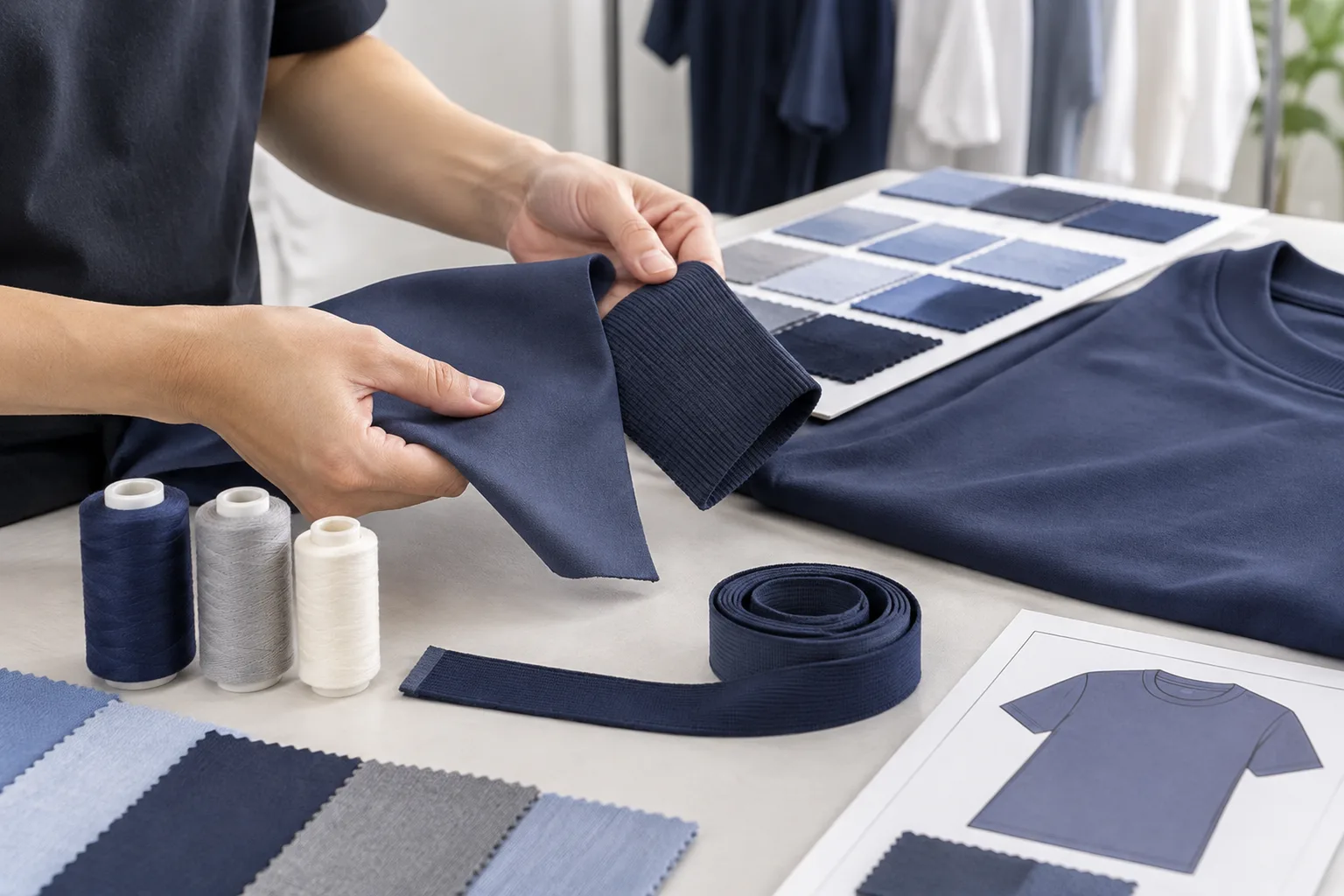
When Custom Fabric or Custom Color Justifies the Extra Setup
Custom fabric is justified when available stock cannot meet a defined requirement for hand feel, construction, appearance, stretch behavior, finish, or repeatability. The buyer must first describe the intended use and required outcome. An AI tool should not independently select yarn, fiber, weight, or construction without that brief and a manufacturer’s technical review.
Yes, custom color can change MOQ. A custom shade can introduce separate development, dyeing, and per-color requirements even when the finished-garment order is small. Ask whether each stated minimum applies to fabric production, dyeing, each color, or completed garments. There is no reliable universal number; feasibility needs current confirmation for the specified material, shade count, style, and setup.
Define the approval path before development begins:
- Provide a physical reference or traceable color standard and identify the affected fabric and trims.
- Agree on viewing conditions and who can approve the color.
- Review a lab dip or equivalent development sample where applicable.
- Record the approved reference, reviewer, and date.
- Compare bulk material with that reference and retain evidence for later orders.
If custom development is impractical, request stock alternatives, but do not treat a substitute as equivalent merely because composition and GSM appear similar. Compare affected appearance, fit, shrinkage, decoration compatibility, and required performance. For stretch knits, requirements should identify an applicable method; ASTM D2594/D2594M-21, for example, covers stretch under load and growth after extension for low-power knitted fabrics, not every support application. Any substitute should receive written approval before purchasing or production.
Can You Reorder the Same Stock Fabric? Build a Continuity Plan
The same written approval discipline applies to stock fabric reorders. You can sometimes reorder the same stock fabric, but “stock” does not guarantee permanent availability, the same fabric lot, or an identical result. Confirm the source, construction, current availability, and shade lot for every repeat order.
Ask the manufacturer to retain or record the approved material reference, supplier route, fabric lot, roll or batch details, approved shade, and which garments were cut from that material. A retained physical reference helps comparison, but future availability still requires current confirmation from the supplier or manufacturer.
Separate 3 different continuity arrangements
- Purchased material: Fabric has been ordered for the confirmed production.
- Reserved material: Identified material is being held under documented terms.
- Future sourcing intention: The parties plan to source the material again, without reserved inventory.
For a material reservation, document the quantity, lot or batch, reservation period, ownership, release date, handling of unused fabric, and conditions for substitution. Pre-booking core materials can be discussed for repeat programs, but it should not be assumed to include free or indefinite storage.
If the original material is unavailable, compare a proposed substitute for appearance, hand feel, usable width, fit, dimensional change, process behavior, decoration compatibility, and required performance. Record affected tests and approvals. Similar composition and GSM alone do not prove equivalence, and no substitution should proceed without written approval.
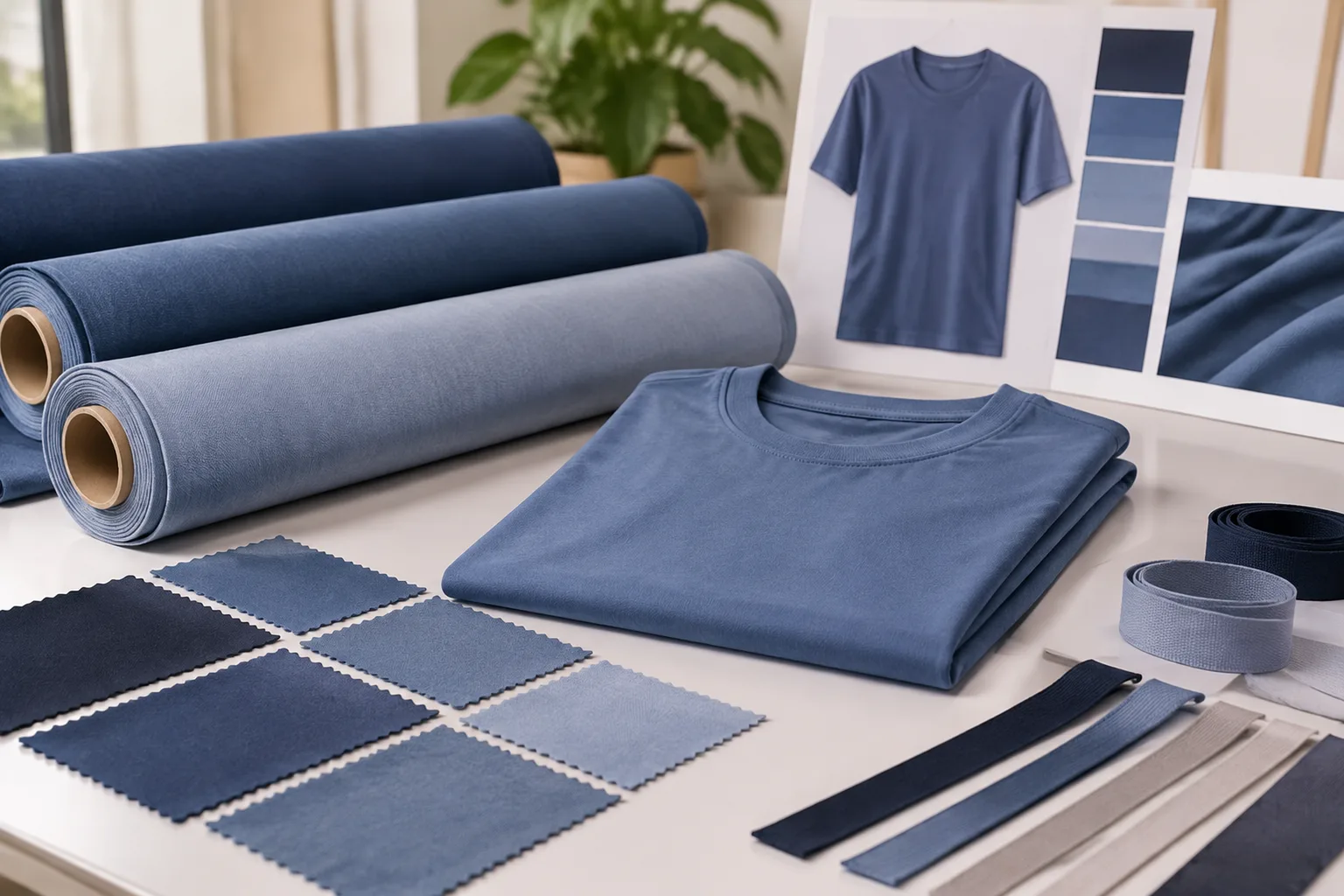
Compare the Real Trade-Offs: MOQ, Material Risk, and Reorder Cost
A useful stock vs custom fabric comparison extends beyond the garment quotation. The lower-risk route depends on the order specification, quantity, number of colors, current sourcing evidence, and expected repeat business.
Compare both routes across the program
- Initial order: Quantity by style and color, fabric setup, sampling needs, approval stages, and available material.
- Inventory exposure: Purchased quantity, unused fabric, ownership, storage terms, and the party responsible for excess material.
- Continuity: Traceable lots, retained references, reservation options, planned replenishment, and substitute-material controls.
- Complexity: Separate colors, trims, logo versions, decoration locations, and department-specific approvals.
- Future cost: Re-sampling, color approval, replacement trims, testing, and operational disruption if the original material cannot be sourced.
Stock fabric generally fits when verified availability and acceptable specifications matter more than exclusive color or construction. Custom fabric or custom color becomes more defensible when controlled identity, defined performance, or planned continuity outweighs additional setup and inventory exposure.
For early orders, fewer priority styles and shared materials can reduce the number of sourcing and approval points. In contrast, many colors with shallow quantities may create separate fabric, dyeing, trim, and decoration requirements even when the total garment quantity appears sufficient.
Ask how fabric consumption was estimated. The calculation should reflect the actual pattern, usable width, size ratio, shrinkage assumptions, matching requirements, and expected purchasing waste. Net garment usage and purchased fabric quantity are not the same. Also request a version matrix when logos, locations, artwork sizes, or colors differ, because each variation may need separate approval.
Prepare a Fabric Sourcing Brief Before Requesting a Manufacturing Quote
A manufacturer cannot make a reliable stock-or-custom recommendation from a garment photo and total quantity alone. Prepare a concise sourcing brief that separates required specifications from acceptable alternatives.
Include these project inputs
- Garment category, style reference, target use, and tech pack.
- Quantity by style and color, size ratio, delivery destination, and expected reorder pattern.
- Preferred composition, weight or GSM range, construction, usable width, finish, hand feel, and color reference.
- Required stretch, recovery, dimensional stability, or other performance conditions, including applicable methods where necessary.
- Artwork, decoration method, logo placement, labels, trims, packaging, and matching requirements.
- Preferred route: stock fabric, custom color, custom fabric, or a manufacturer recommendation against the defined brief.
- Acceptable alternatives and the attributes that cannot change.
Request separate answers for garment MOQ, fabric MOQ, dyeing or per-color MOQ, sample requirements, current stock status, lot continuity, reservation terms, and substitution approval. Low-MOQ feasibility remains project-specific because fabric, customization, trims, and production setup can impose different constraints.
Before bulk material purchasing, freeze the approved sample, fabric reference, color reference, decoration version, labels, packaging, and written order details. Record later changes with their effects on material already purchased, approvals, testing, cost, and timing. Technical or compliance requirements should be reviewed by an appropriate professional and supported by current project documentation.
For a project review, send Ninghow your garment type, tech pack or reference, quantities by style and color, size ratio, fabric requirements, artwork, destination, and repeat-order expectations. State whether you prefer stock fabric, custom color, custom development, or need a recommendation based on the brief.
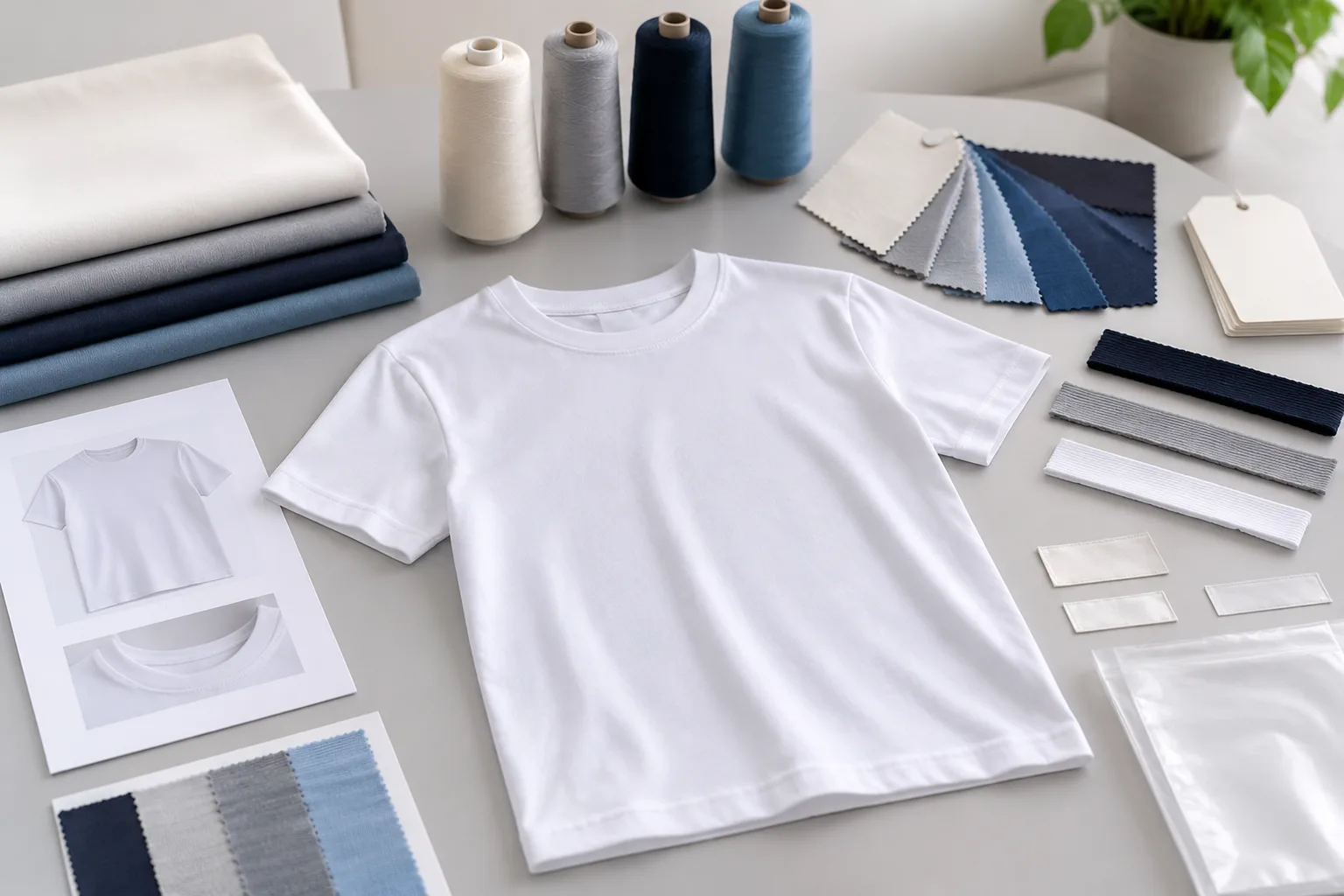
Frequently Asked Questions
Can I reorder the same stock fabric?
Possibly, but the word “stock” does not guarantee continuity. For each reorder, confirm the original source, construction, current availability, fabric lot, shade, and retained reference. If the original material is unavailable, require a documented substitute comparison and written approval before purchasing or production.
Does custom color change MOQ?
Yes. A custom color may introduce development, dyeing, and per-color minimums that are separate from the finished-garment MOQ. Ask the manufacturer to identify garment, fabric, dyeing, trim, and setup minimums individually. The actual effect depends on the fabric, color, quantity, and sourcing route.
Is a stock fabric always available for a repeat apparel order?
No. Stock may mean material is physically available now, can currently be sourced, or is expected to be replenished. None of these automatically guarantees future supply or the same lot. Repeat programs need current availability confirmation, retained references, and documented reservation or substitution terms.
What details should I send to compare stock fabric with custom fabric?
Send the garment category, tech pack, target use, quantities by style and color, size ratio, destination, and reorder expectations. Include composition, GSM range, construction, finish, color reference, performance needs, artwork, trims, packaging, and acceptable alternatives so both routes can be evaluated against the same brief.
Can a low-MOQ garment order still require a higher fabric or dyeing minimum?
Yes. Garment quantity does not automatically satisfy fabric, dyeing, or per-color minimums. Trims and decoration setups may also have separate constraints. Request an itemized explanation of each minimum and ask whether colors or styles can share material without compromising the approved specification.
What should be approved before bulk fabric purchasing?
Approve the garment sample, fabric reference, physical or traceable color standard, decoration version, trims, labels, packaging, and confirmed order specification. Also document lot details, substitution rules, required tests, and responsible approvers. Any later change should be reviewed for commercial, timing, quality, and inventory effects.