








If you are preparing documents to import clothing from China, the safest approach is to treat paperwork as part of the production plan, not an afterthought. The right set of documents helps customs clear the shipment faster, supports correct duty assessment, and reduces the chance of holds, rework, or extra storage charges.
For buyers who need help turning a garment order into export-ready paperwork, our import clothing support for brands sourcing from China is relevant because the document set should match the product spec, packing plan, shipping method, and customs requirements from the start. At Ninghow, we often see smoother shipments when the manufacturer, freight forwarder, and buyer agree on invoice details, carton data, labeling, and product descriptions before goods leave the factory.
Why clothing import documents matter before the shipment leaves China
The core reason is simple: customs authorities clear goods based on documents as much as they do on the physical shipment. If the paperwork is inconsistent, incomplete, or too generic, the shipment may be delayed even when the clothing itself is ready to move.
For apparel buyers, this matters even more because garments are usually classified by fiber content, gender or age category, knit or woven construction, and intended use. A small mismatch in description or HS classification can change duty, trigger questions, or slow down release.
Key takeaway: Good documents do not just “support shipping.” They protect margin, timing, and supply continuity.
Who should use this guide?

This guide is written for clothing brands, importers, retailers, sourcing teams, procurement buyers, and first-time apparel importers. It is especially useful if you are ordering private label garments, bulk uniforms, sportswear, or seasonal basics that need smooth customs clearance.
If your team already has product development experience, this guide can still help you tighten the handoff between sample approval and shipment release. If you are newer to importing, it shows which documents are truly essential and which ones become important only in certain destinations or product categories.
What are the core documents to import clothing from China?
For most clothing shipments, the essential document set includes the commercial invoice, packing list, HS code information, and transport document such as a bill of lading or air waybill. Depending on the destination country and product type, you may also need a certificate of origin, insurance certificate, export declaration, purchase order, contract, or import permit.
The point is not to collect paperwork for its own sake. The point is to make sure every document tells the same story about the shipment: what the clothing is, how much is being shipped, how it is packed, where it came from, and how it should be cleared.
| Document | Why it matters | Typical risk if missing or wrong |
|---|---|---|
| Commercial invoice | Shows product description, value, quantity, and seller/buyer details | Customs hold, valuation questions, delayed entry |
| Packing list | Confirms carton count, weights, and packing structure | Mismatch during inspection or receiving |
| HS code | Supports classification and duty calculation | Incorrect duty, reclassification, delay |
| Bill of lading or air waybill | Proves transport and shipment control | Release delay, documentation mismatch |
What should a commercial invoice include?
The commercial invoice is one of the most important documents to import clothing from China because customs officers use it to understand what is being shipped and what value should be declared. A strong invoice should clearly identify the buyer and seller, product description, quantity, unit price, total value, currency, and the correct HS or tariff reference when required by the destination market.
For clothing, the description should be specific enough to identify the garment type and material. “Men’s 100% cotton knit T-shirts” is much better than “apparel” or “clothes.” That level of detail helps customs evaluate the shipment correctly and reduces questions later.
In the U.S. market, commercial invoice requirements for apparel imports emphasize the need for clear merchandise description, quantity, value, and tariff classification data. Even when a destination country has different rules, the same principle applies: vague invoices create avoidable risk.
From a manufacturer’s perspective, invoice accuracy starts with product development records. The sample approval, size spec, material composition, and final quantity should all match the invoice wording before export paperwork is issued.
What buyers should check on the invoice
- Buyer and seller names match the purchase order and shipping records.
- Product descriptions match the actual garments shipped.
- Quantities match the packing list and carton counts.
- Declared values reflect the agreed commercial terms.
- Currency, payment terms, and incoterms are consistent.
How does the packing list support customs and receiving?
The packing list helps everyone verify what is physically inside the shipment. It should show the number of cartons, items per carton, net weight, gross weight, dimensions if needed, and how the shipment is organized.
For clothing, the packing list matters because garments can be separated by size, color, style, or SKU. If one carton contains mixed sizes or a shipment has multiple styles, the packing list should show that clearly. This reduces confusion when customs inspects the cargo and when your warehouse receives it.
Buyers often underestimate how much a clean packing list helps during receiving. If carton labels, carton quantities, and packing list data align, warehouse intake is faster and discrepancies are easier to spot.
Common packing list mistakes
- Carton totals do not match the shipment count.
- Weights are estimated instead of measured.
- Styles and colors are listed too broadly.
- Mixed-size cartons are not explained.
- Packing list and invoice use different item names.
How do HS codes affect clothing imports?
HS codes determine how clothing is classified for customs. This affects duty rate, import requirements, and sometimes whether a shipment is flagged for review. Choosing the right code is not just a paperwork task; it is part of cost control and compliance.
Clothing classification can be tricky because the code may change based on knit versus woven construction, fiber content, garment category, gender or age range, and whether the item is a top, bottom, outerwear piece, or set. If the product is a performance garment or layered item, classification can become even more specific.
If you want a deeper practical breakdown, our how to choose the right clothing HS code guide explains why product construction and fiber content should be checked before finalizing customs paperwork. In manufacturing, we prefer to settle classification early so the invoice, packing list, and transport documents all follow the same code logic.
Key takeaway: The HS code should be decided from the actual garment construction, not guessed from a generic product name.
When do you need a certificate of origin?
A certificate of origin proves where the goods were produced, and some countries or trade programs require it for duty treatment or import verification. Clothing buyers often need it when a destination market applies a tariff preference, origin-based duty rule, or a specific customs check.
Not every shipment needs the same origin document, but the shipment should always be able to prove manufacturing origin if asked. That means your factory records, material sourcing information, and production statements should be kept organized.
For private label apparel, origin claims should be made carefully. If the garment is cut, sewn, finished, and packed in China, the paperwork should support that actual production story without exaggeration or inconsistency.
Bill of lading vs. air waybill: what is the difference?
The bill of lading is used for sea freight, while the air waybill is used for air freight. Both documents confirm the transport arrangement, but they are issued for different shipping methods and serve different operational needs.
For bulk clothing orders, sea freight is common because it supports larger quantities and usually lower unit shipping cost. For urgent replenishment or smaller lots, air freight may be more practical, especially when speed matters more than freight efficiency. If you are still deciding which route fits your order size, our shipping methods for clothing imports from China article can help you compare the trade-offs more clearly.
| Document | Used for | Key point for clothing buyers |
|---|---|---|
| Bill of lading | Sea freight | Common for bulk apparel shipments and container loads |
| Air waybill | Air freight | Useful for faster delivery and smaller replenishment orders |
What other documents might be needed?
Beyond the core shipping documents, several supporting records can help prevent confusion or satisfy destination-specific requirements. These documents are often prepared earlier in the buying cycle and then reused to support export and customs paperwork.

- Purchase order: confirms the commercial agreement for styles, quantities, and prices.
- Sales or manufacturing contract: clarifies responsibilities, delivery terms, and quality expectations.
- Insurance certificate: shows cargo insurance coverage if the shipment terms require it.
- Export declaration: may be required by the exporting country for customs processing.
- Import permit: sometimes needed depending on the destination, fabric, product type, or end use.
At Ninghow, we treat these documents as part of a single production and shipping file. That is why Ninghow works best when the buyer shares the final product spec, label requirements, shipment plan, and destination market early in the process. The more complete the brief, the easier it is to issue export-ready paperwork that matches the actual garments.
What compliance checks are common for apparel shipments?
Apparel shipments often face product compliance checks related to labeling, fiber composition, and sometimes care instructions or restricted material rules. These are especially important for finished garments because the customs officer or importer may compare paperwork against the physical product and label details.
For example, a cotton-polyester blend should be documented consistently on the commercial invoice, packing list, and garment labels. If the shipping documents say one composition and the sewn label says another, the mismatch can create questions. This is why compliance and document accuracy need to be handled together, not separately.
When a project involves destination-specific rules, our apparel manufacturing compliance support approach is useful because it keeps garment construction, labeling, and shipping documents aligned before the goods leave the factory.
Apparel details that should match across documents
- Fiber content and fabric description
- Garment type and intended use
- Size range and style code
- Color names and count
- Label information and care instructions
How should clothing documents match each other?
Every core document should tell the same story. The invoice should match the packing list, the HS code should fit the garment construction, and the transport document should match the shipper, consignee, and shipment description. If one document uses a different style name or quantity, customs may ask for clarification.
This is where many first-time importers lose time. They may approve a sample using one style code, place the order under another, and then receive shipping paperwork that uses a third version of the product name. The best solution is to define one master product record before bulk production starts and keep it consistent through shipping.
Practical rule: If a warehouse team, customs officer, and freight forwarder read the file, they should all understand the same garment, same quantity, and same shipment value.
What mistakes cause customs delays or extra charges?
The most common problems are usually not complex legal issues. They are simple document mismatches, vague product descriptions, missing data, or last-minute changes that were never updated across the full file.
- Using generic descriptions like “shirts” or “garments” instead of clear product names.
- Changing quantities after production without revising documents.
- Forgetting to align weights and carton counts.
- Guessing the HS code instead of checking garment construction.
- Sending invoice values that do not match the commercial agreement.
- Ignoring country-specific labeling or origin requirements.
Another avoidable issue is waiting until the shipment is ready to discover a documentation gap. When a buyer asks for pre-shipment review, there is still time to correct wording, update quantities, or confirm classification before the cargo is handed to the carrier.
For buyers who want tighter control over release timing, our pre-shipment apparel quality control guidance is useful because document review and physical inspection should happen together. A clean QC pass is stronger when the paperwork reflects the same approved standard.
How do you prepare the document set before shipment?
The best document workflow starts before packing, not after dispatch. Once the final order details are fixed, the manufacturer should issue or confirm the style list, quantities, label details, and carton plan. The buyer or freight partner can then prepare the import-side documents with less risk of correction later.
- Confirm final styles, sizes, and quantities against the approved sample.
- Lock the HS code and product description early.
- Check carton counts, weights, and packing method.
- Review invoice values and shipping terms.
- Confirm whether any destination-specific permit or origin document is needed.
- Verify that labels, care instructions, and composition details match the paperwork.
If the shipment is time-sensitive, do not wait for the vessel or flight departure to review the file. A pre-shipment review can catch a simple description mismatch before it becomes a customs delay.
How should buyers coordinate with the manufacturer, freight forwarder, and broker?
Clear role division saves time. The manufacturer should provide accurate product and packing details, the freight forwarder should handle transport documentation, and the customs broker should check import-entry accuracy and local requirements. The buyer should oversee the final consistency of the full set.
In practice, the best results come when everyone works from one shared spec sheet. That means using the same item names, carton totals, weights, and material descriptions across all teams. If your order involves multiple SKUs or mixed packing, extra attention is needed because the paperwork must remain readable and consistent.
When orders involve bulk apparel manufacturing, the document chain is easier to manage if the production partner understands export requirements from the beginning. That is one reason buyers often ask for production support that connects design, sampling, labeling, and export paperwork in a single workflow.
When should you ask for pre-shipment document review?
You should ask for it whenever the order is large, the destination rules are strict, the product is highly detailed, or the shipment timing is tight. It is also wise to request review when the clothing includes mixed materials, multiple styles, private label branding, or special packaging.
A document review is not only for problem shipments. It is a normal part of risk reduction for any apparel order where customs timing matters. A small correction made before departure is almost always cheaper than a delay at the port or airport.
Final document checklist before importing clothing from China
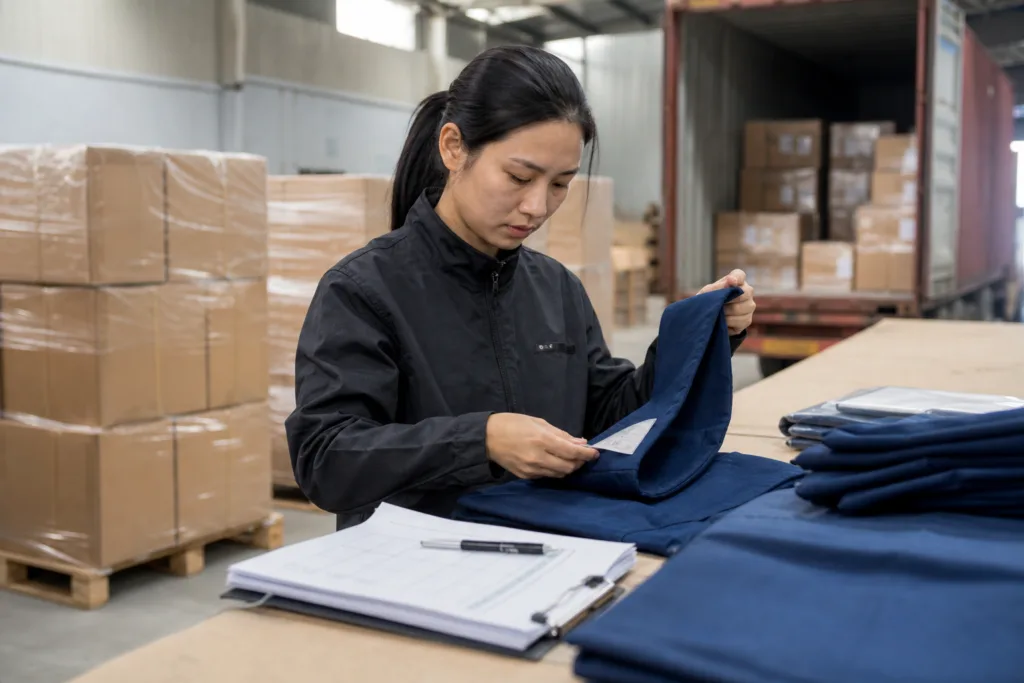
Before the shipment leaves, make sure you can answer these questions with confidence: What exactly is being shipped? How many cartons are there? What is the declared value? Which HS code applies? Do the labels and composition details match the documents?
If you can confirm those points, your customs process is already much stronger. The remaining task is to keep the same data aligned from production through delivery.
For buyers comparing manufacturing and logistics support, Ninghow can help prepare clothing orders with export-ready documentation, clear packing data, and production records that reduce shipping friction. That is especially valuable when your project includes sampling, private label details, or bulk replenishment planning.
Key takeaway: The best document set is simple, specific, and consistent across every touchpoint in the shipment.
FAQs
What are the most important documents to import clothing from China?
The most important documents are the commercial invoice, packing list, HS code information, and the transport document. These four documents usually form the base of customs clearance because they identify what is shipped, how much it costs, how it is packed, and how it moves.
Why does the commercial invoice matter so much for clothing imports?
The commercial invoice matters because customs uses it to verify product description, quantity, and value. If the description is too vague or the values do not match the order, the shipment can be delayed while officials ask for clarification.
Do I always need a certificate of origin for apparel shipments?
No, you do not always need one. Some destinations require it for preferential duty treatment or origin checks, while others only request it in certain cases. It is best to confirm the requirement with your broker before shipment.
How do I know if my clothing HS code is correct?
The correct HS code should match the garment’s construction, fiber content, and product category. If you are unsure, check the item as it is actually manufactured rather than relying on a generic clothing label.
What causes the most customs delays for clothing imports?
The most common cause is inconsistency across the invoice, packing list, HS code, and transport records. Vague descriptions, wrong quantities, and mismatched values also create delays because customs needs the documents to tell one clear story.
Should I review documents before the shipment leaves China?
Yes, you should review them before departure whenever possible. A pre-shipment review gives you time to correct errors, confirm classification, and reduce the chance of customs questions or storage charges at destination.