








If you source garments internationally, import duty clothing from China should be treated as a core cost factor, not a shipping afterthought. Duty can change your target margin, alter which garment category is commercially viable, and even affect whether a sample-approved product still makes sense at bulk scale. For apparel buyers, the real issue is not only the rate itself, but how classification, declared value, origin, taxes, and destination-country rules combine into total landed cost.
If your project involves branded uniforms, private label basics, sportswear, or seasonal fashion programs, our import support for clothing shipments from China helps buyers prepare the product details that matter before production moves too far forward. That usually includes fabric composition confirmation, garment construction notes, labeling and packing details, shipment planning, and coordination with freight or customs partners so the sourcing decision reflects realistic landed cost rather than factory price alone.
Why import duties matter when sourcing clothing from China
Import duties matter because apparel margins are often tight and category-specific. A buyer may compare two factories based on ex-factory cost, but a lower unit price can stop looking attractive once duty, VAT or GST, brokerage, and freight are added.
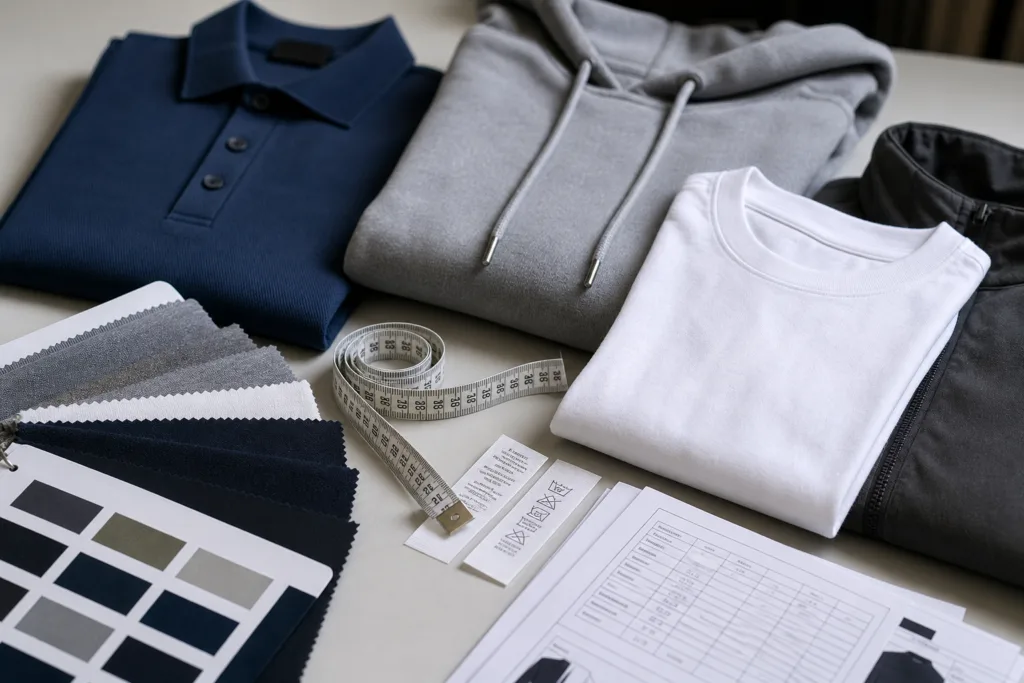
From our manufacturing perspective, this becomes especially important when buyers are choosing between similar items such as a cotton T-shirt, a polyester performance tee, a brushed fleece hoodie, or a lined jacket. These are not just design choices. They may sit under different tariff classifications and trigger different landed-cost outcomes.
A practical sourcing decision should therefore ask two questions at the same time: can the garment be produced to your quality target, and will it still meet your margin target after import charges are paid?
Key takeaway: Factory price is only one part of apparel cost. Duty treatment can change which garment program is actually profitable.
What determines import duty on clothing from China

The short answer is that duty is usually determined by the destination country, the tariff classification, the declared customs value, the origin of the goods, and any trade policy measures that apply at the time of import. Buyers need all five factors before they can estimate landed cost with confidence.
Destination country rules come first
Each market has its own tariff schedule and customs logic. A garment entering the United States, the European Union, the United Kingdom, Canada, Australia, or the Middle East may face different duty structures, tax treatment, and documentation expectations even if the product itself is the same.
This is why buyers should never assume a rate quoted for one market applies everywhere. The same China-made hoodie can be assessed very differently depending on the country of import.
HS code and tariff classification shape the rate
Clothing is classified under tariff systems that break products down by garment type, knit or woven construction, fiber composition, gender category, and other details. If you are unsure where a product fits, it is worth reviewing the logic behind choosing the right clothing HS code before you lock in your landed-cost model.
Even small specification changes can shift classification. A polo shirt and a T-shirt may look commercially similar, but collar construction, placket details, and fabric structure can place them in different tariff lines.
Declared value affects the duty base
Customs duty is usually assessed against a declared customs value based on the importing market’s rules. In simple terms, if the declared value basis changes, the amount of duty and import tax can also change.
That means buyers should be careful when comparing quotes using FOB, EXW, or CIF assumptions. The commercial term on the order and the customs valuation method are not always the same thing, and confusion here can distort cost planning.
Origin and trade policy can change the result
Country of origin is not always the same as shipping origin. Garments shipped from China may be considered Chinese origin, but origin depends on how the product was made and whether substantial transformation rules are met.
On top of that, some markets may apply standard tariffs, preferential tariffs, trade remedy measures, or special duties depending on origin and current policy. Buyers should screen this early, especially for high-volume programs.
How clothing is classified under HS codes and why classification changes duty rates
The most important point is simple: customs does not classify clothing by marketing name alone. It classifies by objective product characteristics.
In apparel, the usual classification drivers include:
- garment type such as T-shirt, polo shirt, hoodie, pants, jacket, or shorts
- knit versus woven construction
- fiber composition such as cotton, polyester, nylon, viscose, or blends
- men’s, women’s, or unisex presentation where relevant
- special features such as lining, coating, padding, or performance construction
The official U.S. tariff schedule shows how these details affect apparel classification and duty treatment in practice through the Harmonized Tariff Schedule. For many buyers, this is the clearest illustration of why two garments with similar styling can still carry different rates.
At Ninghow, we usually advise buyers to confirm the bill of materials early in development. If the fabric content moves from 100% cotton to a cotton-poly blend, or if a lightweight outer layer becomes a lined jacket, the classification logic may change along with duty exposure.
| Garment factor | Why customs cares | Potential cost effect |
|---|---|---|
| Fiber content | Different fibers can fall under different tariff lines | Duty rate may increase or decrease |
| Knit or woven | Construction changes classification | Landed cost assumptions may change |
| Garment category | T-shirts, hoodies, jackets, and pants are not grouped the same | Category-specific duty treatment applies |
| Functional features | Lining, coating, or padding can alter tariff treatment | Outerwear often needs closer review |
| Intended market | Local tariff schedules vary | Same product can cost more to import in another country |
Why the same garment can face different duties in different markets
Because tariff systems are harmonized only at a high level, not identical at the full national level, buyers should expect market-by-market differences. A sports polo for a U.S. teamwear customer and the same polo for an EU distributor may share a broad category but not the exact final rate or import tax structure.
That is why landed-cost planning should be tied to the destination market from the beginning of product development. When buyers ask us to quote comparable styles for several regions, we encourage them to separate factory costing from import-cost modeling.
Key takeaway: Do not ask, “What is the duty on this garment?” Ask, “What is the duty on this exact garment in my destination market?”
How declared value affects customs duties, taxes, and customs review
Declared value is one of the most sensitive customs inputs because it directly affects duty and often influences VAT, GST, or other import tax calculations. If the value is understated, the shipment can face review, delay, reassessment, or penalties. If it is overstated, you may simply pay more than necessary.
Buyers should make sure the commercial invoice, packing list, purchase order, and shipping documents align. Inconsistencies between unit price, total quantity, and packaging details are common triggers for customs questions.
In our production work, the cleanest process happens when buyers lock the following before shipment:
- agreed unit price and Incoterm
- accurate style descriptions
- confirmed fabric composition
- correct carton counts and quantities
- clear breakdown of any non-garment charges if applicable
This is also where labeling matters. Customs review can become more complicated if the product description, content label, and invoice language do not match, so buyers should align packaging and documentation with apparel labeling requirements for imports before bulk dispatch.
Rules of origin: when goods qualify as Chinese origin and when that matters
For many apparel programs, garments made in China will be treated as Chinese origin. However, origin is determined by legal rules, not by assumption or shipping route.
If fabric, components, or partial assembly come from more than one country, the customs authority may look at where the substantial transformation occurred. Rules of origin determine whether imported clothing qualifies for preferential duty treatment or stays under the standard rate, and the European Commission explanation of rules of origin is a useful reference for understanding that logic.
Origin also interacts with labeling. Even when buyers understand where production happened, the sewn-in label and shipping documents must still present origin correctly. That is why we recommend reviewing country of origin label rules for garments during sample approval rather than after goods are packed.
Trade agreements, preferential tariffs, and special duties buyers should watch
Not every shipment from China is treated only under the standard duty schedule. Depending on the destination market and product type, buyers may encounter preferential tariff programs, temporary trade measures, anti-dumping actions, or additional policy-based duties.
The practical lesson is not that every order is high risk. It is that buyers should never lock pricing based only on a generic “normal duty rate” found in an old spreadsheet or informal message thread.
Before confirming a bulk order, ask your broker or import specialist whether any of the following could apply:
- special additional tariffs tied to current trade policy
- product-specific safeguard measures
- temporary suspensions or preference programs in the destination market
- anti-dumping or countervailing duties where relevant
- document requirements needed to claim a preferential rate
Import duty vs VAT, GST, sales tax, and customs brokerage fees
Many first-time buyers focus only on duty and miss the rest of the landed-cost stack. In practice, duty is just one part of import cost.
| Cost item | What it is | Why buyers should track it |
|---|---|---|
| Import duty | Tariff charged based on classification, value, origin, and market rules | Directly affects unit landed cost |
| VAT or GST | Import tax charged in many countries | Can be a major cash-flow factor |
| Sales tax | May apply depending on local system | Affects total import expense in some markets |
| Brokerage fee | Charge for customs clearance handling | Often overlooked in budgeting |
| Port and handling charges | Terminal, documentation, or delivery related fees | Important for full landed-cost accuracy |
For sourcing teams, the right approach is to build a landed-cost sheet that includes all expected charges rather than only the quoted garment price. This is especially important when comparing factory offers from different countries.
How to estimate landed cost for apparel orders from China
The most reliable landed-cost estimate starts with a fully specified product. Without confirmed composition, construction, packing, and shipping method, the estimate is only provisional.
A buyer-friendly sequence looks like this:
- confirm the exact garment specification and fabric composition
- assign the provisional HS code with broker review if needed
- identify the destination-country duty rate and any special measures
- calculate customs value using the correct valuation basis
- add expected VAT, GST, or similar taxes
- add freight, brokerage, and local handling charges
- divide the total by order quantity to get realistic landed unit cost
Shipment mode also changes the result. Air freight may protect a launch date but can raise the customs value base or total import spend depending on market rules and logistics structure. Buyers comparing sea, air, and express options should align costing with realistic shipping methods for clothing orders from China before placing the order.
When buyers work with Ninghow on private label or teamwear programs, we encourage them to finalize specification sheets early because clean product data leads to more stable freight planning, clearer customs paperwork, and fewer margin surprises.
Practical examples of duty impact across common clothing categories
The exact rate depends on the market and classification, but the logic can be illustrated through common sourcing scenarios.
| Category | Classification sensitivity | Typical buyer watchpoints |
|---|---|---|
| T-shirts | Fiber content and knit structure matter | Basic styles seem simple but cotton and synthetic versions may differ commercially |
| Hoodies | Knit construction, fleece weight, and garment details matter | Brushed interior, zipper style, and lining can affect cost and classification review |
| Polo shirts | Collar, placket, and knit type matter | Often confused with tees during early costing |
| Jackets | Outerwear categories can be more complex | Shell fabric, lining, padding, and coating need accurate declaration |
| Sportswear | Blend ratios and performance features matter | Stretch fabrics and technical trims require precise bill of materials |
In manufacturing practice, sportswear often needs extra attention because performance garments use more blends, trims, and technical finishes than simple basics. That makes accurate pre-shipment documentation more important, not less.
Common customs mistakes that cause delays or unexpected costs
The most common problems are preventable. They usually happen when product development, production, and shipping teams are not working from the same final specification.
- using an estimated HS code without reviewing the final garment details
- declaring the wrong fiber content or using outdated sample information
- showing inconsistent descriptions across invoice, packing list, and labels
- treating shipping origin as the same thing as country of origin
- forgetting to budget VAT, GST, brokerage, or local port charges
- assuming the previous season’s duty treatment still applies unchanged
We also see issues when buyers approve a sample change late in the process, such as switching from jersey to pique, adding a lining, or changing blend composition, but do not update the shipping documents. Those are exactly the kinds of changes that can affect classification.
Key takeaway: Customs problems usually begin with product-data problems. Accurate specifications reduce both clearance risk and cost surprises.
How to prepare duty-related information before placing a bulk order
Before production starts, buyers should gather the details that customs and freight teams will eventually need. This does not mean the supplier must act as the import authority, but it does mean the factory should provide accurate technical information.
We recommend confirming these points before bulk approval:
- style name and clear garment description
- fabric composition by percentage
- knit or woven construction
- intended destination market
- country of origin statement
- packing format and carton counts
- unit price basis and trade term
- labeling and care content details
If your order is still evolving, this is the right time to slow down and align the commercial file. It is much easier to update a tech pack or costing sheet before production than to correct customs-facing data after goods are finished.
Questions buyers should ask their supplier or freight forwarder before shipment
Direct questions save time. They also show whether your supply chain partners are working from complete information.
- What is the final fiber composition for each style?
- Has any feature changed from the approved sample that could affect classification?
- What country of origin will appear on the garment and documents?
- How will styles be described on the commercial invoice?
- Which shipping method and Incoterm are being used?
- Which party is arranging customs clearance at destination?
- Should a broker verify the HS code before shipment?
When to verify HS code and duty rate with a customs broker or import specialist
You should verify before shipment whenever the style is technically complex, commercially important, or entering a new market. That is especially true for outerwear, performance apparel, mixed-fiber garments, or products with coatings, linings, or special construction details.
For large programs, a broker review is usually far less expensive than a misclassification problem. It helps buyers move from rough sourcing math to a more defensible landed-cost plan.
Final checklist for reducing customs risk and protecting margins
The goal is not to eliminate every variable. The goal is to reduce avoidable uncertainty before the goods leave the factory.
- confirm final product composition and construction
- review provisional HS classification against the finished style
- check destination-country duty and tax treatment
- verify origin declaration and sewn label accuracy
- align invoice, packing list, and product descriptions
- budget brokerage and local handling fees
- confirm freight mode and shipment timing
- ask for broker verification where the product is complex or high value
Plan clothing imports from China with duty costs in mind
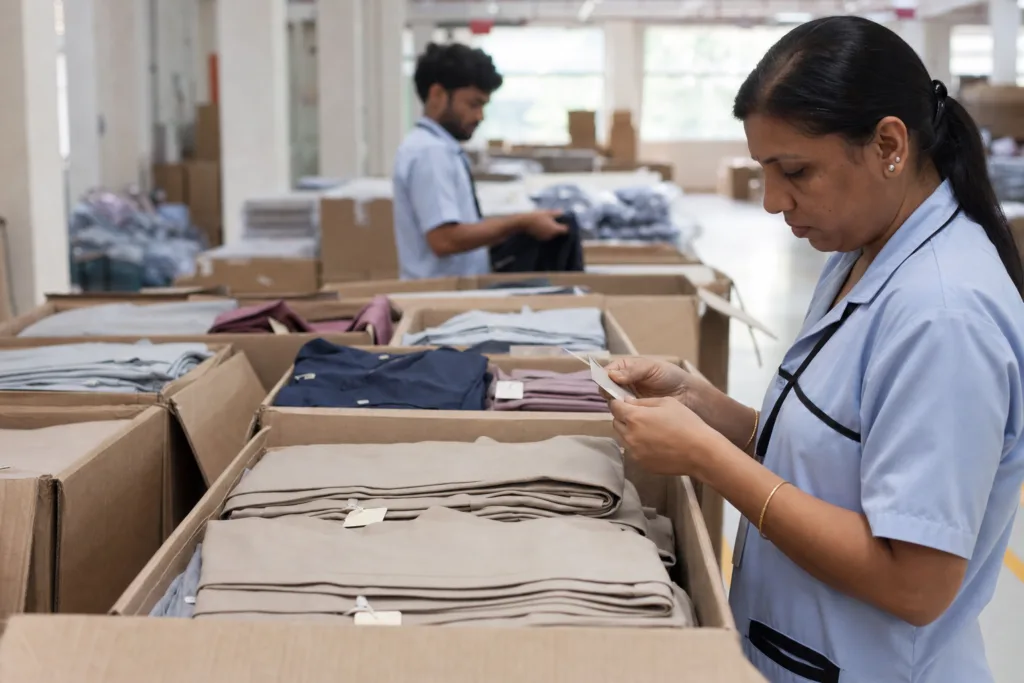
Importing apparel successfully is not just about finding the right factory price. It is about understanding how customs classification, declared value, origin, taxes, and logistics charges shape the true landed cost of each style.
For B2B buyers, the smartest process is to treat duty planning as part of sourcing, not as a last-minute shipping task. When product data is clear early, margin planning becomes more reliable and production decisions become easier to defend internally.
If you are preparing a new clothing program from China, we can support the manufacturing side with accurate garment specs, fabric information, labeling details, sample refinement, and shipment-ready documentation so your team can evaluate total import cost before bulk production moves ahead.
FAQs
How is import duty on clothing from China usually calculated?
Import duty on clothing from China is usually calculated using the product’s tariff classification, customs value, country of origin, and the rules of the destination market. In practice, buyers need the correct HS or HTS code, the declared value basis, and any applicable special tariffs before they can estimate the true amount.
Can two similar garments from China have different duty rates?
Yes, two similar garments can have different duty rates because customs looks at technical characteristics rather than retail naming alone. Fiber content, knit versus woven construction, lining, coating, and the exact garment category can all shift the tariff line and change the duty result.
Does country of origin mean the same thing as shipping from China?
No, country of origin is not always the same as shipping from China. Origin is determined by customs rules about where the garment was substantially made or transformed, while the shipping point only shows where the goods were dispatched from.
What should buyers prepare before asking for a duty estimate?
Buyers should prepare a clear product description, fabric composition, construction type, target market, estimated customs value, and shipping plan before asking for a duty estimate. The more complete the product data is, the more reliable the landed-cost estimate will be.
Is import duty the only extra cost when buying clothing from China?
No, import duty is not the only extra cost when buying clothing from China. Buyers also need to account for VAT or GST, brokerage fees, freight, port charges, and sometimes additional policy-based duties depending on the market and product category.
When should a buyer ask a customs broker to verify the HS code?
A buyer should ask a customs broker to verify the HS code before shipment when the style is complex, the order value is significant, or the goods are entering a new market. This step is especially useful for outerwear, technical sportswear, mixed-fiber garments, and any product where a classification mistake could materially change landed cost.