





Apparel labeling requirements are not a small finishing detail. For imported clothing, labels affect customs clearance, retail acceptance, consumer information, and product consistency across every unit in the shipment. Buyers who confirm label content only at the end of production often discover avoidable problems such as incorrect fiber percentages, missing country of origin details, wrong care instructions, or labels sewn into the wrong position.
If your project involves retailer-ready garments, private label development, or a launch into a new market, private label production support for brand collections helps connect label planning with the real factory workflow. From our manufacturing perspective, buyers usually need coordinated support on fabric composition confirmation, care label development, brand label setup, sampling, and bulk packing checks so the approved label system matches the final garment before shipping.
Why apparel labeling matters for imported clothing orders
The main reason labeling matters is simple: the label is part of the product, not separate from it. A garment can look correct, fit well, and pass sewing inspection, but still create import or retail problems if the label content is incomplete or inaccurate.
In practice, labels affect several checkpoints at once. Customs authorities may review origin or composition information. Retailers may verify brand presentation, size clarity, and care instructions. End users rely on the label for washing, drying, and fiber information. That means one mistake can create delays, rework, markdown risk, or relabeling costs after arrival.
Key takeaway: Buyers should treat labeling approval as part of product development and compliance planning, not as a last-minute trim decision.
What label types do buyers need to understand first?

Most imported clothing programs involve five core label groups: care labels, fiber content labels, country of origin labels, size labels, and brand labels. Some markets, product categories, or retailers may also ask for RN-style identifiers, safety warnings, barcode stickers, packaging marks, or special material claims, but the five core groups are the starting point for nearly every order.
| Label Type | Main Purpose | What Buyers Need to Confirm |
|---|---|---|
| Care label | Explains washing and maintenance | Symbols, wording, language, durability after washing |
| Fiber content label | States material composition | Accurate percentages, approved fiber names, consistency with fabric test data |
| Country of origin label | Identifies where the garment was made | Correct wording, placement, market-specific visibility rules |
| Size label | Shows garment size | Size system, location, consistency with grading and measurement chart |
| Brand label | Shows brand identity | Artwork, fold type, color, sewing method, comfort and finish |
These labels may be combined in some garments and separated in others. For example, a T-shirt may use a printed neck label plus a side seam care label, while a jacket may use a woven main label, hanging loop, separate size label, care label, and an additional origin label depending on the target market and buyer requirements.
How apparel labeling requirements affect care labels
Care labels should tell the user how to maintain the garment without damaging fabric, print, trim, or shape. Buyers should confirm washing, bleaching, drying, ironing, and dry-cleaning instructions based on the actual fabric composition and garment construction, not by copying a previous style that only looks similar.
For symbol selection, many teams align with standardized care symbols so brands, factories, and import teams interpret the same wash instructions consistently. This is especially useful when one product is sampled in one country and produced in another, or when multiple suppliers are involved in the same program.
Durability also matters. A care label that fades, frays, or becomes unreadable after a few washes can create product complaints even if the instructions were originally correct. In our production work, we check both the content and the physical performance of the label material, including print clarity, edge finish, attachment strength, and whether the label irritates the wearer.
Before bulk production, buyers should request sampling support before bulk labeling runs so the approved sample confirms the final care label content, placement, folding style, and readability in the real garment. This is particularly important for activewear, kidswear, and layered garments where label comfort and wash performance directly affect customer satisfaction.
- Match care instructions to the actual fabric and decoration method
- Check whether the market expects symbols, words, or both
- Confirm label language requirements before translation is finalized
- Test label readability after washing when the program is quality-sensitive
- Verify that embellishments like heat transfers or reflective prints can tolerate the stated care method
What buyers should check on fiber content labels
Fiber content labels must reflect the real composition of the garment materials that require disclosure in the target market. This is where buyers often make expensive mistakes, because composition may change during sourcing, fabric substitution, brushing, lining selection, or trim updates while the label artwork stays old.
Accuracy is critical because fiber percentages affect both compliance and consumer trust. A hoodie labeled 100% cotton but produced in a cotton-polyester blend is not just a wording issue. It can affect customs documentation, retail acceptance, customer expectations, care behavior, and potential claims handling.
For EU-bound products, buyers should review EU fibre composition and translation rules early, especially when using multilingual labels or launching in more than one country. From a manufacturer viewpoint, this matters because composition terminology on the approved label file must match the market rule, the lab dip and fabric record, and the exact garment bill of materials.
When the garment uses multiple materials, buyers should also clarify what needs to be disclosed and how each component should be described. A shell fabric, mesh insert, rib trim, or lining may create a different label requirement than a single-jersey T-shirt. That is why label approval should happen alongside fabric approval, not after bulk cutting starts.
| Situation | Risk | Better Buyer Action |
|---|---|---|
| Fabric changed after costing | Label no longer matches bulk material | Update BOM and label artwork before purchase order approval |
| Blend percentages rounded incorrectly | Composition statement becomes inaccurate | Confirm exact percentages from mill or test report |
| Same style sold in multiple markets | One label may not suit every destination | Prepare destination-specific label versions |
| Labels copied from old style | Old fiber names or wrong language remain | Create a fresh label approval sheet for each style |
What buyers must confirm for country of origin labels
Country of origin labels should be confirmed before shipment, not guessed from early sourcing plans. If production location changes between sample and bulk, or if final assembly moves to a different factory, the origin statement may also need to change.
Buyers should confirm the exact wording expected for the destination market and ensure the origin statement appears on the correct label or packaging location. Some brands combine origin with care and fiber information on one label, while others keep it separate for clarity. The right approach depends on garment design, label space, and market rules.
What matters most is consistency. The garment label, packing list, carton marking, customs paperwork, and commercial invoice should not conflict with each other on origin information. Even a correct sewn label can become a problem if the shipping documents tell a different story.
When compliance risk is high, teams should review apparel compliance checks for imported goods as part of the production timeline so label text, documentation, and shipment destination are aligned before final inspection.
How size labels and brand labels should be planned
Size labels look simple, but they often create avoidable claims. The buyer should confirm the size system used on the garment, such as XS-XL, numeric sizing, age sizing, or region-specific notation, and make sure it matches the approved measurement chart and grading logic.
Brand labels need the same level of discipline. A woven neck label, heat-transfer label, satin label, or side-seam logo tape may all be correct choices depending on the garment type, but the construction method changes both comfort and appearance. For sportswear and fitted garments, a soft printed neck label may work better than a bulky folded woven label. For outerwear or uniforms, a woven main label may better support brand presentation and durability.
At Ninghow, we usually advise buyers to approve size labeling together with the graded spec sheet and to approve brand labels together with the trim card. That reduces the common mismatch where the garment is sewn to one size chart but labeled according to another size convention.
- Check whether size labels need region-specific equivalents
- Confirm neck, side seam, or waistband placement before sample approval
- Review fold type, stitch method, and label softness for wearer comfort
- Make sure brand colors and logo details are readable at final label size
Where labels are placed and why construction quality matters
Label placement affects comfort, appearance, and compliance visibility. A neck label that scratches the skin may lead to label removal by the customer. A side-seam label that twists after washing may make the garment feel cheap. A care label hidden too deeply inside a lining may create inspection problems.
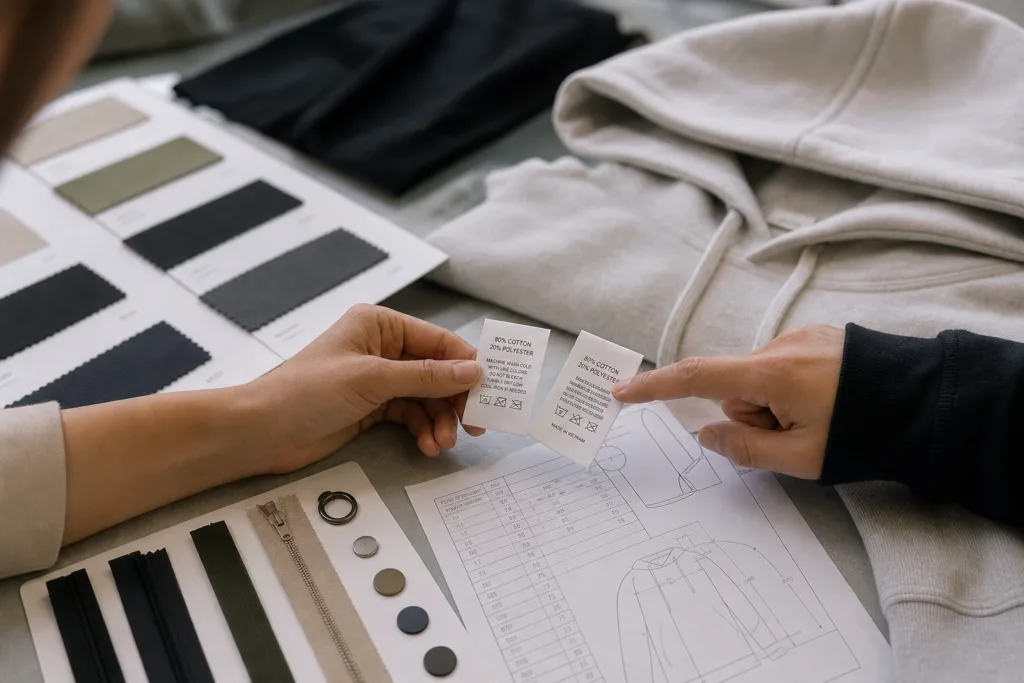
Construction quality also matters because not all label materials behave the same way in sewing and washing. Damask woven labels, satin printed labels, cotton labels, heat-transfer labels, and tear-away constructions each perform differently. Buyers should match label material to garment category, price point, and use scenario.
For example, gym clothing often benefits from soft heat-transfer or smooth satin options, while heavyweight fleece may accept a more substantial woven label. Kidswear often needs extra attention on softness and seam security. Jackets may require larger multi-fold labels because there is more information to display and more structural support for sewing them in cleanly.
Key takeaway: The right label content can still underperform if the label material, edge finish, and sewing method are not suitable for the garment.
Why target market rules should be confirmed early
Labeling rules vary by market, and buyers should confirm destination requirements before finalizing artwork. The same style may need different fiber wording, language, origin presentation, care instructions, or packaging marks depending on where it will be sold.
This is why we recommend building a destination-based approval file early in development. If one hoodie program is split across the EU, North America, and a private school uniform distributor, the label setup may need separate versions even when the garment itself stays the same.
Early confirmation also helps sourcing teams manage lead time. If translations, extra woven labels, or separate packaging stickers are needed, the trim booking and sample review should reflect that. Buyers who wait until the ex-factory date to ask about local rules often create preventable relabeling costs.
Common mistakes import buyers make with apparel labeling requirements
Most labeling mistakes are process mistakes, not design mistakes. The issue is usually that the buyer, brand team, factory, and shipping team were not working from one approved file version.
- Using old label artwork from a previous style without checking composition or origin
- Approving fabric quality before confirming the final fiber declaration
- Sending logo files but not sending full label placement instructions
- Skipping wash testing for labels on performance or heavily washed garments
- Assuming one market label format will work for every destination
- Approving sample labels but not reconfirming them after material substitutions
- Leaving size label conventions unclear between merchandiser and factory
These problems are easier to prevent when the buyer maintains one controlled label pack with artwork, language, dimensions, placement photos, fold type, and market notes. That file should travel with the purchase order, sample comments, and final inspection checklist.
How to prepare label artwork, approval files, and factory instructions
The best label approval file is practical and visual. It should include the exact text, logo artwork, dimensions, color references, fabric composition statement, care instructions, origin statement, size notation, placement, sewing method, and any market-specific notes. A factory should not have to guess where a label goes or which version belongs to which destination.
Good communication is usually more important than complicated formatting. If buyers provide clear specification sheets, label sketches, and packaging notes early, production moves more smoothly and sample corrections happen faster. This is especially true when labels are sourced from one vendor and garments are sewn at another.
We usually suggest approving labels in the same workflow as trim cards, PPS comments, and final packing notes. When buyers need clearer coordination between artwork, trims, and garment build details, the main production file should function as one source of truth rather than several email attachments with different revision dates.
What to check before shipment leaves the factory
Pre-shipment review should confirm both content accuracy and physical execution. The garment may have the correct label text in the approved file, but bulk output can still fail if labels are attached upside down, sewn into the wrong seam, mixed between sizes, or omitted from part of the order.
That is why buyers should include quality control checks for label accuracy in final inspection. Label verification should sit alongside measurement checks, workmanship review, carton assortment checks, and packing confirmation.
| Checkpoint | What to Verify | Why It Matters |
|---|---|---|
| Bulk label content | Text matches approved file exactly | Prevents compliance and retail disputes |
| Label placement | Correct seam, orientation, and visibility | Prevents comfort issues and inspection failures |
| Size-label matching | Size tab matches garment measurements and carton ratio | Reduces sorting and return problems |
| Origin consistency | Garment label matches shipment documents | Supports customs accuracy |
| Wash durability | Readable and secure after expected care use | Protects consumer experience |
- Check random units from multiple cartons, not only top samples
- Inspect every colorway if labels differ by market or language
- Review polybag stickers and carton marks against garment labels
- Confirm replacement labels are segregated and controlled if any correction was made
When should buyers ask for outside verification?
Buyers should ask for outside verification when the market is new, the garment has unusual composition, the brand is using special claims, or the shipment value makes relabeling risk too expensive. A supplier can explain its production practice, but destination-specific legal interpretation may still need review by a compliance consultant, testing partner, customs broker, or importer of record.
This does not mean every order needs formal legal review. It means higher-risk programs deserve earlier checking. If the product uses recycled content claims, multilingual labels, coated fabrics, multiple material zones, or several destination markets, outside verification is usually worth the time.
Final checklist before bulk production and shipping
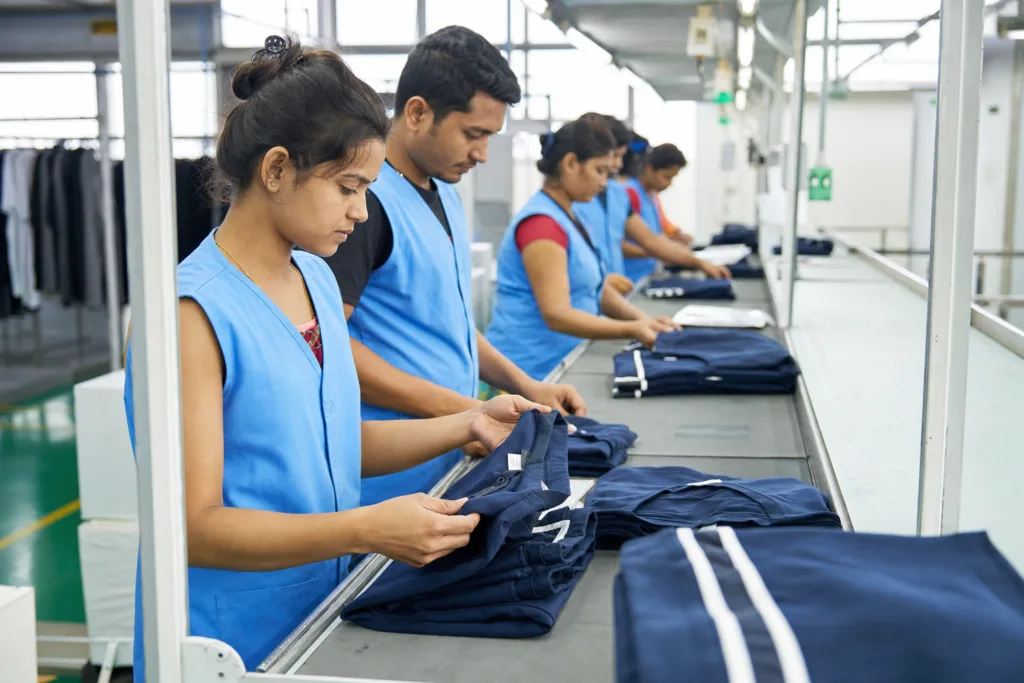
The most effective way to manage apparel labeling requirements is to lock label decisions before bulk production begins and then verify them again before shipment. Buyers who do this usually reduce corrections, improve approval speed, and avoid confusion between sampling files and bulk reality.
- Confirm target market rules before final label artwork is released
- Match fiber content wording to the approved fabric record and test information
- Confirm country of origin wording after final production location is locked
- Approve size labels against the final grading and measurement chart
- Choose label material and placement based on comfort, wash performance, and garment type
- Keep one controlled approval file for factory, QA team, and shipping documents
- Inspect labels during PPS, inline review, and final inspection
For buyers managing imported clothing programs, good label control is really good process control. When label content, trim sourcing, garment construction, and shipment documents all agree, the order is easier to produce, easier to inspect, and safer to ship.
Frequently Asked Questions
What labels are usually mandatory on imported clothing?
Imported clothing usually needs care information, fiber content, country of origin, and size or brand identification depending on the market and product type. Buyers should confirm the exact market rule early because some destinations require specific wording, language, or placement that goes beyond the factory’s standard label setup.
Can we finalize labels after bulk production starts?
It is possible, but it is risky and often expensive. Once bulk production starts, changing labels can affect trim lead time, sewing instructions, packing flow, and shipment documents, so buyers should approve all core label details before cutting and sewing begin.
Who is responsible for verifying fiber content accuracy?
The buyer should make sure fiber content is verified before label approval, even if the factory or fabric mill provides the composition data. In practice, the safest approach is to match the label statement to the approved material record, supplier declaration, and any relevant testing or development documents.
Do care labels need symbols, words, or both?
The answer depends on the target market and the brand’s labeling approach. Many programs use standardized symbols, while some also add written instructions for clarity, so buyers should confirm local expectations and keep the care method consistent with the actual fabric, dye, and decoration performance.
What should we send the factory to avoid labeling mistakes?
Buyers should send a complete label pack that includes artwork, exact wording, dimensions, colors, fold type, placement, sewing method, size notation, and destination notes. A visual approval file with sample comments is usually much more effective than scattered email instructions because it reduces version confusion during sampling and bulk production.
When should a customs broker or compliance specialist review our labels?
A customs broker or compliance specialist should review labels before bulk production when the shipment is entering a new market, uses special claims, has multilingual content, or carries high financial risk if relabeling is needed. Early review is usually far cheaper than fixing label problems after goods are packed or already in transit.