







Your first drop proves demand, but it does not yet prove that your supply chain is ready to scale. Repeat production for startup clothing brands works best when founders move from instinct to evidence by reviewing sales velocity, return reasons, size performance, fit issues, and production consistency before placing the next order.
If your brand is moving from a test launch into structured replenishment, you can explore startup-friendly clothing manufacturing support that connects early sales results with practical next steps such as fabric confirmation, fit revisions, private label updates, sampling, MOQ planning, and bulk production control. This is often where a startup stops treating each drop like a separate experiment and starts building a repeatable operating system.
From our manufacturing perspective, the strongest second and third orders are not simply bigger versions of the first one. They are better planned orders with clearer SKU priorities, tighter specifications, and fewer preventable surprises in fabric, sizing, trims, print execution, and lead time.
Why the first drop is only the beginning for a startup clothing brand
A successful launch answers only one question: did customers want the product enough to buy it? It does not automatically answer whether the style should be reordered exactly as is, revised, expanded into more sizes, or extended into new colors and related products.
In early-stage apparel, first drops are usually part market test and part product-development phase. Even when sell-through is good, founders often discover hidden issues such as weak size grading, fabric shrinkage, inconsistent hand feel between batches, or logo placement that looked good online but underperformed in wear and wash.
Key takeaway: Treat the first drop as proof of demand, but treat repeat production as a separate decision that requires product, operations, and sourcing review.
That is why many startup teams benefit from thinking in stages. The first order validates interest. The second order should validate process stability. Only after that should the brand aggressively widen SKU count or inventory depth.
What data to review after launch before planning repeat production for startup clothing brands

Start with the numbers that directly affect reorder confidence. You need to know not just what sold, but how it sold, in which sizes, over what time period, and with what return or complaint pattern.
Sales data that matters most
- Sales velocity: how fast each style, color, and size sold during launch and after initial promotion.
- Sell-through: the percentage of inventory sold within a defined period.
- Size performance: which sizes sold out first and which sizes moved slowly.
- Return rate: especially return reasons tied to fit, fabric feel, transparency, shrinkage, or print issues.
- Customer feedback: repeated comments matter more than isolated opinions.
- Margin by SKU: some bestsellers are weaker repeat candidates if freight, rework, or return costs are too high.
If you only review top-line revenue, you can easily reorder the wrong product. A style that sold quickly because stock was very limited may not be your best scalable item. A style with steadier but broader size performance may actually be the stronger long-term production candidate.
| Data Point | What It Tells You | Why It Matters for Repeat Orders |
|---|---|---|
| Fast sell-out | Strong demand or underbuying | Check whether demand was real across sizes or concentrated in one SKU |
| High returns | Fit or quality mismatch | Signals need for revision before reorder |
| Uneven size sales | Possible grading or audience mismatch | Helps rebalance future size curves |
| Repeat customer comments | Wear experience after purchase | Useful for fabric, print, and construction changes |
| Low margin on bestseller | Operational inefficiency | May require spec adjustment before scaling volume |
For startup founders who want a fuller framework, From first order to repeat production planning is a useful next read because it connects early order decisions with longer-term product line growth.
How to decide whether a style deserves repeat production
A style deserves repeat production when demand is real, the product can be made consistently, and any known issues are manageable. If one of those three conditions is missing, reorder decisions should be more cautious.
We normally suggest sorting each first-drop product into one of four categories:
- Reorder as is: strong sales, low return rate, stable fit, stable quality.
- Reorder with minor updates: good demand but needs small corrections such as label placement, drawcord length, or print positioning.
- Revise before repeat: strong demand but meaningful issues in fit, fabric, shrinkage, or construction.
- Do not reorder: weak demand or too many technical issues for the margin level.
This classification prevents emotional reordering. Founders often feel pressure to restock anything that sold out quickly, but a sell-out can hide a product problem if customers were unhappy after delivery.
Reorder vs. revise: when to keep the same product and when to improve it
If the product met expectations in wear, fit, and quality, keep the core specification stable. If customers liked the concept but had repeated complaints, revision is usually smarter than a straight reorder.
When a reorder makes sense
- The fabric performed well in wear and wash.
- The measurements matched the approved size chart.
- Print, embroidery, and trims stayed consistent through the production lot.
- Returns were low and mostly unrelated to quality.
- You want speed and lower development risk for the next run.
When revision is the better choice
- Fit complaints show a grading or block issue.
- Fabric pilling, shrinkage, or opacity disappointed customers.
- Neckline, sleeve opening, inseam, or rise proportions need adjustment.
- Logo method cracked, peeled, distorted, or felt too heavy.
- Construction details created QC failures in bulk.
In practice, many startup reorders are hybrid decisions. The body pattern may stay stable while the collar shape changes. The fleece weight may remain the same while the cuff rib is upgraded. This type of selective revision keeps momentum without restarting development from zero.
How customer feedback should change fit, fabric, construction, and print quality
Use repeated feedback patterns, not isolated preferences, to guide revisions. Three people asking for a looser fit may simply have personal taste. Thirty people mentioning short body length is a specification signal.
We recommend separating feedback into four technical buckets:
| Feedback Type | Typical Customer Comment | Likely Production Action |
|---|---|---|
| Fit | Too tight in chest, too short, sleeves narrow | Adjust pattern and grading |
| Fabric | Too thin, too hot, rough hand feel | Review composition, GSM, finish, and supplier lot consistency |
| Construction | Seam twisting, puckering, loose threads | Review sewing method, SPI, pressing, and in-line QC |
| Decoration | Print cracked, embroidery stiff, logo off-center | Change application method, placement tolerance, or artwork execution |
Fabric decisions deserve extra care during repeat production. If you switch mills, dye lots, or finishing methods to save cost, you should retest and reinspect the material before committing. Educational guidance on fabric testing before larger production commitments aligns closely with what we see in apparel manufacturing: small changes in raw material sourcing can create major differences in shrinkage, color, hand feel, and sewability.
Key takeaway: The safest repeat orders are not always the cheapest raw-material choices. Material consistency often protects margin better than a small fabric price reduction.
How to expand sizes without breaking fit consistency
Adding more sizes is a common step after a strong first drop, but it should not be done by simply scaling measurements mechanically. Real size expansion requires proper grading logic, especially when moving into extended sizes or when the original fit was already borderline in certain areas.
The main risk is that the base sample fit may have looked acceptable in one size, while the grade rules cause imbalance in larger or smaller sizes. Armhole depth, bicep width, body sweep, rise, thigh, and hood proportions can all become distorted if grading is rushed.
What to check before expanding the size range
- Was the original base size truly approved after wear testing?
- Did returns cluster around a specific size?
- Are the chest, waist, hip, inseam, or length grades too aggressive?
- Does the fabric stretch enough to support the intended fit across the full range?
- Will labels, packaging stickers, and carton assortments need updating?
From our production side, we usually advise sampling at least one newly added size before bulk approval, especially if the style is fitted, technical, or unisex. That extra sample cost is usually small compared with the risk of repeating a fit problem across a wider SKU range.
How to add new colors, variations, and SKU extensions without losing control
New colors and related styles can increase revenue, but they also multiply complexity. The right approach is to scale the collection around proven winners, not to create too many weak variations at once.
Good SKU expansion usually follows one of these paths:
- Color extension: same pattern, same fabric, same trims, new dye color.
- Graphic extension: same blank garment, new print artwork.
- Fit variation: oversized version, cropped version, or longer inseam option.
- Seasonal fabric variation: same silhouette in lighter or heavier GSM.
- Category extension: a strong T-shirt program expands into hoodies, shorts, or matching sets.
The easiest operational path is usually color extension on an already stable style. Once you add new fabrics, altered patterns, or different logo methods at the same time, the number of variables rises quickly.
If your brand started with trial quantities, it helps to understand how low MOQ trials can grow into bulk runs without creating too many fragmented SKUs too early.
| SKU Expansion Option | Complexity | Risk Level | Best Use Case |
|---|---|---|---|
| New color only | Low | Low to medium | Fast extension of a proven bestseller |
| New print on same blank | Low to medium | Medium | Brands testing creative variation |
| Pattern revision plus new color | Medium | Medium to high | Strong demand with known fit issue |
| Entirely new style in same category | High | High | Brands ready for broader collection building |
MOQ planning for repeat production: balancing cash flow, inventory risk, and supplier requirements
MOQ is not just a factory rule. It is the result of fabric purchasing logic, dyeing requirements, trim sourcing, decoration setup, and production efficiency. For startups, repeat production planning should balance minimums against realistic reorder frequency and cash flow.
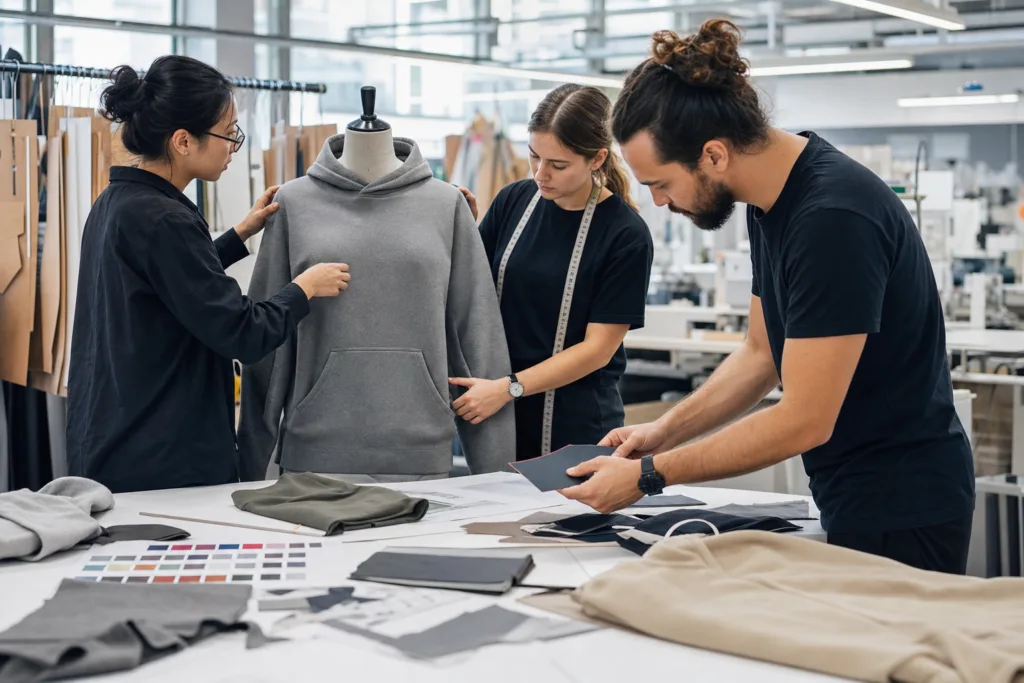
A buyer may want 80 pieces in four colors and six sizes, but that can be inefficient if each color needs separate fabric dyeing and each variation needs separate labels, packaging, and print setup. In contrast, 300 pieces in two colors using stock-supported fabric may be much more practical.
Questions to ask when planning MOQ
- Is the fabric custom dyed or available as ready stock?
- Are trims custom made or standard?
- Will all sizes use one stable pattern with the same sewing process?
- Is the reorder urgent, or can it be grouped with a later run?
- Would fewer colors and deeper size depth reduce risk?
At Ninghow, we often help startups compare a narrower, deeper reorder against a wider but shallower SKU plan. In many cases, the deeper plan produces better factory efficiency, better in-stock performance, and easier quality control.
Key takeaway: A manageable SKU structure usually scales better than an ambitious but fragmented reorder plan.
Updating the tech pack after the first drop: what must change and what must stay stable
The second production run should almost always use a revised tech pack, even if changes are minor. The purpose is not to redesign everything. It is to lock what worked and clearly document what needs correction.
After the first drop, the tech pack should be updated with actual approved information from production and customer use. That includes final measurements, shrinkage notes, artwork size, print placement tolerances, label positions, packing method, and any approved substitutions.
What should stay stable
- Core silhouette if fit was approved
- Successful construction methods
- Proven trim types
- Artwork dimensions that performed well
- Packaging format if it supported fulfillment well
What may need revision
- Measurement tolerances after wash
- Grade rules for weak sizes
- Fabric GSM or finish if hand feel was off
- Care label content if composition changed
- Thread color, reinforcement points, or seam specs
Clear documentation becomes even more important once you begin adding colors, sizes, or related styles. Without disciplined version control, startups often approve one sample but accidentally bulk produce from an older spec file.
How sample development should work for revised styles and new size runs
Sampling should be targeted to the actual risk in the next order. If the reorder is identical and all specifications are stable, you may only need confirmation samples or fabric lab dips. If fit, fabric, or decoration changes are involved, a new development sample is usually necessary.
For revised products and size expansion, structured apparel sampling support for revised fits and new SKUs helps reduce confusion between what is being retested and what is already approved. That is especially useful when founders are changing multiple variables at once.
| Sample Type | Best For | Main Goal |
|---|---|---|
| Proto sample | New style or major revision | Check concept, pattern, and construction direction |
| Fit sample | Measurement and grading changes | Approve silhouette and balance |
| PP sample | Pre-bulk production | Confirm all final specifications before cutting |
| Size set sample | Expanded size range | Check grading consistency across sizes |
We generally recommend not combining major fit revision, new fabric, and new logo method into one rushed approval cycle. When too many changes happen at once, it becomes hard to identify the real cause if the next sample underperforms.
Lead time planning for repeat orders and seasonal replenishment
Repeat orders are often faster than first-time development, but they are not instant. Fabric availability, dyeing, trim lead time, print scheduling, line booking, and shipping still need to be planned.
If you are forecasting a seasonal restock or a follow-up drop, use production timing guidance for reorders and expanded drops to work backward from your launch date. This is especially important when the style needs revised samples or when multiple colors must be approved before bulk starts.
What usually affects repeat-order lead time
- Whether fabric is in stock or must be knitted and dyed
- Whether trims are standard or custom branded
- Whether samples are fully approved at first pass
- How many colors and decorations are included
- Whether shipping is by air or sea
Startups often lose calendar time not in sewing, but in decision lag. A week spent debating revised cuff width or delayed artwork confirmation can easily push the entire replenishment window.
Quality control lessons from the first production run
The first bulk order should teach you where to tighten controls, not just whether the product looked acceptable at delivery. Repeat production needs clearer checkpoints so consistency does not depend on luck.
Useful quality review points include fabric shade consistency, shrinkage control, measurement tolerance, seam security, print adhesion, embroidery cleanliness, and packing accuracy. For larger repeat runs, it is helpful to think in terms of lot-based review and release criteria, not only random visual impressions. The logic behind sampling and acceptance criteria for production lots supports this approach: structured inspection plans reduce the risk of approving bulk output based on only a few good-looking pieces.
QC checkpoints that matter in repeat production
- Incoming material check: fabric width, defects, shade, and hand feel
- Pre-cutting check: marker, shrinkage allowance, and fabric lot separation
- In-line sewing check: high-risk operations and recurring defects
- Decoration check: color match, placement, adhesion, and stitching finish
- Final inspection: measurement, workmanship, labeling, and packaging
When a startup grows, consistency becomes part of the brand promise. A customer who reorders your bestseller expects the second purchase to feel like the first one, not like a different garment.
Common mistakes startup brands make when scaling apparel production
The biggest mistakes usually come from scaling too broadly before the product system is stable. Founders often see strong launch momentum and immediately add too many colors, categories, and size extensions without tightening the technical foundation.
- Reordering based only on sell-out speed
- Ignoring return reasons because revenue looked strong
- Changing fabric and fit at the same time without enough sampling
- Adding many colors before stabilizing one core style
- Using old tech packs with new verbal changes
- Underestimating MOQ impact across fragmented SKUs
- Booking launch dates before sample approval and line availability are secure
Key takeaway: Sustainable scale comes from repeatable control, not from launching the highest number of SKUs in the shortest time.
How we support long-term repeat production, reorders, and product line expansion
From our side as a manufacturer, the goal is to help founders make cleaner decisions between straight replenishment, selective revision, and controlled SKU expansion. That usually means reviewing actual first-order performance, confirming which specifications remain fixed, identifying which details need improvement, and planning sampling only where it adds real value.
We often support startup brands with fabric selection, sample iteration, grading review, print and embroidery method choice, private label details, packaging consistency, and bulk QC planning. When the project is handled this way, repeat production becomes less reactive and more systemized.
This is also where communication quality matters. The more clearly a brand documents approved measurements, target hand feel, logo sizes, packing method, and reorder priorities, the easier it is to protect consistency as order volume grows.
How to start your next production round with better data and lower risk
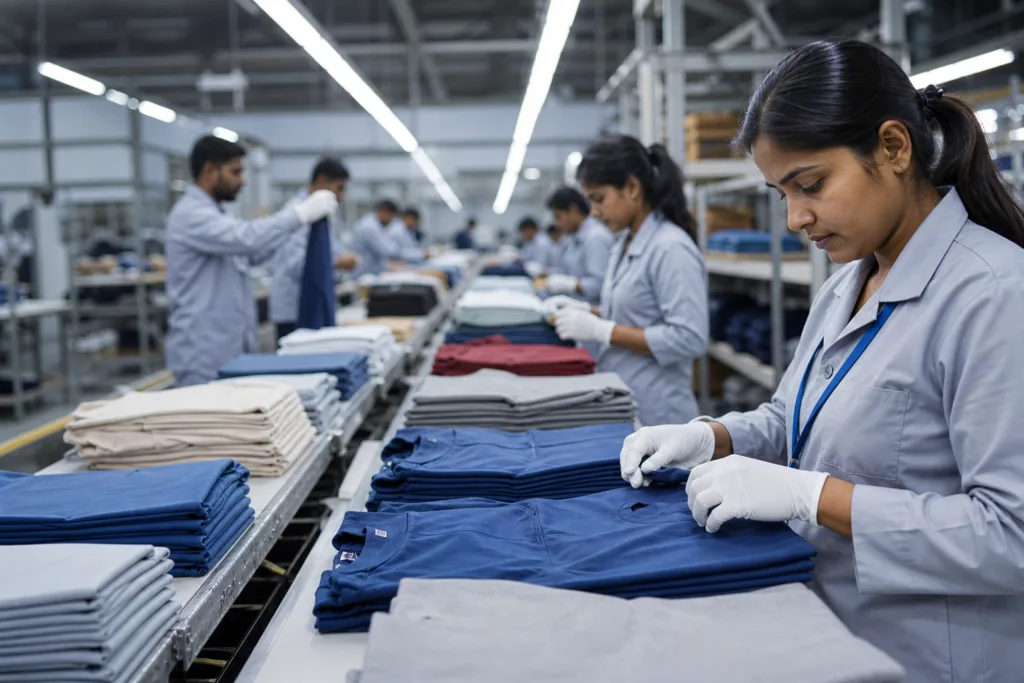
Start by identifying your real winner, not just your fastest sell-out. Then decide whether the next move is reorder, revise, size expansion, or SKU extension. Build the next order around the smallest number of variables needed to increase confidence.
For most startups, the smartest path is simple: protect a proven core style, improve what customers clearly flagged, and expand only after the product and production process are stable. That is the foundation of repeat production for startup clothing brands that want to grow without losing control of fit, quality, timing, or cash flow.
FAQs
How much sales data is enough before placing a repeat order?
You usually need enough data to see clear patterns in sell-through, size performance, return reasons, and customer feedback rather than just launch-day excitement. Even if the first drop was small, a repeat order is safer when you can identify which sizes moved consistently, whether complaints repeated, and whether demand stayed strong after the initial marketing push.
Should a startup reorder the exact same product if it sold out?
Not always, because a sell-out does not automatically mean the product was technically successful. If customers liked the concept but reported fit issues, print cracking, or fabric disappointment, it is often better to revise the style before repeating it at higher volume.
What is the safest way to expand into more sizes after a first drop?
The safest way is to review size-level sales and returns, update grading rules if needed, and sample at least one newly added size before bulk production. This helps confirm that proportions remain balanced across the range instead of assuming the base size fit will scale correctly on its own.
How can startup brands keep MOQ manageable during repeat production?
The best approach is usually to reduce unnecessary variation and focus on deeper stock in the strongest SKUs. Fewer colors, shared trims, and stable fabrics often make MOQ planning more practical than splitting a small budget across too many versions of the same style.
Do revised repeat orders always need new samples?
Yes, if the revision affects fit, fabric, construction, or decoration in a meaningful way, new samples are usually the safer choice. Small repeat runs with no technical changes may only need confirmation approvals, but once the wearer experience could change, sampling becomes part of risk control.
What should a startup brand send to a manufacturer before a repeat production discussion?
A useful package includes first-order sales results, size breakdown, return reasons, customer comments, the latest tech pack, photos of any product problems, and a clear list of what must stay the same versus what should change. This allows the manufacturer to evaluate reorder practicality, sampling needs, MOQ impact, and lead time more accurately.