





Choosing between embroidered vs printed polo shirts is not just a design preference. For bulk custom orders, the logo method affects garment image, unit cost, comfort, durability, sampling time, and how consistent the final polos look across every size in production. From our manufacturing perspective, the right choice depends on the logo itself, the fabric, the end use, and what your buyers or wearers expect from the finished product.
If your project starts with comparing polo shirt manufacturing options for bulk orders, it helps to evaluate logo method selection at the same time as fabric, fit, MOQ, and private label planning. We support buyers through polo development by matching decoration methods with pique cotton, performance polyester, blended fabrics, corporate branding standards, sampling requirements, and bulk production quality control so the final order works commercially, not just visually.
What makes polo shirt logo method selection important in bulk custom orders
The logo method matters because polos are worn in very different settings. A corporate uniform polo, a golf event polo, and a retail private label polo may all use the same base garment shape, but they do not need the same branding result.
In bulk production, decoration decisions also affect workflow. Embroidery requires digitizing, hooping, and stitch planning. Printing methods require artwork separation, color approval, heat settings, or fabric-specific testing. When buyers decide too late, they often create avoidable sample revisions and lead time pressure.
Key takeaway: The best logo method is the one that fits the garment’s fabric, the brand image, and the expected wear cycle, while staying realistic for the order quantity and production schedule.
Embroidered vs printed polo shirts: the core difference buyers should compare
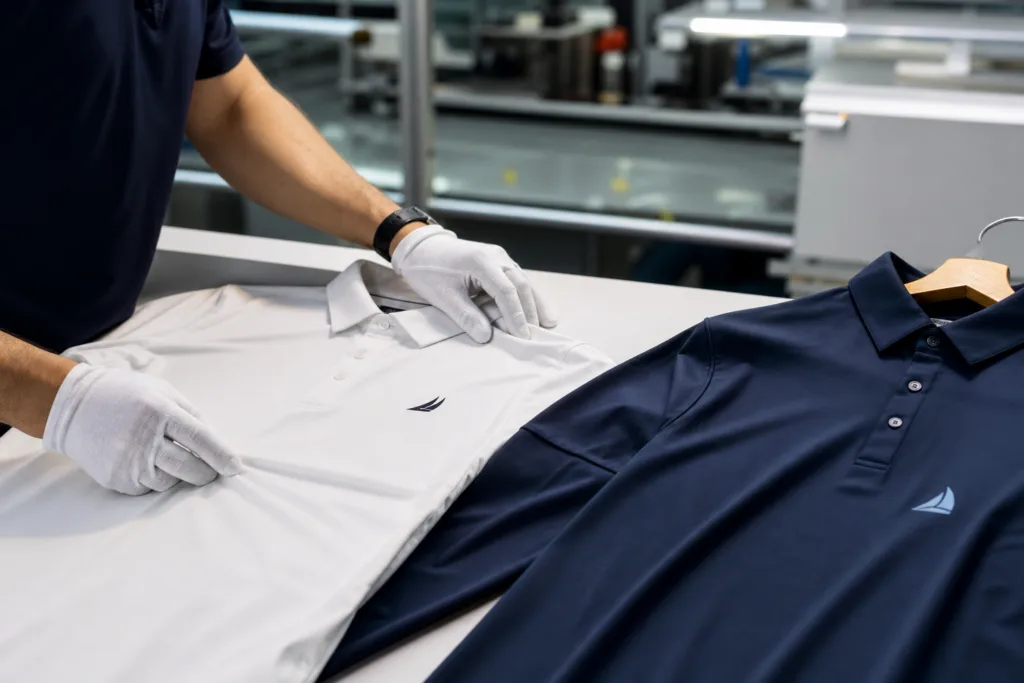
The simplest difference is this: embroidery creates a stitched, raised logo with texture, while printing places ink or transferred color on the fabric surface. That changes the look, hand feel, technical limits, and cost structure.
| Factor | Embroidery | Printing |
|---|---|---|
| Visual effect | Textured, structured, premium | Flat, flexible, more graphic-driven |
| Best logo size | Small to medium chest logos | Small to large graphics |
| Detail handling | Limited for tiny details and gradients | Better for fine detail and full color |
| Garment feel | Slightly heavier at logo area | Usually lighter, depends on method |
| Durability | Strong for repeated wear when digitized well | Good to excellent when method matches fabric |
| Setup cost | Digitizing setup | Screen setup, transfer prep, or print file prep |
| Unit cost impact | Higher for large stitch count logos | Can be efficient for larger runs and larger graphics |
| Typical use | Corporate, golf, uniforms, premium polos | Events, campaigns, sporty styles, promotional orders |
In practice, embroidery often supports a more polished business or club image. Printing opens more flexibility for large artwork, multi-color logos, campaign graphics, and budget-sensitive distribution.
When embroidery is the better choice for polo shirts
Embroidery is usually the better choice when the logo is small, the brand image is premium, and the polos need a professional look over repeated use. This is why many buyers choose custom embroidered polo shirts for corporate branding when ordering for office uniforms, hospitality teams, schools, or golf programs.
Embroidery works especially well on left chest placements, sleeves, and occasionally back yokes. These placements benefit from a clean stitched outline that looks stable on pique textures and medium-weight knits.
Best use cases for embroidery
- Corporate uniforms and front-desk teams
- Golf apparel and country club programs
- School polos with crests or badges
- Distributor programs needing a more premium finish
- Longer-wear uniforms where brand image matters daily
From a production standpoint, embroidery also holds up well when the logo is simple. Text, monograms, shields, and small icon marks usually translate better than photographic or highly shaded art.
What buyers should watch with embroidery
Embroidery is not automatically the best option for every premium polo. Small text can fill in, narrow lines can disappear, and large stitched areas can make the chest feel stiff. Stitch count also affects price quickly.
Good digitizing is critical. Factors such as underlay, pull compensation, and stitch direction directly affect logo clarity and puckering risk. Buyers comparing technical quality can review basics of embroidery stitch density and digitizing setup to better understand why two embroidered samples may look very different even when the logo file is the same.
When printed polo shirts are the better choice
Printed polos are usually the stronger option when the design is colorful, the artwork has gradients or fine lines, or the order is tied to an event, campaign, or promotion. They are also useful when the logo area needs to stay lighter and softer on performance fabrics.
For programs focused on visibility and cost control, many buyers prefer printed polo shirts for event and promotional use. This is common for product launches, trade show uniforms, seasonal activations, charity events, and short-cycle branded merchandise.
Best use cases for printing
- Promotional distribution and giveaways
- Large back graphics or multi-position branding
- Full-color logos and campaign artwork
- Sporty or casual polos with a lighter hand feel
- Budget-sensitive programs with larger volume
Printing also gives buyers more freedom to keep logo colors exact, especially when the artwork uses multiple tones. That matters for retail branding and event sponsors where visual identity is tightly controlled.
Logo method comparison by use case
The fastest way to choose is to start with the wearing scenario, not the decoration method itself. Different programs prioritize image, comfort, wash cycle, and cost very differently.
| Use case | Preferred method | Why it often works best |
|---|---|---|
| Corporate office polos | Embroidery | Professional, durable, premium left chest look |
| Team uniforms | Embroidery or print | Depends on badge-style logo versus sporty graphic use |
| Retail private label polos | Depends on brand direction | Embroidery for premium identity, print for trend graphics |
| Golf apparel | Embroidery or subtle transfer | Clean branding, performance fabric compatibility, lighter feel |
| School polos | Embroidery | Traditional crest look and repeated washing |
| Event giveaways | Better cost control and easier multi-color graphics |
For club, association, and staff programs, we often see mixed decoration strategies work well. A small embroidered chest logo can be paired with a printed packaging or hangtag approach to keep the garment itself more understated.
In sport or organization programs, buyers planning team polo production for clubs and organizations usually benefit from checking whether the logo needs a formal crest appearance or a more athletic branded look before locking the decoration method.
How fabric type affects the final logo result
Fabric choice changes decoration performance more than many buyers expect. The same logo can look sharp on one polo and disappointing on another because surface texture, stretch, fiber content, and heat sensitivity all change the result.
Cotton pique polos
Cotton pique is one of the most embroidery-friendly polo fabrics because its structure supports a traditional premium look. However, the textured surface can make very fine print edges look less crisp than they would on a smoother jersey knit.
Polyester polos
Polyester performance polos are popular for golf, teamwear, and active use, but they need more careful method selection. Heat response, dye migration risk, and surface smoothness all matter. For technical background on polyester decoration behavior, this overview of polyester printing and dye-sublimation compatibility is helpful when comparing sublimation and other print methods.
Cotton-poly blends
Blended polos are often the most commercially flexible. They can support embroidery well and may also work with screen printing or transfer methods, depending on the knit and finish.
Stretch and performance polos
Stretch fabrics need extra attention. Dense embroidery on lightweight stretch polos can reduce comfort and distort the fabric at the logo area. Softer transfer-based methods may be better when lightweight performance and movement are priorities.
| Fabric type | Embroidery suitability | Printing suitability | Main caution |
|---|---|---|---|
| Cotton pique | High | Medium | Textured surface can affect print sharpness |
| Polyester interlock | Medium to high | High | Heat and dye migration control required |
| CVC or poly-cotton blend | High | High | Method should match blend ratio and finish |
| Light stretch performance knit | Medium | High | Heavy stitches may reduce comfort |
Embroidery vs screen printing for logo size, detail, and garment feel
If the design is a small chest logo with bold lines, embroidery usually wins on perceived value. If the design is larger, more detailed, or color-rich, screen printing is often more practical.
Screen printing is strong when the artwork is simple enough for separated colors and the quantity justifies setup. It can create a cleaner large graphic than embroidery and usually keeps the garment more flexible in wear.
Choose embroidery when
- The logo is small to medium
- The brand wants a raised, premium finish
- The fabric is stable enough to support stitching well
- The design has limited colors and no gradients
Choose screen printing when
- The logo or graphic is larger
- The artwork has cleaner flat color areas
- Soft hand feel matters more than texture
- The order volume helps spread setup cost efficiently
Key takeaway: Embroidery sells structure and prestige, while screen printing sells visual flexibility and better scalability for graphic-heavy layouts.
Where heat transfer printing fits in bulk custom polo programs
Heat transfer works best when buyers need flexibility. It is useful for short runs, multi-color artwork, name and number personalization, or fast-turn programs where screen setup is less practical.
Transfer methods can also be a smart option for performance polos where a lightweight chest logo is preferred over dense stitching. In our apparel production work, transfers often help buyers combine visual sharpness with wearer comfort on lighter sports-oriented polos.
That said, transfer quality varies widely. Film thickness, adhesive quality, heat application control, and washing expectations should all be reviewed during sampling. A low-quality transfer can crack, peel, or feel overly plastic, especially on budget garments.
Where sublimation works best and when it is not suitable
Sublimation works best on polyester-rich fabrics and usually performs best when the decoration is integrated into the garment’s visual design rather than added as a traditional small badge logo. It creates excellent color vibrancy and almost no surface hand feel because the color becomes part of the fabric.
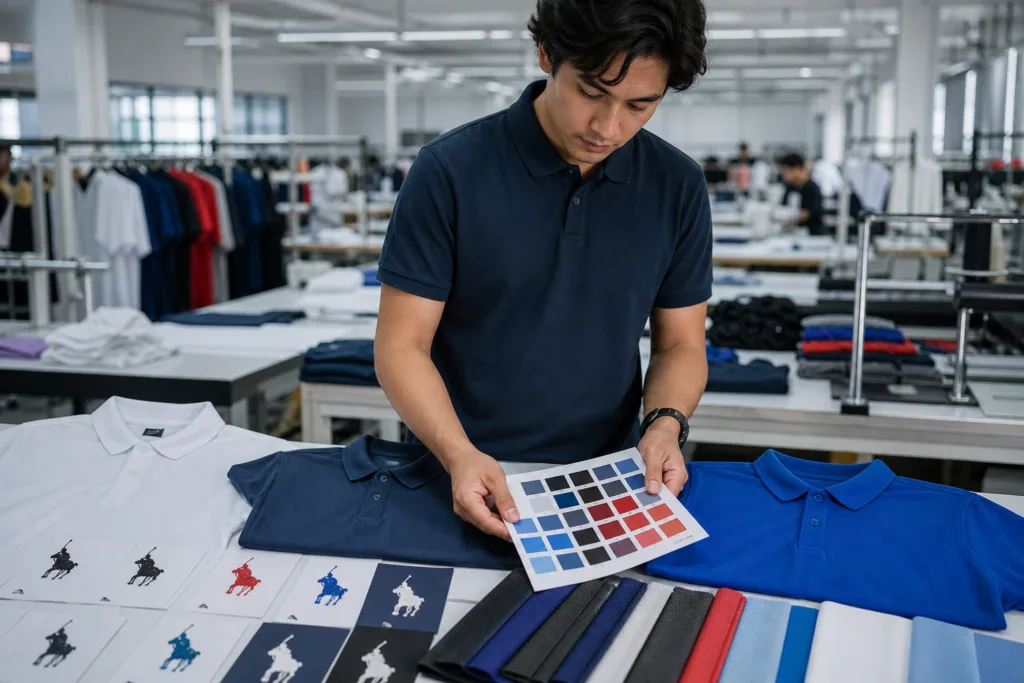
However, sublimation is not ideal for every polo program. It is generally not the first choice for cotton-rich polos, traditional corporate uniforms, or logos that need the classic premium raised look of embroidery. It also works best on lighter or white polyester bases unless the garment is fully panel-printed during development.
For technical sportswear or some golf styles, sublimation can be a strong choice. Buyers planning golf polo development for performance-focused branding often compare subtle embroidery on the chest against sublimated panel graphics depending on whether the collection direction is classic or athletic.
How brand positioning should guide your choice
Brand image should narrow the options quickly. If your polo needs to communicate premium, stable, corporate, or heritage value, embroidery usually supports that message better. If the brand language is younger, more graphic, more promotional, or more sport-driven, printing methods often fit better.
| Brand positioning | Likely better method | Reason |
|---|---|---|
| Premium corporate | Embroidery | Structured and professional appearance |
| Sporty performance | Transfer, print, or sublimation | Lighter feel and modern technical look |
| Casual retail | Print or embroidery | Depends on logo style and collection direction |
| Promotional | Cost-effective for visibility and color impact | |
| Institutional uniform | Embroidery | Consistent badge-like branding over time |
At Ninghow, we usually advise buyers to decide first whether the polo should feel formal, sporty, or campaign-driven. That brand decision often makes the decoration decision much easier.
How design complexity affects the best logo method
Simple logos give buyers more options. Complex logos reduce options fast.
Small text logos, simple icons, and shield marks usually work well in embroidery if the line weight is sufficient. Large back graphics, gradient effects, photos, and multi-color sponsor layouts are better handled through printing methods.
Quick design guide
- Small left chest text or emblem: embroidery is often strongest
- Large back statement graphic: printing is usually better
- Fine lines and gradients: printing or transfer is safer
- Full-color artwork: printing or sublimation is usually required
- Very lightweight stretch polo: avoid overly dense embroidery
Budget planning for bulk orders
Cost comparison should include more than unit price. Buyers should review setup, sample revisions, method scalability, and reject risk if the decoration does not suit the fabric.
| Cost factor | Embroidery | Printing |
|---|---|---|
| Initial setup | Digitizing fee | Screen or file preparation cost |
| Unit cost on small logo | Moderate | Low to moderate |
| Unit cost on large artwork | High | Usually more efficient |
| Sampling revisions | May increase with logo complexity | May increase with color and wash testing |
| Scalability in large runs | Good, but stitch time matters | Often excellent for stable artwork |
Embroidery can look more expensive in unit price, but it may deliver stronger value for premium uniform programs. Printing can reduce cost on larger graphics and higher volumes, but only if the method is matched correctly to the fabric and wear requirement.
Key takeaway: The cheapest logo method on paper can become the more expensive option if it creates sample delays, comfort complaints, or failed wash performance in bulk use.
MOQ, lead time, and production workflow considerations
MOQ and lead time depend on the full polo program, not decoration alone. Fabric sourcing, color availability, trim customization, label requirements, and packaging all influence the real production plan.
Embroidery may add time for digitizing approval and embroidery line scheduling. Screen printing may add time for color separation and test panels. Transfers can speed some small programs, while sublimation may require a more specialized fabric and pattern workflow.
- Approve logo size and placement before sample sewing is finalized
- Confirm fabric composition before locking print method
- Check whether one logo method can be used across all sizes consistently
- Review packing method if logos must remain flat and protected in transit
- Ask whether replacement pieces can match the same decoration batch later
For private label orders, we usually recommend combining logo review with label, hangtag, and polybag decisions during the sample stage. That reduces late changes and keeps bulk planning cleaner.
Quality factors buyers should check before confirming bulk production
The correct pre-production checks are straightforward. Buyers should review physical sample quality, not just digital mockups.
For embroidery
- Stitch density and edge clarity
- Thread color accuracy under normal light
- Backing and underlay effect on fabric distortion
- Consistency of placement across sizes
- Puckering after washing
For printing
- Color matching versus approved artwork
- Wash resistance and abrasion resistance
- Stretch recovery if used on performance fabrics
- Surface feel and breathability at logo area
- Registration accuracy for multi-color prints
Care labeling should also match the decoration method. If the polos are sold into retail, uniform, or institutional channels, buyers should align garment care instructions with recognized frameworks such as the ASTM textile care symbols standard so end users can maintain the product correctly.
Common mistakes buyers make when choosing polo shirt logo methods
The most common mistake is choosing based only on appearance. A logo may look attractive in artwork form but fail commercially once it is applied to textured pique, stretch fabric, or a large-size run.
- Using embroidery for logos with text that is too small
- Using print on textured fabrics without testing edge clarity
- Ignoring fabric heat sensitivity on polyester polos
- Approving artwork without final placement measurement
- Skipping wash tests before bulk production
- Comparing unit cost without comparing wear life and brand image
Another common issue is trying to use one decoration method for every sales channel. Corporate uniforms, retail capsules, and promotional giveaway polos often need different logic even if the base logo is the same.
How to prepare a better tech pack or artwork file for embroidery or printing
Better input files reduce sample revisions. Buyers do not need overly complex tech packs, but they do need clear and production-ready information.
What to include
- Vector logo file or high-resolution artwork
- Logo width and height in millimeters or inches
- Placement point for each logo location
- Pantone references when color accuracy matters
- Fabric composition and garment color
- Preferred decoration method and acceptable alternative
- Care expectations and end-use scenario
If the buyer is unsure whether the artwork is more suitable for embroidery or print, that should be raised before sampling starts. From our manufacturing side, that early discussion saves time because we can recommend line weight changes, size adjustments, or method alternatives before an avoidable sample is made.
Best practice recommendation matrix for bulk custom polo orders
Most buyers can reach a confident decision by matching business goal, logo complexity, and fabric type in one simple matrix.
| Order goal | Recommended method | Why |
|---|---|---|
| Premium office uniform | Embroidery | Professional look and strong perceived value |
| Trade show or event distribution | Print or transfer | Cost-efficient, colorful, scalable visibility |
| Golf collection with classic image | Embroidery | Refined branding on performance polo styles |
| Sporty polyester program | Transfer or sublimation | Lighter feel and better fabric compatibility |
| Retail graphic polo | Supports larger and more creative artwork | |
| School or institutional crest polo | Embroidery | Traditional emblem appearance and wash durability |
Key takeaway: If the logo is small and the image is premium, start with embroidery. If the artwork is larger, more colorful, or cost-sensitive, start with printing and then refine by fabric type.
Questions to ask your clothing manufacturer before confirming production
The right questions reduce risk faster than any brochure or mockup. Buyers should confirm what the factory will actually test, control, and standardize in bulk.
- Which logo methods are suitable for this exact polo fabric?
- Will the logo look different on small and large sizes?
- What is the recommended maximum and minimum logo size?
- What wash testing is done before bulk approval?
- How will placement consistency be controlled during production?
- Is the chosen method realistic for the required lead time and quantity?
- Can the factory match the same logo quality in repeat orders?
These questions are especially important when the program includes multiple colorways, private label packaging, or reorders for distributors and institutions.
Conclusion
When buyers compare embroidered vs printed polo shirts, the right answer is rarely one method for every project. Embroidery is often stronger for premium small logos, corporate identity, school crests, and classic golf or uniform programs. Printing methods are often stronger for colorful graphics, promotional campaigns, sporty styling, and larger visual layouts.
The best commercial decision comes from reviewing logo complexity, fabric type, brand positioning, expected wear cycle, and production workflow together. If that evaluation is done early, the sample process becomes smoother and the bulk order is more likely to perform well in cost, appearance, and consistency.
FAQs
Is embroidery more durable than printing on polo shirts?
Embroidery is often more durable for small logos on polos, but only when the digitizing, stitch density, and fabric support are correct. A well-made print can also perform very well, especially on suitable fabrics and with proper wash testing, so buyers should compare durability by method and fabric combination rather than assuming one always wins.
Are printed polo shirts cheaper than embroidered polo shirts?
Printed polo shirts are often cheaper for larger graphics, colorful artwork, or high-volume promotional orders, but not in every case. Embroidery can be cost-effective for simple small chest logos, while printing may add setup or testing costs depending on the artwork and fabric, so the full cost should include setup, unit price, and sample revision risk.
Which logo method looks more premium on corporate polo uniforms?
Embroidery usually looks more premium on corporate polo uniforms because it creates a structured and professional logo finish. That said, subtle transfer applications can also work on modern performance polos when the brand wants a cleaner athletic look with less weight on the garment.
Can polyester polo shirts be embroidered and printed?
Yes, polyester polo shirts can usually be both embroidered and printed, but the best choice depends on the knit, stretch level, and heat sensitivity. Performance polyester often works well with transfer or sublimation methods, while embroidery can still be suitable for simpler logos if the fabric remains stable and comfortable after stitching.
What logo file is best for custom polo shirt sampling?
A vector file is usually the best starting point for custom polo shirt sampling because it allows clean scaling and clearer production preparation. Buyers should also provide logo size, placement, color references, and the intended fabric so the factory can judge whether embroidery or print will reproduce the design more accurately.
How do I choose the best logo method for a bulk polo order?
The best way is to start with the use case, fabric, and artwork complexity, then compare image, comfort, durability, and cost together. For premium small logos, embroidery is often the first option to test, while larger or full-color graphics usually point toward screen printing, transfer, or sublimation depending on the polo fabric.