








When you compare clothing manufacturer quotes, the cheapest unit price is rarely the safest choice. In apparel sourcing, a quote can look attractive on paper while hiding weak fabric, vague workmanship standards, limited capacity, slow sampling, or extra charges that appear after approval. A better comparison framework helps you evaluate true landed cost, production risk, and supplier fit before you commit to a bulk order.
If you are still building your supplier shortlist, this step-by-step guide to finding a clothing manufacturer can help you narrow the field before you request quotes. From our manufacturing perspective, the best sourcing decisions usually begin with a clear tech pack, realistic timeline, and a supplier that can support sampling, fit refinement, private label details, and bulk production without changing assumptions midstream.
Who this guide is for and what you should expect to decide
This guide is written for brand founders, sourcing managers, product developers, clubs, schools, retailers, and startup teams that need to choose between multiple OEM or ODM apparel suppliers. The goal is not just to find a lower price; it is to decide which quote gives you the most reliable balance of quality, speed, communication, compliance, and total cost.
By the end, you should be able to:
- standardize quotation requests so suppliers are quoting the same project
- separate true product cost from hidden or optional charges
- compare fabric, construction, decoration, and packaging on equal terms
- estimate total landed cost instead of only factory price
- use a scoring matrix to reduce the risk of choosing the wrong supplier
How to compare clothing manufacturer quotes without getting misled by unit price

The first rule is simple: do not compare quotes that are not built on the same assumptions. One supplier may quote a heavier fabric, another may exclude testing, and a third may include basic packaging while others do not. Those differences make direct unit-price comparison unreliable.
To compare clothing manufacturer quotes correctly, normalize every offer into the same structure. Ask each supplier to quote the same garment type, size range, construction level, decoration method, packing spec, and delivery term. If one supplier is quoting FOB and another is quoting EXW, or one includes freight while another does not, convert each offer into a comparable total landed cost.
Standardize the RFQ before you request price
A professional RFQ should include the essentials needed for accurate quotation:
- tech pack with measurements and construction notes
- size range or size set requirements
- fabric composition, GSM, finish, and color standards
- trim and label details
- print, embroidery, washing, or special finishing instructions
- packaging requirements and carton expectations
- target order quantity by color and size
- delivery target and destination
When these inputs are vague, the quote may look low only because the supplier assumed a lighter fabric, fewer QC steps, or a simpler finish than you actually need.
Anatomy of a professional apparel quote
A useful quote should break the garment into line items. If the supplier only gives one all-in number, ask for a detailed breakdown. That is the only way to see where price differences come from.
| Quote component | What it may include | Why it matters |
|---|---|---|
| Fabric | Base cloth, dyeing, finishing, wastage allowance | Usually the largest cost driver |
| Trims and BOM | Thread, zipper, buttons, elastic, labels, hangtags | Affects both cost and brand presentation |
| Decoration | Screen print, embroidery, heat transfer, sublimation | Setup and repeat costs can vary widely |
| Cut and sew | Patterning, cutting, stitching, assembly | Shows workmanship level and factory efficiency |
| Finishing | Pressing, washing, QC, folding | Impacts appearance and consistency |
| Testing/compliance | Colorfastness, shrinkage, chemical safety, inspection | Important for risk control |
| Packing | Polybag, carton, inserts, barcodes, carton marks | Can change branding and logistics cost |
| Freight and duties | Shipping, customs, taxes, local delivery | Needed for real landed cost |
Some quotes also include overhead and profit as a separate line, while others roll them into the garment price. That is fine as long as the quote is transparent enough to compare apples to apples.
Fabric, GSM, and material comparison: the most common source of quote confusion
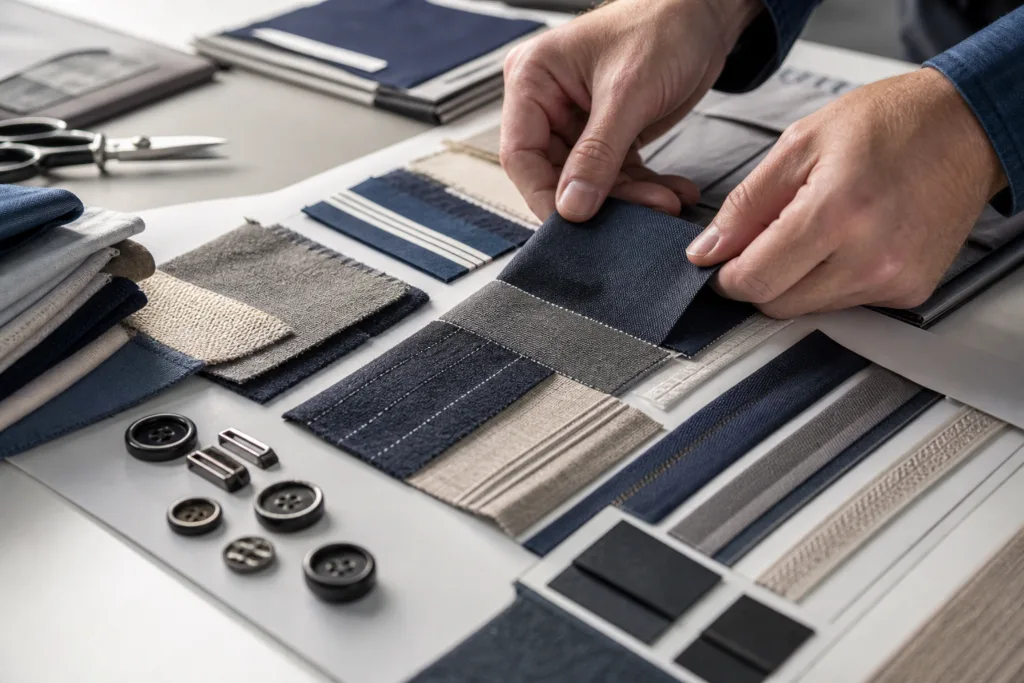
Fabric is often where quote gaps begin. A supplier might quote a lower price because the fabric is lighter, has a different composition, or comes from a different mill. If your product depends on hand feel, stretch, drape, or durability, this can change the entire result.
Ask suppliers to specify:
- composition, such as cotton, polyester, spandex, or blends
- GSM or fabric weight
- fabric width
- knit or weave structure
- dyeing method and colorfastness expectations
- mill name or fabric source if available
- lead time for greige, dyed, or specialty fabric
Fabric weight should always be compared against the tech pack and measured using a reliable method. For readers who want a technical reference point, fabric GSM and weight verification is one of the most practical checks when a supplier’s quote seems unusually low or unusually high.
We also recommend asking whether the supplier can offer an alternative fabric if your target price is over budget. A good factory should be able to explain how a different yarn count, knit density, or finishing method will affect cost-performance balance before you approve sampling.
Process and workmanship differences that change price
Two quotes can look similar while the actual construction is very different. Stitch density, seam allowance, reinforcement points, washing processes, and pressing standards all affect labor time and defect risk. In bulk production, a small adjustment in construction can create a meaningful price difference.
Pay close attention to:
- stitch type and stitch density
- seam allowance consistency
- reinforcement at stress points
- bar tacks, topstitching, or coverstitch requirements
- wash and finishing steps
- tolerance on measurements after washing
If one quote assumes a simple lockstitch construction and another includes reinforced seams, the lower quote may not be the better choice. It may simply be quoting a weaker product.
Decoration costs: printing, embroidery, and ownership details
Decoration is another area where quoted prices can look misleading. Screen printing may include setup screens and color separations. Embroidery may include digitizing, stitch count changes, and sample approval rounds. Heat transfer may have tool or artwork review fees. Sublimation may be priced differently depending on fabric type and print coverage.
Always ask:
- what the setup charge includes
- how repeat orders are priced
- who owns the artwork files and embroidery digitizing data
- how many approval rounds are included
- whether oversized prints or special placements cost extra
These details matter because decoration cost can scale faster than garment cost, especially on small-batch or highly customized programs.
Sampling and prototyping: compare the full development path, not just bulk price
Sample cost is often underestimated. Some suppliers quote a low sample price to win the project, then recover the cost later through revisions or development fees. Others include sample support in the production journey but charge more on the first proto. Both approaches can be valid, but you need to understand the full process.
In most projects, there are at least two sample stages: a prototype sample and a pre-production sample. The prototype checks design interpretation, fabric direction, and basic fit. The pre-production sample confirms final construction, labeling, and bulk readiness.
For a more detailed breakdown of what should happen between concept and bulk approval, see our apparel sampling process and sample approval steps. If you are comparing quotes, ask which sample stages are included, how many revisions are allowed, and whether the sample lead time fits your launch window.
Quality control and compliance: price the risk, not only the garment
Quality control is one of the most important differentiators between suppliers. A lower quote may omit in-line checks, final inspection, or test reports. That can reduce the factory price, but it may increase the chance of rework, delays, or returns.
When comparing quotes, ask suppliers to define their inspection scope. A practical comparison should include:
- incoming material inspection
- in-line production checks
- final AQL inspection
- measurement verification
- shade band and color consistency checks
- needle and metal control if relevant
- test reports for shrinkage, pilling, and colorfastness when needed
If a supplier claims a certification or compliance standard, request documentation and confirm whether it applies to the fabric, trims, or final product. For chemical safety and textile product compliance, OEKO-TEX® STANDARD 100 is one widely recognized reference point, but the quote should still state exactly what is included and what is not.
Our own apparel quality control and inspection checkpoints are always discussed before bulk approval, because cost differences often appear in the level of checking, not only in sewing labor. If a quote is much cheaper, make sure the supplier has not removed the very inspections that protect your order.
For a supplier evaluation guide, the apparel quality control and inspection checkpoints page is a useful companion when you are comparing production risk across factories.
Packaging, labels, and trims: small details that change both price and brand value
Packaging and trims are often treated as minor line items, but they can create major quote differences when private-label requirements are involved. A generic polybag and a branded folding pack are not the same project. Neither are standard labels and custom woven labels with hangtags, size stickers, and carton marks.
Ask for a clear breakdown of:
- care label content and placement
- main label and size label method
- hangtag setup and stringing
- polybag thickness and warning text if required
- carton quality, carton marks, and carton count
- individual packaging versus bulk packing
If your supplier quotes “standard packing,” define what standard means. Otherwise, the quote may not match your retail, club, or distribution needs.
Lead time and production capacity: the hidden cost of a slow factory
Delivery timing can be as important as unit price. A supplier with a lower quote but a long lead time may cause you to miss a season, event, or retail deadline. Delays can also create expedite fees, air freight costs, and stock shortages that far outweigh the savings.
Ask the supplier to provide a realistic schedule from sample approval to bulk delivery, including fabric booking, cutting, sewing, finishing, inspection, packing, and shipping. Then compare that schedule against your internal launch date and sales window.
For planning purposes, use our realistic apparel production timelines and lead times to pressure-test any quote that promises unusually fast turnaround. If the proposed timeline does not include buffer time for approval delays, sampling changes, or raw material delays, the quote is probably too optimistic.
What to watch for in capacity claims
Some suppliers can handle the quoted volume only if there is no interruption in fabric supply or no change to specs. Ask how many production lines are available, whether the order will be shared across lines, and what happens if a critical component is delayed. A factory that cannot explain scheduling risk clearly may not be the safest partner for a time-sensitive program.
A reproducible scoring matrix for quote comparison
A weighted scoring matrix helps turn subjective impressions into a clearer decision. This is especially useful when one supplier is cheaper, another has better communication, and a third has stronger compliance documentation.
| Criterion | Weight | Supplier A | Supplier B | Supplier C |
|---|---|---|---|---|
| Product quality and workmanship | 30% | 8 | 7 | 9 |
| Total landed cost | 20% | 7 | 9 | 6 |
| Lead time and capacity | 15% | 8 | 6 | 8 |
| MOQ flexibility | 10% | 7 | 8 | 6 |
| Communication and responsiveness | 10% | 9 | 6 | 8 |
| Compliance and QC | 10% | 8 | 7 | 9 |
| Packaging and private label readiness | 5% | 7 | 8 | 8 |
Score each area from 1 to 10, multiply by the weight, and compare totals. A simple matrix like this prevents a low unit price from hiding weak production control. It also forces the team to discuss what matters most for the product and sales channel.
Negotiation and clarification: the questions that protect your margin
When a quote is unclear, do not negotiate blindly. Clarify the assumptions first. Good suppliers welcome precise questions because it reduces later rework.
- What exactly is included in the unit price?
- What fabric source and weight are being quoted?
- What is excluded from sample cost or bulk cost?
- How many revisions are included before extra charges apply?
- What happens if the first bulk shipment fails inspection?
- Who owns pattern files, artwork files, and embroidery data?
- How are change orders handled after approval?
These questions are especially important if you need a supplier that can support private label development, because design ownership, label setup, and packaging details can affect both cost and control.
From a manufacturing perspective, the best way to protect your design and your schedule is to move through a clear handoff process. Our apparel order process from pre-production to delivery shows the logic many brands need: approval, confirmation, bulk planning, inspection, and shipment. A quote is more trustworthy when it aligns with a visible operating process.
Example: how two quotes can lead to different outcomes
Imagine two suppliers quoting a men’s performance polo. Supplier A offers a lower unit price, but the quote excludes lab testing, uses a lighter fabric, and provides only a general packing spec. Supplier B costs more per unit, but it includes confirmed GSM, detailed trims, final inspection, and a more realistic lead time.
At first glance, Supplier A may appear cheaper. But after you add inspection, remake risk, delayed shipping, and the possibility of customer complaints from poor hand feel or inconsistent sizing, Supplier B may actually be the safer financial decision. This is why the right question is not “Which supplier is cheapest?” but “Which quote is most complete and least risky for this product and launch plan?”
Common mistakes that lead to choosing the wrong supplier
- comparing unit price without comparing specs
- accepting vague fabric descriptions
- ignoring sample quality and sample communication
- overlooking capacity and seasonal workload
- failing to define packaging and label requirements
- not checking whether inspection and testing are included
- choosing a quote that is too optimistic on lead time
These mistakes are avoidable when the RFQ is standardized and every supplier is asked the same questions.
Practical checklist you can use before approving a supplier
- Does the quote match the tech pack line by line?
- Are fabric, GSM, trims, and decoration clearly defined?
- Are sample fees and revision limits stated?
- Is lead time realistic for your launch?
- Are QC, testing, and packaging requirements included?
- Is the total landed cost clear?
- Have you scored the supplier against your weighted matrix?
For teams that need a more specific supplier-screening perspective, 15 questions to ask a clothing manufacturer before ordering is a useful support resource when you want to validate a quote before moving forward.
Conclusion

To compare clothing manufacturer quotes well, you need more than a price list. You need a consistent RFQ, a clear view of material and workmanship differences, a realistic landed-cost estimate, and a scoring method that reflects your priorities. The lowest quote is not always the smartest option, especially when product quality, communication, compliance, and delivery risk affect your final margin.
At Ninghow, we approach quotation comparison as part of the wider production decision, not a one-line price exercise. When brands compare quotes carefully, they reduce surprises, approve samples faster, and build stronger supplier relationships over time.
FAQs
What is the biggest mistake when comparing apparel quotes?
The biggest mistake is comparing only unit price while ignoring fabric, construction, testing, packaging, and delivery terms. Two quotes can look close in price but represent very different products and risk levels.
Should sample cost be included in the quote comparison?
Yes. Sample cost, revision fees, and sample lead time should be compared alongside bulk price because they affect development speed and total project cost.
How do I know if a quote includes quality control?
Ask the supplier to specify incoming inspection, in-line checks, final inspection, and any testing requirements. If the quote is vague, treat QC as excluded until proven otherwise.
What should I do if one supplier quotes a much lower price?
Request a line-item breakdown and compare the same specifications across all suppliers. A much lower price often means a lighter fabric, fewer QC steps, simpler packaging, or missing services.
How should I compare lead times across suppliers?
Compare the full production schedule from sample approval to delivery, including fabric sourcing, bulk production, inspection, packing, and shipping. Do not rely on a single promised ship date.
Is a higher MOQ always a bad sign?
Not always. A higher MOQ can reflect factory efficiency, fabric booking constraints, or production method. The key is whether the MOQ fits your sales plan and whether the supplier can explain the cost structure clearly.