


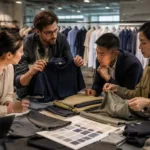





Choosing a factory is not only about getting a price quote. It is about confirming whether the manufacturer can repeat your quality standard, manage your material requirements, communicate clearly, and scale without losing consistency. For brand founders, sourcing managers, and product developers, the right questions to ask a clothing manufacturer can reveal risks long before fabric is cut. We use this checklist from a factory perspective because strong supplier selection depends on evidence, not promises. To make it practical, you can score each answer from 1 to 5, then set simple thresholds: 60 or below means do not proceed yet, 61 to 74 means proceed only with more verification, and 75 or above means the supplier may be suitable for sampling or a controlled pilot order.
If you are still early in sourcing and need a broader framework for how to evaluate and find a clothing manufacturer, this checklist works well as the next step after building a shortlist. It helps buyers move from general comparison to document-based verification, especially when the project involves custom garments, private label setup, fabric sourcing, sample development, or first bulk planning. From our manufacturing perspective, the value is in connecting each answer to real production points such as capacity, quality controls, lead times, labeling, and packaging readiness.
We selected these 15 questions around one principle: capability must be verifiable. A supplier may sound flexible in a first call, but that does not confirm they can manage pattern accuracy, maintain shade consistency, control shrinkage, or keep delivery stable during peak season. Good evaluation questions should reduce risk in four areas: production fit, quality control, compliance, and commercial execution. They should also make it easier to compare multiple factories using the same decision criteria.
Quick 15-question checklist
- What is your main production focus and core competency?
- What is your actual capacity for this garment type, and how do you manage peak seasons?
- Can you source fabrics and trims, or must the buyer supply them?
- What are your MOQs by style, color, and fabric, and can you phase production?
- What are your sample and bulk lead times, and what usually causes delays?
- What QC system do you operate, and what defect metrics do you track?
- Can you share PP sample, pre-production, and final inspection records?
- What product tests do you perform, and which labs or standards do you use?
- How do you handle pattern making, grading, fit approval, and size consistency?
- Which certifications or audit summaries can you provide?
- How do you control material and chemical compliance?
- How do you protect tech packs, artwork, and confidential product information?
- Can you explain your pricing breakdown and key cost drivers?
- How do you handle packaging, labels, hangtags, and private label details?
- What are your payment terms, shipping terms, and delay contingency plans?
Section A: Core production capability and capacity
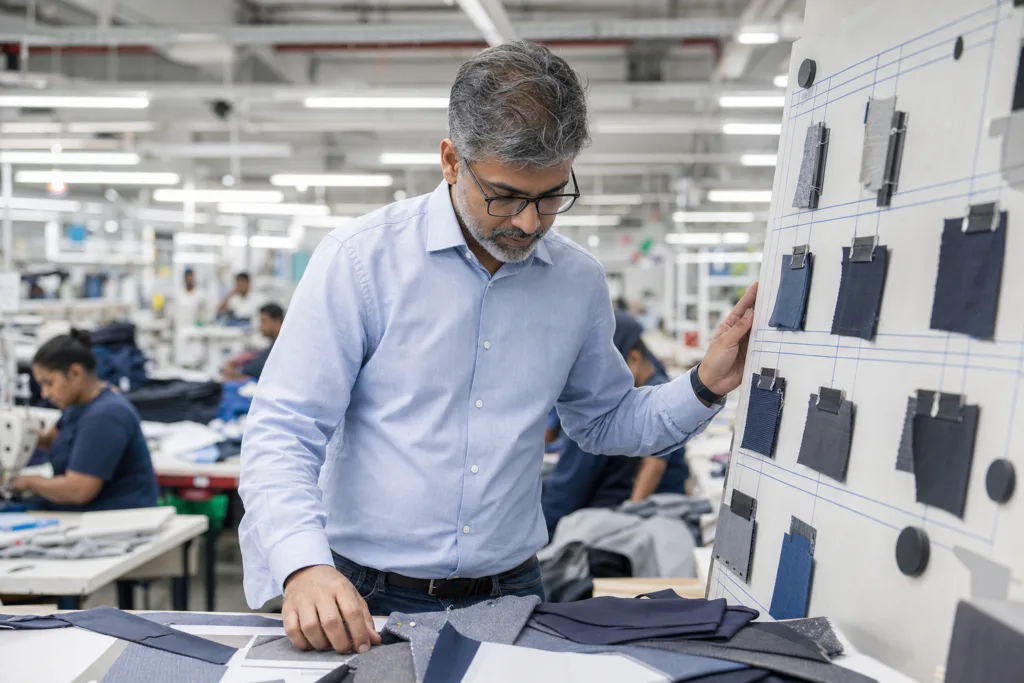
What is your main production focus and core competencies?
This is the first filter because many factories accept projects outside their real strength. A manufacturer focused on basic knit tees may not be the right fit for bonded outerwear, sublimated teamwear, or structured golf polos with performance trims. Ask which garment categories they make most often, which processes are in-house, and which are subcontracted. Also ask whether they regularly produce your fabric type, target price level, and construction complexity.
Evidence to request includes line photos, workshop videos, process maps, and recent examples of similar garments. If they say they do embroidery, ask whether it is internal or sent outside. If they claim pattern development capability, ask how many pattern makers they have and whether they grade digitally. Good answers are specific: they describe category focus, machinery, common stitch types, and the order range they handle comfortably. Red flags include broad claims such as “we can make everything” without proof, or confusion around the garment details in your tech pack.
At Ninghow, we usually advise buyers to compare a factory’s claimed specialty with the exact garment they plan to launch, not just the broad category. A polo shirt factory may still differ significantly in performance-mesh handling, placket construction, color matching, collar knitting, and logo application.
What is your current monthly or weekly production capacity for this garment type and peak capacity planning?
Capacity numbers are easy to misuse, so buyers should ask how the number is built. Is it based on sewing lines, operator count, available cutting capacity, or historical output for that specific garment? A claim of 100,000 pieces per month means little if it refers to simple tees while your order is a multi-panel zip jacket. Capacity must be style-specific.
Request weekly line output examples, line allocation plans, shift patterns, and peak-season booking windows. A good answer explains normal capacity, buffer capacity, and what happens when orders overlap. Strong suppliers will also explain how lead time changes when fabric arrival is late or when approvals are delayed. Red flags include round numbers with no line breakdown, no mention of bottlenecks, or refusal to discuss current booking status.
Can you source fabrics and trims or must the buyer supply them?
This question affects cost, speed, consistency, and control. If the factory sources materials, ask for approved vendor categories, standard lead times, color matching process, and how they verify fabric quality before cutting. If you supply materials, ask how the factory checks shortages, shade variation, width variation, and replacement timing.
Verification can include vendor lists, sample purchase invoices, trim cards, and incoming inspection records. Ask whether the supplier can coordinate labels, elastic, zipper brands, drawcords, polybags, and carton marks. Good answers show a controlled supply chain with realistic lead times and substitute plans. Red flags include vague sourcing promises, no incoming inspection, or no experience with the type of functional fabric your product needs.
What are your minimum order quantities and do you offer phased production or split shipments?
MOQ must be broken down properly: by style, by color, by fabric dye lot, and sometimes by logo application. Buyers often hear one attractive MOQ figure but later discover print setup minimums, trim minimums, or fabric dye minimums that change the real number. Ask whether the supplier supports pilot runs, repeat-color replenishment, and split deliveries by destination or by production batch.
For startups or test launches, it helps to understand low MOQ clothing manufacturing options for small runs before negotiating. A good answer explains where MOQ flexibility is possible and where it is limited by fabric mills, knitting, dyeing, or packaging components. Red flags include unusually low MOQ promises without explaining how fabric, labels, or print economics will be handled.
What are your sample and bulk production lead times and what causes typical delays?
Lead time should be split into prototype, fit sample, sales sample if needed, PP sample, material booking, cutting, sewing, finishing, inspection, and shipping. Buyers should not accept one bulk number without approval milestones. Ask what the lead time assumes about fabric availability, print strike-off approval, lab dip approval, and packaging confirmation.
Strong suppliers can walk you through the typical apparel production timelines and milestones for your garment type, including critical dependencies. Good answers mention likely delay points such as fabric dyeing queues, holiday congestion, missing approvals, and rework from sample changes. Red flags include unrealistic speed, no contingency logic, or no separation between sample lead time and mass production lead time.
Section B: Quality systems and testing
What quality control systems do you operate and what defect metrics do you track?
A serious supplier should explain incoming quality control, in-process quality control, and final quality control clearly. Ask how fabric is checked before spreading, how measurements are monitored during sewing, how logo placement is verified, and whether final inspection follows an AQL method. If the factory claims to follow a formal quality management framework, ask whether it aligns with ISO 9001 quality management principles or an equivalent documented system.
Request sample QC reports, defect categories, rework procedures, and corrective-action examples from recent orders. You should also review factory quality control procedures and checkpoints against the supplier’s own explanation. Good answers identify common defects by garment type, show tolerance control, and explain who signs off each stage. Red flags include no written QC forms, no defect tracking, or a claim that quality is checked only at the end.
| QC Area | What to Ask | Good Sign | Red Flag |
|---|---|---|---|
| IQC | How are fabric and trims checked on arrival? | 4-point or clear incoming checks, shade review, trim count | No documented receiving inspection |
| IPQC | How often are measurements checked in sewing? | Inline audits and measurement records | Only visual checks by operators |
| FQC | How is final inspection handled? | AQL or defined inspection method with records | No sampling plan or report format |
| CAPA | How are recurring defects corrected? | Root-cause discussion and process adjustment | Only rework, no prevention logic |
Can you provide recent PP sample photos, pre-production inspection reports, and final inspection reports?
Documents reveal whether the factory can turn words into controlled execution. Ask to see anonymized examples of PP sample approvals, measurement sheets, workmanship comments, and final inspection summaries with defect classifications. You are not only checking the garment result; you are checking how the factory records decisions.
Good documents show style references, revision dates, measurement tolerances, packaging notes, and clear pass or fail remarks. Red flags include blurry sample photos, incomplete size charts, no revision tracking, or inspection reports with no defect coding. These issues often signal weak internal communication.
What mechanical and chemical testing do you perform, and do you use third-party labs?
Testing expectations depend on the garment. For example, activewear may need more attention on stretch recovery, colorfastness, pilling, and seam performance, while kidswear may need stronger compliance checks. Ask which tests are done in-house, which are outsourced, how often they test repeat fabrics, and what standards or acceptance criteria they follow.
For chemical safety, request proof that fabrics and trims meet recognized requirements, such as OEKO-TEX STANDARD 100 when relevant to your market or brand policy. Good answers include lab names, report dates, style or material references, and a clear trigger for retesting after material or color changes. Red flags include old generic reports, reports not tied to the actual material, or statements like “our supplier already says it is safe” without documents.
How do you handle pattern making, grading, fit approval, and size consistency?
Many production issues start before sewing. Ask whether patterns are made in-house, how fit comments are applied, whether grading is digital, and how measurement tolerances are set. If the supplier cannot explain the movement from base size to graded size set, you may see size inconsistency in bulk.
Request sample measurement charts, graded spec sheets, and examples of fit comments being closed out between rounds. It also helps to understand the supplier’s apparel sampling process and sample approval steps, because fit approval, construction refinement, and tolerance confirmation should all happen before bulk cutting. Good answers show structured revision control and awareness of fabric behavior after washing. Red flags include no tolerance chart, no wash test before approving measurements, or reliance on copying a reference garment without technical development.
Section C: Compliance, materials, and IP protection
Which social, ethical, or quality certifications and audit reports can you provide?
Certifications alone do not guarantee performance, but they help verify whether the supplier has been reviewed for management systems or social compliance. Ask which certifications are current, what facility they apply to, when the last audit was completed, and whether the scope covers the production site that will actually make your order. If the supplier uses multiple sites, this matters even more.
Good answers include certificate copies, audit dates, scope details, and summary findings. Red flags include expired certificates, certificates issued to another company name, or resistance to sharing even a summary page. Buyers should also ask whether subcontractors are covered when outsourced processes are involved.
How do you ensure material and chemical compliance?
This question should cover supplier declarations, incoming checks, restricted-substance awareness, test records, and market-specific requirements. U.S.-bound styles, children’s garments, and performance products may require tighter controls. Ask how the factory collects supplier attestations, tracks fabric lots, and responds if a trim fails testing.
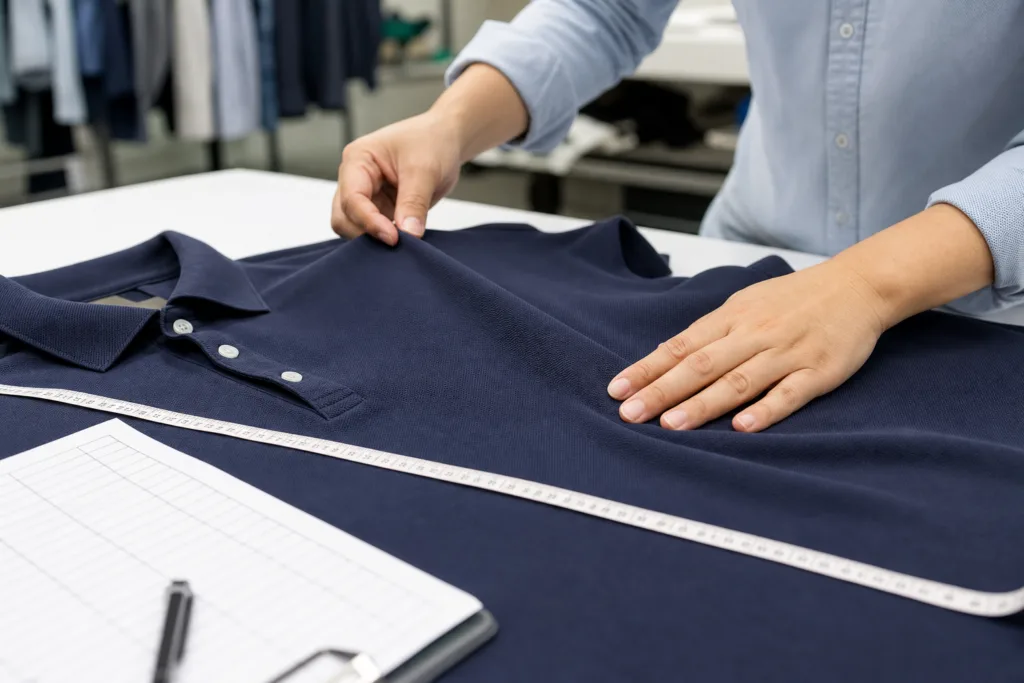
Good answers mention lot traceability, document retention, and reapproval procedures after material substitutions. Red flags include no separation between compliant and non-compliant stock, no records for trims, or no understanding of destination-market rules.
How do you protect intellectual property and confidential tech packs?
Private label buyers should ask this early, especially if the product includes custom patterns, unique trims, proprietary graphics, or specialized construction details. Ask whether the factory signs NDAs, limits file access, restricts workshop photography, and destroys or returns unused branded materials when required.
Request a written policy if available. Good answers describe who can access customer files, how samples are labeled internally, and how external visitors are controlled. Red flags include casual responses, open use of customer products as showroom items without permission, or no process for separating client artwork and molds.
Section D: Commercial terms, packaging, and logistics
What is your pricing breakdown and main cost drivers?
Price should be explained, not just quoted. Ask for a sample cost sheet showing fabric, trims, labor, logo application, washing, finishing, packaging, and overhead assumptions. You should also ask which costs are fixed and which move with quantity, fabric yield, or packaging complexity.
Good answers identify real cost drivers such as fabric composition, GSM, yarn price fluctuation, printing colors, embroidery stitch count, zipper brand, and folding requirements. Red flags include reluctance to explain major cost variables or a quote that changes sharply after basic details are confirmed. That often suggests the first quote was not technically built.
| Cost Driver | Why It Changes Price | What to Clarify |
|---|---|---|
| Fabric | Main cost share in many garments | Composition, GSM, width, dye method, wastage |
| Logo application | Setup and unit cost vary by method | Print colors, size, embroidery stitches, placement count |
| Construction | More operations increase labor time | Panels, pockets, taping, reinforcements, specialty seams |
| Finishing | Steaming, thread trimming, pressing, folding add labor | Presentation standard and carton pack ratio |
| Packaging | Custom labels and accessories add cost and lead time | Hangtags, barcodes, polybags, stickers, export marks |
How do you handle packaging, labeling, hangtags, custom private labels, folding, and polybag specs?
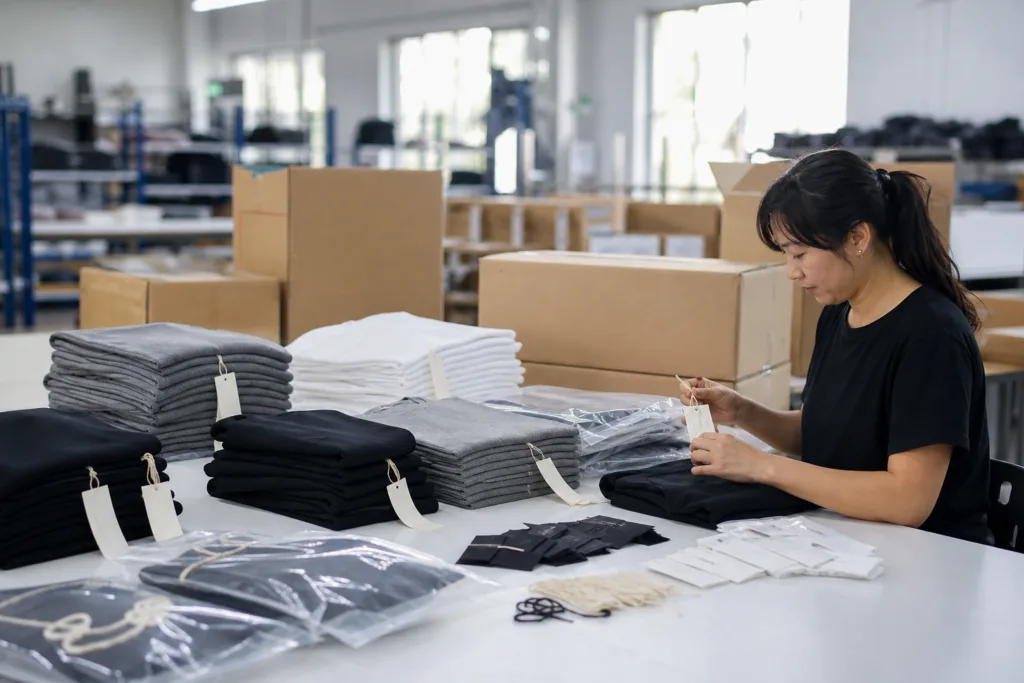
Many avoidable shipment delays happen at this stage. Ask whether the factory can develop woven labels, care labels, size stickers, hangtags, UPC labels, barcode stickers, carton marks, and folding boards according to your retailer or brand requirements. If you need private label support, ask whether they can manage artwork checks, material sourcing, and pack-out verification.
Request mock-ups, dielines, and sample pack-outs. Good answers include carton drop-test awareness, barcode checking, spare-button policies where relevant, and a final packaging checklist. Red flags include no review of wording on care labels, unclear carton dimensions, or no packaging sample approval before bulk packing.
What are your standard payment terms, incoterms offered, shipping lead times, and contingency plans for delays?
Commercial clarity matters as much as sewing quality. Ask which payment milestones they use, whether terms differ for first orders versus repeat business, which incoterms they support, and how they manage air, sea, rail, or courier decisions. Also ask for examples of how they handled fabric delay, booking congestion, or inspection failure in past orders.
Good answers explain realistic transit windows, document timing, and what happens if production slips. Red flags include no written payment logic, no explanation of risk transfer by incoterm, or vague answers such as “shipping is not a problem.” Reliable suppliers treat logistics as part of delivery performance, not an afterthought.
How to verify answers and red flags to escalate
Practical evidence to request in every first conversation
In early screening, we suggest asking for the same core evidence from every supplier so you can compare like with like. That usually includes factory photos or video, production schedule samples, recent inspection reports, lab tests, audit summaries, client references where possible, packaging samples, and sample invoices for sourced materials. Timestamped media and document dates matter because they help confirm the information is current.
Scorecard and quick decision rubric
A simple scorecard can turn a subjective call into a workable decision tool. Use a 1 to 5 scale for each question, where 1 means unsupported or high risk and 5 means strong evidence and clear process control. You can weight the questions based on your project.
| Section | Suggested Weight | Decision Use |
|---|---|---|
| Production capability and capacity | 30% | Can they actually make this garment reliably? |
| Quality systems and testing | 30% | Will output be consistent and measurable? |
| Compliance and IP protection | 20% | Is market and brand risk controlled? |
| Commercial terms and logistics | 20% | Can the order be delivered smoothly and predictably? |
A practical threshold is to move to sampling only if the supplier scores strongly in capability and quality, even if commercial terms still need negotiation. Never let a low price outweigh major process gaps.
Sample email and first-call script
Keep the first email short and structured. State the garment category, quantity estimate, target market, target launch timing, and whether you need fabric sourcing, branding, and packaging support. Then list the 15 questions and attach your tech pack or at least a reference board with construction notes. On the first call, probe the answers that matter most: similar product experience, capacity for your order window, fabric sourcing control, testing process, and sample workflow.
When the first screening is positive, the next step should be a controlled sample plan, not an immediate large order. That means agreeing sample stages, measurement tolerance, approval method, packaging details, and payment checkpoints before bulk booking.
How to run a remote verification
Remote verification is common, but it only works if you ask for structured evidence. Request workshop videos by department, not a promotional montage. Ask for cutting, sewing, finishing, inspection, and packing footage, plus timestamps. Ask to see production boards, inline QC checks, and carton staging. If the order value is significant, a third-party factory audit or pre-shipment inspection can add useful confidence.
Common supplier replies and how to probe deeper
One common reply is “we can do it” without detail. The correct follow-up is “please show a recent similar style and explain your process from sample to final inspection.” If they give a large capacity number, ask how many lines are currently booked and what output they achieve for garments like yours. If they say quality is good, ask for recent defect reports and measurement records. If they promise a very short lead time, ask what assumptions that depends on.
Good suppliers usually welcome precise follow-up because it shows you understand the production process. Weak suppliers often become vague or defensive when asked for evidence.
Next steps after a satisfactory initial screening
After a factory passes the initial checklist, start with a sample workflow and a small pilot order where possible. Confirm the approved BOM, measurement chart, artwork files, label copy, packaging method, and inspection standard. Then set milestone payments around measurable events such as sample approval, fabric booking, bulk completion, and pre-shipment release. This approach protects both sides and creates a clearer onboarding path.
FAQ
What is an acceptable MOQ for a startup brand?
An acceptable MOQ depends on fabric type, dye method, garment complexity, and trim setup, but startups should focus less on the lowest headline number and more on the real MOQ by style, color, and material. A workable supplier will explain which parts are flexible, whether a pilot run is possible, and how small orders affect unit cost and lead time.
What AQL level is commonly acceptable for apparel orders?
Many buyers use an AQL-based final inspection plan, but the acceptable level depends on product category, retail channel, and defect tolerance. The important point is to align the inspection method, critical-major-minor defect definitions, and pass criteria before production starts so there is no disagreement at shipment stage.
How long do garment lab tests usually take?
Turnaround varies by test type, lab workload, and shipping time for materials, but buyers should always ask the factory which tests are needed, whether they are in-house or outsourced, and what the realistic schedule is for initial testing and any retest caused by material changes or failed results.
Should I choose a factory that offers everything in-house?
Not always. A factory can still be reliable if some processes are outsourced, provided it manages those partners well, keeps quality records, and is transparent about what is internal versus external. The key is controlled subcontracting, not just the number of in-house processes.
What documents should I request before placing the first bulk order?
You should normally request a quotation with assumptions, sample approval records, measurement chart, BOM, QC process summary, recent inspection examples, testing documents where relevant, packaging details, payment terms, and delivery timing assumptions. These documents help convert a verbal discussion into a controlled production agreement.
When should I move from supplier screening to a pilot order?
Move to a pilot order only after the supplier has answered the key capability, quality, compliance, and commercial questions with evidence and after the sample has confirmed fit, workmanship, and material expectations. A small pilot is useful when you want to verify bulk consistency before committing to larger scale.
Conclusion
The most useful questions to ask a clothing manufacturer are the ones that expose whether the supplier can support your product in real production conditions. Price matters, but evidence matters more. When you ask about capability, quality systems, compliance, packaging, and logistics in a structured way, you reduce surprises and improve your chance of building a stable manufacturing relationship. From our factory perspective, the strongest buyer-supplier partnerships start with precise questions, clear documents, and a disciplined sample-to-bulk process rather than assumptions.