




Bulk Crewnecks vs Hoodies for Brand Collections: Essential Brand Decision Factors
For apparel brands developing a new collection, deciding between bulk crewnecks and hoodies is much more than a style preference. It’s a strategic call with direct implications for cost, print size, seasonality, customer base, and reorder cycles. At Ninghow, we know every season is an opportunity to refresh assortments, manage inventory risk, and launch high-conversion SKUs. Understanding the commercial and production differences between these two staples is critical for effective line planning and sourcing success.
If you’re focused on optimizing your sweatshirt and fleece program or evaluating which category best fits your next drop, a useful next step is to explore our guide on hoodie manufacturers. This page offers a focused look at Ninghow’s actual production capabilities, customization scope, and the manufacturing process for hoodies—a practical resource for buyers comparing factory solutions and options in the hoodie category.
Overview: Crewnecks vs Hoodies in Apparel Branding
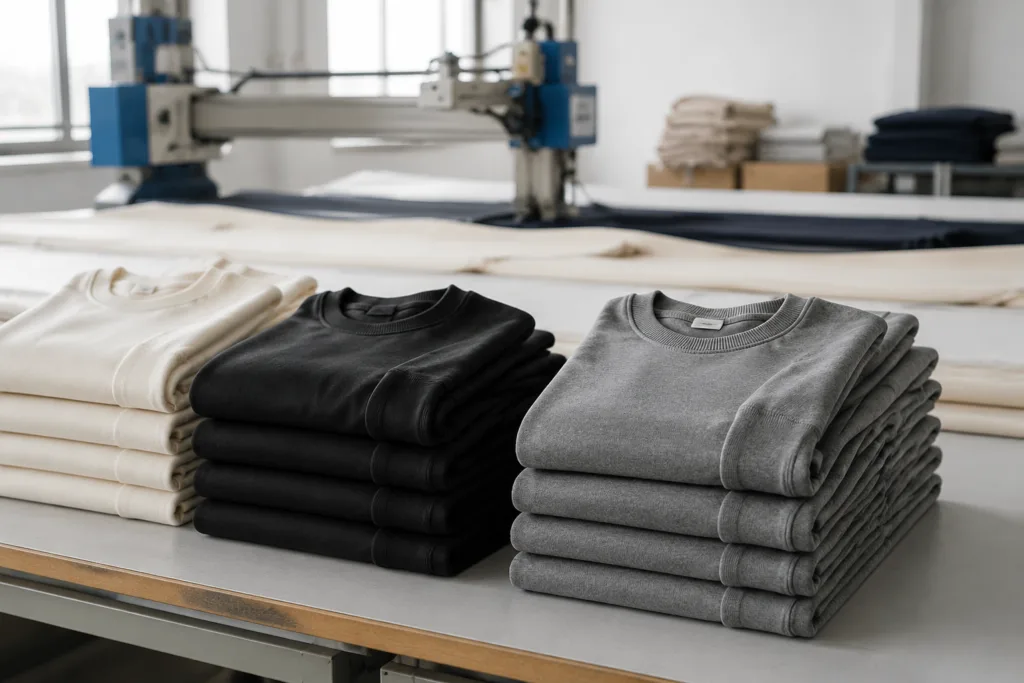
Both crewneck sweatshirts and hoodies anchor casualwear and athleisure lineups for brands worldwide. Choosing which to introduce first—or stock most heavily—shapes how your collection feels, how your marketing lands, and even how your margins play out. Below, we explore the defining variables that brands and sourcing teams must weigh when making this pivotal selection.
Key Characteristics of Crewneck Sweatshirts
- Classic pullover with ribbed collar (no hood, no zip)
- Simpler pattern—easier layup and quicker sewing
- Lower material usage and less trim
- Wide unisex appeal; adaptable across seasons
Key Characteristics of Hoodies
- Attached hood with drawcord (may include kangaroo pocket or zip front)
- Slightly higher fabric yield per piece
- More complex construction (hood, eyelets, cords, sometimes zippers)
- Largest appeal in colder climates, loungewear, and streetwear segments
Production Cost Comparison: Bulk Crewnecks and Hoodies
| Item | Crewneck | Hoodie |
|---|---|---|
| Fabric Usage | Lower | Higher (hood/pockets add yield) |
| Sewing Operations | Simpler (less steps) | More complex (hood, cord, pocket) |
| Trim | Minimal | Drawcord (sometimes eyelets/zipper) |
| Unit Cost | Typically lower | 5–20% higher (material + labor) |
What Drives the Cost Difference?
The difference is mostly in extra material for the hood and pockets, plus drawcord/eyelet trim and the added sewing steps. From a manufacturing perspective, hoodies run slightly longer on the line and use more components, so expect a moderate price bump over crewnecks for the same fabric quality and print specs.
Seasonality: Timing Your Launch for Maximum Impact
Crewnecks offer flexible appeal between late summer and early spring, depending on fleece weight. Hoodies trend strongest in cooler months and have higher perceived value in autumn/winter drops. For back-to-school launches or pre-fall, crewnecks can bridge summer/fall without overheating the assortment. Hoodies anchor winter capsules or serve as seasonal hero pieces.
How Brand Audience Shapes the Choice
Streetwear, sport, and athleisure audiences often see oversized hoodies as signature brand anchors. For collegiate, lifestyle, or professional clientele, crewnecks frequently offer better layering options and wider age/gender coverage. Kids’ collections lean solidly toward crewnecks for safety and function.
Print Size, Decoration, and Branding Real Estate
The print area on hoodies is frequently reduced along the chest due to the kangaroo pocket or zipper, and hood seams may interfere with back graphics. Crewnecks give an uninterrupted front and back—excellent for oversized graphics, appliqué, or all-over prints. Brands planning bold, centerpiece artworks often launch these designs on crewnecks first for maximum visual impact.
Customer Base and Repurchase Rate Insights
Crewnecks’ classic styling appeals to a broad base and often elevates basket size for unisex or family brands. Hoodies, with their utility and fashion heat, may drive faster first-season sales but can saturate more quickly if not rotated with capsule colorways or detailing. Considering average order value and “must have the set” energy, launching both can boost cross-selling if your budget allows, but for single-item pilots, crewnecks can yield a slightly higher repeat rate among more conservative buyers, while hoodies fuel urgency for on-trend consumers.
Bulk Ordering for Brand Pilots: MOQ and Inventory Flexibility
Crewnecks are often available with lower minimum order quantities, making them suitable for first-time brand test runs or capsule drops. Hoodie orders might require higher MOQ, especially with external trims or custom dye. Production lines at manufacturers like Ninghow are set up for both but sequencing crewnecks first can reduce upfront investment and free up resources for later hoodie runs.
Lead Times and Factory Scheduling
Hoodies require longer assembly schedules due to trim and component procurement, especially if using custom hardware or unique drawcords. Crewnecks typically move from fabric to finish up to a week faster, depending on production slotting. For urgent launches, this time saving can be crucial.
Blank Crewnecks vs Hoodies: Customization Options
Both categories support a wide range of fabrications—cotton-rich, polyester, French terry, fleece, or recycled blends. Crewnecks are more consistent for flat surface decoration (screen print, DTG, embroidery), while hoodies allow more technical branding (woven labels, branded cords, rubber-appliqué patches). Whichever you choose to launch, ensure the factory confirms surface smoothness, shrinkage control, and print fastness based on the intended decorating method.
Market Pricing and Margins Snapshot
Crewnecks generally deliver tighter retail markups due to efficient production and lower landed cost. Hoodies can often command a higher retail due to perceived value and functional extras, but keep an eye on the margin compression from increased CMT (cut-make-trim) complexity and the risk of overproducing trend shades that may not carry over to later seasons. Brands that correctly align retail pricing to production reality can calibrate healthy, sustainable profit levels.
Reorder Dynamics and Stock Risk Assessment
Crewnecks, when ordered in neutral and core colors, typically support steady reorders and off-season sell-through, minimizing obsolete stock risk. Hoodies often have “fashion spike” risk—strong launch, but potential slowdowns if trend or weather shifts. Advanced buyers monitor sales velocity, color performance, and allocate budget for quick reorders of winners, rather than overcommitting on inventory at launch.
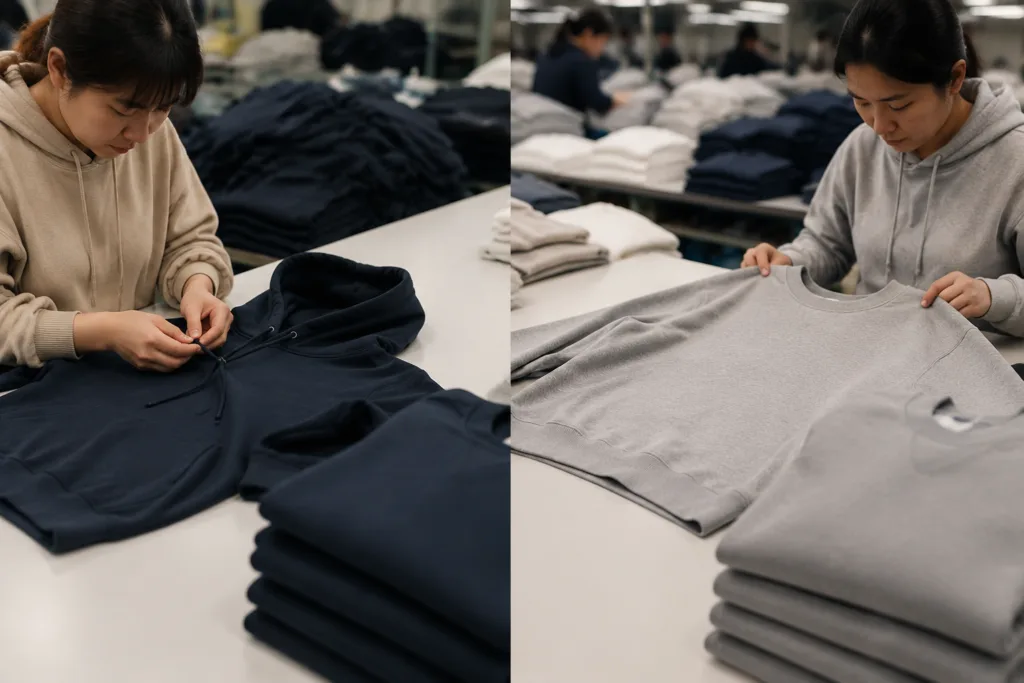
Which Should Brands Introduce First? Decision Table
| Criteria | Launch Crewneck | Launch Hoodie |
|---|---|---|
| Budget Sensitivity | ✔️ Lower initial cost | |
| Trend-Leading | ✔️ Strong fashion statement | |
| Unisex/All Ages Appeal | ✔️ Wider | |
| Colder Season Focus | ✔️ Higher utility | |
| Maximum Print Area | ✔️ Best for bold graphics | |
| Rapid Turnaround Needed | ✔️ Shorter lead time | |
| Set-building/Outfit | ✔️ Easier to cross-sell | ✔️ Also strong for sets |
| SKU Complexity | Simpler (fewer trims) | More complex |
Suitability for Screen Printing and Decoration Methods
Blank crewnecks provide the smoothest canvas for large chest prints or back art. The lack of hood seams or pockets means all-over or placement prints come out more predictable. Hoodies, by contrast, may require print file adjustment to avoid seam overlap or lost design details. Factories versed in decoration—like Ninghow—can review your print plans against tech packs to prevent costly mismatches in sampling and bulk runs.
Fabric Selection: Weight, Drape, and Comfort
Fleece weight can dramatically affect perceived quality and retail placement. Lightweight blends support transitional seasons and fashion silhouettes, while 320gsm+ heavyweight fleece lends a premium handfeel for both crewnecks and hoodies. For technical or sport market launches, moisture-wicking or recycled yarns may be more attractive, with either style performing well if properly finished and inspected for pilling resistance and colorfastness.
Bulk Sourcing Strategies for Emerging Apparel Brands
Emerging lines often sample both crewneck and hoodie blanks for in-hand evaluation before committing to bulk. It’s usually wise to finalize intended print type and fit early—the tiniest changes in spec (hood size, cuff length, print map) create major swing in cost and customer response. For more guidance on tee-to-fleece sequencing, readers comparing sourcing approaches can see our in-depth article on when to choose blank vs custom-made hoodies. Making this assessment up-front can save costly revision and bulk hold-ups later.
Sustainability and Supply Chain Transparency Considerations
Whether launching crewnecks or hoodies, brands should demand clear supplier policies for fiber origin, dyehouse compliance, and spot QC records. Both items are available in organic or recycled blends; ask the manufacturer to break out cost for each material type. Third-party certifications may add time and small upcharge but enable brand stories that scale with consumer responsibility trends.
Custom Brand Label & Packaging Capabilities
Both crewnecks and hoodies allow for full suite of private label trims—neck labels, hem tags, hangtags, and even custom packaging. Trims are especially cost-efficient in bulk and can be sequenced to match your mainline graphic drop. For private label fitness brands exploring full customization, it’s helpful to read this guide on private label hoodies for fitness brands for practical manufacturing scenarios.
Risk Factors: Common Production and Sourcing Pitfalls
- Underestimating seam stress points (especially on hood attachments or rib cuffs)
- Misaligned print/decoration size with actual wearable area
- Delays from special trim procurement (zippers, cords, hardware)
- Forecasting errors leading to overstock in single colorways
Supplier Selection: Questions to Ask Your Clothing Manufacturer
- What is the cost delta between crewnecks and hoodies at your standard spec?
- Can you share lead time differences for sampling and production?
- What are standard MOQs for each style and fabric base?
- Which decoration techniques do you most recommend for each?
- Is fit grading consistent across body types and genders?
Ninghow’s Perspective: Practical Tips from the Production Floor
In our own factory experience, pilot runs for new brands benefit from starting with crewnecks—they allow speedier sampling, easy QC, and cost-efficient launch. For ongoing ranges, integrating hoodies in later drops increases your upsell opportunities and lets you gauge consumer preference by actual velocity. Brands often return to crewnecks as “evergreen” items, using hoodies to shape capsule trends and seasonal stories.
Bulk Crewnecks vs Hoodies for Brand Collections
Ultimately, choosing between crewneck and hoodie is about knowing your target customer, collection strategy, and resource allocation. For brands just launching, crewnecks offer wide appeal, easier logistics, and safe-margin pilots. Hoodies provide a sharper trend angle and higher perceived value but involve more up-front complexity and cost. Many successful brands use both in layered assortment planning—testing hero graphics on crewnecks, then following up with hoodie versions for seasonal freshness. Strategic thinking, backed by close partnership with your manufacturer, is key to smooth, profitable launches.
Frequently Asked Questions
What is the main cost difference between bulk crewnecks and hoodies?
The main difference comes from extra fabric and sewing needed for the hood, drawcord, and pockets of hoodies. Crewnecks are generally cheaper per unit to produce and decorate.
Which style sells better for new apparel brands?
Crewnecks have a broader appeal across demographics and are easier to cross-sell, making them a smart choice for new brand launches. Hoodies attract core trend audiences and can drive fast early sales in streetwear or athletic segments.
Are print areas different for crewnecks vs hoodies?
Yes. Crewnecks offer larger, uninterrupted print surfaces. Hoodies sometimes limit chest print area due to pockets or zippers, so print files may need adjustment.
Is there a difference in minimum order quantity (MOQ) between the two?
Crewneck sweatshirts usually have lower MOQs, which helps brands minimize risk when testing new graphics or small runs. Hoodies may have higher MOQs, especially with custom trim requirements.
How does seasonality affect which to launch first?
Crewnecks are seasonally versatile and bridge late summer to early spring, whereas hoodies work best for autumn or winter drops and colder climates.
Which style is better for bold or oversized prints?
Crewnecks are ideal for bold, oversized, or all-over prints due to their uninterrupted surface. Hoodies might limit large prints because of construction details.