








For many buyers, the most confusing part of sourcing is hearing one factory say a style can start at 10 pieces while another says the same project needs 100 or more. From our perspective as a low MOQ clothing manufacturer, the difference is usually not arbitrary and it is rarely just a sales policy. MOQ is shaped by fabric availability, dyeing methods, trim purchasing rules, logo application setup, scheduling efficiency, and the amount of customization built into the garment. If you understand those constraints early, you can plan a realistic order that protects both your budget and your product quality.
If your team needs to evaluate low MOQ clothing manufacturing options, the most useful starting point is to separate what can be made from existing stock from what must be purchased or developed specifically for your order. At Ninghow, we typically review fabric availability, trim requirements, branding method, sample needs, and bulk planning together, because a project that works at 10 pieces usually depends on controlled customization, while a project that needs 100 pieces often involves fresh material buying, custom labels, or more complex production coordination.
The simple truth behind 10-piece and 100-piece minimums
A 10-piece order becomes possible when the factory can use what already exists: stock fabric, standard thread, common labels, existing patterns, and low-setup branding such as heat transfer or a printed neck label. A 100-piece minimum appears when the order triggers external purchases or process setups that do not scale well at tiny quantities.
In sourcing terms, MOQ is the point where a style becomes commercially and operationally workable. That point is affected by three layers:
- Material layer: fabric rolls, dye lots, rib, zippers, buttons, labels, polybags, and cartons.
- Production layer: pattern work, cutting efficiency, sewing line loading, embroidery or print setup, pressing, packing, and inspection.
- Business layer: unit cost expectations, lead time, target margin, and whether the buyer is testing a style or scaling a collection.
This guide is for brand founders, startup apparel teams, sourcing managers, merchandisers, and product developers who need decision support rather than general advice. Our aim is to show where lower MOQs are genuinely possible, where higher minimums are reasonable, and how to lower the requirement without creating hidden cost or quality problems later.
Key definitions buyers should align on early
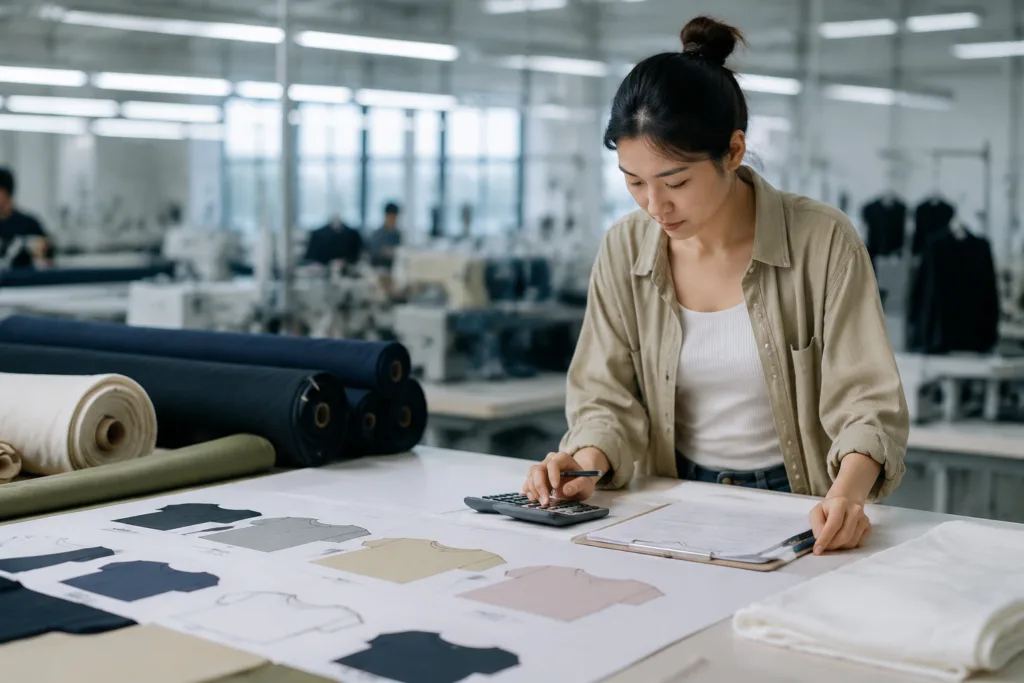
MOQ and low MOQ
MOQ means minimum order quantity: the lowest quantity at which a style can be produced under agreed specifications. Low MOQ is relative. In cut-and-sew private label work, 50 pieces can be low. In stock-blank customization, 10 pieces can be low. In fully custom performance wear using new fabric development, 100 to 300 pieces may still be considered relatively low.
CMT, OEM/ODM, and stock-based production
CMT means cut, make, trim. The buyer may provide fabric or approve standard materials while the factory mainly handles production. OEM/ODM usually involves broader development, including materials, branding, patterns, and packaging. Available-stock production relies on existing fabric or blank garments. Buy-to-order production requires new procurement and often raises MOQ.
Why these definitions matter
Many MOQ misunderstandings come from comparing different business models. A buyer asking for 10 fully custom hoodies with custom-dyed fleece, woven neck labels, branded drawcord tips, and embroidered logos is not asking for the same thing as a buyer requesting 10 stock cotton T-shirts with one heat-transfer chest logo.
How manufacturers set MOQ in real production planning
When we assess a project, we do not start with a fixed number. We start with a question: what must be purchased, set up, or reserved specifically for this order? The more exclusive the inputs, the more likely the MOQ rises.
| Driver | Can support 10 pieces? | Often pushes toward 100+ |
|---|---|---|
| Fabric source | In-stock fabric or buyer-supplied fabric | New roll purchase or custom knit |
| Color | Stock colors | Custom dye lot or multiple colorways |
| Branding | Heat transfer, printed label | Screen setup, embroidery program, woven label minimums |
| Pattern | Existing base fit with light edits | New pattern development and repeated fit revision |
| Trims | Standard trims from factory inventory | Custom buttons, zippers, cords, hangtags, packaging |
| Scheduling | Can fit into a mixed small-batch window | Needs dedicated production planning |
That is why MOQ should be discussed alongside spec clarity, sourcing route, and target price. If buyers only ask, “What is your MOQ?” without defining the build, the answer will be broad and not very useful.
Material constraints that force higher MOQ
Fabric roll sizes and yield math
Fabric is one of the biggest reasons a style moves from 10 pieces to 100 pieces. Mills typically supply knitted or woven fabrics by roll, and each roll contains enough material for many garments. If the factory must buy a full roll for one style in one color, the practical MOQ may rise immediately.
For a simple example, imagine a 200 GSM cotton jersey for a standard T-shirt. Suppose a full roll is 25 kilograms. If one medium T-shirt consumes roughly 0.22 to 0.25 kilograms of finished fabric allowance after marker efficiency and cutting loss, one roll might support around 100 pieces, sometimes a little more or less depending on width, shrinkage, and size mix. If a buyer only wants 12 pieces in one custom color, the unused balance becomes dead stock unless it can be absorbed by future orders.
Polos, heavier oversized tees, hoodies, and garments with panels or contrast details can raise consumption further. A hoodie with fleece body fabric plus rib for cuff and hem uses more material categories, which multiplies MOQ pressure.
Dye lot and color batch constraints
Color consistency matters, especially for brand collections, uniforms, golf apparel, and teamwear. When fabric must be dyed to a custom shade, mills usually work within minimum lot sizes. Smaller dye lots can produce unstable color matching, higher cost per kilo, or may not be accepted at all. That is why custom fabric dyeing minimums and color runs are often one of the first checkpoints in MOQ discussions.
Yarn-dyed stripes, melange constructions, and engineered color effects can push minimums even higher because the supply chain starts earlier at the yarn stage, not just at finishing.
Trim and notions minimums
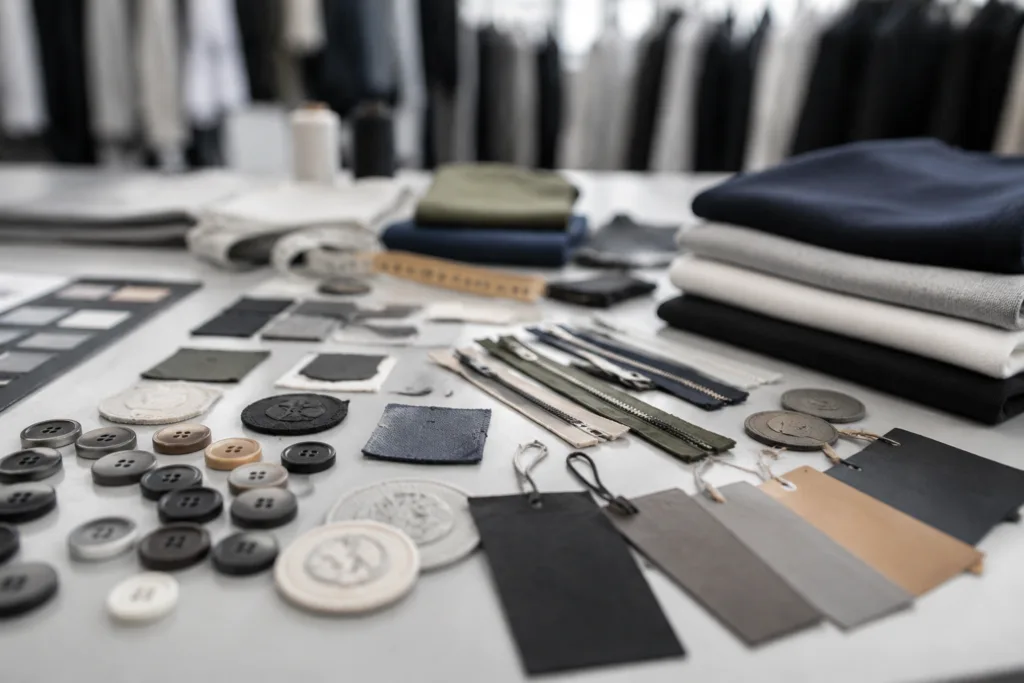
Buyers often focus on fabric and forget trims. But zippers, buttons, elastic, drawcords, woven labels, size labels, hangtags, and custom polybags may each carry their own minimum purchase requirements. A custom woven neck label supplier may quote 1,000 pieces. A branded zipper puller may require mold cost plus a minimum order. Even a simple hangtag can become inefficient if one style needs a separate print file, hole punch, stringing method, and packaging sequence.
If the garment can use standard trims already held in factory inventory, MOQ can stay low. If every trim is unique to the brand, the minimum often rises, or the buyer must accept surcharge and leftover materials.
Print and embroidery setup logic
Decoration methods are not equal in small runs. Screen printing requires film output, screen preparation, color registration, test strike-off, and cleanup. Embroidery requires digitizing, hoop or frame planning, machine allocation, and approval of stitch quality. For very low runs, setup time can outweigh sewing time.
That is why a 10-piece order may work with one simple heat transfer or DTF logo but become inefficient with a six-color chest print plus sleeve print plus back neck detail. When buyers review the apparel sampling process for small-batch orders, they usually see quickly that approvals on decoration placement, color, and hand feel are part of what determines whether a tiny run is practical.
Customization depth changes the MOQ more than many buyers expect
How 10-piece orders become possible
Ultra-low runs are usually achievable when the project is controlled in these ways:
- Existing fabric or buyer-supplied material is used.
- The style is based on a standard pattern block with limited changes.
- The order stays in one color or a narrow size range.
- Branding uses low-setup methods.
- Labels and packaging use standard options or printed solutions.
For example, 10 training T-shirts for an event launch may be realistic if the fabric is already stocked, the fit is based on an approved block, the logo is a single transfer, and the packaging is simple.
Why major customization pushes orders toward 100 or more
Now compare that with a private label polo requiring a custom pique fabric, a dyed-to-match collar rib, woven main label, woven size label, custom buttons, side seam flag label, two colorways, and branded hangtags. None of those details is unreasonable. But together they create separate material sourcing paths, more approvals, and more quality checkpoints. That structure naturally pushes MOQ higher.
This is one reason some category-specific programs have clearer thresholds. If your project is performance-oriented, reading a category breakdown such as gym clothing MOQ explained can help align expectations between compression fabrics, standard jerseys, and logo-heavy activewear sets.
Supply-chain cadence and lead time also affect MOQ
MOQ is not only about materials; it is also about timing. Factories plan cutting rooms, sewing lines, finishing stations, and inspection windows. Small orders can fit into gaps when materials are ready and the build is straightforward. But if the order requires fresh procurement from several suppliers, the production window becomes harder to protect. A larger quantity may then be needed to justify the planning effort.
Fast-moving stock fabrics, standard thread shades, and regular packaging components support lower MOQ because they reduce waiting and coordination. Slower items such as custom elastics, molded hardware, or special wash effects create more dependency and often make a higher minimum more sensible.
Cost drivers and tooling amortization from 10 pieces to 100 pieces
Even when a factory accepts 10 pieces, buyers should understand the unit economics. Setup costs do not disappear; they are simply spread across fewer garments. Pattern adjustment, marker making, sample confirmation, print setup, embroidery digitizing, line briefing, and quality checks all still happen.
| Cost element | 10-piece run impact | 100-piece run impact |
|---|---|---|
| Pattern and tech review | High cost per unit | Lower cost per unit |
| Fabric procurement | May require surcharge or use stock only | More efficient if full rolls are used |
| Decoration setup | Strongly increases unit cost | Spread more effectively |
| QC and packing | Similar fixed effort, fewer units | Better labor efficiency |
| Leftover materials risk | High if custom inputs are used | Lower relative waste |
In practical terms, the lowest MOQ is not always the smartest buy. A 10-piece order may be useful for market testing, influencer seeding, or fit verification, but the unit cost can be dramatically higher than a 100-piece order built from the same specification.
Two common sourcing scenarios with realistic logic
Scenario A: when 10 pieces can work
A startup wants 10 oversized cotton T-shirts in black for content creation and a pre-launch shoot. The factory already holds suitable black jersey, the shape uses an existing block, the only branding is a one-color heat transfer, and the neck label is printed. No custom hangtag is required.
In this case, the order works because the project avoids new roll purchasing, custom dyeing, custom trims, and long approval chains. The buyer pays a higher per-unit rate, but the run is operationally manageable.
Scenario B: when 100 pieces is more realistic
A brand wants 100 polos split across two colorways, each with moisture-wicking pique, Pantone-matched dyeing, embroidered chest logo, woven neck label, branded buttons, and hangtags. The collar rib must match body color, and sizes range from XS to XXL.
Here the MOQ rises because the order involves body fabric, matching rib, embroidery setup, branded trims, and color management across multiple materials. Even if sewing capacity exists, the procurement structure alone usually requires a larger commitment to control waste and maintain consistency.
Practical ways buyers can achieve a lower workable MOQ
We often help buyers reduce MOQ by changing the sourcing strategy rather than changing the garment idea completely. The most effective moves are usually these:
- Use buyer-owned or existing stock material: BYOM can remove the need for a full new roll purchase.
- Select in-stock fabrics and colors: warehouse or mill inventory is one of the strongest low-MOQ enablers.
- Reduce custom trims: standard zippers, cords, buttons, and packaging can save both MOQ and lead time.
- Consolidate colorways: one color often works where two or three do not.
- Simplify labels: printed neck labels or standard care labels can replace woven labels for early-stage orders.
- Choose low-setup branding: heat transfer may be more suitable than multi-screen printing in small tests.
- Pool development where possible: if several styles use the same fabric, the total fabric buy becomes more efficient.
Another helpful step is to define the entire order path clearly. A transparent apparel order process and MOQ planning conversation usually reveals where the true minimum comes from and whether it is negotiable.
How we evaluate an MOQ project step by step
At Ninghow, we typically assess a low-quantity project in a sequence that keeps decision points visible for the buyer.
Tech pack and feasibility review
We first check whether the style is based on an existing block, how many fabric types are involved, how many trims are custom, and whether the artwork requires special production handling. If the tech pack is incomplete, MOQ estimates will stay broad.
Inventory and sourcing audit
Next we identify what is already available versus what must be purchased. This includes shell fabric, rib, labels, packaging, and logo method. If 80 percent of the bill of materials is stock-based, low MOQ becomes more feasible.
Yield calculation and MOQ recommendation
We then calculate estimated fabric consumption by size range and marker efficiency. For example, if a polo consumes 0.38 kilograms of body fabric and 0.05 kilograms of rib and allowance, and the available stock is only 18 kilograms in the desired color, the maximum practical quantity may be limited unless a fresh purchase is made. If the next supply option is a 30-kilogram roll, MOQ may step up accordingly.
Sample and pilot planning
When the order sits between a test run and a bulk run, a pilot lot can be smarter than forcing an unrealistic MOQ conversation. One pre-production sample, one size-set review, and one pilot quantity can reduce mistakes before a larger reorder.
Negotiation points when MOQ becomes a sticking point
MOQ discussions are most productive when both sides negotiate the structure, not just the number. Buyers can ask:
- Can stock fabric replace custom-dyed fabric for the first run?
- Can one label be deferred to phase two?
- Can one colorway be dropped from the test order?
- Can leftover custom trims be stored against a repeat order?
- Can sample costs or setup costs be separated from bulk pricing?
From a manufacturer’s perspective, these are constructive questions because they target the actual cost and risk drivers.
Quality risks in ultra-low runs and how to manage them
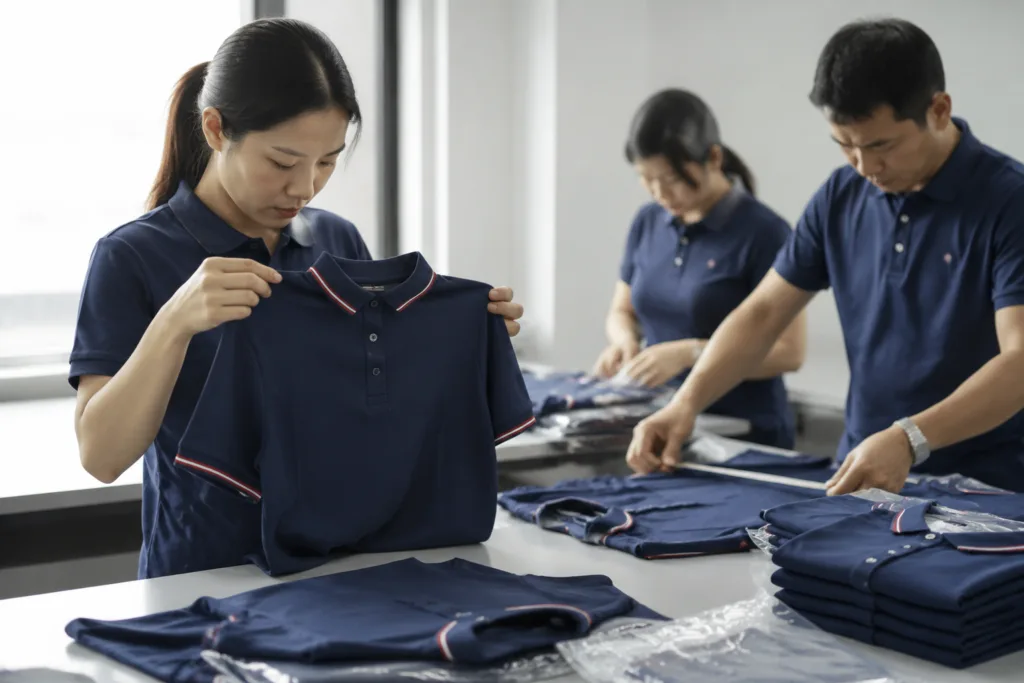
Low MOQ is useful, but buyers should not assume lower quantity automatically means lower risk. In some cases, the opposite is true. Small runs may use substitute inventory, mixed production windows, or faster approval timelines. The main risks are shade variation if materials are pulled from different stock batches, inconsistent logo placement if artwork approval is rushed, and size inconsistency if grading is not validated across the intended size range.
To reduce those risks, buyers should approve fabric swatches, confirm logo size and placement visually, request clear measurement tolerances, and understand which materials are stock and which are newly sourced. For projects expected to scale, it is wise to lock construction details early so the 10-piece test and the 100-piece reorder do not become different products.
Planning the path from 10 pieces to 100 plus
A common mistake is treating the first small order as a one-off without thinking about repeatability. If you believe the style may scale, build the first order in a way that can transition smoothly. Use a fabric that can be replenished, choose trims with stable availability, and document approved specs carefully. That way the test run teaches the supply chain something useful instead of creating a dead-end sample.
We usually recommend that buyers treat 10-piece orders as validation tools: fit approval, content creation, first customer testing, or market feedback. When demand proves real, the brand can move to 50, 100, or more with stronger cost control and better consistency.
A practical checklist to get the lowest workable MOQ
- Prepare a clear tech pack with sketches, measurements, and construction notes.
- State whether you need stock fabric or are open to available alternatives.
- List all trims and identify which are truly brand-critical.
- Limit initial colorways if your goal is low MOQ.
- Clarify your logo method preferences and acceptable substitutes.
- Share target price, timeline, and intended reorder potential.
- Confirm whether the order is for testing, launch, or repeat production.
- Ask for MOQ by style, by color, and by size ratio, not only total units.
Common misconceptions about low MOQ clothing orders
“If a factory can make one sample, it can make 10 pieces cheaply”?
Not necessarily. A sample proves feasibility, not commercial efficiency. Bulk steps such as cutting, bundling, decoration, and packing still create cost that does not shrink proportionally.
“MOQ is just a negotiation tactic”?
Sometimes a factory may quote conservatively, but in many cases MOQ reflects real supplier minimums and workflow economics. The most useful response is to ask what input is driving the number.
“Low MOQ always means lower risk”?
It lowers inventory exposure, but it can raise unit cost and sometimes compromise consistency if the project depends on fragmented stock or substitute materials.
Conclusion
The gap between 10 pieces and 100 pieces usually comes down to whether your order can be built from existing, efficient resources or whether it triggers fresh purchasing, setup, and coordination across the supply chain. A low MOQ clothing manufacturer can often support very small runs when the style is simplified and materials are accessible, but higher minimums are reasonable when custom fabric, dye lots, trims, and branding require dedicated sourcing. The smartest approach is to define what is essential for your first run, remove unnecessary customization where possible, and use the first order to build a repeatable production path rather than only chasing the smallest number.
Frequently Asked Questions
Can a low MOQ clothing manufacturer really produce only 10 pieces?
Yes, but usually only under specific conditions such as stock fabric, standard trims, a simple pattern, and low-setup branding like heat transfer or printed neck labels. If the order requires custom dyeing, woven labels, special trims, or multiple colorways, the practical minimum often rises because external purchasing and setup costs become the real limit.
Why does custom fabric color increase MOQ so quickly?
Custom color usually means a new dye lot, and mills often work with minimum batch sizes to control shade consistency and processing efficiency. If your order cannot consume enough fabric from that batch, the factory must either hold leftover material, charge a surcharge, or recommend a higher minimum that better matches the fabric purchase and color-control requirements.
Which customization choices help reduce MOQ the most?
The biggest reductions usually come from choosing in-stock fabric colors, limiting the number of colorways, using standard trims, replacing woven labels with printed labels for the first run, and selecting branding methods with lower setup requirements. These decisions remove external minimums and make it easier for the factory to fit your order into an efficient small-batch workflow.
Is a 10-piece order always better for a startup brand?
No. A 10-piece run can be useful for testing fit, content creation, or soft launch feedback, but the cost per unit is usually much higher than a 50-piece or 100-piece run. Startups should compare the purpose of the order against the likely reorder path, because a slightly larger run can sometimes offer much better cost-performance without creating excessive inventory risk.
What should buyers send a factory to get an accurate MOQ assessment?
A clear tech pack, intended size range, color plan, fabric preference, logo application details, trim list, packaging needs, target timeline, and expected reorder volume are the most helpful inputs. The more complete the information, the easier it is for the manufacturer to identify which materials can come from stock and which elements are pushing the minimum upward.
How can buyers protect quality when starting with a very low MOQ?
Approve fabric and color references early, confirm measurement tolerances, review logo placement carefully, and keep the first order technically simple enough to control. If you expect to scale later, document all approved materials and construction details so the transition from a 10-piece test run to a 100-piece reorder does not create avoidable differences in fit, shade, or finishing.