






Introduction: Why Fabric Choice Matters for Custom Team T-Shirts
When it comes to custom team t shirts, fabric selection is the foundation of comfort, durability, budget control, and print quality. Whether you’re gearing up for a tournament, organizing a company event, or planning brand wear, the right material sets the tone for your team’s identity and the shirt’s lasting power. In this article, we’ll break down the pros and cons of top team t-shirt materials — from pure cotton to functional blends — and reveal how their characteristics directly influence how your shirts wear, wash, and display graphics.
Understanding the Main Fabric Types for Custom Team T-Shirts
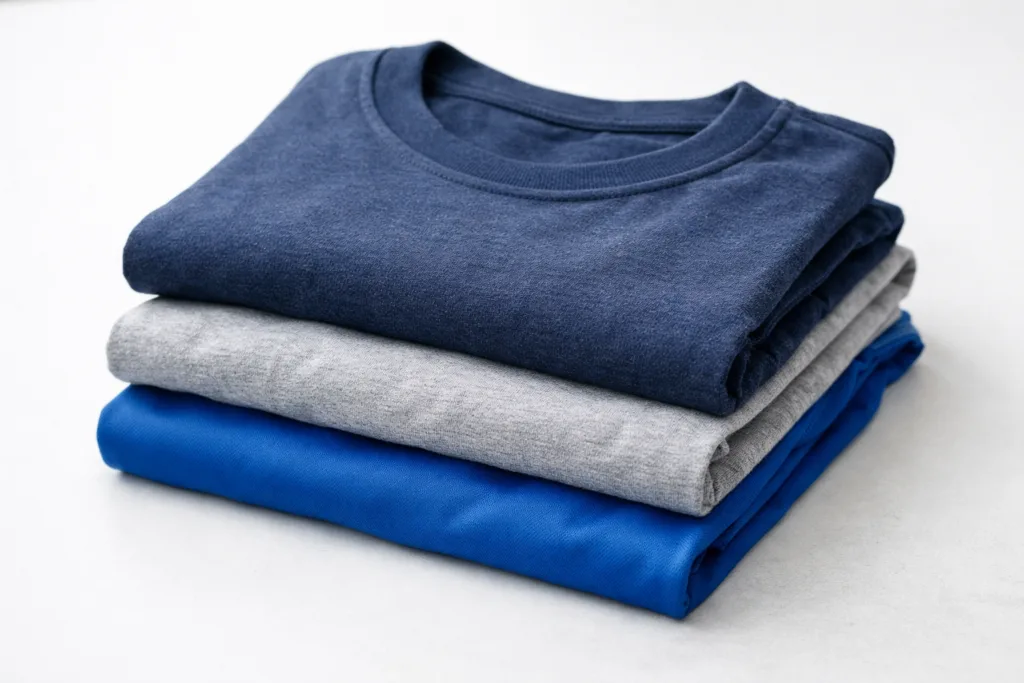
Team shirts manufacturers typically offer three primary fabric categories for custom team t-shirts: 100% cotton, poly-cotton blends, and performance (functional) synthetics. Let’s map out these options and see how they compare.
| Fabric Type | Comfort | Durability | Print Quality | Cost |
|---|---|---|---|---|
| Cotton | Soft, breathable | Medium | Excellent | Medium-high |
| Poly-Cotton Blend | Good, less shrinkage | High | Good | Medium |
| Performance Synthetic | Moisture-wicking, cool | Very high | Variable | Medium |
Cotton: The Classic Choice for Team Shirts
Cotton remains a favorite due to its natural softness and comfort. It’s easy to print on, absorbs moisture well, and feels great against the skin. However, 100% cotton is more prone to shrinking and fading after repeated washing. For events where comfort and print clarity are priorities, cotton stands out, especially with jersey knits.
Poly-Cotton Blends: Versatile and Affordable
Poly-cotton blends combine 50–80% cotton with polyester, balancing breathability and durability. These mixes are less likely to shrink, hold color better, and are often preferred for bulk teamwear with frequent washing. Printing results on blends are good, though sometimes not as vibrant as pure cotton.
Performance Synthetic Fabrics: For Active Teams
Synthetics like polyester, Sorona®, and spandex blends offer moisture-wicking, quick-drying, and stretch features. These are ideal for sports or outdoor teams needing sweat management and resilience. Printing may differ based on the surface — some synthetics require special inks or transfer methods.
Factors That Influence Fabric Selection for Custom Team T-Shirts
Picking the right fabric isn’t just about feel. Four major factors affect your decision:
- Comfort: Who’s wearing the shirts, and for what activity?
- Durability: How often will shirts be washed and worn?
- Budget: What is your cost per shirt limit?
- Print Quality: Are you planning bold graphics or subtle logos?
For a deep dive into comfort vs durability, check out the T-Shirt Fabric Showdown: Comfort vs Durability Costs Explained.
Common Team Shirt Scenarios and Recommended Fabrics
School Sports Teams: Moisture-wicking synthetics or poly-cotton blends. Needs ruggedness and sweat control.
Corporate Events: 100% cotton or soft blends. Prioritizes comfort and print clarity.
Outdoor Groups: Functional blends with UV or water-resistant properties. Budget for performance fabrics.
Cotton Variations: Jersey, Slub, and Combed
Even within cotton, there are distinctions that matter:
- Jersey Knit: Smooth, soft, perfect for printing.
- Slub Cotton: Textured, more casual, but prints less sharply.
- Combed Cotton: Extra-soft, high-end option for premium teamwear.
For a technical breakdown, visit our Manufacturer’s Guide: Comparing Cotton, Slub & Jersey for T-Shirts.
Polyester Fabric Innovations in Team T-Shirts
Polyester is constantly evolving. Sorona® blends, recycled PET, and functional finishes improve moisture transport and odor resistance. This is popular in high-performance and environmentally conscious teamwear.
For those concerned about sustainability, learn more at Sorona Fabric Explained: 7 Surprising Ways It Raises the Bar for Modern Apparel.
Printing and Decoration: How Fabric Impacts Graphic Quality
The final look of your logos, slogans, and designs hinges on fabric surface and fiber composition.
- Cotton: Accepts screen printing, DTG, and heat transfer well.
- Polycotton: Slightly more slippery, but accommodates most methods.
- Synthetics (Polyester, Sorona®): Need specialty inks (plastisol or sublimation).
Durability of Printed Graphics: What to Expect
On cotton, graphics may fade faster with intense washing, but they start off crisp. Polyester blends protect colors better, especially with advanced print techniques.
Budget Considerations: Balancing Quality and Cost
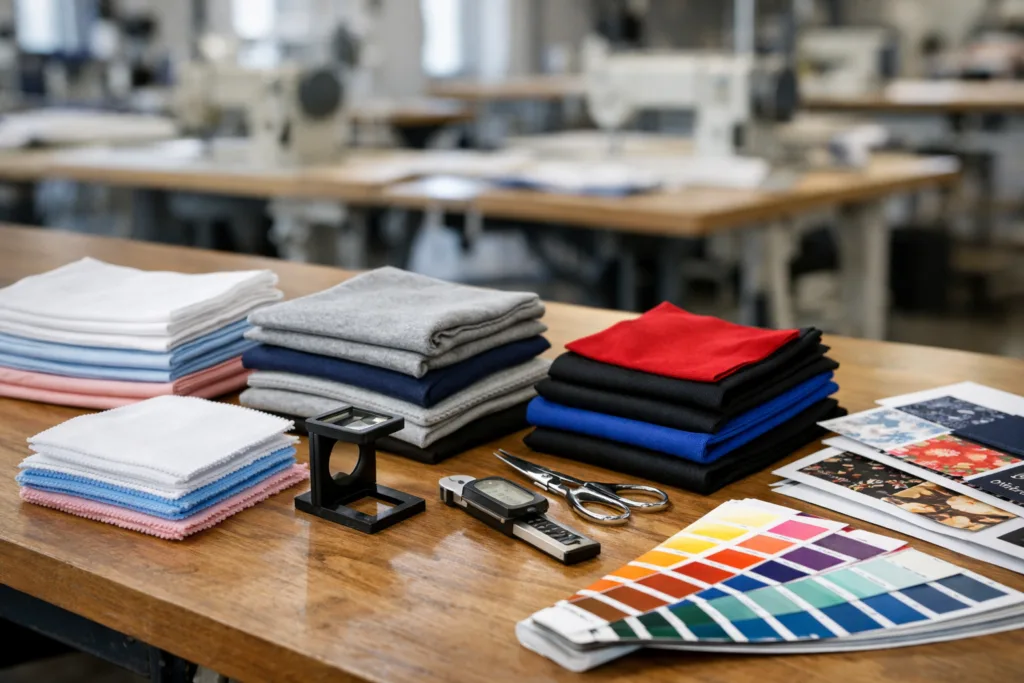
Team shirts budgets often dictate material choice. Cotton generally costs more, while blends and synthetics offer reliable quality at lower prices for bulk orders. Sustainable and functional fabrics may carry a premium but deliver added value.
Bulk Order Savings: MOQ and Material Price Points
Most manufacturers structure discounts by fabric type and MOQ. Poly-cotton blends often win on price for large batches.
Comfort and Fit: How Fabric Affects Shirt Shape
The stretch and drape of the material influence whether shirts feel relaxed or fitted — a vital factor for team morale and visual unity. Cotton shirts offer a natural drape; blends hold structure through activity; synthetics deliver athletic fits with no sag.
Fit Types: Regular, Oversized, and Athletic Cuts
Different fabrics suit distinct patterns. For more insights, see Oversized vs Regular Fit T-Shirts: The 7 Surprising Differences Shaping Trend-Driven Apparel.
Care and Longevity: Managing Shrinkage and Fading
Cotton shirts demand gentle washing and air drying to minimize shrinkage and fading. Blends are less fussy, while synthetics can handle aggressive wash cycles.
Labeling and Care Instructions: What Your Team Needs to Know
Always check care label requirements with your manufacturer to avoid confusion and keep shirts looking new longer. Proper instructions help teams avoid unintentional damage.
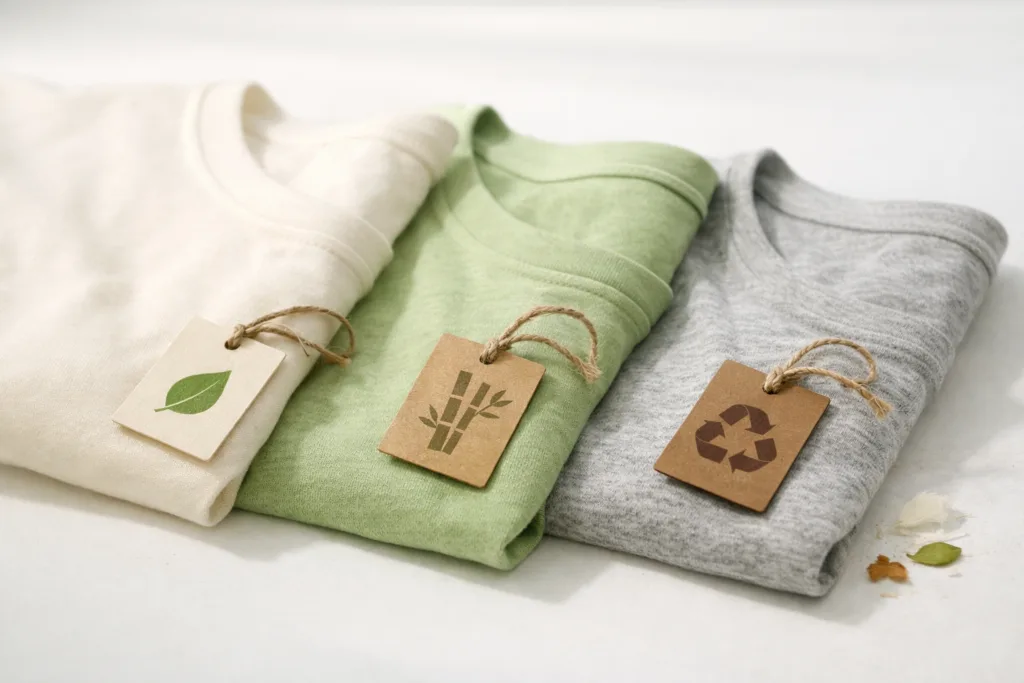
Sustainability Options: Eco-Friendly Team T-Shirt Fabrics
Many teams now prefer organic cotton, recycled polyester, or bamboo blends. These materials reduce environmental impact and can be certified for authenticity.
Bamboo and Recycled Fabrics: Are They Worth It?
Bamboo and recycled synthetics are soft, durable, and align with modern eco-standards. However, they sometimes require extra care and may cost more up front.
Managing Large Orders: What Manufacturers Want You to Know
Consistency in fabric choice, color fastness, and QC is essential for large batch production. Ninghow, a seasoned garment manufacturer, advises teams to sample both fabric and fit before confirming bulk orders — this helps avoid costly rework and ensures uniform quality across all units.
Sampling and Pre-Production Checks
Most manufacturers recommend trial runs in your chosen fabric to test comfort, print, and wear. This step prevents surprises and helps fine-tune specs.
Custom Team T-Shirts: Key Takeaways for Fabric Choices
Picking the right material for custom team t shirts isn’t one-size-fits-all. Assess activity level, comfort needs, print style, and budget. Partner closely with your team shirt manufacturer for recommendations and sample runs, then finalize specs that fit your group’s goals and identity. Thoughtful decisions here drive both team satisfaction and long-term value.
Frequently Asked Questions
Which fabric is best for custom team t-shirts used outdoors?
Synthetic blends like polyester or functional Sorona® offer moisture-wicking and durability, ideal for outdoor activity and sweat management.
Do poly-cotton blends shrink less than pure cotton?
Yes, poly-cotton blends are more resistant to shrinkage and hold their shape better after repeated washing compared to 100% cotton.
Does fabric type affect print quality?
Absolutely — cotton gives clear, vivid prints; blends are good but may soften graphics; synthetics require special ink and methods but resist fading.
Can sustainable fabrics be used for custom team t-shirts?
Definitely — organic cotton, recycled polyester, and bamboo fabrics are increasingly common and offer eco-benefits, though costs may be higher.
What is the most budget-friendly fabric for bulk orders?
Poly-cotton blends usually offer the best price-value ratio in large batches, balancing cost, durability, and decent print results.
Should I sample shirts before placing a large order?
Yes. Sampling ensures your chosen fabric meets comfort, durability, and printing expectations, minimizing the risk of costly errors.
Related Reading
- How Team Hoodies Build Group Spirit and Brand Identity
- Custom vs Ready-Made Teamwear: Key Differences for Brand Power
- Seven Budget-Savvy Tips for Low MOQ Team Clothing
- The 11 Questions Sourcing Pros Ask Before Bulk Team Apparel Orders
- Bulk Teamwear Orders: Smarter Planning for Sizes and Delivery