
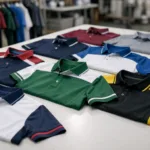





The right custom golf polo shirt manufacturer is evaluated against your product brief, not consumer brand popularity. Before comparing quotes, confirm the intended use, target market, fabric composition and performance requirements, fit block and size range, decoration and labeling methods, sample process, MOQ assumptions, quality checks, packaging and delivery destination. Treat each point as a commercial checkpoint: an attractive unit price is difficult to compare when suppliers are pricing different fabrics, sizes, branding details or order splits. A buyer assessing golf apparel production can also use Golf Clothing as a related resource while keeping capability, terms and production evidence subject to current supplier confirmation.
What to Confirm Before Choosing a Golf Polo Manufacturer
A manufacturer-ready inquiry should describe what the garment must do, who will wear it and how it will be sold or distributed. A golf club, private-label brand, retailer and team buyer may all request a polo, but their priorities can differ. A club may need consistent decoration and coordinated size allocation; a brand may need a distinctive fit, labels and packaging; a wholesaler may prioritize repeatability, color options and clear order assumptions.
- End use: State whether the polo is intended for golf play, uniforms, retail, teamwear or general warm-weather use. This affects movement needs, appearance, care instructions and decoration decisions.
- Target market: Identify the sales region, wearer profile and expected fit preferences. Do not assume that a standard size chart or straight grading system will suit every market.
- Order structure: Separate initial development from bulk production and identify expected quantities by style, color and size. Ask how MOQ rules apply to each variable rather than treating MOQ as a single product-wide figure.
- Product identity: List the required collar, placket, sleeve, hem, colorway, logo placement, labels, hangtags and packaging. Reference images help communicate direction, but they do not replace measurable specifications.
- Approval controls: Request the proposed sample workflow, revision points, measurement documents, decoration artwork requirements, quality checkpoints and delivery assumptions before approving a quote.
| Evaluation area | What to define | Evidence or document to request | Questions for the manufacturer | Approval checkpoint |
|---|---|---|---|---|
| Product scope | End use, construction, colors and size range | Tech pack, reference images and measurement chart | Which details are included in the quotation? | Brief is complete enough to price and sample |
| Fit and extended sizes | Fit block, body measurements and grading approach | Size specification and approved fit sample | How are larger sizes reviewed and measured? | Measurements and fit comments are approved |
| Customization | Logo locations, decoration, labels and packaging | Artwork files, label layout and packaging brief | What affects method suitability and revision cost? | Decoration and branding details are signed off |
| Sampling | Sample purpose, revision scope and approval reference | Sample plan, sample record and revision notes | Which elements are provisional, and how are revisions priced? | Sample and changes are approved as the bulk reference |
| Commercial planning | MOQ by style, color and size, payment terms, order splits and shipping or delivery basis | Written quotation with inclusions, exclusions and delivery assumptions | Which quantities or options change MOQ, payment terms or shipping basis? | Quotes use the same commercial scope and assumptions |
| Quality control | Measurement points, tolerances, materials, workmanship and packing checks | Inspection plan, measurement records and available test or inspection documents | How are deviations recorded and corrective actions approved? | Inspection requirements and acceptance criteria are agreed |
| Delivery | Approval dates, production assumptions, destination and shipping basis | Production schedule, packing details and written delivery assumptions | What must be approved before production and dispatch planning? | Destination, timing assumptions and dispatch terms are confirmed |
Define the Golf Polo Product Brief
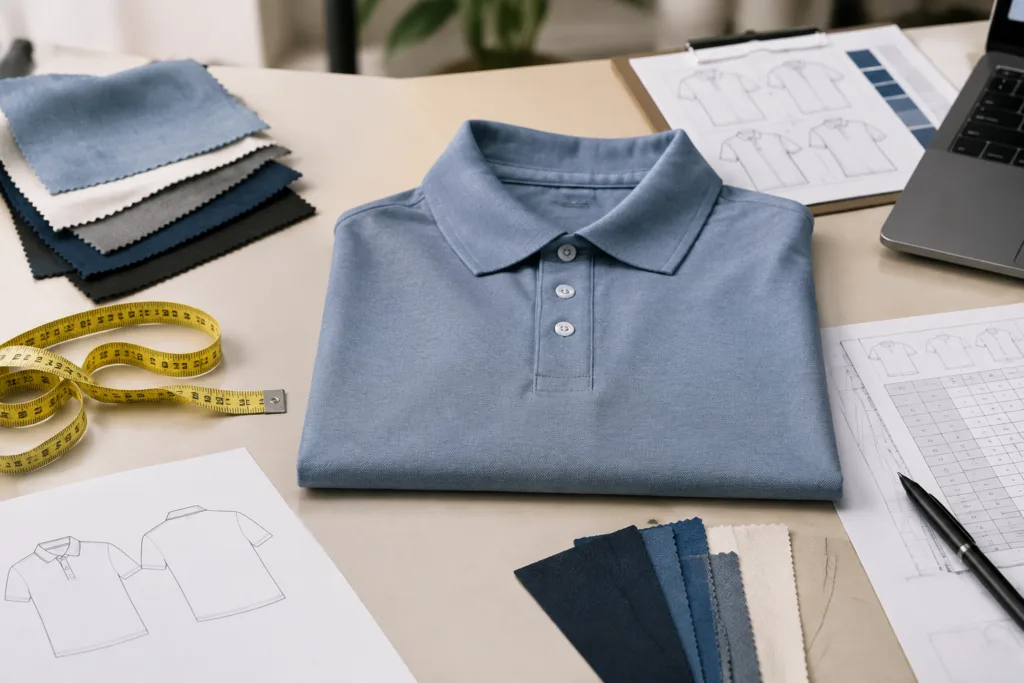
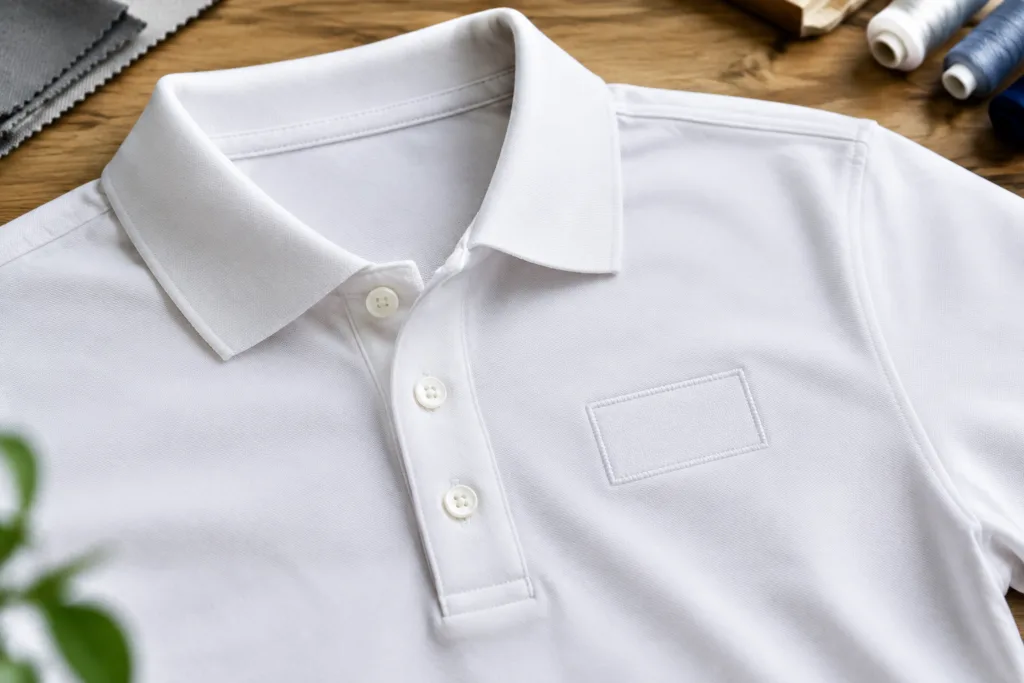
Convert the idea of “a performance golf polo” into choices a factory can interpret consistently. Start with the polo construction: collar shape, collar height, placket length, button or closure details, sleeve shape, cuff treatment, side vents, hem shape and finishing. These decisions influence appearance, movement, sewing operations and the way decoration sits on the garment.
Next, define the visual system. Record each colorway, the approved color reference, contrast details, logo position, logo size, label locations and any trim. A buyer should distinguish mandatory requirements from flexible options because every additional color, trim or decoration location can change development and production assumptions. Include care-label content, folding method, individual packaging and carton requirements when they form part of the retail or wholesale offer.
Private-label golf polos require more than a logo. The brief may include a brand label, size label, care information, hangtag, packaging artwork and a consistent garment identity across future styles. Confirm which items are supplied by the buyer, which are sourced by the manufacturer and which require separate approval. For a structured approach to turning a broad polo concept into specifications, custom polo shirt manufacturing planning is relevant, but the final brief should still be based on the buyer’s own measurements, artwork and commercial terms.
Fabric and Performance Features for Golf Use
Fabric selection should begin with composition and construction rather than a marketing label. Ask for the proposed fibre content, knit structure, fabric weight if relevant to the brief, available colors, care guidance and any supporting documentation. Breathability, moisture management, drying behavior, stretch, opacity, hand feel, colorfastness and dimensional stability can vary with fibre, knit, finish, garment construction and test method.
For performance golf polos, define the conditions that matter: warm-weather use, repeated movement, appearance after care, contact with sunscreen or perspiration, and the expected balance between softness, structure and stretch. A fabric that feels light may not provide the desired opacity or shape retention; a fabric with more stretch may require different fit and decoration decisions. Ask what evidence supports each requested property, such as supplier documentation or a relevant test report, and record the method and result rather than accepting an undefined performance term.
When comparing custom moisture-wicking polo shirt sourcing, use the same questions for every supplier: What is the composition? What care instructions apply? What documentation supports the stated behavior? Which sample represents the proposed bulk fabric? This keeps “cool,” “quick-drying” or “stretch” from becoming unmeasurable promises.
Before bulk approval, align the fabric, color, construction, care information and decoration on the approved sample record. That record becomes the reference for later fit, workmanship and appearance checks.
Fit Development, Size Range and Extended Sizes
Fit should be developed as a measurable system, not inferred from a reference garment or a label such as regular, athletic or relaxed. Provide a base size measurement chart covering chest, waist, shoulder, body length, sleeve length, bicep and hem. Also identify the intended ease, because a polo for active use may require a different balance of room and shape from one designed mainly for retail presentation or club uniforms.
For plus size golf polos, review the measurement relationship across the garment rather than simply extending the width. Check chest, waist, armhole, sleeve opening, sleeve length, body length and hem proportions on an approved sample. Ask the manufacturer to explain the grading rules and identify which measurements are graded, held, or adjusted between sizes. A size-set review can reveal pulling, excess volume, short body length or restricted arm movement before bulk production.
Record fit comments by measurement and location. “Too tight” is less useful than stating that the chest is narrow, the armhole restricts movement or the hem is shorter than the approved specification. Confirm whether changes affect the base pattern, the full size range or only selected sizes. The final approval record should include the measurement chart, sample reference, fit comments, tolerance assumptions and any agreed construction changes.
Customization, Private Label and Decoration Options
Decoration should be selected after reviewing artwork, fabric construction, placement, quantity and durability requirements. Embroidery, screen printing, transfer printing, woven labels and printed labels may suit different visual outcomes, but method suitability depends on the garment and the design. Ask for artwork dimensions, file requirements, color references, placement measurements and approval samples before production.
For a branded golf shirt, separate garment identity from surface decoration. A private-label brief may include main labels, size labels, care information, hangtags, packaging artwork and carton markings in addition to a chest or sleeve logo. Confirm who supplies each component, how revisions are approved and whether labels or trims are included in the quoted scope. A club or team order may also need consistent decoration placement across different sizes and colorways.
Use the same review standard for every decoration location: position, scale, color, edge definition, attachment, appearance after care and compatibility with the approved fabric. A decoration sample should represent the proposed production method and fabric wherever possible. Buyers comparing broader sourcing criteria can also review custom polo manufacturing requirements for fabric, fit, MOQ and QC while keeping the final decision tied to their own specification and approval records.
Sampling, MOQ and Wholesale Order Planning
Sampling should answer specific development questions. Define whether the 1st sample is intended to assess construction, fabric, color, fit, decoration or packaging, and record which elements remain provisional. Ask how sample revisions are handled, which changes may affect cost, and when the sample is considered approved for bulk reference.
MOQ should be clarified by style, color, size, fabric, decoration and order split. A quoted minimum may apply to the whole style or separately to individual colorways, so request the assumptions in writing. Also ask whether a size breakdown can vary within the order, how mixed colors are treated and whether repeat orders use the same commercial basis. Do not compare wholesale golf polos on unit price alone when suppliers have used different minimums or included different development items.
Production planning should connect approval dates with material confirmation, artwork approval, size allocation, packaging and delivery destination. Request a written statement of inclusions, exclusions, payment terms, shipping basis, revision costs and delivery assumptions. Keep a version-controlled brief so the approved fabric, measurements, labels, decoration and packaging can be checked against later communications.
Quality Control and Production Communication
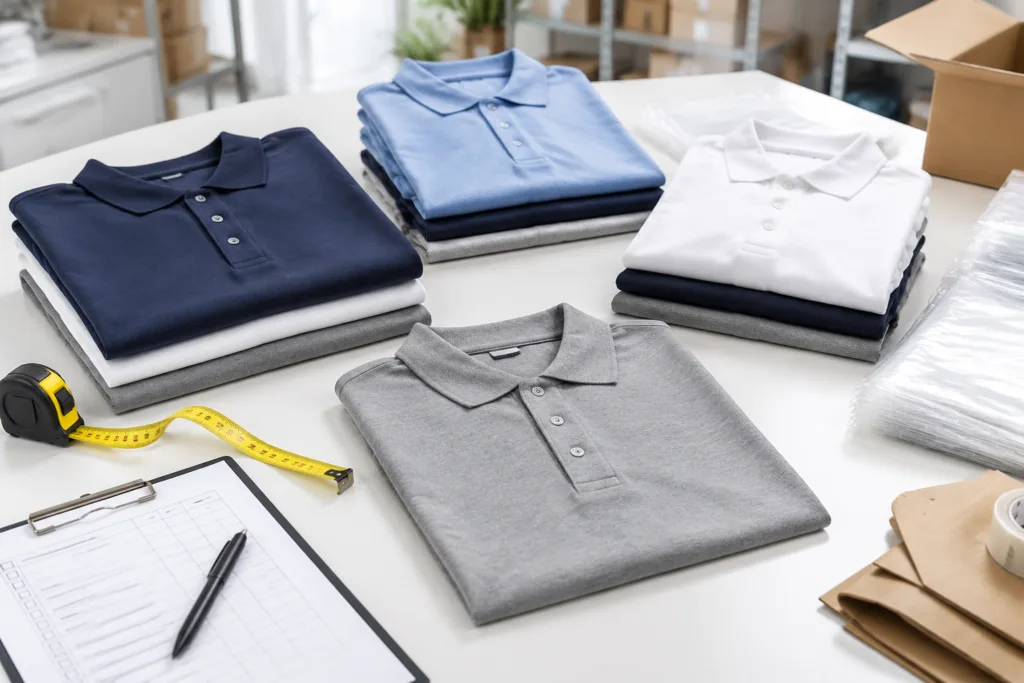
Bulk approval should reference the approved sample and specification, not only a product photograph. Ask what is checked at each relevant stage, including fabric and trim identity, color, measurements, construction, decoration, labels, pressing, folding and packing. Where tolerances are used, define the measurement points and the accepted range before inspection.
Request evidence appropriate to the product brief, such as measurement records, decoration approvals, fabric documentation or inspection reports where available. Confirm how deviations are recorded, who approves corrective action and whether unresolved issues can delay shipment approval. For performance golf polos, retain the composition, care information and any supporting test method or supplier document alongside the sample record. This helps prevent a marketing description from replacing a production specification.
How to Compare Manufacturer Quotes
Normalize every quote before ranking suppliers. Compare the same construction, fabric composition, color scope, size range, decoration, labels, packaging, sample treatment, MOQ assumptions, payment terms, shipping basis and delivery assumptions. Identify exclusions such as artwork preparation, trims, testing, special packaging, revisions or freight. A lower price may reflect a narrower scope rather than a more efficient production plan.
Assess communication quality as part of the commercial review. A useful response should identify unanswered questions, distinguish confirmed details from assumptions and show how the supplier will use the brief for sampling and bulk approval. Buyers evaluating private-label and bulk production can use guidance on how to choose a custom clothing manufacturer for private-label and compare suppliers, while still requesting current terms for the specific golf polo project.
Manufacturer-Ready Golf Polo Inquiry Checklist
Send a concise package containing the target market and end use, reference images or a tech pack, construction preferences, fabric composition direction, required performance evidence, measurement chart, size range, artwork, label and packaging requirements, quantity by style, color and size, delivery destination and required timeline. State which elements are fixed and which are open to recommendation. Ask the manufacturer to return a scoped quotation, sample plan, MOQ assumptions, approval checkpoints and any missing information.
When the brief is ready, Request a Quote with the intended use, quantity, material direction, decoration, labeling and sampling requirements clearly stated.
What should I send a custom golf polo manufacturer before requesting a quote?
Send the end use, target market, construction details, fabric direction, size chart, artwork, quantities by style, color and size, labels, packaging, destination and required timeline.
What is the difference between custom golf polos and private-label golf polos?
Custom golf polos focus on garment design or decoration, while private-label golf polos also define the brand identity through labels, care information, hangtags and packaging.
How can I confirm whether a golf polo fabric is suitable for warm-weather use?
Request the fibre composition, knit details, care guidance and supporting documentation for properties such as moisture management, drying behavior, stretch, opacity and colorfastness.
Can golf polo manufacturers develop extended-size fits?
Ask for a current size chart, grading rules and an approved size-set review covering chest, waist, armhole, sleeve, body length and hem measurements.
What should be checked before approving bulk golf polo production?
Check the approved fabric, measurements, construction, color, decoration, labels, packaging, care information, tolerances and inspection records against the final specification.
How should I compare wholesale golf polo quotes?
Compare equivalent fabric, construction, sizes, decoration, packaging, sample treatment, MOQ assumptions, payment terms, shipping basis, exclusions and delivery assumptions.