








A suitable men’s beach shorts manufacturer should be assessed on its ability to develop the required fit and pattern, work with buyer-approved fabrics and trims, apply branding accurately, produce an approved sample, document quality checks, confirm order requirements, and provide a realistic production and packaging plan. Before requesting a quotation, prepare a tech pack or clear product brief covering intended use, target customer, size range, quantity, artwork, delivery market, target cost position, and required compliance information. For a related process overview, review how to choose a custom clothing manufacturer for private-label and bulk apparel production.
What Buyers Should Define Before Sourcing Men’s Beach Shorts
Start with the product decision rather than the supplier shortlist. A resort retailer, swimwear label, teamwear buyer, and discount wholesaler may all request men’s beach shorts, but their acceptable fit, decoration, packaging, and cost structure can differ. Define whether the garment is intended primarily for beachwear, pool use, resort wear, casual wear, or a mixed range. The intended use affects the required construction brief, lining decision, pocket design, and care information.
State the sales channel and price position in the inquiry. A private-label product sold through a branded e-commerce store may need more detailed presentation and packaging than a wholesale style supplied in basic shipping units. The target cost should be treated as a planning input, not as proof that a particular fabric, trim, or decoration method is feasible. Ask the manufacturer to identify which assumptions affect the quotation.
Quantity should be supplied by style, color, and size rather than as 1 total. Include the expected size range, proposed colorways, destination market, requested delivery window, and whether the order is a new development or a repeat style. A buyer comparing a custom men’s beach shorts program should also specify whether 1 base pattern will support several color or print versions, because changing the design can affect sampling and production planning.
Artwork should include the logo files, print or label placement, color references, scale, and any restrictions on distortion or repetition. Add the required brand label, care label, fiber-content information, hangtag, barcode, folding method, polybag instruction, and carton marking where applicable. Requirements should be checked against the destination market and the approved product information. Broader guidance on private-label clothing branding, labels, hangtags, and packaging is useful for organizing these retail-readiness inputs, but it does not replace product-specific confirmation.
A clear inquiry helps a buyer compare replies on the same basis. Keep the supplier questions tied to beach-short specifications so responses reveal product, cost, and timing assumptions.
Specification and quotation framework
| Product area | Buyer decision | Specification or document to provide | Manufacturer confirmation needed | Approval or risk checkpoint |
|---|---|---|---|---|
| Silhouette and fit | Board-short, trunk, or another intended shape | Reference image, sketch, measurements, rise, leg opening, and fit notes | Pattern-development or modification scope and sample process | Measure the approved sample on the agreed size |
| Fabric and lining | Handle, stretch, opacity, and intended-use requirements | Fiber preference, weight or hand-feel reference, lining request, and care needs | Available or buyer-supplied fabric, lining, and trim options | Confirm composition and appearance before bulk approval |
| Waistband and closure | Elastic, drawcord, fixed waistband, or combination | Waist construction, cord details, eyelet or opening requirements | Construction method and trim availability | Check comfort, security, symmetry, and finishing |
| Pockets and trims | Need for side, back, or secure pockets | Position, dimensions, closure, mesh, and trim artwork | Feasible pocket construction and approved components | Check access, bulk, attachment, and pull strength where relevant |
| Decoration and branding | Print, label, hangtag, or other brand application | Artwork, placement, scale, color references, and label information | Applicable method and any required artwork changes | Approve placement, color, registration, and finish |
| Sizing | Size range and quantity split | Point-of-measure chart, tolerances, grading direction, and quantities | Grading approach and measurement-control process | Record revisions against the approved sample |
| Packaging | Retail-ready or bulk shipment presentation | Folding, bags, labels, barcodes, carton marks, and destination | Available packaging formats and documentation | Approve a packed sample or packaging reference |
| MOQ and timing | Commercially workable order and launch plan | Quantity by color and size, target date, and shipping market | Current MOQ rules, charges, assumptions, and timing | Put commercial terms and dependencies in writing |
| Quality documentation | Acceptance criteria for bulk goods | Specification sheet, tolerances, defect definitions, and required documents | Inspection checkpoints and available records | Agree approval and escalation steps before production |
Custom Development: Styles, Patterns, and Fit
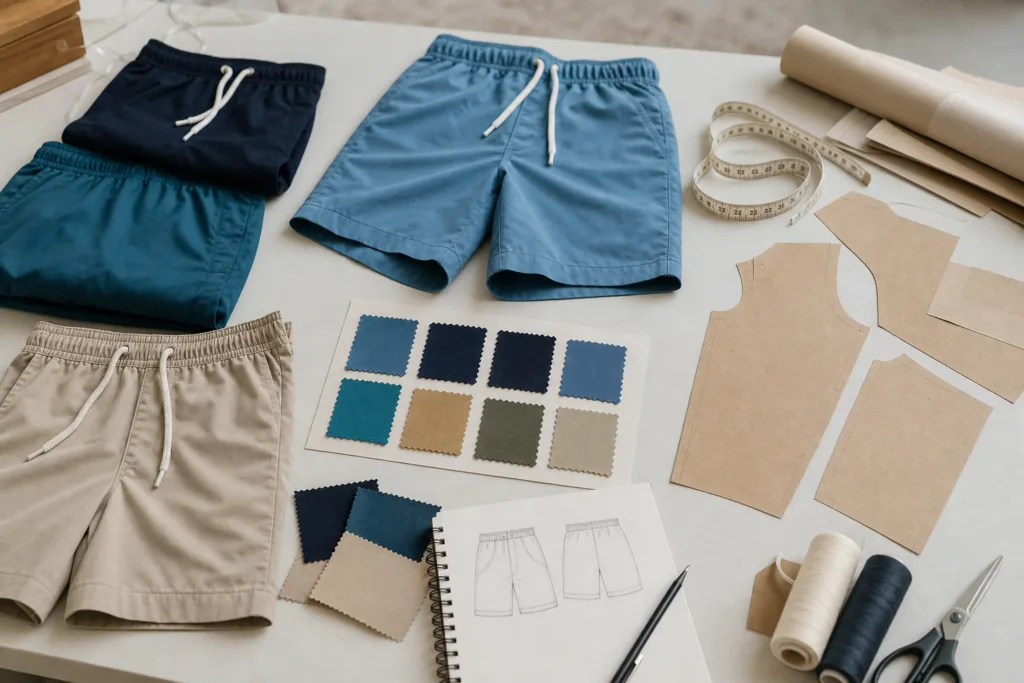
“Custom” can mean developing a new pattern, modifying an existing base, or applying a new fabric, color, print, and branding package to an established shape. These routes have different approval risks. A new pattern gives the buyer more control over the silhouette but requires more decisions about measurements and construction. A modified base may reduce development work, but the buyer must verify which proportions can change and whether the result matches the intended fit.
Specify the silhouette in measurable terms. Board shorts may be planned with a longer leg and a more structured waistband, while trunks may use a shorter leg and a different balance of ease. These are general design directions, not a statement that any particular supplier collection contains them. Provide a reference garment, sketch, or technical drawing when visual language matters, then convert the reference into a point-of-measure chart.
The fit brief should cover waist, waistband height, hip, front and back rise, thigh, leg opening, outseam, inseam where relevant, pocket position, and lining dimensions. State the base size and the intended grading direction for the complete size range. A size chart without measurement points is difficult to approve because different suppliers may interpret the same size label differently.
Waist construction deserves early attention. Elastic width, drawcord position, waistband height, opening method, and reinforcement affect comfort and perceived quality. Pocket bags, mesh components, closures, and seam placement can change the garment balance. Ask which details are part of the proposed construction and which require separate development or approval.
For a brand developing a wider active or resort assortment, the product brief can sit alongside custom sportswear manufacturing for brands and teams, but beach shorts should retain their own fit, fabric, lining, and use-case requirements.
Sample decisions before bulk production
Request a documented sequence for pattern or modification review, fit sampling, measurement checking, artwork placement, trim confirmation, and final pre-production approval. The buyer should record each revision against the sample version and avoid approving bulk production from an unmarked visual image alone. Confirm the approved size, color, print placement, construction details, labels, and packaging reference in writing.
Fabric and lining selection should remain conditional until the actual composition, construction, and care requirements are confirmed. Terms such as quick-drying, chlorine-resistant, saltwater-resistant, UV-protective, moisture-wicking, durable, or colorfast should not be used as product promises without product-level or supplier documentation and, where required, an appropriate test method. The final care instruction should follow the approved garment information rather than generic beachwear advice.
Fabric, Lining, and Construction Options
Fabric selection should follow the intended use, target price position, hand-feel expectation, and required product documentation. Ask the supplier to identify the proposed fiber composition, fabric weight or construction reference, stretch level, opacity, surface appearance, and care requirements. If the buyer supplies fabric, confirm whether the supplier can work with it and which documents must accompany the material.
For lined styles, define the lining area, fiber content, color, attachment method, and desired coverage. A lining can affect comfort, opacity, drying behavior, bulk, and production steps, so it should be approved with the outer fabric rather than treated as a minor trim. Do not assume that a fabric will resist chlorine, saltwater, fading, or repeated wear without product-level evidence and an appropriate test basis.
Construction specifications should identify seam types, seam allowances where relevant, reinforcement points, hem finish, waistband height, elastic width, drawcord routing, eyelets, and pocket-bag material. The manufacturer should confirm which details are feasible for the proposed fabric and pattern. Care-label wording must match the approved composition and finished garment; generic beachwear instructions should not replace the product-specific label.
Functional Features and Branding Applications
Pockets, closures, and trims should be selected for the use case rather than added after the pattern is complete. State whether the style needs side pockets, a back pocket, a closure, a flap, a drain detail, or a secure fastening. Provide pocket dimensions, placement, opening direction, and trim references. The sample should be checked for access, bulk, symmetry, attachment, and any pull or closure requirement relevant to the design.
Branding may include a waistband label, woven label, care label, hangtag, barcode, print, transfer, or another approved application. Submit artwork in a usable format with placement, scale, color references, repeat direction, and distortion limits. Confirm the proposed decoration method for the actual fabric and ask whether an artwork adjustment or separate approval is required. Decoration appearance and attachment should be checked on the sample before bulk production.
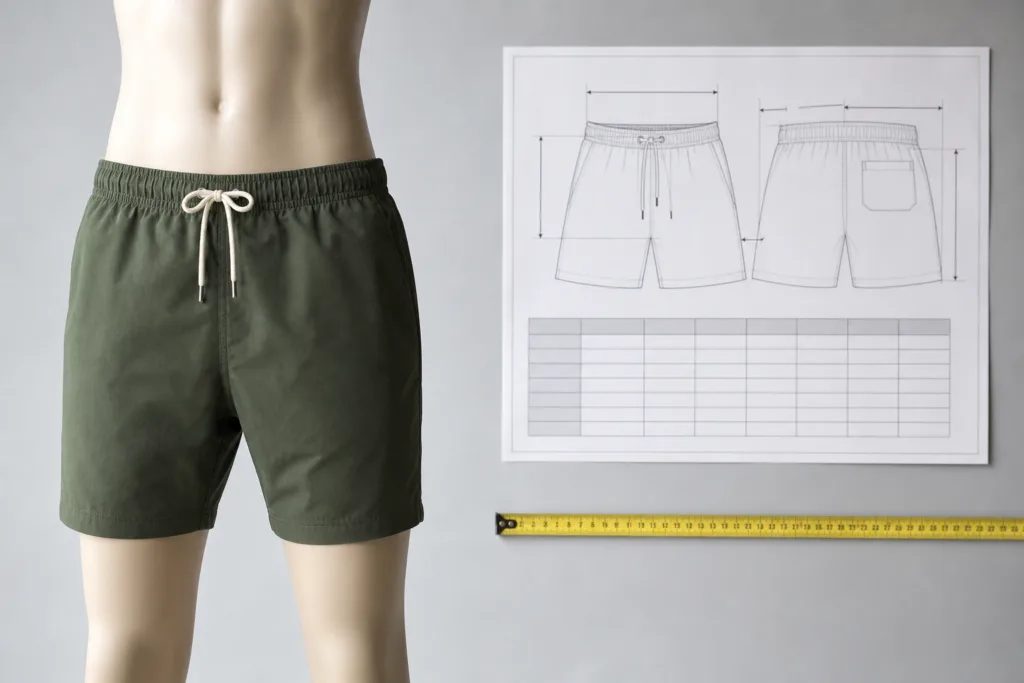
Retail presentation also needs a written specification. Define folding, individual packing, barcode placement, carton marks, assortment by carton, and destination-market information where applicable. The wider subject of apparel sourcing and supplier-switching risk reduction is useful when comparing documentation and handover risks, but the beach-short brief should remain the controlling product document.
Measurement, Sampling, and Approval Controls
A fit review should compare the sample against the approved point-of-measure chart, not only against a model or photograph. Check waist, waistband height, hip, front and back rise, thigh, leg opening, outseam, inseam where relevant, pocket position, lining dimensions, and key construction details. Record the sample size, measurement results, tolerance decisions, and requested revisions.
When a style uses grading, approve the base size and the method used to extend measurements across the requested range. Review whether the rise, leg opening, waistband, pocket position, and lining proportions remain appropriate at each size. A size label alone is insufficient for comparison because sizing conventions vary between markets and suppliers.
Sampling should also verify print or logo placement, color appearance, trim selection, seam finishing, closure operation, labels, and packaging references. Keep revision records tied to sample versions. Bulk production should proceed only after the buyer has approved the final pre-production sample and the written specification covering the details that changed during development.
Quality Control and Product Documentation
Quality expectations should be expressed as observable checkpoints. Agree which measurements are checked, how tolerances are recorded, how defects are categorized, and which parts of the garment require closer review. Typical checkpoints may include fabric identity, color reference, measurement points, seam integrity, waistband symmetry, pocket attachment, lining placement, print registration, label information, packing, and carton details.
Ask the manufacturer what inspection records or supporting documents are available for the proposed order. Do not treat a verbal quality statement as a substitute for an approved specification sheet and acceptance criteria. Where the destination market requires testing, labeling, fiber-content disclosure, chemical restrictions, or other compliance evidence, define the responsible party, document format, test basis, and approval timing before production.
Color and decoration should be assessed against the approved reference under an agreed review process. Performance terms such as quick drying, moisture management, UV protection, durability, or colorfastness require supplier documentation or product-level testing; they should not appear in sales copy merely because they are common features in the category.
MOQ, Pricing Inputs, Lead Times, and Packaging
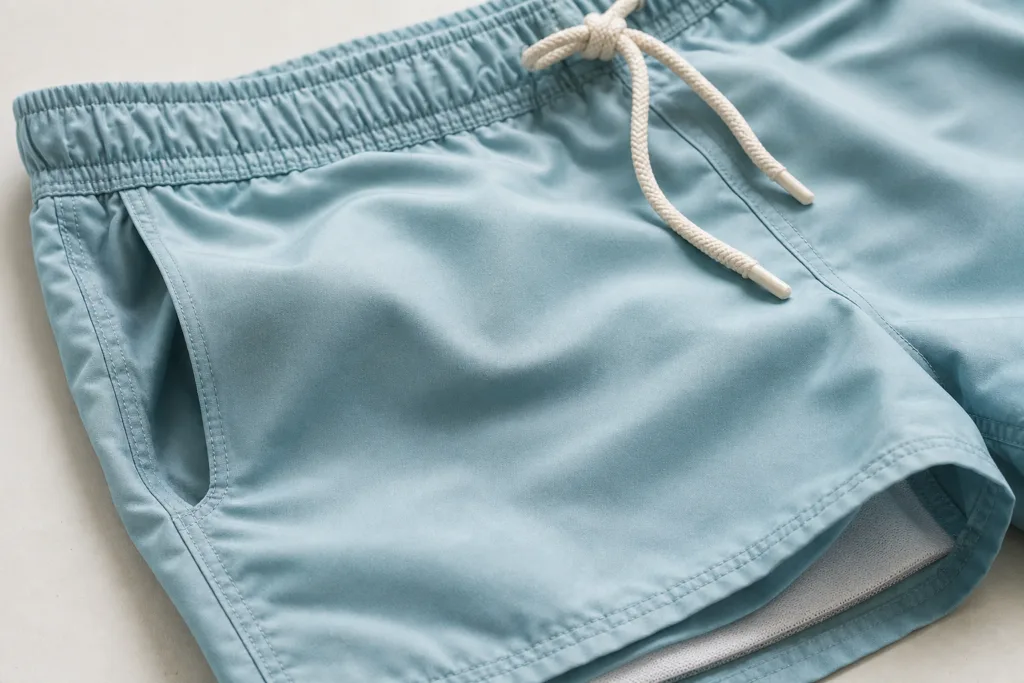
A commercially useful quotation should separate development assumptions from bulk-order assumptions. Request current rules for minimum quantities, sample charges, quantity breaks, color and size splits, payment terms, material availability, and any development or setup costs. These details should be confirmed for the proposed style rather than inferred from another garment category.
Timing should be requested as a plan with dependencies. Ask what affects sample timing, material booking, approval dates, production scheduling, inspection, packing, and shipment readiness. Put the requested delivery window, destination, shipping terms, carton information, and buyer approval deadlines in writing. A date without stated assumptions is difficult to use for launch planning.
Packaging instructions should cover individual bags, folding, size stickers, barcodes, carton marks, carton assortment, and any destination requirements. Approve a packed reference when presentation or barcode accuracy matters. Commercial terms, quality criteria, and packaging instructions should be aligned before the order is released.
Manufacturer Inquiry Checklist
Before sending an inquiry to a men’s swimwear manufacturer, assemble the product brief, sketches or reference images, tech pack if available, intended use, target customer, size chart, quantity by style, color and size, fabric direction, lining request, waistband and closure details, pocket requirements, artwork, labels, care information, packaging instructions, destination market, target timeline, and required compliance documents.
Ask the supplier to respond against the same list: development route, pattern or modification scope, proposed materials, decoration method, sample stages, approval requirements, current MOQ, sample charges, bulk assumptions, lead-time dependencies, quality records, packaging formats, and shipping terms. This makes replies easier to compare and exposes unresolved risks before a purchase commitment.
For a product brief covering intended use, quantity, material direction, decoration, and sampling requirements, contact Ninghow with the relevant specifications and buyer documentation.
What should I send a manufacturer when requesting custom men’s beach shorts?
Send the intended use, sketches or references, measurements, size range, quantity by style, color and size, fabric direction, lining, construction, artwork, labels, packaging, destination market, target timing, and required compliance documents.
Can men’s beach shorts be developed with custom fabric, fit, prints, labels, and packaging?
They may be developed with those inputs when the manufacturer confirms the proposed materials, construction, decoration, labels, and packaging for the specific style. Request written confirmation before assuming availability.
How are fit and sizing approved before bulk production?
Use an agreed point-of-measure chart, base size, grading direction, tolerances, and sample revision record. Approve the final pre-production sample and written specifications before bulk production.
What should be confirmed about MOQ and lead time before placing an order?
Confirm current minimum quantities, color and size splits, sample and development charges, material availability, approval dependencies, production timing, shipping terms, and the requested delivery window.
What quality checks and product documents should buyers request?
Request the approved specification, measurement tolerances, defect definitions, inspection checkpoints, composition and care information, artwork approvals, packaging details, and any destination-market documents that apply.
Which performance claims require testing or supplier documentation?
Claims about quick drying, chlorine or saltwater resistance, UV protection, moisture management, durability, recycled content, or colorfastness require product-level or supplier documentation and, where applicable, an appropriate test method.