
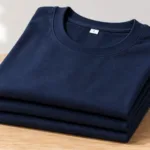
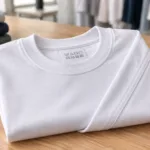
A T-shirt is best classified across several dimensions, not by one style label. For example, a single garment can be a crew-neck, short-sleeve, relaxed-fit T-shirt. “Crew neck” identifies the neckline, “short sleeve” identifies sleeve length, and “relaxed fit” describes the body shape. These choices can be combined because they answer different questions.
When comparing products or preparing a custom brief, record the attributes separately. This prevents a common mistake: treating raglan as an alternative to short sleeve, or treating cropped as another word for slim fit.
How Can One T-Shirt Have Several Types at Once?
Treat Neckline, Sleeve Design and Fit as Separate Dimensions
Start with three independent checks. Look at the opening around the neck, identify how far the sleeve extends and inspect how closely the body follows the wearer. The result is a more precise description than a broad label such as “fashion T-shirt” or “oversized top.”
A fourth detail, garment length, may also matter. A cropped hem describes where the body ends; it does not tell you whether the shoulders are narrow, standard or dropped.
Use a Combined Style Description
Hypothetical example: “Relaxed-fit, V-neck, long-sleeve T-shirt with raglan sleeves” gives four separate pieces of information. The V shape identifies the neckline, long sleeve identifies extension, raglan identifies the sleeve attachment and relaxed fit identifies the body silhouette.
This format is useful because a supplier can check each feature independently against a reference sample, measurement sheet or product image. It also makes revisions clearer: you can change the neckline without accidentally changing the intended fit.
Why the Classification Matters for Selection
Different dimensions affect different decisions. The neckline changes the visible front opening and layering appearance. Sleeve length changes arm coverage. Sleeve attachment changes the seam layout and visual line around the shoulder. Fit changes shoulder position and the amount of space through the body.
Because the effects are different, there is no single “best” T-shirt type for every situation. A useful selection starts with the wearer’s activity, desired appearance and need for consistency, then assigns an option to each dimension.
A Quick T-Shirt Identification Table
| Dimension | Question to ask | Example answer |
|---|---|---|
| Neckline | What shape or opening is visible around the neck? | Crew neck |
| Sleeve length | How far does the sleeve extend? | Short sleeve |
| Sleeve attachment | Where does the sleeve seam run? | Set-in or raglan |
| Body fit | How much ease and shoulder space does the body have? | Relaxed fit |
| Body length | Where does the hem finish? | Standard or cropped |
How Do You Identify Crew-Neck, V-Neck and Henley T-Shirts?
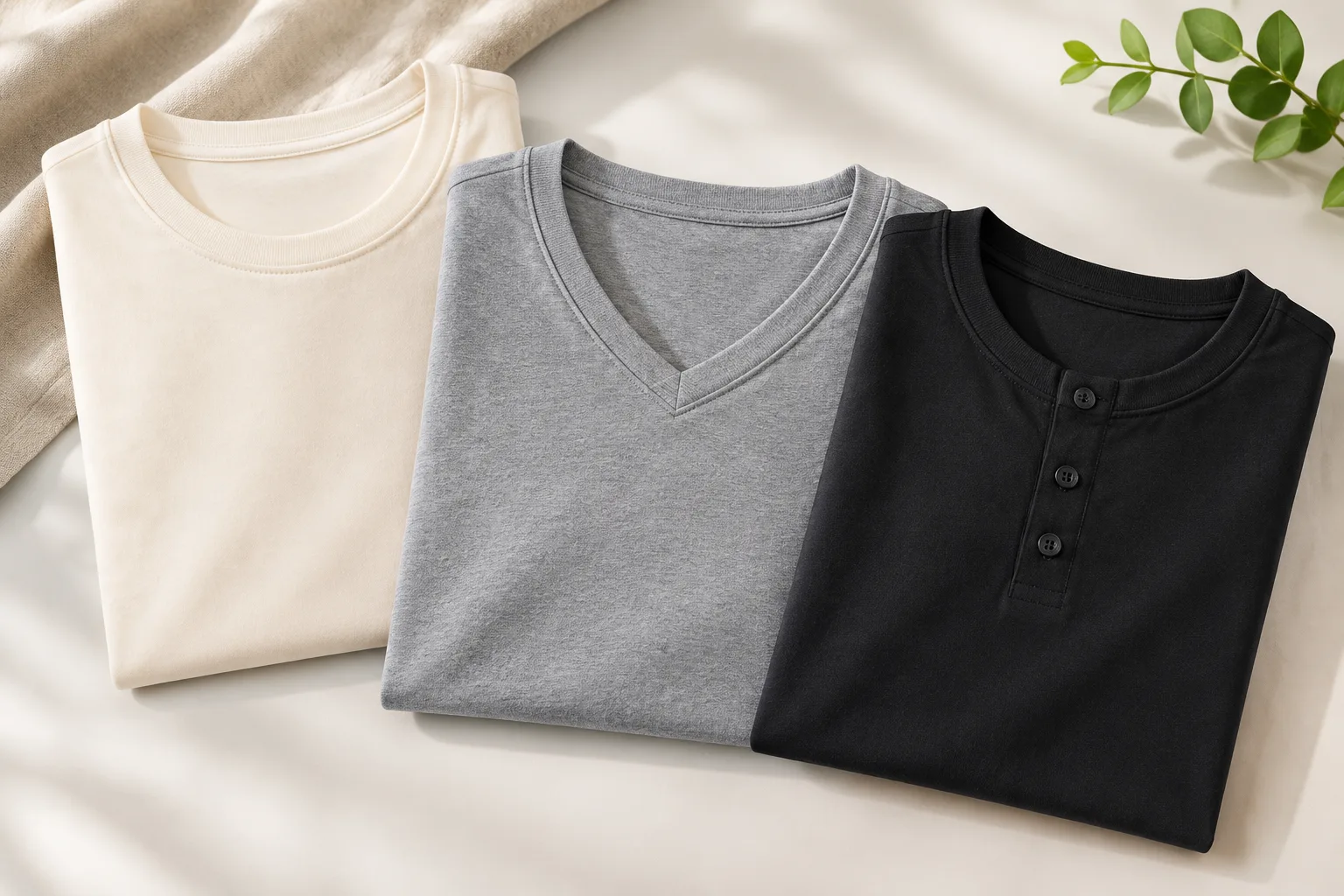
Crew Neck: A Closed Curved Opening
A crew neck has a rounded opening that sits close to the base of the neck compared with more open neckline shapes. To identify it, follow the front edge from one shoulder toward the other: it forms a continuous curve rather than a point.
This is often a straightforward starting point for everyday styling because the front opening is visually simple and works with many layers. The exact coverage still depends on the neckline depth, rib construction and garment size, so compare the actual sample or measurement information when consistency matters.
V-Neck: A Pointed Front Shape
A V-neck forms a clear point at the front. The point may be shallow or deep, but the defining check is the angled shape rather than a rounded curve.
When choosing between a crew neck and a V-neck, compare the amount of visible opening, how the T-shirt sits under another layer and the visual line you want at the front. Do not assume that one shape universally suits a particular body type; neckline depth and personal preference can change the result.
Henley: A Partial Opening with a Placket
A Henley has a partial front opening below the neckline, usually identified by a short placket with buttons or another fastening. The opening does not continue around the full front as a deep V or other open neckline would.
For product identification, the placket is the fastest check. If the neckline shape is unclear in a photograph, look for the vertical opening and fastening below it. In a custom brief, specify both the neckline appearance and the placket details so the front design is not interpreted as a standard crew neck.
Compare Coverage and Layering Without Universal Fit Rules
Neckline selection is a visual and practical decision, not a fixed body-type rule. A more closed crew neck may give the front a simpler, more covered appearance; a V-neck creates a pointed opening; a Henley adds a functional-looking front detail and adjustable opening.
Compare equal conditions when reviewing samples: use the same size, similar fabric weight and similar body fit. Otherwise, fabric drape or sizing may make the neckline seem different even when the pattern shape is similar.
How Are Sleeve Length and Sleeve Attachment Different?
Short and Long Describe Sleeve Length
Short sleeve and long sleeve describe how far the sleeve extends along the arm. They answer a length question: where does the sleeve end relative to the upper arm, elbow or wrist?
These terms should be recorded separately from the neckline and body fit. A short-sleeve T-shirt can be crew neck, V-neck or Henley, and it can also be slim, regular or relaxed fit.
Raglan Describes the Sleeve Seam
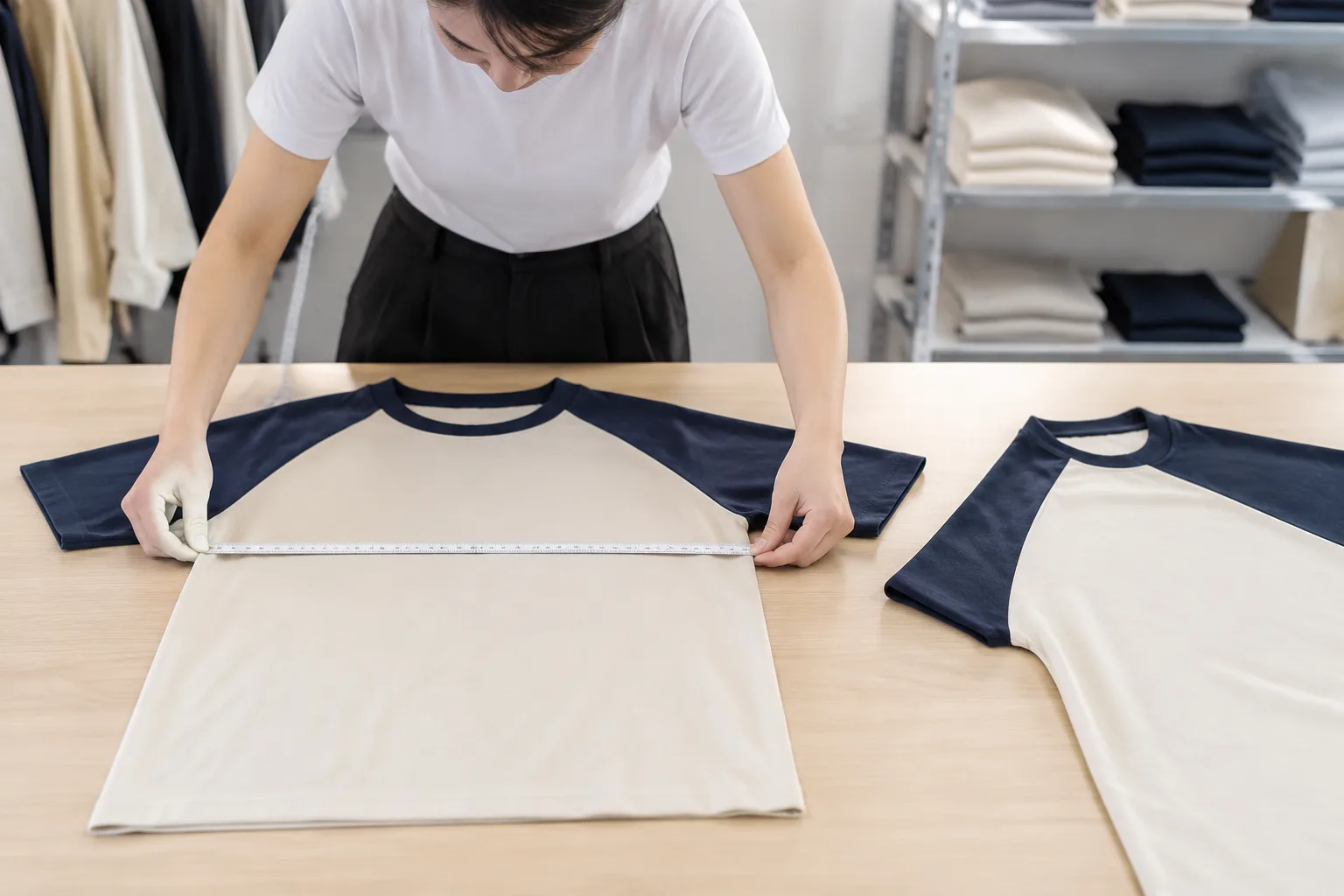
Raglan describes a sleeve attachment rather than a sleeve length. Its seam runs diagonally from the underarm toward the neckline area instead of following a conventional shoulder seam. A raglan design can therefore have a shorter or longer sleeve.
This distinction matters in product searches and custom communication. Saying “raglan sleeve” alone does not tell a supplier whether the sleeve should finish near the upper arm or extend farther down the arm. State both features.
A Simple Check for Product Photos and Samples
- First identify the sleeve endpoint to classify the length.
- Next trace the seam near the shoulder and neckline to identify the attachment.
- Finally record the neckline and body fit as separate attributes.
This sequence reduces errors caused by photos that emphasize the shoulder seam but do not show the full arm. If the seam is hidden by a graphic or folded fabric, request a flat product photo, technical sketch or physical sample before finalizing the description.
When to Use a Separate Sleeve Guide
This page only uses sleeve terms to build the overall T-shirt classification. Detailed comparisons of sleeve lengths, attachment methods, cuffs and less common sleeve shapes belong in a dedicated sleeve guide.
If you are preparing a brief, keep the information concise here: specify the desired sleeve length and whether the attachment should be conventional or raglan. Add cuff and construction requirements only when they affect the intended sample or order.
How Should You Compare Slim, Regular and Relaxed T-Shirt Fits?
Slim Fit: A Closer Silhouette
A slim-fit T-shirt usually follows the body more closely through the shoulders, chest and waist. The shoulder seam may sit nearer the natural shoulder, while the body has less extra space than a regular or relaxed style.
Use the fit when a neater outline is part of the intended appearance, but do not judge it from the label alone. A slim fit in one supplier’s range may have similar body measurements to a regular fit in another. Check the garment’s shoulder width, chest width and body length against a size chart or sample.
Regular Fit: A Middle Starting Point
A regular-fit T-shirt generally provides a balanced silhouette: the body is not designed to closely follow the torso, but it is not deliberately oversized either. It can be a useful comparison baseline when reviewing several products because it helps show whether another style adds or removes ease.
“Regular” is not a universal measurement standard. Compare samples in the same nominal size and record where the shoulder seam sits, how much room remains across the chest and how the hem falls on the body. These checks are more reliable than assuming the label means the same thing across brands.
Relaxed Fit: More Visual and Wearing Ease
A relaxed-fit T-shirt normally presents more space through the body and may use a wider shoulder line or a dropped shoulder. The result can look less structured and provide more visual ease, although the exact silhouette depends on the pattern and fabric.
More room is not automatically better for every use. Extra width can affect how the garment layers, how artwork sits and how consistent the appearance is across different body shapes. When comparing relaxed styles, check both the shoulder placement and the chest or body width rather than relying on the word “oversized” or “relaxed.”
| Fit label | Shoulder and body checkpoint | Typical selection question |
|---|---|---|
| Slim | Closer shoulder and chest outline | Is a neater silhouette more important than extra ease? |
| Regular | Balanced shoulder placement and body room | Do you need a neutral starting point for a broad group? |
| Relaxed | More body ease, sometimes with a wider or dropped shoulder | Should the garment have a looser visual proportion? |
Cropped Length Is Not the Same as Body Fit
Cropped or short length describes the position of the hem, not how close or loose the body is. A cropped T-shirt can be slim, regular or relaxed. Likewise, a full-length T-shirt can have any of those fits.
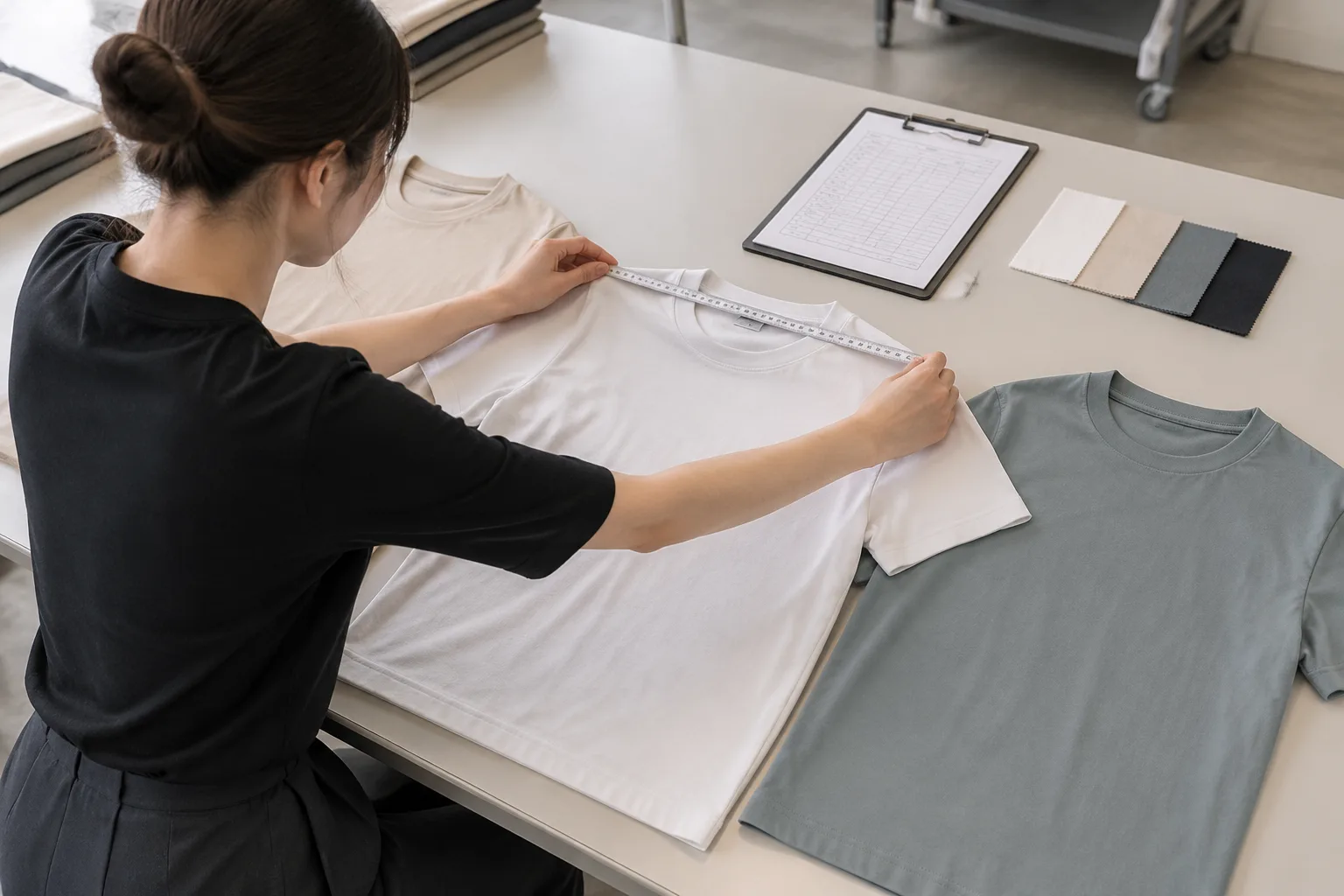
To compare like-for-like samples, record at least the shoulder width, chest or half-chest measurement, body length and sleeve length. Measure garments laid flat under the same conditions, and compare the same nominal size. If the intended design includes a dropped shoulder, note that separately because shoulder width alone may not show how the garment is meant to sit.
How Do You Choose a T-Shirt Combination for the Use Case?
Everyday Wear: Start with Familiar Proportions
For everyday wear, begin with the proportions that are easiest to recognize and compare: choose the neckline for the desired front opening, the sleeve length for the preferred arm coverage and the fit for the intended silhouette. A crew-neck, short-sleeve, regular-fit combination is a familiar starting point, but a V-neck or relaxed fit may be more appropriate when the visual direction calls for a different proportion.
Check how the neckline works under the intended outer layer and whether the body length is suitable for wearing untucked or tucked. Avoid selecting by a style name alone; review a measurement chart or sample because fabric drape and shoulder placement can change the result.
Active Use: Prioritize Movement and Coverage in the Brief
For active use, describe the movement and coverage requirements rather than assuming that one T-shirt combination is universally suitable. Consider whether the wearer needs short or long sleeves, how much room is needed around the shoulders and chest, and whether the neckline should remain relatively closed during movement.
A relaxed body may allow more room, while a closer fit may support a more controlled visual outline. These choices can also affect layering and how a graphic sits during wear. Confirm the result with a sample in the intended size range, especially if the garment will be used by people with different proportions.
Teams and Events: Balance Consistency with Recognition
For teams, staff groups or events, consistency often matters as much as individual style. A regular fit may provide a neutral starting point, while a common neckline and sleeve length can make the group look more coordinated. A contrasting neckline, raglan seam or relaxed proportion can help the garment stand out, but it may also make the group look less uniform.
Decide whether recognition should come from the garment shape, the artwork or both. Check how the design appears across the smallest and largest planned sizes, because the same graphic placement can look different when body width and length change. If several fits are offered, define which measurements must remain consistent so the range still looks like one collection.
Custom Orders: Turn the Style Choice into a Clear Brief
A custom brief should convert visual preferences into separate, checkable requirements. State the neckline, sleeve length, sleeve attachment if relevant, body fit and body length. Then add the intended size range, fabric surface or construction preference, decoration locations, artwork files, labels and packaging requirements.
Fabric construction can affect how the sample looks and behaves during cutting and decoration. For example, single jersey may curl at cut edges, while interlock is a more stable double-knit construction; compare like-weight samples rather than treating either structure as a universal guarantee. Review the jersey and interlock construction comparison when the fabric surface is part of the decision.
Ninghow lists custom T-shirt development, garment decoration and private-label packaging options. If those services fit your project, you can request a manufacturing quote after the brief is defined. The enquiry should ask the supplier to confirm what can be matched in the proposed sample rather than assuming that every combination is available.
Before requesting a quotation or approving a sample, confirm:
- Style: neckline, sleeve length, sleeve attachment and body fit.
- Measurements: shoulder, chest or body width, body length and sleeve length for each required size.
- Fabric: surface appearance, knit construction, approximate weight and any handling concerns relevant to the design.
- Decoration: artwork, placement, size, colors and the intended decoration area.
- Labels and packaging: brand labels, care information, size labels and private-label packaging requirements.
- Approval: which sample size will be reviewed, what measurements will be checked and which visual details must be corrected before production.
Frequently Asked Questions
What measurements should I compare when two T-shirts have the same fit label?
Compare the same nominal size and record shoulder width, chest or half-chest width, body length and sleeve length. Also note whether the shoulder is natural or dropped. These measurements reveal differences hidden by labels such as “regular” or “relaxed,” which are not universal standards across brands or suppliers.
Can a cropped T-shirt also be relaxed or oversized?
Yes. Cropped describes the hem position, while relaxed or oversized describes the amount of body and shoulder ease. A cropped garment can therefore have a close, regular or loose silhouette. Confirm both body measurements and finished length so the supplier does not treat “cropped” as a complete fit specification.
What should I approve before placing a custom T-shirt order?
Approve a physical or otherwise clearly documented sample against the agreed neckline, sleeve details, fit, body length, measurements, fabric surface, artwork placement, labels and size range. Check more than one planned size when consistency matters. Record corrections in the brief before discussing production, decoration or packaging requirements.