
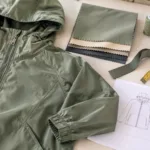
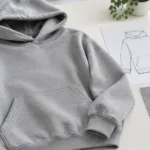
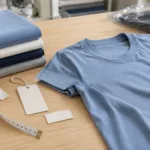
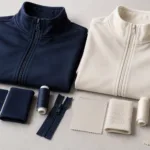
No. Higher GSM does not automatically mean better T-shirt quality. GSM means grams per square metre: the mass of a measured area of fabric. A higher value indicates more mass in that area, but it does not by itself establish whether the shirt is durable, comfortable, opaque, breathable or right for your customer.
What GSM Measures—and What It Does Not
Use GSM as one fabric specification, not as a quality grade. Weight can influence how a fabric feels and hangs, but those results also depend on yarn, fiber, knit structure and finishing. Two fabrics with the same GSM may have different thickness, stretch, surface texture and drape.
Keep related properties separate when writing a brief. Thickness is not interchangeable with mass per area; air permeability and strength are also distinct characteristics. ASTM’s textile standards list separate methods for these kinds of properties. If a project depends on opacity or durability, assess that property directly rather than assuming a higher GSM provides it.
For sourcing, specify the target weight alongside the intended use and the qualities that matter to the wearer. This gives a manufacturer a clearer basis for suggesting a fabric and prevents a heavier sample from passing as proof of overall quality.
Compare GSM by T-Shirt End Use
Choose weight for the job the shirt needs to do. A lighter fabric may suit warm-weather uniforms or a soft, easy-layering silhouette; a heavier option may better support a structured look or a more substantial hand. These are trade-offs, not universal rules: fiber, construction and fit can change the result.
| Fabric direction | May suit | What to verify |
|---|---|---|
| Lower GSM | Warm climates, layering or a lighter drape | Opacity, body and how it behaves with the chosen fit or print |
| Midrange GSM | Versatile everyday shirts | Whether the hand, drape and surface match the intended positioning |
| Higher GSM | A more substantial hand or more structured silhouette | Wearer comfort, drape, opacity and performance after care |
The table describes directions, not fixed GSM bands or performance guarantees. A heavy shirt can feel unsuitable in a hot climate, while a lighter one can still be well made if its construction and performance meet the brief. Avoid comparing a number alone: confirm whether a quoted weight refers to the same fabric type and state, then review a physical swatch.
When developing a product, share the wearer, climate, fit and decoration plans with the supplier. T-shirt manufacturing options can be discussed in that context, but the fabric still needs to be evaluated against your specific requirements. For early calculations related to apparel development, use the apparel manufacturing calculators.
Consider Knit Structure and Finish
Construction helps explain why equal-GSM fabrics can behave differently. Single jersey and interlock are not simply lighter and heavier versions of the same cloth: they are different knit structures. Single jersey can curl at cut edges, while interlock is generally a more stable double knit. Those tendencies can affect how a fabric lies and is handled, but they do not guarantee a particular sample’s strength, shrinkage or comfort. Compare fabrics with similar weight and composition when judging the construction itself; single- and double-knit examples help clarify the distinction.
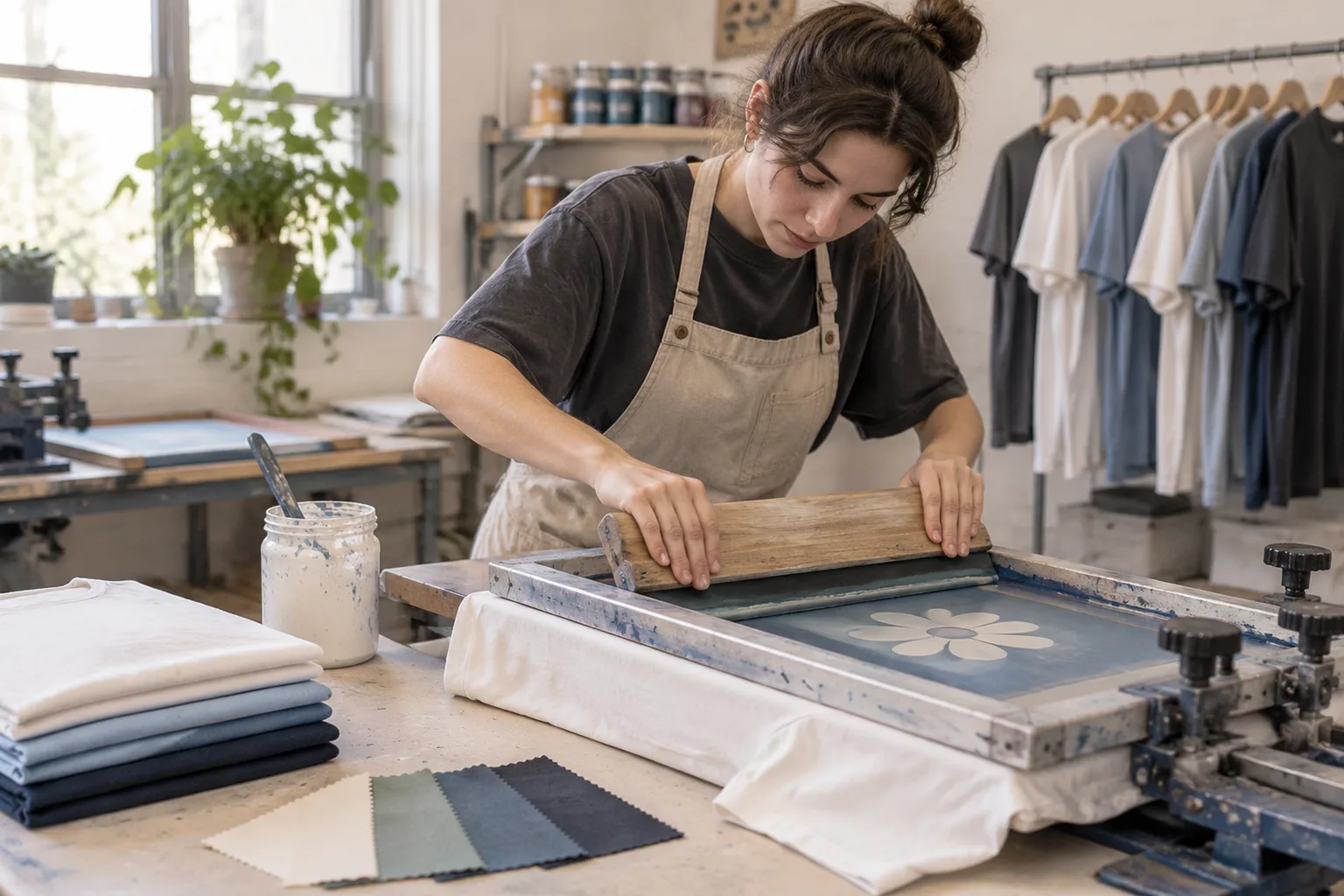
Finish also changes the result buyers see and feel. Surface treatments and preparation can influence hand and how consistently a fabric accepts decoration. For cotton printing, preparation helps remove residues that could interfere with processing; the print outcome therefore depends on more than the artwork or GSM. Ask for a trial using the intended base fabric and decoration method when print appearance is important.
Before moving on to swatch approval, note the composition, knit structure, stated GSM and finish for each candidate. That record helps you compare like with like and identify whether a difference in feel comes from weight, construction or finishing. If you are ready to scope a specific product, request a manufacturing quote with those details and the intended end use.
Review Swatches Before Approval
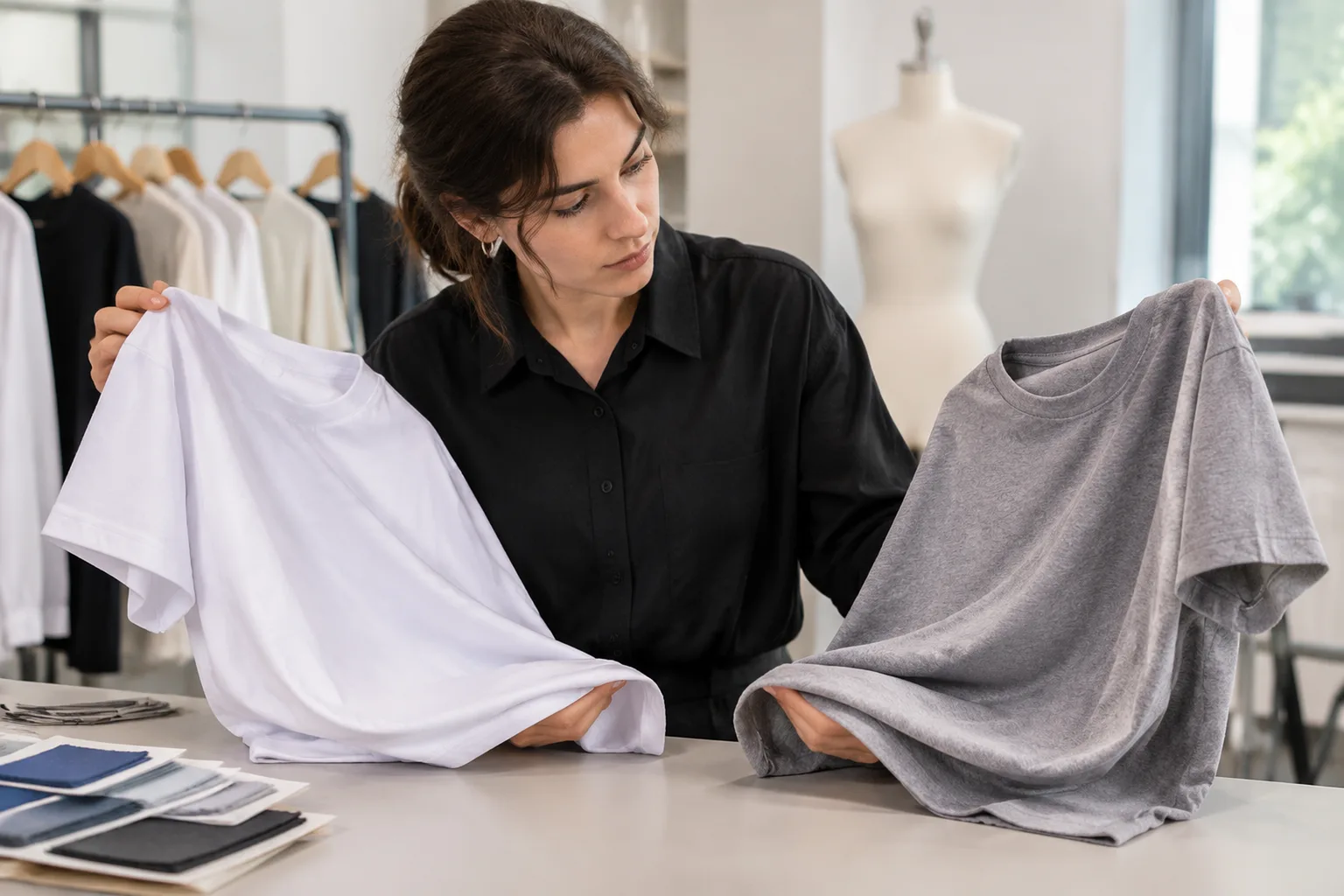
Compare physical swatches under the same conditions, not a heavy sample against a lightweight one with a different composition and finish. Record each candidate’s stated GSM, fiber content, knit structure and finish so a difference in feel has a plausible explanation.
Check the qualities that matter to the product:
- Drape: Hold or hang each swatch in the same way. A fabric that looks substantial on a table may fall differently once cut into a shirt.
- Opacity: View the fabric over a consistent background and in the lighting where it is likely to be worn. Do not infer coverage from weight alone.
- Surface: Look for the texture, smoothness and consistency needed for the design and decoration. If printing is planned, assess a test on the actual fabric; preparation and surface condition can affect processing.
- Recovery: Stretch the fabric in the directions relevant to wear, then observe whether it returns as expected. This is a useful screening check, not a substitute for an agreed performance method.
Swatches help narrow choices, but they cannot fully predict how a garment will fit or behave. Review a sample garment when proportions, seam handling or decoration placement could change the result. When care response matters, compare samples after the intended wash and drying method, noting changes in dimensions, shape, surface and print. Keep the approved reference and record what was checked so later production can be assessed against the same expectations.
Confirm Performance Needs Separately
Turn the product brief into separate requirements rather than using GSM as a shortcut. For example, a lightweight shirt intended for layering may need a particular drape and acceptable opacity; a structured graphic tee may need a surface that suits its print method and holds its intended shape. In both cases, the required weight is only one part of the specification.
List the properties that affect the intended use, such as dimensional change after care, seam or fabric strength, air permeability, opacity, stretch recovery, or print appearance. Not every project needs every check. Choose based on the wearer, construction, decoration and consequences of a mismatch. Where a property is critical, agree how it will be evaluated, on which sample or finished garment, and under what conditions. Test methods measure defined properties; they do not establish that a garment is universally “high quality.”
Give the manufacturer a clear written brief: target GSM and how it is stated, fiber content, knit structure, finish, intended use, decoration, care instructions and any agreed performance checks. Identify which sample is the approved reference and what changes require review. This makes it easier to distinguish a weight variation from a change in construction or finish, and to discuss any deviation before bulk production.
For a specific T-shirt, send the intended fit, wearer and decoration alongside the fabric requirements when you request a manufacturing quote. Ask the manufacturer to confirm which sample and checks will be used for your project before approving the fabric.
Frequently Asked Questions
Is a heavier T-shirt always better?
No. Higher GSM means more fabric mass per area, not automatically better durability, comfort, opacity or construction. A heavier fabric may suit a structured silhouette or substantial hand, while a lighter one may work better for warm weather or layering. Choose for the end use, then assess the properties that matter independently.
Can two fabrics share GSM but feel different?
Yes. Fiber content, yarn, knit structure and finishing can change thickness, surface, stretch, stability and drape even when fabrics have the same GSM. Compare swatches with their specifications recorded, and review a garment sample when fit, sewing or decoration could affect the result.
Should I approve fabric from a swatch alone?
A swatch is useful for comparing hand, surface and initial drape, but it cannot show every garment-level outcome. Request a sample garment when fit, seams, print placement or construction matter. If wash response is important, agree the care conditions and evaluate an appropriate sample after washing before approving the fabric.