

Golf tournament apparel planning starts with the date the polos must be available, not the date a factory expects to finish production. Buyers can use Golf Clothing as a starting point for the product category, then work backward through garment selection, sponsor logo approval, size collection, sampling, production, inspection, shipping, and venue distribution. This approach helps clubs, organizers, sponsors, and procurement teams identify decisions that must be made early and request a delivery-feasibility review based on the actual destination and event date.
The key rule is simple: separate factory completion from destination arrival. A polo that leaves production on time can still miss the tournament because of inspection, transit, customs, receiving, or participant distribution. The sections below turn that risk into a practical planning sequence.
Lock the Tournament Date First: Build Backward From Venue Arrival
Start with the date the apparel must be at the venue or distribution point. Treat the tournament date as fixed, then add the time needed for receiving, inspection, packing, and handing garments to participants. The resulting venue-arrival date becomes the control date for the entire order.
Work backward through the major decision gates: destination arrival, transport and customs, factory completion, bulk production, pre-production sample approval, artwork approval, quantity and size lock, and initial product selection. Each gate depends on the previous one. For example, bulk production should not be released while sponsor artwork or the final size breakdown remains open.
A practical planning map should distinguish these dates:
- Venue arrival: when the complete and correctly packed order must be available for use.
- Inspection and packing: time for checking garments, decoration, sizes, labels, quantities, and carton information.
- Transit and customs: the route-dependent period between shipment and destination receipt.
- Factory completion: when production is finished, which is not the same as delivery.
- Approval gates: the deadlines for garment choice, artwork, quantities, and any representative sample.
Use a buffer between expected arrival and the tournament. The buffer should reflect the buyer’s tolerance for transport disruption, customs review, receiving delays, and on-site distribution work. Do not fill this plan with generic lead-time figures unless the manufacturer and shipping route have confirmed them for the actual order.
Illustrative example only: a buyer might place venue arrival at the end of the plan, then reserve a separate block before it for receiving and inspection, another for transit, and another for production. The exact duration of each block must be confirmed from the destination, garment route, quantity, decoration, approvals, and shipping method. It is not a Ninghow lead-time commitment.
When the event date is close, ask for a delivery-feasibility assessment rather than assuming an automatic rush option. Submit the tournament location, required arrival date, garment route, estimated quantity, sponsor artwork status, size information, and shipping destination together. A manufacturer can then assess the project against its current order details, subject to confirmation.
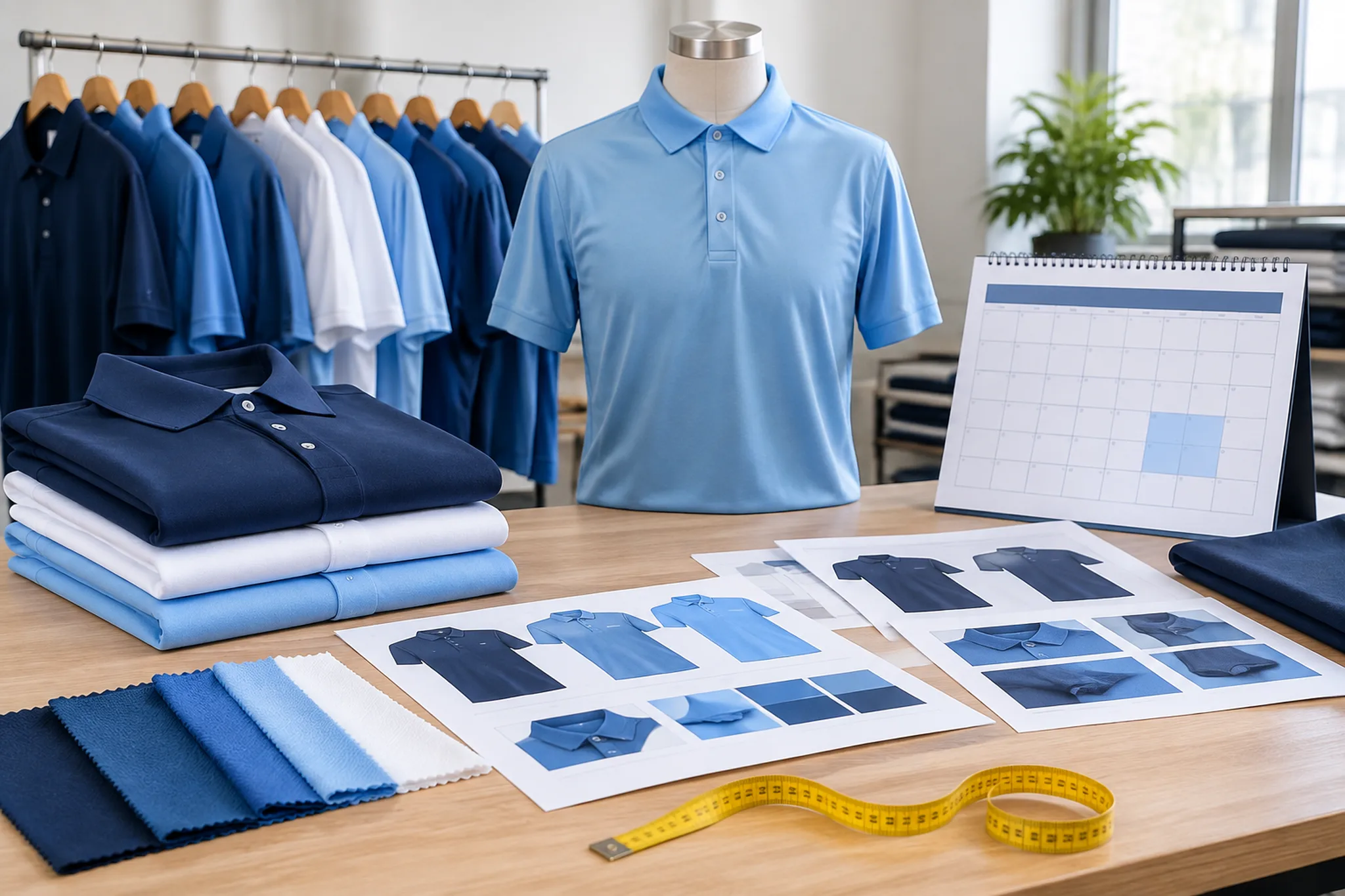
Choose Stock-Based Decoration or Custom Polo Development by Risk, Time, and Sponsor Needs
The choice between a stock-based decorated polo and custom polo development is primarily a risk decision. A stock route may reduce development work when the garment, colors, decoration surface, and sizes are readily available. Custom development may be justified when fit, fabric, collar, placket, coordinated panels, or several sponsor placements are central to the event brief.
| Decision factor | Stock-based decoration | Custom polo development |
|---|---|---|
| Available time | Potentially suitable when the base garment can be approved quickly | Requires more development and approval gates |
| Garment control | Uses an available base style subject to confirmation | Allows the buyer to define fabric, collar, placket, fit, and details |
| Branding | Best for confirmed positions and compatible decoration | Useful for coordinated placements, panels, or more complex branding |
| Quantity risk | Depends on confirmed stock, colors, and size availability | Depends on development, material, and production confirmation |
| Fallback | May offer a simpler route if the custom brief is too late | May offer better control when the event plan allows development time |
A stock option does not remove the approval burden. The buyer still needs to approve the actual garment color, logo position, decoration method, size breakdown, and delivery feasibility. Ninghow’s public scope includes polos and golf-related sportswear, while the specific stock availability and route remain order-dependent. Listed decoration options include screen printing, sublimation, embroidery, and heat transfer; each must be checked against the actual fabric, logo size, placement, and care requirements.
Hypothetical example 1: A club has limited time, one simple sponsor mark, and a straightforward chest placement. The available evidence is a confirmed stock polo, approved artwork, an agreed decoration method, and a workable size list. The evidence gap is whether the selected garment and decorated sample can reach the venue by the required date. Outcome: Clarify delivery feasibility and approve the physical result before release.
Hypothetical example 2: An organizer has more development time, several sponsors, and coordinated branding across the chest, sleeve, and back. The available evidence is a defined polo brief and sponsor artwork in progress. The evidence gap is the approved fit, fabric, placement, and final artwork register. Outcome: Go with custom development only after those approvals and the delivery plan are confirmed.
Use the stock route when speed and simplicity outweigh design control. Use custom development when a precise fit, coordinated appearance, or multiple sponsor requirements would make a basic decorated garment too restrictive. In either case, confirm the actual garment, decoration compatibility, quantities, and production route before treating the plan as executable.
Create a Sponsor Logo Approval Register Before Artwork Enters Production
Create one sponsor logo approval register before artwork enters production. The register should give every logo version a clear owner, location, physical reference, and approval status. A single sponsor mark may need separate approval when its size, placement, color treatment, or decoration method changes.
At minimum, record the sponsor name, artwork filename or version, garment color, placement, dimensions, colors, decoration method, sample status, authorized approver, approval date, and change history. Assign a unique reference to each combination rather than tracking only the total number of logos.
- Nominate 1 authorized approver for each sponsor and identify the buyer-side final approver.
- State whether approvals run in parallel or must be completed in sequence.
- Review the smallest lettering, the most detailed mark, and the largest decoration area on physical garment material.
- Compare the computer mockup with the actual decorated surface before bulk approval.
- Block unapproved artwork versions from production files and packing references.
For small embroidered sponsor lettering, legibility deserves a specific review; artwork size, location, and color can change the approval requirement even on the same base garment. The relevant technical guidance is limited to that issue and does not establish a universal size threshold or guaranteed result.
If a sponsor approves late, identify the missed decision immediately, record the effect on the garment and schedule, and trigger the agreed fallback. Possible buyer-side fallbacks include using an already approved version, removing the late logo from the affected quantity, or moving that sponsor placement to a separately reviewed route. Do not allow an unapproved logo to enter bulk production simply because the tournament date is approaching.
Lock the Size Breakdown and Quantity Cutoff Before Bulk Release
Separate the early estimate from the final size-and-quantity decision. Tournament registration can remain fluid, and a total unit count does not show whether every color, size, sponsor version, decoration route, and destination is covered.
Set 3 buyer-side milestones: an early quantity estimate for feasibility review, a final size-and-quantity cutoff for bulk release, and a written consequence for changes after that cutoff. Use registration data, historical participant information, and a buyer-defined reserve as planning inputs. Do not assume a standard size ratio or overage percentage without project evidence.
Use this copyable quantity brief:
- Garment and color: ____________________
- Sponsor or logo version: ____________________
- Decoration route and placement: ____________________
- Size breakdown: ____________________
- Destination and venue-arrival date: ____________________
- Packing format: prepacked allocation / open-size packing
- Final cutoff and approver: ____________________
- Post-cutoff change rule: ____________________
| Variant | Size mix | Logo version | Packing | Destination |
|---|---|---|---|---|
| Color or SKU | List each size and quantity | Reference approved artwork | Prepacked or open-size | Venue or receiving point |
Choose prepacked or open-size packing according to the receiving and distribution process. Prepacked allocations can support named participant or group distribution; open-size packing can preserve flexibility when final allocation remains uncertain. Confirm the required format, carton marks, barcode files, and destination handling for the actual order.
Finally, keep 3 types of tolerance separate: quantity tolerance, measurement tolerance, and defect acceptance. A shipment can meet a total-unit target while still having the wrong size mix or logo version. The final check should compare physical garments, the approved size ratios, decoration, labels, and packing-list information before release.
Freeze the Polo Specification and Approve a Representative Pre-Production Sample
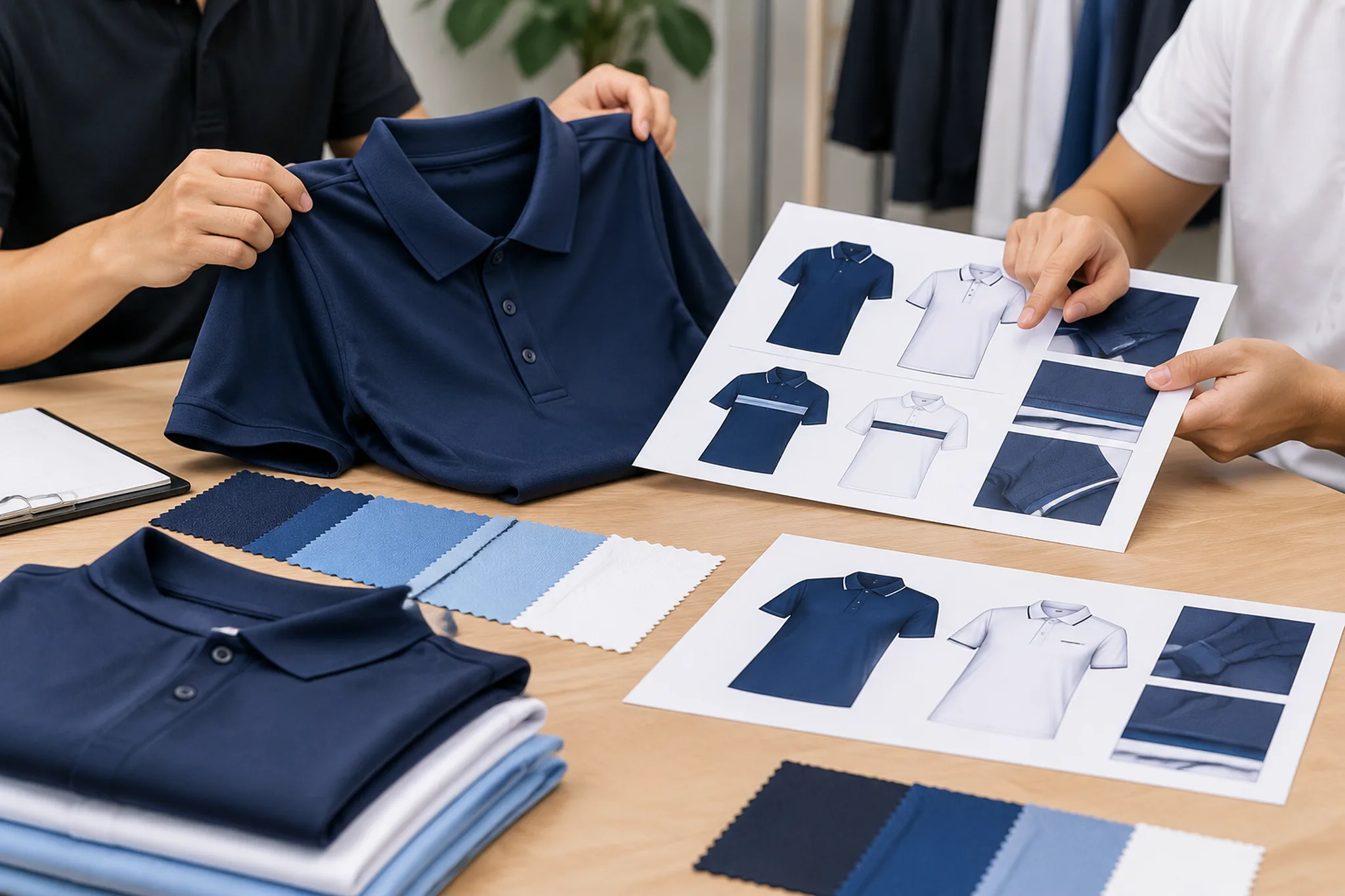
That final size mix is only useful if every unit is tied to a defined garment and decoration standard. Freeze the polo specification and approve a representative pre-production sample before bulk material purchasing or production release.
Record the fabric requirements, collar and placket construction, fit, garment color, size chart, logo positions and dimensions, decoration method, labels, care information, and packing instructions. Treat these choices as connected: a logo that looks clear on a screen may appear different on the selected fabric, and decoration can affect the look and feel of the garment.
| Area | Decision to lock | Buyer verification | Approval evidence |
|---|---|---|---|
| Fabric and color | Material specification and physical color standard | Does the sample match the agreed appearance under the agreed viewing condition? | Approved swatch or sample and recorded specification |
| Collar and placket | Shape, construction, and visible proportions | Does the collar sit as intended and does the placket lie flat? | Representative garment sample |
| Fit and sizing | Measurement chart and fit intent | Are measurements and fit acceptable across the requested size range? | Approved size chart and fit comments |
| Sponsor decoration | Artwork version, position, dimensions, colors, and method | Is the mark legible and correctly placed on the actual fabric? | Approved artwork and decorated sample |
| Labels and packing | Label content, care information, and packing format | Do these match buyer and receiving requirements? | Approved label details and packing instructions |
A color code identifies a target; it does not by itself approve the physical color. Where color is important, agree on a physical standard or approved sample and the viewing condition used for review. Likewise, assess decoration on the selected fabric rather than approving only a digital rendering. For small embroidered lettering, the legibility of sponsor lettering merits particular review; artwork size, position, and color can each affect approval.
If fabric use is quoted, ask for the estimate basis rather than relying on garment weight or a generic allowance. Relevant inputs include the pattern, usable fabric width, size mix, shrinkage assumptions, and waste assumptions. Keep estimated net consumption separate from procurement allowances.
Any proposed material substitution should be recorded as a change, not treated as equivalent because a headline specification appears similar. Review the affected appearance, fit, processing, decoration, and any product-specific checks or approvals. Ninghow’s published order process places sample approval and order confirmation before bulk material purchasing; the order should still define the approved version and any revalidation needed after a change. A project planning guide can help organize the development brief.
Protect the Venue-Arrival Date With Change Control, Quality Checks, and Packing Rules
Once the representative sample and size matrix are approved, treat them as the release baseline. Bulk release should wait until the garment sample, sponsor logo versions, final quantity and size matrix, size chart, labels, packing instructions, destination, and named sign-offs are all documented.
Late artwork or quantity changes need a written impact check before acceptance. For artwork, compare practical fallback choices: simplify a placement, reduce decoration complexity, use another route only if it is approved for the garment, or revisit a stock-based option. Each choice can change appearance, approval needs, cost, or timing, so none should be assumed interchangeable.
For quantity changes, ask whether the order has reached material commitment or cutting, and whether the change affects a specific size, color, or logo variant. A late increase or mix change may affect material availability and the venue-arrival date even when the total quantity changes little. Record the requested change, affected versions and units, cost or time impact where applicable, responsible approver, and checks that must be repeated. Do not proceed on an informal message that leaves the approved version unclear.
Before shipment, align the inspection and packing checks with the order’s agreed requirements. Compare garments with the approved sample; verify measurements and size ratios, decoration, labels, packing-list information, and carton marks. Check barcode or scan information when the order uses it. Receiving teams should reconcile physical garments against the packing list and variant matrix, not just carton totals: the right total can still contain the wrong size or sponsor version.
Ninghow’s published quality-control guidance includes checks such as size ratios, measurements, decoration, labels, and packing-list consistency. The buyer and supplier should agree the applicable inspection and acceptance rules for the order; a general process description is not a claim that every unit is defect-free or that a particular inspection level applies.
Submit a Golf Tournament Apparel Feasibility Brief Before Requesting a Quote
Bring the decisions into one feasibility brief so the delivery review can be based on the actual event requirements. State the tournament location and date, required venue-arrival date, destination, garment route, estimated quantity, final size cutoff, size mix, and any required distribution format. Attach the current polo specification, size chart, sponsor logo files, logo register, event schedule, and receiving instructions.
Name the person authorized to approve the garment and each sponsor contact responsible for artwork. Mark each logo as approved, pending, or conditional, and identify which version, placement, dimensions, colors, and decoration method are intended. Include the sample approval gate and any fallback that the buyer would accept if artwork or materials change.
Ask the manufacturer to assess the plan against the venue-arrival date, including the destination and any required packing or inspection steps. The date to evaluate is venue arrival, not simply factory completion: transit, customs, receiving, and distribution also need space in the schedule. Request confirmation of the dates and assumptions that can be supported for this specific order; do not treat an unqualified rush request as a delivery commitment.
Before sending, check that the event date and arrival buffer are defined, the stock-based or custom route is selected, the sponsor approval register is current, the size cutoff is set, the sample gate is clear, and change fallbacks are documented. Ninghow describes itself as an apparel manufacturer headquartered in Shenzhen, China; project feasibility remains dependent on the submitted specification and order details.
Send the tournament location and date, required venue-arrival date, garment and quantity details, size mix and cutoff, sponsor logo files with approval status and named approvers, decoration and packing requirements, and delivery destination through Ninghow’s contact page for a project review.
Frequently Asked Questions
When should tournament apparel be ordered?
Start as soon as the tournament date and required venue-arrival date are known. Work backward through sample approval, sponsor sign-off, final quantity and size cutoff, production, inspection, shipping, and distribution. Custom development generally requires more decisions than stock-based decoration, so the route and approval schedule should be assessed together.
What information is needed to check a tournament apparel deadline?
Provide the tournament location and date, required venue-arrival date, delivery destination, garment route and specification, estimated quantity and size mix, final size cutoff, sponsor artwork and approval status, decoration details, sample requirements, and packing or receiving instructions. Name the decision-makers so pending approvals and schedule assumptions are visible.
What if sponsor logos are approved late?
Ask the sponsor to confirm the exact artwork version and identify what remains unresolved. Then review options such as simplifying placement, reducing decoration complexity, or using an already approved alternative. Check the effect on appearance, cost, and timing before authorizing a change; do not release bulk production against unapproved artwork.
Can custom polos be replaced by stock-based options?
Potentially, if a suitable stock garment meets the event’s requirements for fit, color, sizing, and decoration. Compare it with custom polo development against sponsor needs, sample approval, and the venue-arrival date. Confirm actual availability and assess decoration on the garment; a stock route is not an automatic delivery guarantee.
Which date should a production quote commit to?
Use the required venue-arrival date as the planning and feasibility target, not factory completion alone. The schedule also needs to account for inspection, packing, transit, customs where applicable, receiving, and distribution. Ask the supplier to confirm order-specific dates and assumptions rather than relying on an unspecified production or rush promise.
How should size breakdowns be handled when the player list is not final?
Keep an early estimate separate from the final quantity and size cutoff. Track quantities by garment color, size, and sponsor-logo version in a variant matrix, then set a named owner and date for the final update. Confirm whether later changes affect material commitment, cutting, or the venue-arrival plan before accepting them.