

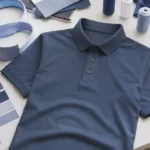
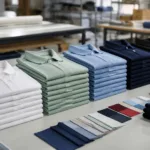
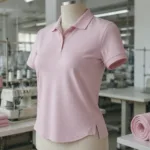




A useful custom clothing manufacturing project begins with a defined buyer question, not a fabric swatch or a logo file. Brand founders, uniform buyers, and product developers need to decide what the garment must do, who will wear it, how it will be customized, and what production constraints are acceptable before requesting prices. This approach turns an open-ended sourcing request into a specification a manufacturer can sample, cost, and produce consistently.
For organizations building coordinated uniforms, polo shirt manufacturing options for coordinated team programs can provide a practical starting point for comparing piqué and jersey fabrics, collar construction, logo methods, size runs, and repeat-order planning. We support this kind of development by aligning fabric selection, fit refinement, private-label details, sampling, and bulk production checkpoints with the intended workplace, team, retail, or event use.
Start With the Buyer Question Before Choosing a Garment
The first decision is the use case. A polo for front-of-house staff has different priorities from a golf polo, a trade uniform, or a promotional giveaway. The same is true for T-shirts, hoodies, jackets, shorts, and performance apparel: the wearer, climate, laundering frequency, and brand position should determine the specification.
Write a short product brief that answers the questions a factory needs to price and develop the item accurately. It does not need to be a finished technical pack at the beginning, but it should eliminate avoidable assumptions.
- Who will wear the garment, and in what environment?
- Is the priority durability, performance, comfort, presentation, or low unit cost?
- What silhouette and fit are required: regular, fitted, relaxed, unisex, or a gender-specific block?
- Which colors, sizes, logos, labels, and packaging elements are mandatory?
- What order quantity, delivery date, and repeat-order expectation apply?
Key takeaway: A manufacturer can recommend options, but only a clear use scenario reveals which trade-offs are appropriate.
How Custom Clothing Manufacturing Decisions Connect
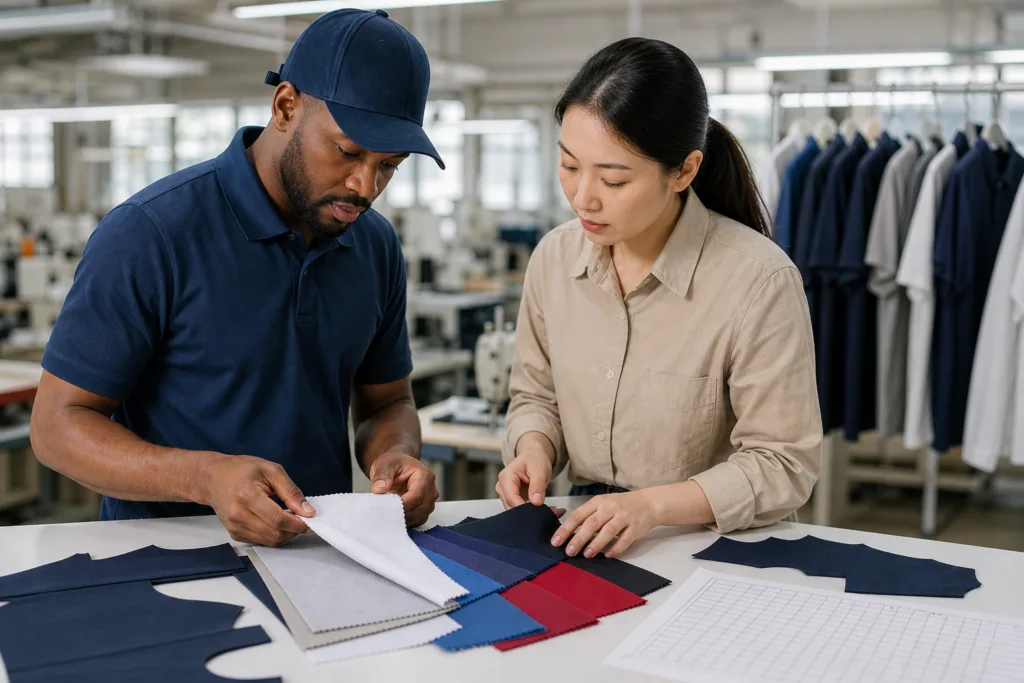
Fabric, construction, decoration, and MOQ should be evaluated together. A heavyweight cotton garment may create a premium hand feel, but it also changes sewing time, shrinkage control, freight weight, and the suitability of some prints. A highly detailed embroidered logo can look durable on a polo chest, yet it may require stabilizer, backing choices, and a layout that does not distort a lightweight knit.
In our apparel production work, we advise buyers to confirm the product architecture before refining cosmetic details. That means identifying the fabric category, garment block, critical measurements, construction level, and decoration method first. A color change is usually simpler than changing a collar pattern, fabric composition, or logo process after the sample is approved.
Choose Fabric by Wear Conditions, Not Only Fiber Name
Fiber content alone does not describe performance. Cotton, polyester, viscose, elastane, and blends can each vary significantly with yarn type, knit or weave structure, finishing, weight, and dyeing. Ask for composition, GSM, construction, color standard, and expected care behavior rather than relying on a generic description such as “premium cotton.”
| Material direction | Typical strengths | Buyer checks |
|---|---|---|
| Cotton jersey | Soft hand feel and familiar comfort | Shrinkage, pilling, colorfastness, recovery after washing |
| Cotton-polyester piqué | Structured polo appearance and practical durability | Weight, collar compatibility, moisture handling, snag resistance |
| Polyester performance knit | Lightweight, quick-drying potential, sublimation suitability | Opacity, snagging, odor-management claims, print-through |
| Stretch blend | Mobility and shape recovery | Elastane percentage, rebound, heat sensitivity, long-term recovery |
GSM is useful for comparing weight, but it is not a quality score. A 180 GSM jersey can feel dense or soft depending on yarn and finish, while a 220 GSM piqué can feel airy because its knit has an open texture. Request swatches or a fabric hanger before approving a development sample when hand feel is central to the product.
For buyer projects involving coated fabrics, specialty materials, or regulated categories, compliance should be checked early rather than after bulk materials are booked. The U.S. Consumer Product Safety Commission summarizes general wearing-apparel flammability requirements, while certain products, including children’s sleepwear, may have additional requirements. Confirm the applicable market and product category with the buyer’s compliance team.
Build Fit and Size Consistency Into the Pattern
Fit is a pattern-development issue, not just a size-label decision. A manufacturer needs a base-size measurement chart, tolerance expectations, and grade rules that describe how the garment changes across the size range. Without them, a sample can look acceptable in one size while larger or smaller sizes fit unpredictably.
For polos, the collar, placket length, chest ease, sleeve opening, and body length strongly affect the finished impression. Corporate programs may prioritize a consistent, approachable regular fit, while sport or golf brands may prefer mobility through the shoulder and a more shaped body. Buyers evaluating custom corporate polo shirt styles for branded teams should identify whether one unisex block can serve the program or whether separate fit blocks will reduce wearer complaints.
- Provide a target size chart with point-of-measure definitions.
- State which measurements are critical, such as chest, body length, sleeve length, and collar opening.
- Confirm shrinkage allowance before finalizing the chart.
- Approve grading logic, not only the base-size sample.
- Record acceptable tolerances in the bulk specification.
Match Logo Application to Fabric, Use, and Order Plan
The right logo method is the one that fits the artwork, material, expected wear, and production quantity. Screen printing can be efficient for bold designs and larger runs, while embroidery creates a textured, durable identity on many polos, caps, jackets, and workwear pieces. Heat transfer can suit small runs or multi-color artwork, and sublimation is generally planned into compatible polyester fabric before cutting.
| Method | Good fit | Planning consideration |
|---|---|---|
| Embroidery | Chest logos, work polos, outerwear | Stitch count, backing, fabric distortion, small-detail legibility |
| Screen printing | Bold graphics on tees and fleece | Color count, print placement, curing, hand feel |
| Heat transfer | Names, numbers, detailed small-run graphics | Adhesion, wash testing, heat sensitivity of the fabric |
| Sublimation | All-over sportswear on polyester | Artwork setup, panel alignment, fabric compatibility |
Decoration placement should be dimensioned from stable garment reference points, not described as “near the chest.” This is especially important for a small embroidered mark, where even a modest shift is visible. Buyers can use embroidered polo logo placement and application guidance to frame artwork size, position, and production questions before sampling.
At Ninghow, we ask for vector logo files where possible and confirm decoration on the actual sample fabric. This helps expose issues such as thread coverage on textured piqué, fine-line loss, show-through, or an application that feels too rigid for the garment.
Plan Sampling, MOQ, and Lead Time as One Workflow
Sampling is the controlled stage for resolving material, fit, color, and decoration questions. It should not be treated as a miniature bulk order. A sample may use available fabric or provisional trims while the buyer is still deciding, but the approved pre-production sample should represent the confirmed bulk specification as closely as practical.
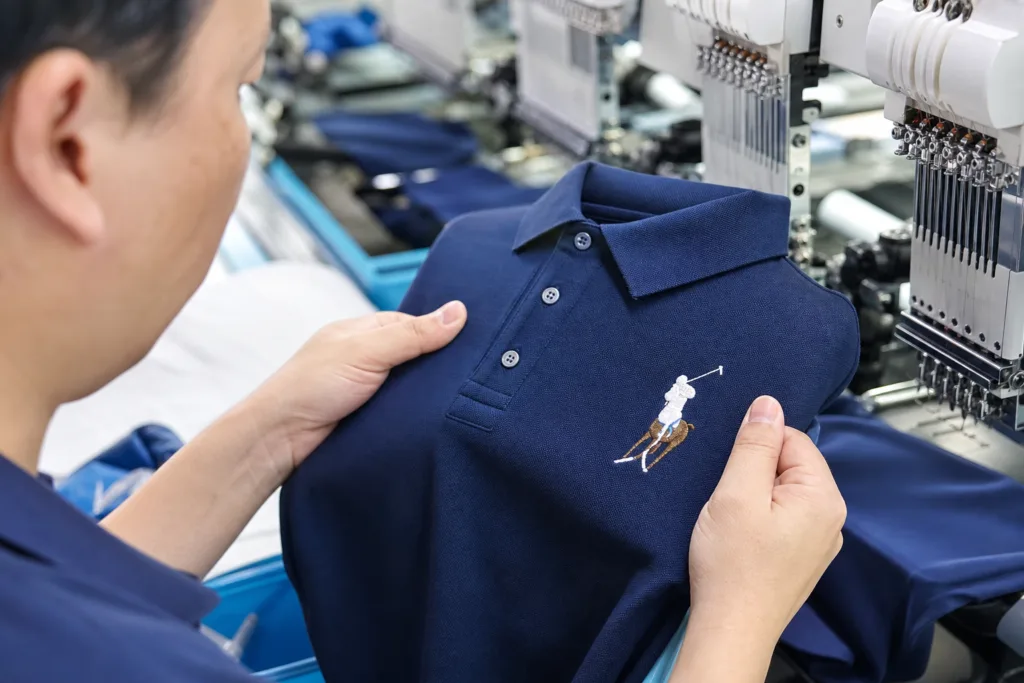
MOQ depends on more than the factory’s sewing capacity. Custom-dyed fabric, woven labels, special zippers, multiple colors, and individual packaging each introduce supplier minimums. Lower quantities are often more realistic when buyers use available fabrics, standard components, fewer colorways, and a shared decoration setup.
| Stage | Buyer approval | Production risk reduced |
|---|---|---|
| Development sample | Silhouette, initial fabric direction, logo appearance | Wrong product concept or fit block |
| Revised sample | Measurements, construction, colors, trims | Late specification changes |
| Pre-production sample | Bulk-ready garment and packing details | Mismatch between approved sample and bulk |
| Bulk inspection | Workmanship, measurement, decoration, packing | Inconsistent finished order |
Lead time should be discussed as a sequence: fabric booking or development, sample review, material arrival, bulk cutting and sewing, decoration, finishing, inspection, and packing. A fixed event date requires earlier decisions, not simply faster production. Changes to color, artwork, labels, or size ratios after material booking can affect the schedule and cost.
Set Quality Control Checkpoints Before Bulk Production
Quality control is most effective when the buyer and manufacturer agree on what “acceptable” means before production begins. Inspection at the end matters, but it cannot fully correct an unclear color standard, a missing size tolerance, or an unapproved logo location. Define checkpoints during fabric receipt, cutting, inline sewing, decoration, final measurement, and packing.
For daily uniforms, abrasion, wash durability, collar recovery, color consistency, and logo stability are often more relevant than appearance at first delivery. Projects using work polo shirt options for daily uniform use should specify likely wash frequency and working conditions so the fabric and construction can be evaluated for the real use case.
- Approve a color reference and identify where color variation is unacceptable.
- List critical measurements and permitted tolerances.
- Confirm button, zipper, thread, label, and packaging specifications.
- Check logo position, artwork scale, and adhesion or stitch quality.
- Set carton assortment, size stickers, folding method, and shipping marks.
Key takeaway: The bulk order should be inspected against an agreed specification and approved sample, not against memory or a product photo.
Common Planning Mistakes That Delay Apparel Production
The most expensive sourcing errors are often specification gaps. Buyers may request a “similar” garment without defining the fabric, expect a sample to solve every decision at once, or approve a photo without reviewing measurements and construction. These gaps create revisions because each participant interprets the request differently.
Another frequent issue is choosing fabric by appearance only. A long-sleeve work polo may need warmth, durability, and collar stability in addition to visual consistency. Reviewing long-sleeve polo fabric choices for workwear can help teams ask more precise questions about cotton content, weight, and work conditions.
Use This Order-Preparation Checklist
- Product brief with wearer, channel, climate, and performance priorities.
- Tech pack or reference garment with measurement chart and fit comments.
- Fabric composition, construction, GSM target, and approved color reference.
- Artwork files, decoration method, position dimensions, and size limits.
- Label content, hangtag, polybag, folding, carton, and barcode requirements.
- Size breakdown, color breakdown, MOQ assumptions, delivery target, and inspection criteria.
Choose a Manufacturer That Can Clarify the Production Plan
A suitable manufacturing partner should ask practical questions before confirming a final price or delivery promise. Useful early communication covers fabric availability, pattern status, sample purpose, decoration method, trim minimums, packing requirements, and approval responsibility. A supplier that translates these choices into a written production specification helps reduce ambiguity for both teams.
For private-label development, provide the brand assets and decision hierarchy early: which elements are fixed, which may be substituted, and who can approve changes. We find that this is especially useful for buyers balancing a target price against hand feel, customization, and launch timing. It makes cost-performance choices visible before they become bulk-production issues.
Bring the Brief, Sample, and Bulk Plan Together
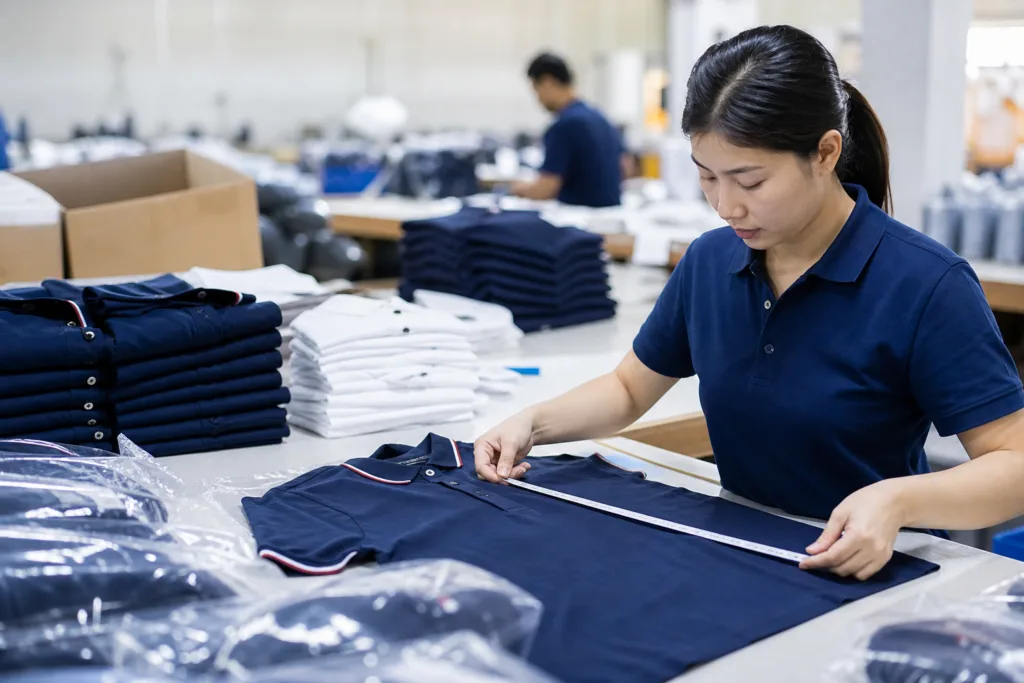
Strong custom clothing manufacturing is a sequence of informed approvals. Start with the wearer and garment role, select material and fit for that use, test decoration on the actual fabric, approve a bulk-ready sample, and document the inspection and packing standard. This framework works for a single private-label style and for a multi-piece uniform program.
The practical goal is not to add complexity. It is to make the decisions that control comfort, appearance, durability, and delivery visible early enough to manage. With a complete brief and disciplined sample review, buyers can move into bulk production with clearer expectations on MOQ, lead time, and consistency.
Frequently Asked Questions
What information should I send before requesting a custom clothing quote?
Send the garment type, target quantity, colors, size range, fabric direction, logo files, decoration method, delivery market, and desired delivery date. A measurement chart, reference images, and packaging requirements improve quote accuracy because they show the manufacturer which materials, operations, and trim minimums apply.
How many samples are usually needed before bulk production?
Most projects need at least one development sample and one bulk-ready pre-production sample, although complex fits or custom fabrics may require more revisions. The right number depends on how complete the brief is and whether fabric, pattern, color, or decoration still needs approval.
Can a low MOQ use custom fabric and private labels?
It can, but low MOQ is more achievable when fabric and trims are available rather than newly developed. Custom-dyed fabric, woven labels, special hardware, and multiple colorways may carry separate supplier minimums, so buyers should confirm each component before promising a final order quantity.
How should I choose between embroidery and printing for a polo shirt?
Choose embroidery when a textured, durable chest identity suits the fabric and artwork, and choose printing when the design needs broad color coverage, fine graphics, or a lighter hand feel. Test the chosen method on the intended polo fabric because piqué texture, garment weight, and logo detail can change the result.
What quality checks matter most for uniform orders?
Measurement consistency, color consistency, logo position, sewing workmanship, collar shape, label accuracy, and carton assortment matter most for uniform orders. The inspection standard should also reflect actual wear conditions, especially when garments will be laundered frequently or used in active work settings.
How can buyers reduce delays in custom clothing manufacturing?
Buyers reduce delays by approving fabric, fit, artwork, size ratios, labels, packaging, and the pre-production sample before bulk materials and production are released. Assigning one decision maker and recording changes in a single specification also prevents conflicting feedback from reaching the factory.