





Choosing a custom clothing manufacturer determines far more than where garments are sewn. The right partner influences fabric performance, fit consistency, decoration durability, unit economics, delivery planning, and whether a brand can repeat a successful product at scale. For private label and bulk apparel buyers, the best decision comes from matching a factory’s actual development and production capability to a clearly defined product brief.
If your range includes uniforms, golfwear, or branded polos, custom polo shirt manufacturing support can connect fabric selection, collar construction, logo decoration, size development, and bulk planning in one workflow. At Ninghow, we find that early alignment on the end user, wash frequency, logo method, and quantity prevents many avoidable sampling revisions later.
Start With the Product and Commercial Plan, Not the Supplier Search
A manufacturer can only quote and advise accurately when the buyer has defined the project. Before comparing factories, clarify what you are making, who will wear it, the required performance level, target retail or program price, expected quantity, and required delivery date.
For example, a lightweight promotional tee, a premium streetwear hoodie, and a hard-wearing employee polo may all appear simple, yet they need different fabric weights, construction standards, trim choices, and inspection priorities. A factory that is strong in one category may not be the best operational fit for another.
- Garment category, silhouette, and intended wearer
- Fabric composition, target GSM, color, and hand feel
- Branding method, label set, hangtags, and packaging
- Size range, size ratio, grading requirements, and fit standard
- Estimated first order, repeat volume, and launch deadline
- Required destination-market labeling or testing expectations
Key takeaway: A detailed inquiry lets a manufacturer identify real risks early; a vague inquiry usually produces a vague price and an unreliable timeline.
Understand OEM, ODM, Private Label, and Fully Custom Development
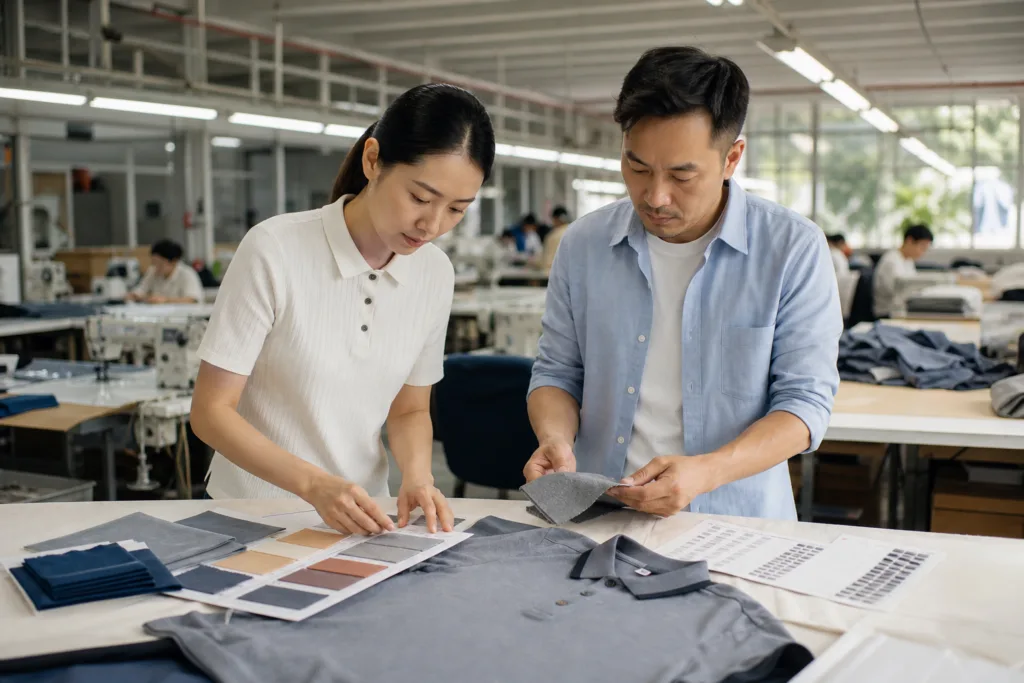
These terms overlap in everyday sourcing conversations, but the production model affects cost, speed, ownership of details, and MOQ. Buyers should ask a factory what is included rather than relying on labels alone.
| Model | What the buyer provides | Best use | Main trade-off |
|---|---|---|---|
| OEM | Design, specifications, artwork, and often a tech pack | Established products with defined requirements | Accuracy depends on complete documentation |
| ODM | Brand direction and selected factory base style | Faster launches using adaptable existing patterns | Less product exclusivity |
| Private label | Brand labels and selected product specifications | Branded essentials and curated collections | Customization depth varies by product |
| Fully custom cut and sew | Original concept, technical direction, and fit goals | Distinct silhouettes or technical products | More development time and higher setup cost |
From our manufacturing perspective, private label is not automatically “off the shelf.” It can range from applying woven labels to a proven blank through to changing fabric, fit, pockets, stitching, wash treatment, and packaging. Confirm exactly which elements can change without resetting the development process.
How to Evaluate a Custom Clothing Manufacturer’s Product Capability
Look for evidence that the supplier understands your garment category at the construction level. Ask how they handle collar shape retention, seam reinforcement, shrinkage allowance, zipper selection, print adhesion, or stretch recovery as relevant to the product. Useful answers explain choices and limitations, not just say that everything is possible.
Check category and construction experience
Evaluate whether the factory routinely develops the categories you need: T-shirts, polos, hoodies, sweatshirts, jackets, pants, shorts, sportswear, or team apparel. For workwear-style polos, for instance, useful options may include reinforced plackets, stable rib collars, side vents, and embroidery-friendly chest areas; review custom work polo shirt options when those decisions are central to the project.
For products requiring unusual panel lines, utility pockets, or a proprietary silhouette, verify that the supplier can manage pattern work rather than merely decorate finished blanks. cut-and-sew support for durable work shirts is particularly relevant when construction must be developed around real use rather than adapted after production.
Choose fabric by end use, not by a swatch alone
Fabric composition and GSM shape both perceived quality and production behavior. Cotton-rich jersey may offer a familiar natural hand feel, while polyester or blends can support quicker drying, color retention, and active use. GSM indicates weight, but it does not independently confirm durability, softness, opacity, or recovery; knit structure, yarn quality, finishing, and garment construction also matter.
| Requirement | What to specify | What to check in sampling |
|---|---|---|
| Everyday T-shirt | Composition, GSM, shrinkage target, neck rib | Twist, pilling, wash hand feel, neckline recovery |
| Performance polo | Stretch, moisture handling, collar type, snag resistance | Movement, logo appearance, color consistency |
| Fleece hoodie | GSM, brushed or loopback interior, rib quality | Warmth, pilling, cuff recovery, seam bulk |
| Teamwear | Color matching, stretch, decoration method | Repeatability across sizes and panels |
Ask for fabric composition, weight tolerance, color standard, and wash expectations in writing. When performance claims or demanding wear conditions matter, a buyer can also align the quality plan with ASTM textile performance standards for fabric and apparel testing, selecting test methods appropriate to the fabric and end use rather than assuming one generic test covers every risk.
Fit, Sizing, and Patterns Decide Whether the Product Can Be Reordered
A good sample that cannot be repeated consistently is not production ready. The factory should work from a measurement chart with points of measure, tolerances, graded sizes, and clear fit comments. A tech pack is ideal, but a reference garment plus annotated measurements can provide a workable starting point for early development.
Buyers should distinguish between a visual prototype and an approved production standard. During fitting, review shoulder position, chest ease, body length, sleeve balance, pocket placement, and garment behavior after laundering. Corrections should be documented against the revised pattern and measurement specification, not left as verbal instructions.
- Request a base-size measurement sheet and grading logic.
- State whether the fit should be slim, regular, relaxed, or oversize.
- Approve fabric and color before judging final drape.
- Record every sample correction with photos and measurements.
- Keep the approved sample as the reference for bulk production.
Select Customization Methods That Suit the Garment and Order Size
Decoration should be chosen for material compatibility, artwork detail, wash durability, placement, and quantity. Screen printing is efficient for larger runs with suitable artwork, embroidery adds texture and perceived durability but can pull lightweight fabrics, heat transfer supports detailed small runs, and sublimation is best suited to compatible polyester constructions.
Labels, hangtags, care labels, polybags, folding instructions, and carton marks deserve the same clarity as the garment itself. Small omissions in a label statement or packaging count can delay a finished order even when the sewing is complete. Ninghow can support buyers in connecting these private label details to sampling and bulk production planning, so approvals cover the complete delivered product rather than only the garment shell.
Use Sampling to Reduce Bulk Production Risk
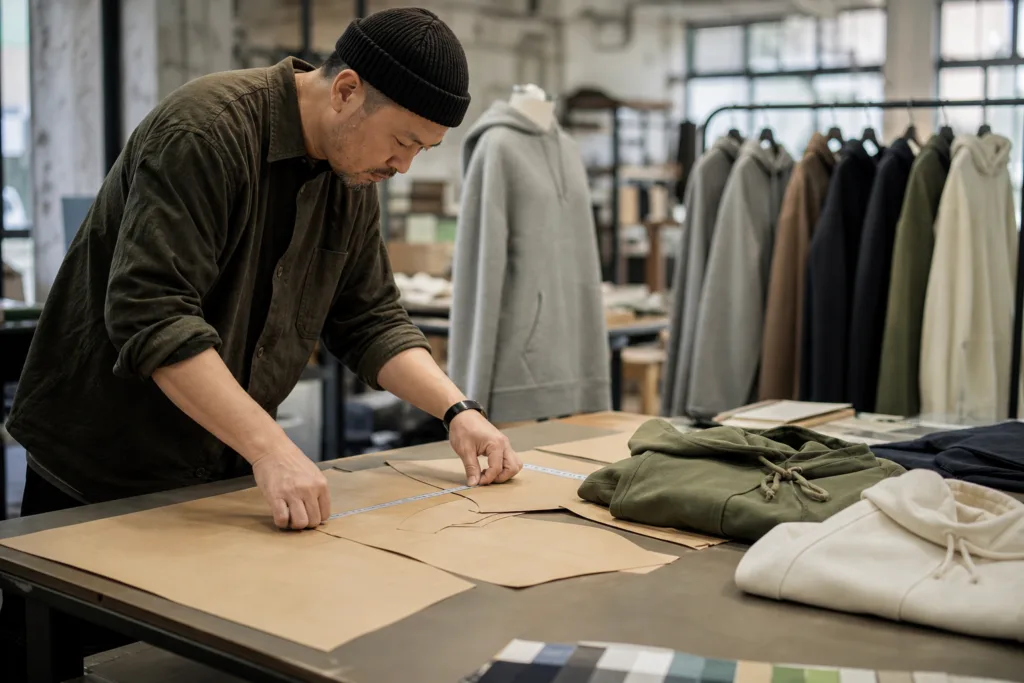
Sampling is the decision stage, not a formality. A development sample checks interpretation of the design; a revised fit sample confirms measurements and fabric direction; and a pre-production sample should represent the approved bulk standard as closely as possible. The exact sequence depends on complexity, available materials, and whether an existing pattern is being adapted.
Review samples under normal use conditions. Wash garments when shrinkage, color bleeding, print cracking, or hand feel are relevant. Wear active garments through movement; inspect embroidered areas from the inside; and compare all colors against an agreed standard. A manufacturer should capture approvals and changes in a clear record before bulk materials are committed.
Compare MOQ and Pricing on a Like-for-Like Basis
MOQ is a production-planning issue, not simply a sales policy. Custom fabric dyeing, special trims, multiple colors, and many size splits can all raise the practical minimum because mills and trim suppliers have their own quantities. A lower MOQ may be realistic when stock fabric, standard colors, or existing components are acceptable.
Do not compare only the headline unit price. One quote may include pattern development, labels, folding, inspection, and export packaging while another excludes several of those items. Request a specification-matched quotation with sampling fees, decoration setup, packaging, quality requirements, shipping terms, and payment milestones shown separately.
| Cost driver | Why it changes price | Buyer action |
|---|---|---|
| Fabric and GSM | Material quality and consumption change cost | Approve composition and weight before quoting |
| Order quantity | Fixed setup costs spread over more units | Share realistic repeat-order forecasts |
| Colors and sizes | More splits complicate cutting and inventory | Provide a quantity breakdown |
| Decoration | Stitches, colors, placements, and setup vary | Send production-ready artwork |
| Trims and packaging | Custom items have separate sourcing minimums | Specify every branded component |
Confirm Lead Times, Capacity, and Quality Control Before Ordering
A credible lead time separates development, material booking, bulk cutting and sewing, decoration, finishing, inspection, packing, and shipping preparation. It should also account for sample revisions, fabric availability, peak-season capacity, and approval delays. Promises without a production sequence are difficult to evaluate.
Quality control should be planned before bulk production, with checkpoints for incoming fabric, cutting, in-line sewing, decoration, finishing, measurements, packing, and final inspection. Buyers of uniforms and high-use garments should specifically discuss seam strength, shade variation, logo placement, measurement tolerance, and wash durability. Review the practical checkpoints used in apparel quality control for workwear production when building your own acceptance criteria.
Key takeaway: The most useful supplier is not the one that promises zero problems; it is the one that identifies likely variables, documents approvals, and has a clear method for controlling them.
Questions and Warning Signs When Comparing Suppliers
Ask manufacturers how they would approach your actual product, not only whether they can make it. Strong responses identify needed files, likely sample stages, fabric alternatives, MOQ constraints, and approval points. Compare communication quality alongside price because unclear communication often becomes an expensive bulk-production problem.
- Which parts of this product are produced in-house and which are sourced?
- What materials are available now, and which require a mill minimum?
- What sample type will be supplied and what does it prove?
- What measurement tolerances and inspection points will apply?
- What can change after sample approval without affecting delivery?
- How are defects, shortages, or approved changes documented?
Warning signs include a supplier quoting before confirming core specifications, refusing to show what is included, promising unusually fast custom production without material details, or treating sample comments casually. Another risk is a sample that looks acceptable but arrives without measurements, fabric details, or a revision record. Those missing documents make future consistency harder to protect.
Make the Final Choice for the First Order and Future Scale

Choose the custom clothing manufacturer that best matches your product complexity, documentation level, order volume, and growth plan. A startup may value guided development and workable low-MOQ choices, while an established brand may prioritize repeatable fabric supply, grading discipline, capacity planning, and robust quality records. Neither priority is wrong, but the factory relationship must fit the project.
Prepare an inquiry package containing artwork, references, a size chart, color requirements, quantity by color and size, label and packaging needs, target delivery date, and any mandatory performance expectations. This gives both sides a practical basis for pricing, sampling, and production decisions. The best partnership is built on visible specifications, realistic trade-offs, and approvals that remain useful when the next bulk order is placed.
Frequently Asked Questions
What is the difference between private label and custom clothing manufacturing?
Private label usually means applying your brand to a manufacturer’s available product platform, while custom manufacturing can include original fabric, pattern, construction, and finish decisions. Many projects combine both approaches by adapting an existing base pattern with custom labels, colors, and decoration.
What should I send when requesting a manufacturer quote?
Send garment images or a tech pack, fabric and color preferences, size chart, quantity by size and color, logo artwork, packaging requirements, target delivery date, and destination market. The more complete the brief, the more comparable and dependable the quote will be.
How many samples should I expect before bulk production?
Expect at least one development or fit sample and a final approved production reference for a custom product. More complex garments, new fabrics, intricate decorations, or major fit corrections may require additional rounds to confirm every specification.
Why does MOQ change between different apparel designs?
MOQ changes because fabric mills, trim suppliers, dyeing processes, decoration setup, and cutting efficiency all have practical minimums. Using stock materials and fewer color or trim variations can often make a smaller first order more feasible.
How can I compare two clothing manufacturer quotes fairly?
Compare quotes against the same specification sheet and confirm fabric, GSM, decoration, labels, packaging, sampling, inspection, shipping terms, and payment conditions. The lowest unit price is not the lowest total cost if essential development or finishing items are excluded.
What quality checks should be agreed before bulk apparel production?
Agree on approved sample reference, measurement tolerances, fabric and color approval, logo placement, seam and finishing expectations, packing standards, and final inspection method. Documenting these points before production gives the supplier a usable standard and gives the buyer a clear basis for acceptance.