








Many startups wait too long before contacting a manufacturer because they assume they need a perfect startup clothing tech pack, approved patterns, and finalized branding before a real conversation can begin. In practice, that is not true. A clothing manufacturer can usually start evaluating your project from three different readiness levels: an idea-based brief, a reference sample, or a complete tech pack. The key is not sending everything perfectly. The key is sending enough useful information for the next correct step.
If you are still comparing development paths and need to evaluate startup-friendly clothing manufacturing support, it helps to work with a manufacturer that can guide fabric selection, explain sampling trade-offs, review MOQ reality, and help turn rough product ideas into clearer production decisions. For early-stage brands, that support matters because quotation accuracy, sample speed, and bulk consistency all improve when the manufacturer knows how to fill in reasonable gaps without guessing the wrong details.
Which of the three startup readiness levels are you in?
Most startup projects fall into one of three categories. Knowing which one fits your brand will save time and make your first manufacturer conversation much more productive.
- Idea only: you know the product concept, target customer, and basic look, but you do not yet have a technical file or physical sample.
- Reference sample: you have an existing garment, competitor product, or market sample that shows the direction you want.
- Complete tech pack: you already have measurements, construction details, material notes, artwork placement, and labeling requirements documented.
None of these starting points is automatically right or wrong. The best option depends on your budget, development speed, fit expectations, customization level, and how much control you need over the final product.
Key takeaway: Startups do not need the same level of preparation to begin a manufacturer conversation, but they do need to be clear about what information they have and what still needs to be developed.
What to send a manufacturer if you only have an idea

If you only have an idea, send a structured brief rather than a vague message. A manufacturer can work from an early concept, but only if the concept is translated into practical product information.
Your brief should explain the product in buyer terms, not only brand language. Instead of saying “premium oversized streetwear tee,” explain the intended fit, weight, fabric feel, decoration style, target retail level, and expected order quantity.
What an idea-based brief should include
- Garment type, such as oversized T-shirt, cropped hoodie, golf polo, team short, or fleece jogger
- Target market, such as women’s activewear, unisex streetwear, school uniform, or club merchandise
- Estimated size range
- Preferred fabric direction, such as cotton jersey, cotton-poly blend, French terry, pique, or performance knit
- Expected hand feel and weight, such as soft, structured, lightweight, or heavyweight
- Color ideas or Pantone references if available
- Logo application needs, such as embroidery, screen print, heat transfer, or woven label
- Reference images, sketches, or mood board
- Estimated quantity per style and per color
- Target launch date and price position
At this stage, we would not treat your request as production-ready. We would treat it as a development inquiry. That means the first goal is to clarify the product, identify likely materials, estimate feasibility, and decide whether the project should move into sample development first.
A rough idea can absolutely be enough to start, but it usually gives a wider quotation range. It may also require more back-and-forth on fit, fabric, trim sourcing, and branding details before sampling can begin smoothly.
What to send if you have a reference sample or competitor product
If you have a physical sample, that is often the fastest way to show direction. A real garment helps a manufacturer understand silhouette, construction level, fabric weight, and logo placement much more quickly than a short written concept.
However, a reference sample is not the same as a full specification. It shows what you like, but it does not automatically tell the factory what to keep, what to change, and what to avoid copying directly.
How to use a reference sample correctly
Send clear photos and explain the purpose of the sample. Is it for fabric feel, overall fit, collar shape, sleeve opening, stitching quality, branding placement, or all of those together?
We usually recommend marking up the sample requirements in a simple note list. For example:
- Keep body fit, but shorten length by 3 cm
- Use heavier fabric than the reference
- Replace chest print with embroidery
- Change neck label to private label woven label
- Adjust color to a custom shade
This kind of instruction reduces a common startup problem: the manufacturer copies the wrong elements because the buyer did not identify which details mattered most.
When startups use samples as references, the next useful step is often a clearer development file or a measured comparison sheet. That is why understanding the apparel sampling process for early-stage product development is so important. A reference garment can accelerate communication, but sample comments and fit corrections are still what turn inspiration into a controlled product.
What to send if you already have a startup clothing tech pack
If you already have a startup clothing tech pack, you are in the strongest position for accurate quotation and controlled sampling. A good tech pack reduces guesswork, speeds up communication, and makes it easier to compare suppliers on the same product scope.
That said, not all tech packs are equally useful. Some startup tech packs look polished but still miss the information a factory actually needs. Others are simple but highly functional because the key decisions are clear.
What a manufacturer expects in a useful tech pack
- Flat sketches or clear front and back views
- Measurement spec with tolerances where relevant
- Construction notes, such as seam type, rib details, placket structure, pocket style, or hem finish
- Fabric composition and target GSM if known
- Color references
- Artwork files and placement size
- Label, hangtag, and packaging requirements
- Size range and grading direction
- Bill of materials if available
- Comments about fit intent, such as slim, regular, boxy, relaxed, or compression
From our manufacturing perspective, the most valuable part of a tech pack is not visual design. It is decision clarity. If your document clearly states what the garment should be, what can be flexible, and what cannot change, sampling becomes much more efficient.
A strong tech pack also fits better into the broader clothing manufacturing workflow from concept to production. The more complete the technical information is, the easier it is to align sourcing, sample room planning, trim preparation, and quality control checkpoints before bulk production.
How manufacturers evaluate idea briefs, samples, and tech packs differently
The same factory does not evaluate every type of startup input the same way. The manufacturer’s quotation confidence, sample planning method, and risk level all change depending on what you send first.
| Starting Input | What It Helps With | Main Limitation | Typical Risk Level |
|---|---|---|---|
| Idea-based brief | Early feasibility, direction, rough quotation | Many details still open | High |
| Reference sample | Visual and fit direction, construction clues | May still lack measured specs and clear change notes | Medium |
| Complete tech pack | Accurate quotation, planned sourcing, controlled sampling | Still needs factory review for feasibility | Lower |
When information is incomplete, manufacturers usually protect themselves by giving broader estimates, more conditional comments, or longer development timing. That does not mean they are being difficult. It means they are trying not to promise unrealistic cost or lead time before key variables are known.
Key takeaway: Better input does not always mean you must start with a full tech pack, but it does mean your quote, sample plan, and production timeline will become more reliable.
What information is always needed no matter how prepared you are
Whether you send a sketch, a sample, or a full specification file, some information is always needed before development can move efficiently. These basics create the foundation for pricing, fabric sourcing, and production planning.
- Garment type: polo, hoodie, T-shirt, jacket, short, legging, or another product category
- Target market: men, women, kids, unisex, sport team, school, golf, retail, or promotional use
- Size range: even an estimated range helps
- Fabric preference: cotton, blend, pique, fleece, interlock, performance knit, and approximate weight expectation
- Logo needs: print, embroidery, transfer, patch, woven label, neck print, hangtag
- Order quantity: planned units per style, color, and size mix
When startups omit these basics, even a beautiful concept presentation becomes hard to quote. Price is affected by style complexity, material type, decoration method, and quantity structure, not by visuals alone.
Early on, the apparel order process for new brand buyers becomes much smoother when those core details are shared in one message instead of being discovered slowly across several emails.
How fabric choice, fit expectations, and customization affect development accuracy
Fabric, fit, and branding method are three of the biggest drivers of development accuracy. Startups often focus first on the sketch or logo, but the production result depends heavily on these technical choices.
Fabric choice changes more than cost
Fabric affects drape, opacity, shrinkage behavior, print performance, sewing difficulty, and how premium the garment feels in hand. A 180 GSM cotton jersey and a 260 GSM cotton jersey can create completely different expectations, even when the silhouette looks similar on paper.
Performance fabrics add another layer because stretch recovery, moisture handling, and surface smoothness can change both fit and decoration suitability. If you are unsure how fiber behavior affects care or performance expectations, it is worth reviewing general care labeling guidance during product planning, especially when you are considering blended fabrics or special finishes.
Fit expectations must be translated into measurements
Words like oversized, tailored, boxy, athletic, or relaxed are useful, but they are not enough on their own. A manufacturer still needs measurement logic. That can come from your tech pack, a graded spec, or a sample comparison with requested changes.
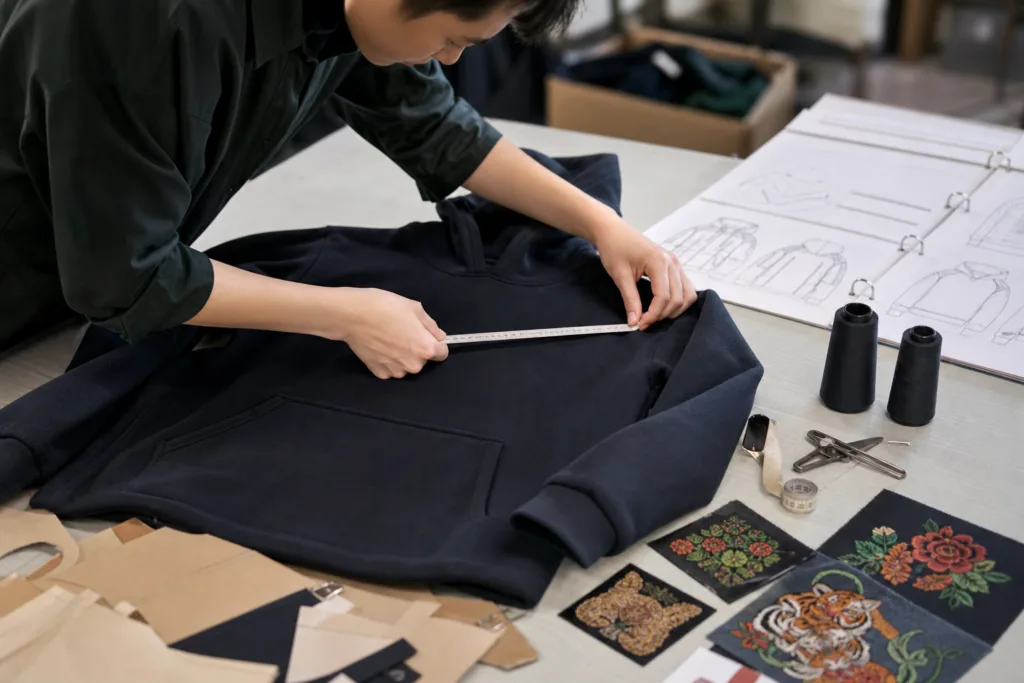
We see many startup projects improve once the founder stops describing only the aesthetic and starts defining the body shape and wearing intention. For example, a “premium oversized tee” might need dropped shoulders, a wider chest, thicker neck rib, and shorter body proportions to feel intentional rather than simply larger.
Customization method affects both look and production planning
| Method | Best For | What Startups Should Consider |
|---|---|---|
| Screen printing | Bold graphics at volume | Color count, artwork separation, and minimum efficiency |
| Embroidery | Logos and premium branding | Stitch density, placement, and fabric distortion risk |
| Heat transfer | Small runs, sportswear, names, numbers | Application durability and heat sensitivity of fabric |
| Sublimation | All-over polyester graphics | Requires suitable fabric base and color planning |
These choices influence sample planning, trim preparation, and final cost. At Ninghow, we usually help startups review decoration choices early because a logo method that looks simple in a mockup may create avoidable delay or cost in bulk.
When should a startup create a tech pack before requesting samples?
A startup should create a tech pack before sampling when fit accuracy, custom construction, or brand-specific detail control is important. If your design is not a simple adaptation of an existing base style, documentation becomes much more valuable.
You should strongly consider a tech pack first if:
- You are developing a custom silhouette rather than using a standard block
- You want multiple branded details such as custom labels, hangtags, zipper pulls, patches, or packaging
- You need consistent sizing across several styles
- You are comparing multiple manufacturers and want comparable quotes
- You want to reduce avoidable sample revisions
For startups with investor timelines, retail delivery deadlines, or a higher product price point, a tech pack is often worth the extra preparation because it lowers misinterpretation risk. It does not remove all development issues, but it gives everyone a much clearer working document.
When can a startup begin with sample development first?
A startup can begin with sample development first when the concept is simple, the design direction is visually clear, and the founder still needs to confirm fabric and fit before investing in full documentation. This is common for first collections with a few core products.
For example, if you are making a basic cotton tee, fleece hoodie, or straightforward polo with limited branding, it may be practical to develop an initial sample first and finalize the technical spec after the fit direction is confirmed.
This path is also common when the real goal is to test a silhouette before committing to a full size run. In that case, the first sample is not the end product. It is a decision tool.
However, the manufacturer still needs enough structure to proceed. Even for a sample-first approach, you should provide the intended product use, fit direction, material preference, branding plan, and quantity expectation.
How MOQ, budget, and lead time change the best starting point
MOQ, budget, and lead time are not separate from development choice. They directly affect whether it makes more sense to begin with an idea brief, reference sample, or tech pack.
| Business Factor | Better Starting Point | Why |
|---|---|---|
| Very limited budget | Idea brief or reference sample | Lets you validate direction before investing heavily in documents |
| Fast launch deadline | Reference sample or tech pack | Reduces concept clarification time |
| Complex custom product | Tech pack | Prevents repeated interpretation mistakes |
| Small test order | Simple sample-first project | Keeps development lighter if style complexity is low |
MOQ matters because fabric development, custom trims, and special dyeing often require minimum thresholds. If your quantity is still small, a simpler product plan or existing material route may be more realistic than a fully custom build.
That is why startups exploring low MOQ clothing manufacturing options for test orders should also review how much customization they really need in the first run. Lower MOQ is often easiest when materials and processes stay relatively efficient.
Common mistakes startups make when sending product information
The most common mistake is not having incomplete information. The real mistake is sending incomplete information without identifying what is still undecided.
Here are some issues that cause delays or inaccurate quotes:
- Sending inspiration photos without explaining the actual garment category
- Using subjective terms like luxury or premium without fabric or construction context
- Providing a sample but not explaining which details must change
- Asking for price without quantity, color count, or logo method
- Requesting an exact delivery date before fabric and trim feasibility are reviewed
- Skipping size range and fit direction
- Mixing OEM, ODM, and private label expectations in one request without clarifying the goal
From a factory side, these gaps create preventable risk. The team has to estimate more, and the buyer may later feel the original quote or sample missed expectations even though the technical input was still incomplete.
Key takeaway: You do not need to know every detail at the start, but you should clearly label what is confirmed, what is preferred, and what still needs manufacturer advice.
A simple startup manufacturer briefing checklist
If you want faster replies and more useful sample planning, send a structured first message. This checklist is usually enough to move a startup conversation forward productively.
- Brand stage: concept, launch prep, test order, or growth stage
- Garment category and intended use
- Target customer and fit direction
- Photos, sketches, or sample references
- Fabric ideas or performance expectations
- Logo and branding methods
- Estimated quantity by style and color
- Target market price level
- Deadline or launch window
- Whether you need OEM, ODM, or private label support
This kind of checklist gives the manufacturer enough context to explain the likely next step. Sometimes that next step is quotation. Sometimes it is fabric recommendation. Sometimes it is sample development before pricing can be narrowed further.
How to decide between OEM, ODM, and private label development
The right development path depends on how original your product needs to be and how much control you want over fit, design, and branding.
OEM is a better fit when
- You have a clear design direction
- You want custom materials, measurements, or construction details
- You need your own branding and technical control
ODM is a better fit when
- You want faster development using existing styles or proven blocks
- You are testing the market before investing in custom pattern development
- You need a simpler first collection
Private label works well when
- You want your own brand identity on a manufacturer-supported product base
- You need faster launch timing with controlled customization
- You want to focus more on branding and sales than full product engineering
Startups often begin somewhere between these models. A project might start as private label or ODM for speed, then move toward OEM once the brand has validated fit, demand, and reorder confidence.
What a good clothing manufacturer should help clarify early
A good manufacturer should not only say yes to your request. They should help you identify what is still unclear before those gaps become expensive in sampling or bulk production.
Early communication should help clarify:
- Whether your target fabric is realistic for the budget and quantity
- Whether your fit references can be converted into measurable sample instructions
- Which logo method suits the fabric and order scale
- Whether your MOQ expectation matches the level of customization
- Which details should be approved in sample stage before bulk begins
That guidance is especially valuable for startups because the first development cycle often sets the communication standard for future orders. A manufacturer who asks practical questions early usually reduces mistakes later.
Conclusion
A startup can begin a manufacturer conversation with an idea, a sample, or a startup clothing tech pack. The right starting point depends on how defined the product is, how much fit and customization control you need, and how much risk you want to remove before sampling or bulk production.
If your concept is still early, send a structured brief. If you have a sample, explain exactly what should stay and what should change. If you already have a tech pack, make sure it contains practical factory information rather than only design visuals. In all three cases, better communication leads to better quotation accuracy, more efficient sample development, and fewer surprises when production planning begins.
At Ninghow, we support startups at different readiness levels, from rough concept development to production-ready private label programs. The strongest projects are not always the ones that start with the most paperwork. They are usually the ones where the brand and manufacturer identify the next right step clearly.
FAQs
Do I need a tech pack before contacting a clothing manufacturer?
No, you do not need a tech pack before first contact, but you do need enough product information for the manufacturer to understand your direction. A clear idea brief or reference sample can be enough to begin discussion, while a tech pack becomes more important when you need accurate pricing, custom fit control, and smoother sampling.
Can I send a competitor garment as a reference sample?
Yes, you can send a competitor garment as a reference sample if you clearly explain what you like and what must change. The sample should be used to communicate fit, fabric feel, or construction direction, not as a vague instruction to copy everything without brand-specific adjustments.
What information affects quotation accuracy the most?
The biggest factors are garment type, fabric choice, GSM or weight expectation, logo method, quantity, and size range. When those details are missing, a manufacturer can usually only provide a broad estimate because material cost, labor content, and production efficiency are still uncertain.
When is an idea-based brief enough to start sampling?
An idea-based brief can be enough to start sampling when the product is relatively simple and the brand is still validating direction. It works best when you can still provide clear reference images, intended fit, branding method, fabric preference, and quantity expectations so the sample room is not forced to guess core details.
Should a startup choose OEM, ODM, or private label first?
The right choice depends on your launch priorities. OEM suits startups that want more custom control, ODM suits those that need speed and proven style bases, and private label is often practical when you want branded products without building every technical detail from zero.
What should I prepare before approving bulk production?
Before approving bulk production, you should confirm the final sample, size specs, fabric quality, color approval, logo placement, labels, packaging, and order breakdown. Bulk approval should happen only after the key fit and construction decisions are locked, because changes after production starts usually increase delay, cost, or inconsistency risk.