






Introduction: Understanding Boxy Fit Hoodie vs Oversized Hoodie for Apparel Brands
Choosing the right hoodie silhouette is more than just a style statement—it’s a strategic decision that shapes how your collection is perceived, worn, and produced. For brands developing streetwear or premium casual series, the choice between a boxy fit hoodie and an oversized hoodie influences not only design and visual appeal, but also bulk manufacturing, fabric selection, and audience engagement. As a clothing manufacturer, Ninghow recognizes the nuances brands face in distinguishing between these two fits, especially when it comes to translating a vision into mass production.
For brands and buyers comparing manufacturing options, a useful next step is exploring hoodie options on Ninghow’s category page, which offers detailed insight into production capabilities, custom development, and our factory approach to hoodie manufacturing. Reviewing how manufacturers present this category helps clarify potential fit, fabric, and custom possibilities before you commit to sampling or bulk production.
Defining Boxy Fit Hoodie vs Oversized Hoodie: Key Distinctions
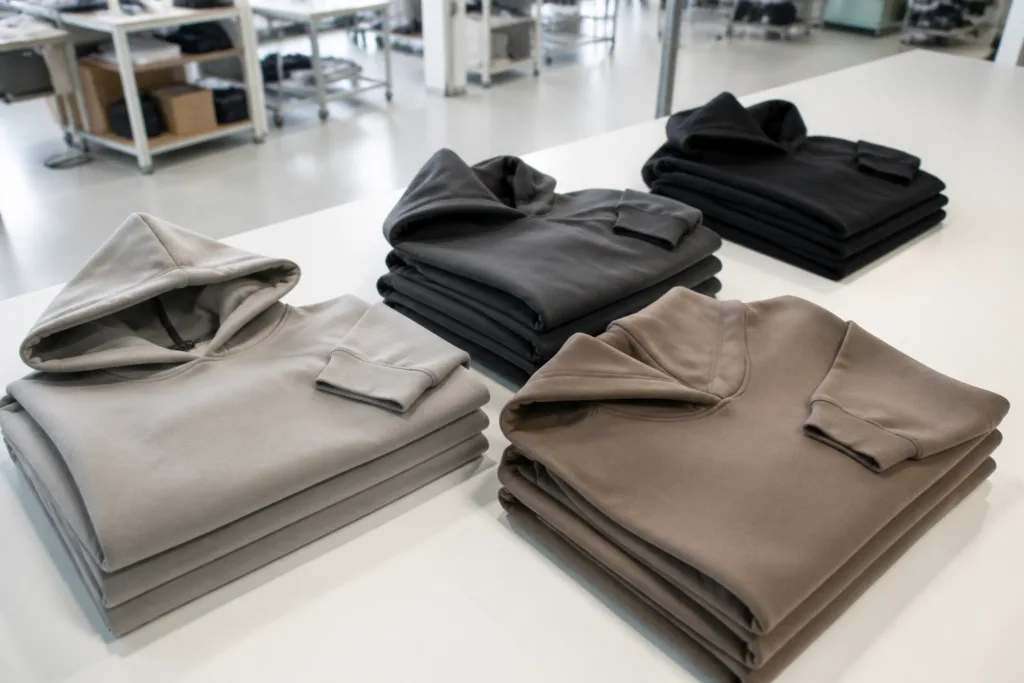
Before you move ahead with sampling or bulk orders, let’s break down the essentials: boxy fit hoodies feature a square, cropped profile with wider body and sleeves but less length; oversized hoodies exaggerate proportions for a much looser, longer, and bulkier drape. Each option has commercial implications for fit grading, pattern development, and sourcing strategy.
Boxy Fit Hoodie: Structure & Design
A boxy fit hoodie is typically characterized by a short, wide body, dropped shoulder seams, and a roomier—but not excessive—sleeve. The shape delivers a clean, geometric line, appealing especially to unisex and minimalist brands. Commercially, this fit is more predictable: smaller grading steps, less risk of disproportionate bulk, and an easier transition from sampling to bulk production.
Oversized Hoodie: Structure & Design
Oversized hoodies are intentionally dramatic. They use larger grading increments, longer bodies, and exaggerated sleeves. Streetwear brands popularized this silhouette, but the fit is less forgiving—the potential for pattern distortion, seam stress, and variable drape can make mass production tricky if not carefully managed.
Pattern Engineering: Boxy vs Oversized Manufacturing Considerations
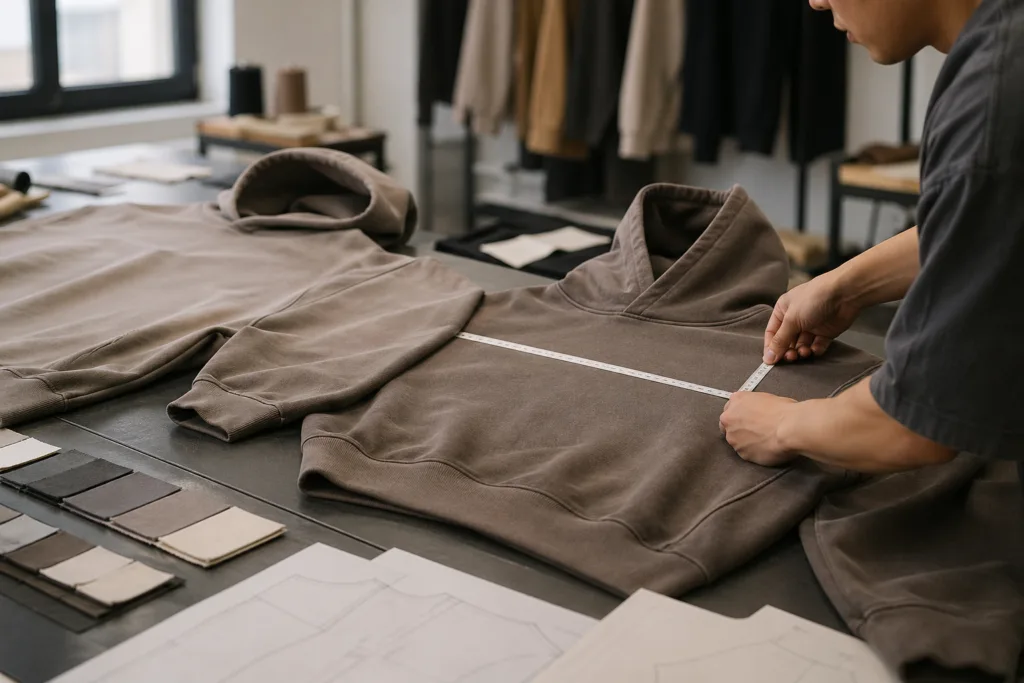
Fit accuracy is a top priority for both silhouettes. Boxy fits allow for tighter control during pattern drafting and grading. Oversized fits, however, require more sample iteration; inconsistencies can multiply across different sizes and lead to unexpected results during production.
Grading Impact on Bulk Production
Boxy fits depend on smaller grading jumps, meaning you can maintain consistent visual proportions across XS–XL. Oversized fits need more dramatic jumps—risking a garment that becomes either extremely bulky or oddly proportioned at upper sizes. Manufacturers use specialized grading templates to anticipate these risks.
Audience & Market Positioning: Who Buys Each Fit?
Boxy fit hoodies appeal to urban minimalism, premium casual, and gender-inclusive collections. The silhouette offers a fashion-forward but wearable alternative. Oversized hoodies are favored by streetwear enthusiasts and younger demographics seeking statement pieces.
Unisex Potential
Both fits are commonly offered in unisex sizing, but boxy fits more easily adapt to cross-gender wear, while oversized hoodies deliver more dramatic, youthful energy.
Fabric Selection: Sourcing Decisions for Boxy and Oversized Hoodies
Choosing the right fabric is crucial for maintaining silhouette integrity. Boxy fit hoodies often use structured, medium-weight fleece or French terry to accentuate angular shape, while oversized hoodies benefit from softer, heavier materials that enhance drape.
Common Fabric Risks & Solutions
Boxy fits can lose their crisp line if the fabric is too soft or thin. Oversized styles risk looking limp if the material lacks substance. Manufacturers should advise brands during sourcing—fabric swatching and pre-production tests are key.
Visual Style: How Each Fit Conveys Brand Identity
Boxy fits project modern minimalism and street sophistication—clean lines, cropped length, and refined details. Oversized hoodies deliver bolder aesthetics, reinforcing relaxed, athletic, or streetwear-focused cues.
Trims and Detailing Impact
Boxy fits often pair with subtle trims and tonal branding; oversized fits accommodate larger logos, bold prints, and layered styling options.
Bulk Production Challenges: Managing Risks for Both Silhouettes
Boxy fit hoodies tend to have fewer production risks caused by distortion. Oversized hoodies require extra QC steps—pattern alignment, seam stability, and fabric shrinkage become more pronounced due to larger volumes.
Quality Control Considerations
Manufacturers like Ninghow emphasize extra QC checkpoints on oversized hoodies: verifying measurements, overseeing seam strength, and monitoring for pattern consistency.
Sampling Phase: Reducing Sizing Errors and Lead Time Surprises
Brands developing oversized silhouettes should expect multiple sampling rounds. Unexpected fit or drape issues often show up only at scale. Boxy fit sampling is typically more straightforward: fewer revisions and predictable lead times.
For a deep dive into this process, see our guide on developing oversized hoodies, which explains the step-by-step approach manufacturers take for fit validation and factory sampling.
MOQ and Pricing: Impact of Fit Choice on Manufacturing Cost Structure
Oversized hoodies usually consume more fabric per piece, which affects pricing, yield, and minimum order quantity expectations. Boxy fit hoodies, being more standard in measurement, allow tighter yield calculation and often lower MOQ flexibility.
Fit Preference Trends: How Streetwear and Premium Casual Brands Decide
Market trends suggest oversized hoodies dominate Gen Z, youth streetwear, and independent brands, while boxy fits resonate with premium, minimalist lines. Brands must match fit choice to their target demographics and retail positioning.
Product Development Workflow: Step-by-Step for Reliable Fit
The most effective workflow starts with clear tech packs, reference samples, and fabric tests before scaling to bulk production.
Role of Manufacturer Feedback
Experienced manufacturers, like Ninghow, add value by flagging risks, recommending fabric modifications, and adjusting patterns early to prevent bulk order issues.
Visual Comparison Table: Boxy Fit Hoodie vs Oversized Hoodie
| Aspect | Boxy Fit Hoodie | Oversized Hoodie |
|---|---|---|
| Body Length | Cropped/shorter | Long/draped |
| Sleeve Style | Wide, but structured | Extra wide, dropped |
| Audience | Premium casual, unisex | Streetwear, youth, bold |
| Fabric Needs | Medium-weight, firm | Heavy, soft, drapey |
| Risk Level | Low production risk | Higher QC complexity |
| MOQ | Lower/flexible | Higher/fabric-heavy |
Bulk Order Advice: Minimizing Fit and Fabric Issues
Brands should lock tech packs, approve samples, and communicate measurement tolerances before bulk confirmation. Oversized fits demand detailed QA instructions; boxy fits are less complex but require attention to hem finishing and proportion control.
Trend Adaptation: Evolving Fits in Modern Hoodie Design
Both fits are evolving. For example, some brands merge boxy and oversized for hybrid silhouettes—cropped body, oversized sleeves, unique trim. Manufacturers must stay flexible and adapt grading logic for these new combinations.
Budgeting for Sampling & Bulk Production: What Brands Should Plan
Oversized hoodies usually require 2–3 rounds of samples, higher fabric testing, and extensive fit checks. Budget for extra time, material, and QC. Boxy fits are more direct—sampling is faster, less resource-intensive.
Factory Communication Tips: Avoiding Common Development Pitfalls
Clear communication is key. Brands should specify desired fit, fabric weight, target audience, and expected visual outcome. Request pattern photos and lab dips early, especially for oversized designs.
If you’re preparing to sample, review Ninghow’s advice on sampling considerations for hoodies—it addresses essential questions from sizing to fabric testing that can help streamline your order.
Quality Control: Maintaining Consistency at Scale
QC teams must monitor for seam slippage, exaggerated grading errors, and fabric shrinkage—especially with oversized hoodies. Boxy fits require checks for hem integrity and consistent body width.
Packaging & Delivery: Fit-Driven Logistics Considerations
Oversized hoodies take up more space per unit, affecting carton packing, shipping costs, and delivery lead times. Boxy fits are easier to fold and optimize for freight.
Compliance & Sustainability: Fit’s Impact on Responsible Production
Bigger, heavier hoodie styles use more raw material, increasing environmental impact per unit. Manufacturers now offer recycled fleece and lower-impact trims to balance sustainability goals regardless of fit choice.
Boxy Fit Hoodie vs Oversized Hoodie: Which One Fits Your Brand Better?
This crucial decision depends on your target market, brand identity, sourcing budget, and production workflow. Boxy fit hoodies are reliable, visually versatile, and commercially predictable; oversized hoodies deliver statement looks and fast-moving trends but require more manufacturer oversight and quality checks. For brands seeking steady premium casual appeal, boxy fits offer safety and range. For disruptive streetwear, oversized silhouettes are worth the investment, provided the pattern, sizing, and QC procedures are watertight.
Conclusion: Finding the Best Fit for Streetwear and Premium Casual Brands

Ultimately, the choice between a boxy fit hoodie and an oversized hoodie is a blend of creative vision and practical manufacturing. Boxy fits promise consistency and visual clarity; oversized styles offer trend-driven energy and bold brand expression. Understanding these distinctions—and partnering with the right manufacturer—ensures your hoodie project is not only stylish but also reliably produced. Think carefully, sample strategically, and keep fit and QC at the forefront for a collection that resonates with both customers and your supply chain.
Frequently Asked Questions
How is a boxy fit hoodie different from an oversized hoodie?
A boxy fit hoodie features a shorter, wider profile with cleaner lines, while an oversized hoodie is longer, bulkier, and intentionally loose-fitting for exaggerated style.
Which fit is easier to produce in bulk?
Boxy fits tend to be easier for bulk production due to their consistent sizing and lower pattern distortion risk compared to oversized fits, which demand extra QC.
What fabrics work best for each silhouette?
Boxy fits use medium-weight, structured fabrics for shape retention; oversized fits benefit from heavier, softer materials that enhance drape and volume.
Can both fits work for unisex collections?
Yes, both boxy and oversized fits are popular for unisex items. Boxy fit hoodies adapt more comfortably across gender lines, while oversized hoodies appeal to bolder tastes.
Are there higher MOQ requirements for oversized hoodies?
Generally, oversized hoodies use more fabric per unit and may require higher minimum orders, while boxy fits often have more flexible MOQ arrangements.
What quality control challenges should brands expect?
Oversized hoodies need rigorous measurement checks, seam stability tests, and fabric shrinkage monitoring. Boxy fits mostly require attention to hem and proportion consistency.