





Introduction: Why Rush Apparel Orders in China Are a Different Game
If you’ve ever faced an event date creeping up while your custom clothing order is still in limbo, you know the value of the phrase “rush apparel orders China.” Getting apparel manufactured fast isn’t just about workers putting in overtime hours; it’s an orchestra of supply chain moves, quick approvals, and seasoned manufacturing know-how. In China, some clothing manufacturers consistently handle urgent clothing production requests better than anyone else. But what really goes on behind those seemingly miraculous fast turnarounds?
How Chinese Clothing Manufacturers Handle Rush Orders More Reliably
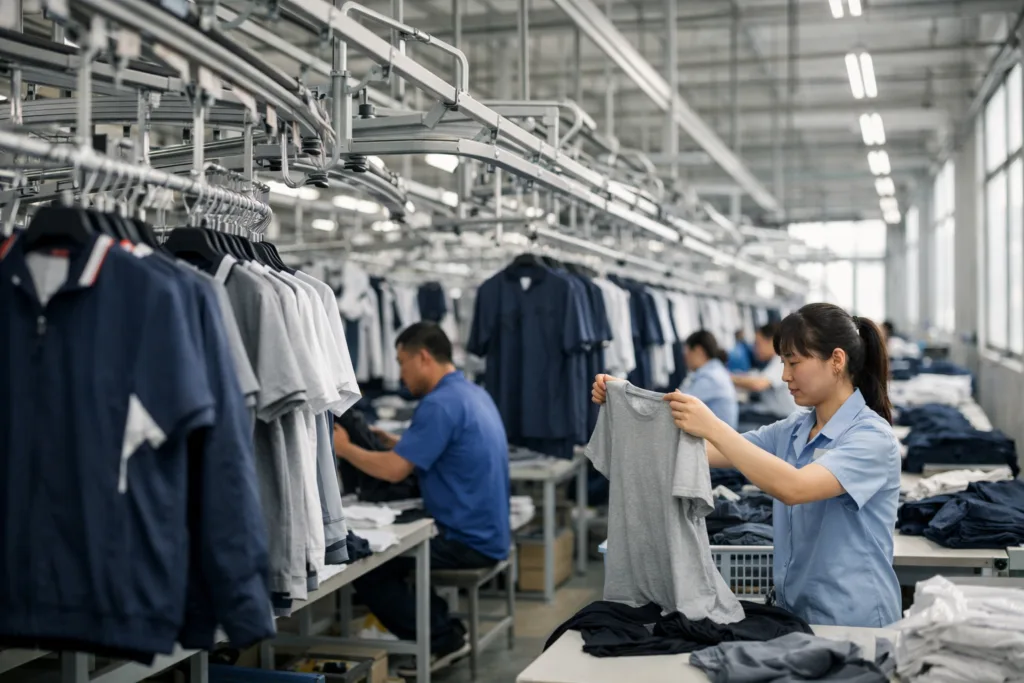
Let’s break down how experienced Chinese factories actually process rush apparel orders more reliably, and why “fast turnaround clothing manufacturer” is more than just a marketing claim—it’s a system built for speed and coordination.
What Really Makes an Order ‘Rush’?
A “rush” order usually means the customer requests finished apparel significantly faster than standard timelines. This could be for a school event, sports team, brand launch, or last-minute merchandise. In a true rush, every lost day is critical, and the entire process—design, sourcing, approval, and final production—must run parallel, not sequential.
Rush Manufacturing Is More Than Just Overtime
It’s a mistake to assume factories just ask staff to work longer hours to win the deadline. In reality, successful urgent clothing production in China is possible only because multiple players—fabric suppliers, trim vendors, pattern makers, printing shops, internal QC teams—operate with tightly coordinated relationships and predictable routines.
The Four Bottlenecks That Threaten Every Urgent Order
Every stage from the first design sketch to final packing holds risks. Miss a step, and the “fast apparel production China” promise breaks down. Here’s where most rush orders encounter delays:
Raw Materials: Not All Fabrics Are In Stock
Many buyers are surprised that even in China’s vast textile markets, specific custom fabrics or trims may require days—or weeks—to source and deliver. Fast turnaround depends on using available stock fabrics, standard trims, and colors. Custom yarns or colors will almost always push the schedule out of “rush” possibilities. To overcome this, some bulk teamwear manufacturers maintain their own stock material reserves.
Pattern and Fit Confirmation Delays
A beautifully designed digital concept means nothing without a production-ready sample. Rush orders often stall if the buyer doesn’t quickly confirm fit samples, approve size specs, or green-light pattern changes. Seamless tech packs and rapid decision-making are crucial. (For a step-by-step look at the manufacturing process, see how custom apparel is made.)
Printing, Embroidery, or Other Decoration
Decorated apparel—like printed logos, embroidery, or heat transfers—adds layers to production, each with their own capacity and scheduling limits. If your garment needs complex embellishments, factor in artwork approval and specialized machine availability. Transparent, deadline-driven communication with the factory about decoration expectations is vital (learn more about logo techniques here).
Quality Control Without Shortcuts
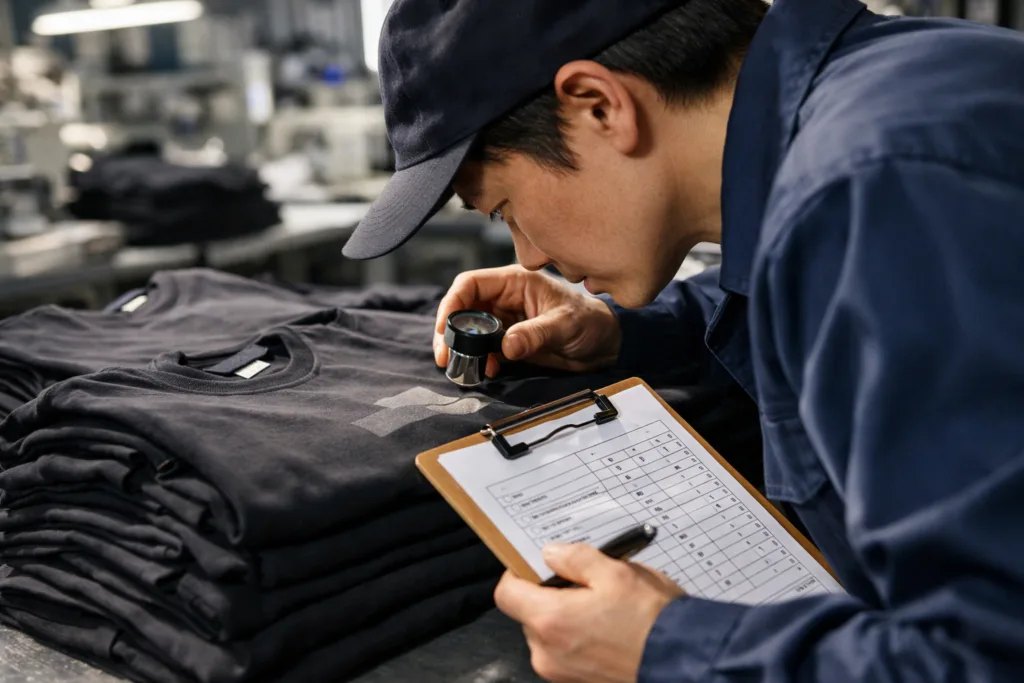
Don’t assume QC is “flexible” for urgent orders. Responsible factories maintain core checks even if the production is fast. Skipping QC leads to costly rework—or worse, unsellable goods.
Why Chinese Fast Turnaround Clothing Manufacturers Deliver Rush Orders Better
China’s unique supply chain density and skill set empower “quick turn garment factory” models that often surpass overseas options for speed and smoothness. Here’s what gives them the edge:
Dense Supplier Networks Close Lead Time Gaps
China’s main garment hubs (like Guangzhou, Dongguan, or Zhejiang) are surrounded by specialized fabric, trim, print, and accessory suppliers. This web means short transport times and rapid access to backup resources. Factories can often pivot if a material delay threatens the overall timeline. “Fast” here is less about cutting corners, more about reducing waiting at every step.
Proven Production Workflows for Rush Jobs
Many experienced Chinese manufacturers have established pre-set workflows specifically for urgent orders—dedicated staff, parallel tasking, and early coordination with outside processing (printing, embroidery, etc.). Compared to more fragmented supply chains elsewhere, these workflows reduce handoff errors and “lost days.”
Relationship Leverage: What Real Factories Can Unlock
Because long-term partnerships are common in China’s clothing sector, factories often leverage their deep supplier relationships to jump queues for urgent fabrics or trims when a loyal client needs help. Ninghow, for instance, can sometimes tap into priority allocations due to years of consistent, high-volume work with upstream partners. However, such “favor pulls” are never guaranteed and always depend on the type of rush and current market load.
When Even Chinese Factories Cannot Accept a Rush Order
Some requests are simply not feasible—no matter how strong the supply chain. Understanding these limits prevents frustration and repeat delays.
Ultra-Custom Requirements (Fabric, Color, Trim)
If your design needs a never-before-seen fabric, complex custom trims, or brand-new color-dyed lots, those base materials can’t be conjured overnight. These constraints often move delivery out of “rush” territory and require a planned timeline.
Holiday Periods and Market Peak Congestion
Chinese New Year, Golden Week, or “double-peak” times (major trade show and e-commerce sales periods) stretch factories to the limit. Booking production during these times is challenging, and even rush surcharges may not unlock extra capacity.
Approvals and Decisions: The Buyer’s Role
Even the fastest factory can’t work faster than the slowest approval! If buyers delay commenting on samples, artwork, or technical corrections, the clock just keeps ticking. Speed relies on both sides executing quickly and clearly.
How Ninghow Evaluates Rush Order Feasibility (Real-World Checklist)
Determining if a rush order is truly possible requires a cold assessment. Here’s the practical checklist many factories, including Ninghow, use to make the call:
Inventory and Material Mapping in Advance
Is the required fabric or trim already in local stock? If not, can it be replaced with an available alternative? Factories with solid inventory systems, and regular stock reviews, spot bottlenecks before they cause breakdowns.
Sampling Timeline Versus Production Overlap
Can a sample be rushed in time, or can “approval pending” parallel with cutting core items? Some orders start production on sizes or colors that are unlikely to change, even before the first sample approval is back—an experienced risk that only established partners may attempt for repeat designs.
Line Availability and Staff Allocation Reality Check
No matter how urgent the project, if production lines are already booked, true capacity can’t just materialize. A responsible factory checks its production calendar and personnel limits before promising a deadline—preventing wishful thinking and last-minute disappointments.
Visibility to Potential Risk and Delay Points
Rush production always carries some risk. Strong factories highlight these up-front—like uncertain shipment schedules, dependency on one-off decoration, or cross-vendor delays—so buyers can adjust expectations or contingency plans in advance.
Practical Strategies for Buyers: Increase Your Rush Success Odds
If you need your apparel fast—and done right—apply these proven tips before you send your next urgent request to any “fast apparel production China” partner.
Checklist for Rush Submission
- Use in-stock (or pre-approved fallback) fabrics and trims.
- Attach clear tech packs and design specifications up front.
- Confirm embellishment artwork at quoting—not post-sampling.
- Indicate hard delivery deadlines, and stress what is not negotiable.
- Be available and responsive for all sample approvals, decisions, and project check-ins.
Communication Techniques That Speed Up Every Stage
Set up a single email thread or group chat (WeChat works well in China) for all key parties. Confirm receipt and expected timeline for every stage—don’t wait for reminders. If stuck, ask your manufacturer to propose fallback options, rather than losing days seeking “perfect” solutions that may not be available during a rush.
Conclusion: The Real Difference—And How to Plan for a Smooth Rush
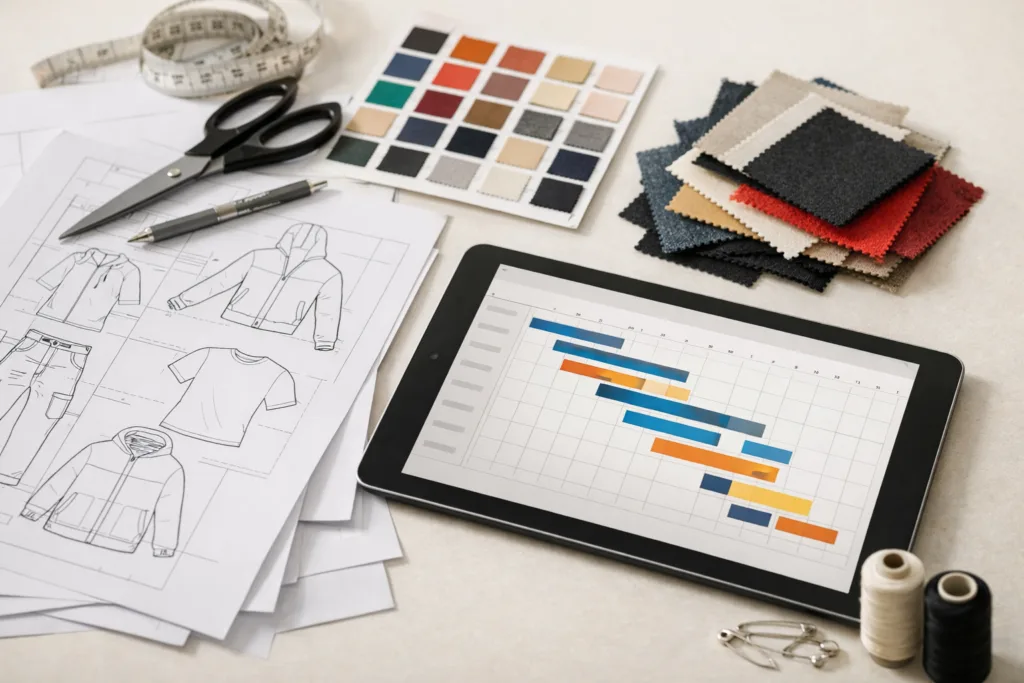
Rush apparel orders in China can simplify big challenges – but only when buyers and manufacturers operate transparently, act quickly, and play to the strengths of a dense local supply chain. The real skill isn’t just running machines faster. It’s the orchestration of people, approvals, and materials. If your next project is truly urgent, clarify your requirements, consider feasible trade-offs, and collaborate with factories who show real coordination skill—so “rush” doesn’t become “regret.”
Frequently Asked Questions
What is the shortest possible timeline for a rush apparel order in China?
If all materials are in stock and approvals are prompt, some factories can turn orders as quickly as 7–12 days from confirmation to shipment, especially for basic styles with standard trims.
Can all clothing types be rushed equally?
Styles needing unique fabrics, heavy decoration, or labor-intensive finishing often cannot be rushed as quickly as standard T-shirts or polos using in-stock supplies.
Is there a risk of lower quality on rush orders?
Reliable factories maintain core QC regardless of speed. Problems occur only if a factory drops checks—or if instructions or approvals from buyers are incomplete or unclear.
How can buyers help speed up the process?
Finalize specs before quoting, use stock materials, and reply to all confirmation requests immediately. Delays in sample approval are the #1 buyer-side cause of lost days.
Are rush surcharges common for urgent clothing production in China?
Many factories add an express fee, which covers extra line setup, overtime, or expedited logistics. This cost usually reflects actual resource needs, not just higher margins.
What counts as “unrushable” for Chinese manufacturers?
Orders needing new custom fabrics, special trims, or scheduled during public holidays/peak times are often impossible to rush, regardless of cost or intent.