





Introduction: Why Team Clothing Color Choices Matter More Than You Think
When it comes to team clothing, color isn’t just about looking good—it’s a powerful statement of who you are, how you want to be remembered, and what your group stands for. Whether you’re designing for a school, a company, or a sports team, choosing the right colors for custom team clothing can strengthen brand identity and foster unity. In this guide, we’ll uncover the strategies, common pitfalls, and industry know-how needed to make color decisions that last. You’ll also discover practical tips and mistakes to avoid, ensuring your branded team apparel delivers maximum impact on and off the field.
Understanding the Power of Color in Team Clothing
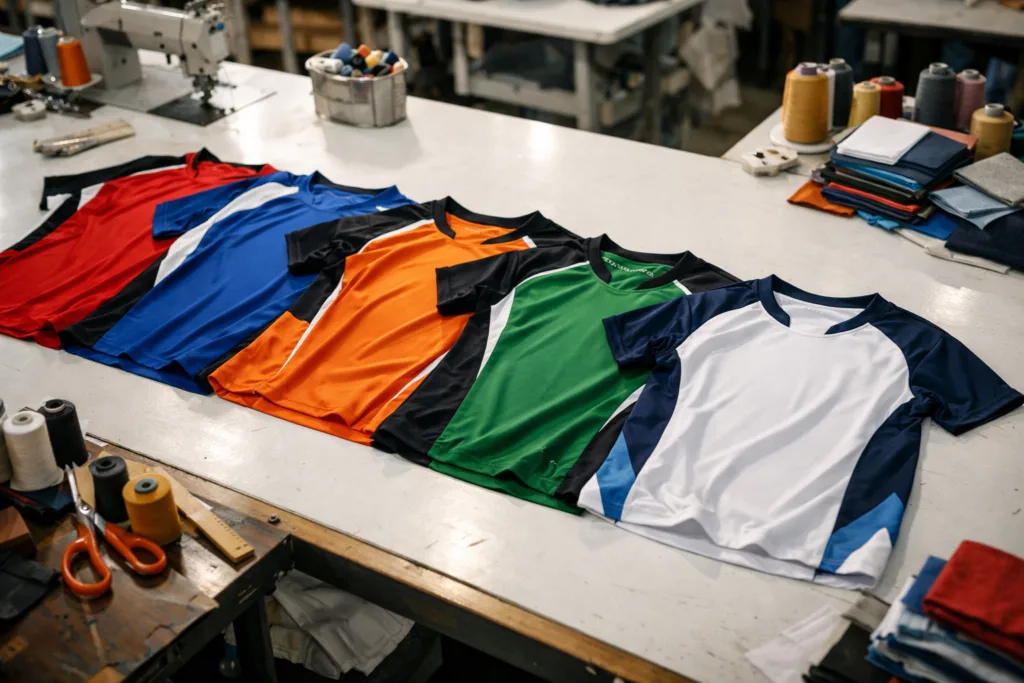
Colors aren’t just decoration—they work at a deeper psychological and emotional level. The right hues can boost morale, signal your values, and even make you memorable to your audience or opponents. Studies show that well-chosen team clothing colors boost group spirit, support visual recognition, and help everyone—from athletes to staff—feel like part of something bigger.
How to Choose Colors for Custom Team Clothing That Strengthen Brand Identity
There’s a science and strategy to picking team clothing colors that truly reflect and strengthen your brand identity. These choices involve brand values, logo color matches, event needs, and, oftentimes, independent requirements such as school guidelines or sports federation rules. Let’s walk through each critical aspect you should consider.
Defining Your Brand Identity First
Your brand identity is more than a logo—it’s your story, values, and promise, expressed visually. Begin by identifying what your brand stands for and the main messages you want your team clothing to convey. If your brand is known for energy and excitement, bold color blocks might be ideal. But for reliability and professionalism, you might prefer muted or classic tones. Anchor your color decisions in this foundation to maintain consistency across all channels.
Event Context: Game Days, Conferences, and Corporate Scenes
The environment can influence your color choices. Sports teams often select vibrant colors for high visibility on the field or court. For conferences and corporate networking, some groups lean toward refined palettes that echo their business sector. Always ensure your decisions fit the context and practical needs of your team and audience.
Visual Uniformity for Schools, Businesses, and Clubs
Consistency in teamwear is key for professionalism and easy recognition. Whether you’re designing for a school, club, or multinational business, aligning your team clothing colors with institutional hues eliminates confusion and amplifies pride. Visual unity, from staff T-shirts to event polo shirts, ensures your brand stands out in every crowd.
Common Approaches for Selecting Team Clothing Colors
- Monochromatic Schemes: Use one main color and mix tones (light/dark), which is simple and highly consistent.
- Analogous Palettes: Combine colors sitting next to each other on the color wheel—for a more dynamic but coordinated look.
- Complementary Contrasts: Pair colors opposite each other (like blue and orange). This creates energy but requires careful balance to avoid visual overload.
If you need an in-depth explanation of how different color systems work in apparel (Pantone, CMYK, etc.), this step-by-step custom apparel manufacturing guide is a helpful resource.
Brand Colors vs. Team Colors: Aligning for Maximum Impact
Some brands have established color schemes—others must build their own. If you’re designing uniforms for a corporation, school, or sports federation, always start with your existing brand guidelines. Team colors should echo (or at least not clash with) these hues. This keeps your apparel in sync with your website, logo, signage, and social media.
Matching Logo Colors to Team Uniforms
The simplest method is to use your logo’s primary color as the dominant shirt or jacket color. Use secondary logo colors for trim, names, or side panels. If your logo includes gradients or effects, simplify to solid or print-friendly tones.
Color Hierarchy and Accent Placement
Use a main color for overall visibility. Add one or two accent shades to highlight logos, team names, or division marks. Avoid using too many colors—it can cause confusion and weaken your brand presence.
How Visual Harmony Enhances Brand Recognition
Teams recognized for strong visual unity often win at more than just sports. Harmonized teamwear stands out in group photos, media spots, and organizational events. When fans, parents, or colleagues see the coordinated look, they instantly know who you are. For deeper design tips on building matching collections across multiple garments (T-shirts, hoodies, polos), see this expert collection-building guide.
Adapting Colors for Different Roles and Garment Types
Not every team member needs the same look. Sometimes, staff should wear a slightly different shade or design to distinguish roles while staying on-brand. Consider lighter colors for coaches, officials, or event staff—this makes them easy to identify while still fitting the brand palette. Always standardize main teamwear items (jerseys, main jackets) and only tweak accents or cuts as needed.
Color Theory Essentials for Branded Team Apparel
Understanding color theory helps avoid clashing combinations and costly mistakes. Here’s a quick primer:
- Warm colors (red, orange, yellow): Energizing, attention-grabbing.
- Cool colors (blue, green, purple): Calm, trustworthy, often associated with professionalism.
- Neutrals (white, black, gray, navy): Versatile, excellent as a base or contrast.
Contrast and Readability
Always ensure strong contrast between the fabric color and any logos or text. This holds for both on-site viewing and photography—no one should squint to see your team’s name!
The Importance of Material and Printing Techniques
Did you know that fabric choice and logo method affect how colors look and last? Material can shift the shade of a color, and certain finishes make tones pop more. For sharp, clear logos, read this comparison of embroidery, printing, and heat transfer for team apparel and match the technique to your needs.
Color Shifts and Fabric Types
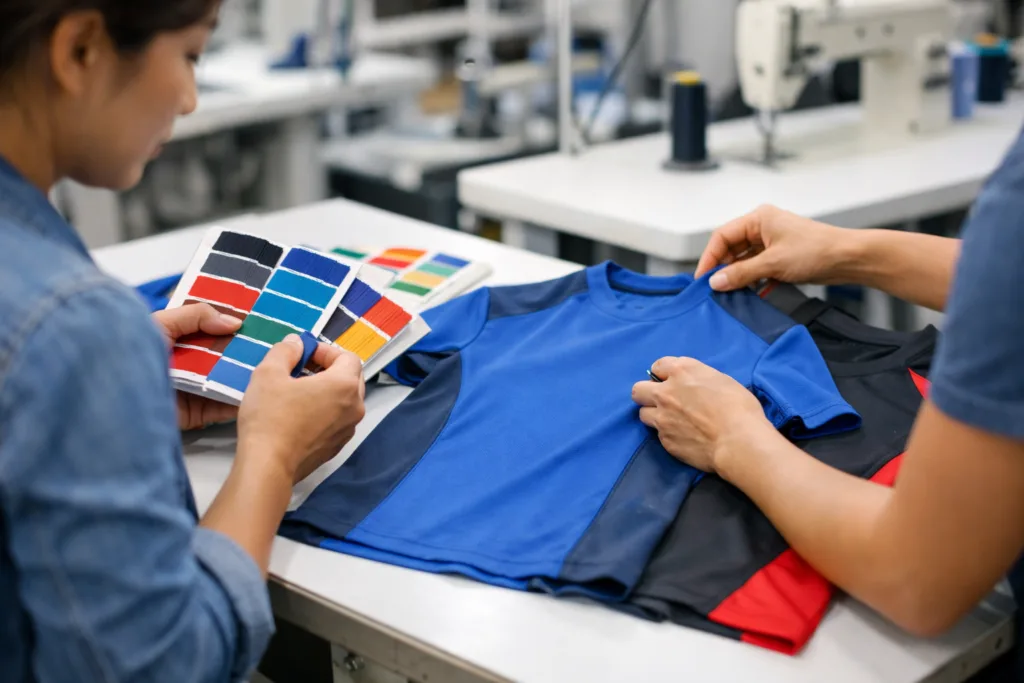
Cotton absorbs dye differently than polyester. Satin and mesh will reflect light, making colors seem lighter or more saturated. It’s important to always check samples on the actual garment fabric before finalizing your decision.
Color Psychology: How Hues Influence Team Spirit
It’s not just science—color psychology is real in teamwear! Specific hues can impact how your team feels before they even start. For example, red is often associated with power and aggression, while blue is calming and trustworthy. Use this to your advantage when locking in your choices.
Avoiding Common Pitfalls in Teamwear Color Selection
- Choosing a color not available for bulk production (always check material and dye limitations).
- Using too many accent shades, which damages brand clarity.
- Forgetting about diverse skin tones—choose colors that look good on all team members.
- Ignoring real-life lighting (stadiums, schools, outdoor events) that can affect color appearance.
Sampling: The Only Way to Be Sure
Ninghow, as a manufacturer, often reminds brands to request color swatches and sewn samples before bulk production. Dye lots can shift and digital mockups can misrepresent final shades. Never skip sampling—it will save you frustration, especially with Pantone-matched or custom-dyed fabrics.
Compliance and Special Requirements
Certain organizations and events (like federations, schools, or regulated competitions) have strict rules on acceptable colors, logo size, and placement. Double-check compliance guidelines before sending your final approval. For example, some leagues ban all-black kits, while others require a white alternate.
Custom vs. Ready-Made: Color Options Pros and Cons
Custom team clothing provides maximum control over color accuracy and branding. Ready-made teamwear can be faster and less costly, but color choices are often limited. If you need help deciding, compare the key differences between custom and ready-made teamwear before you commit.
Color Maintenance: Keeping Your Team Looking Sharp
Brightly colored garments may fade faster if not cared for properly. Instruct your team to wash clothing in cool water and avoid heavy bleach. Some modern synthetic fabrics resist fading better but can shine more or feel warmer. Always balance visual impact with long-term durability.
Future-Proofing: Planning Seasonal and Annual Updates
Design your team clothing colors with the future in mind. If you plan to update your branding or add new team divisions, select colors flexible enough to work with broader schemes or future expansions. Strong brands use foundation colors (like navy or gray) to allow for accent changes over the years without losing recognition.
Practical Checklist: How to Choose Colors for Custom Team Clothing That Strengthen Brand Identity
- Start with current brand guidelines and logo colors.
- Consider the primary environment (event/school/competition/corporate use).
- Ensure strong contrast for logos and any text.
- Check with your manufacturer for fabric and dye limitations.
- Test sample colors under both indoor and outdoor lighting.
- Validate compliance with any relevant organizational rules.
- Plan for seasonal updates without abandoning core colors.
Case Studies: Real-World Teamwear Color Decisions
A mid-sized tech company unified its event staff by adopting a monochromatic blue, matching its app interface color. The result? Visitors immediately recognized staff at a glance—and the brand popped in every event photo. Another example: a youth soccer club shifted from random shirt colors to a consistent navy/orange combo (school colors), boosting player pride and fundraising success thanks to better visual unity in public events.
Conclusions: Choose Wisely for Lasting Impact
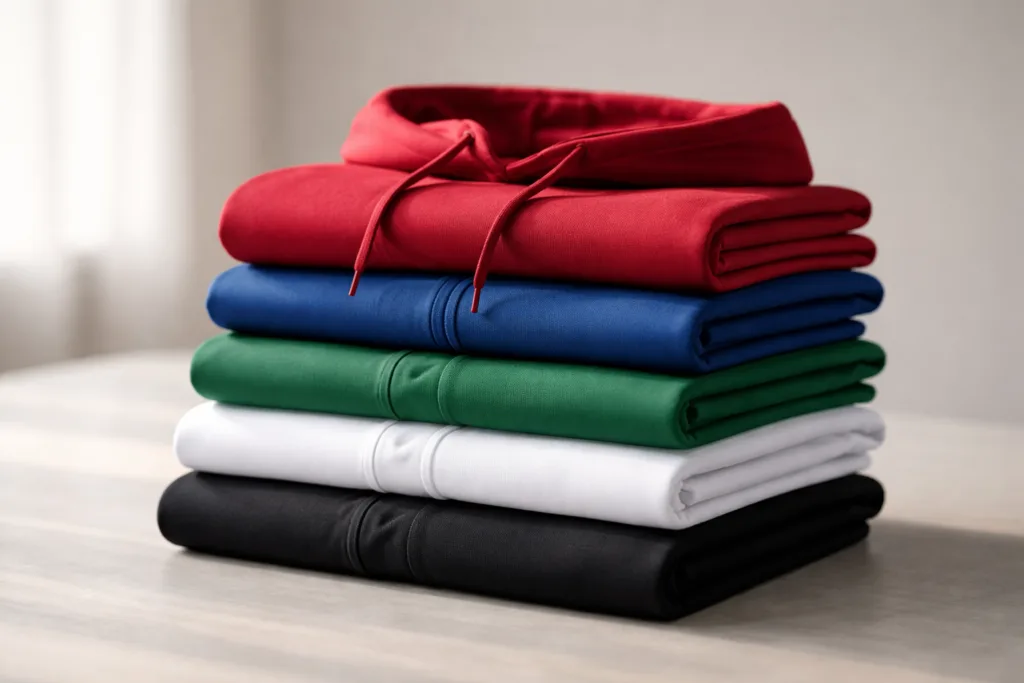
Selecting colors for custom team clothing isn’t just about taste—it’s about strategy, psychology, and long-term brand health. Choose carefully, involve all stakeholders, and always validate color choices with actual samples. A unified team appearance builds pride, improves visibility, and communicates your values before a word is spoken. Get these steps right, and your teamwear will be remembered for all the right reasons.
Frequently Asked Questions
What’s the safest method for picking a team clothing color?
Start with your brand’s existing color palette. If that’s not defined, pick 1–2 main brand-appropriate colors and validate them with physical samples before production.
Can we use more than three colors in our team design?
Yes, but it’s better to keep it simple. Using one base and one accent maintains clarity and cohesion; too many colors weaken the brand image and complicate manufacturing.
How do colors appear different on screen versus fabric?
Screen colors (RGB/HEX) are often brighter than physical fabrics. Always inspect real fabric or printed samples since materials absorb and reflect light differently.
What if our school or company has strict color standards?
Follow those standards without exception. Share the official color codes with your manufacturer and request standardized fabric or ink matches before production starts.
Should we allow team members to customize their colors?
Individual customization can reduce overall unity. It’s smart to let people personalize names or small accents, but keep main garment colors strictly standardized.
How should we handle color fading in teamwear?
Choose high-quality dyes and durable fabrics, provide washing guidance, and periodically refresh gear to ensure everyone looks sharp season after season.