







Introduction: Why Speed Matters in Hoodie Product Development
In today’s fast-paced fashion world, the difference between a winning hoodie launch and a stale release often comes down to speed. Brands seeking to stand out must master how to develop a new hoodie faster (timeline) without sacrificing quality, fit, or profitability. Whether you’re a startup or growing label, understanding the critical path, time-saving methods, and common risks can dramatically shorten your hoodie product development cycle and get you ahead in the market.
Understanding Hoodie Product Development: From Idea to Delivery
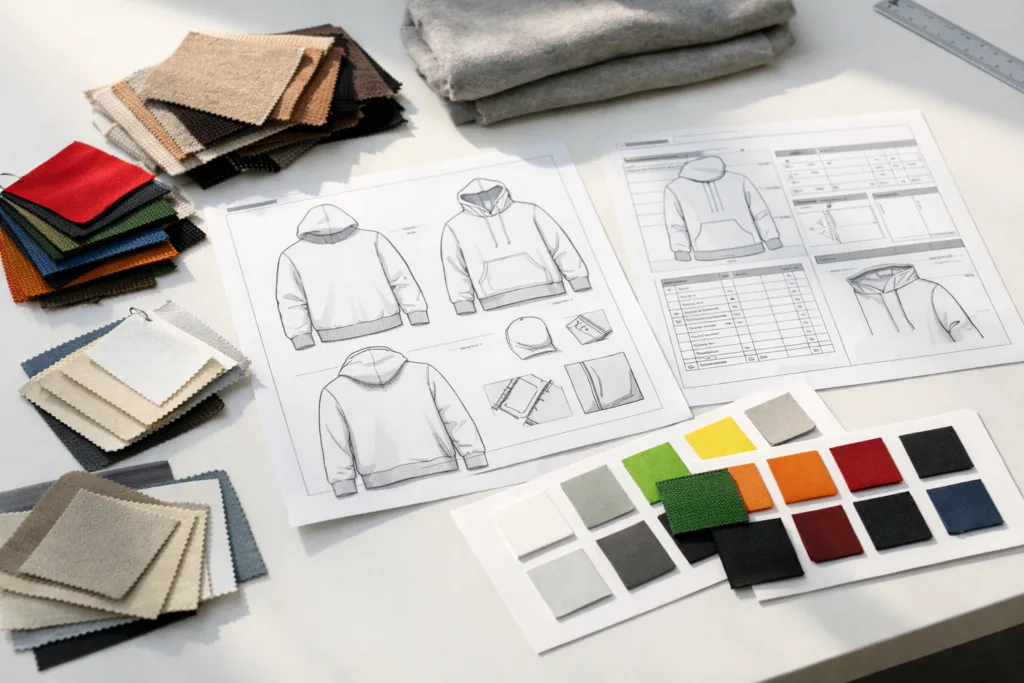
Hoodie product development involves several complex steps—from initial concept to the finished garment arriving at your warehouse. Each step has its risks, potential for delays, and specific levers for acceleration. The process typically includes design, technical packages, fabric and trim sourcing, sampling, fit approvals, bulk production, quality checks, and logistics. Accelerating this path requires clear planning and disciplined execution.
Hoodie Development Timeline: Key Stages Explained
The typical hoodie development process looks like this:
- Inspiration & Market Research
- Design Brief & Tech Pack Creation
- Fabric & Trim Sourcing
- Pattern Making & Proto Sampling
- Fit & Construction Approvals
- Pre-Production Sample (PPS) Round
- Bulk Production & Inline QC
- Packing & Shipping
Understanding these stages is crucial for compressing deadlines. For a detailed guide to measurement accuracy, see Get Your Garment Measurements Right: Precision Tolerance Strategies for 2026.
Critical Path: The Fastest Route to a New Hoodie
The critical path is the sequence of development steps where any delay directly pushes back your delivery date. Compressing the timeline means identifying and prioritizing these “must-not-slip” steps—often tech pack approval, fabric ordering, and sample feedback cycles.
Setting Up a Rapid Hoodie Timeline (Sample Table)
| Stage | Standard Days | Accelerated Days | Risks |
|---|---|---|---|
| Design & Tech Pack | 7–14 | 3–7 | Missed details cause sample errors |
| Sourcing | 10–21 | 5–10 | Quality compromise, supply gaps |
| Proto Sample | 7–14 | 3–7 | Poor fit, rework loop |
| Fit Approval | 7–10 | 2–5 | Delayed feedback = lost time |
| PPS/Bulk Production | 20–35 | 12–21 | QC failures, rush surcharges |
| Packing/Shipping | 7–21 | 4–10 | Freight disruption |
How to Develop a New Hoodie Faster (Timeline)
Speeding up hoodie development is both art and science. Here’s a breakdown of proven strategies to trim weeks from your go-to-market calendar.
Set Non-Negotiable Milestones
Map out your production calendar with hard deadlines for each stage. Build in buffer time for inevitable hiccups, but be ruthless about sign-off deadlines that affect the whole process.
Build a Detailed Tech Pack First
Starting with a precise, factory-ready tech pack ensures you don’t waste time with unclear details. For practical advice, refer to Tech Pack Template That Factories Follow. Ninghow has found error-proof tech packs can chop a full sample round off the project.
Parallel Processing
Where possible, move tasks forward simultaneously (e.g., trim sourcing while fabrics are in lab dips). This proactive approach demands real-time communication but keeps the schedule tight.
Source Materials in Advance
If base fabrics or trims are likely to recur, pre-order them or source substitutes to avoid material bottlenecks. Always have fallback vendors lined up.
How to Coordinate Design, Tech Packs, and Approvals
Communication breakdowns between designers, tech teams, and factories cause the biggest time overruns. Shared cloud folders, tracked revision logs, and weekly check-ins cut confusion. Ensure your tech pack answers every question before it leaves the design team’s hands.
Fabric & Trim Sourcing: Hidden Time Risks + Solutions
Sourcing is a leading cause of schedule overruns. Inconsistent dye lots, hard-to-find trims, or last-minute design swaps can derail a hoodie launch. For solution-driven tips, visit Fabric & Trim Sourcing: 7 Secrets to Match Handfeel & Performance for Apparel Success. Practical steps include confirming supplier MOQ and color availability upfront.
Pattern Making and Prototyping: Avoid the Rework Trap
Rushing pattern making without honest fit feedback is self-defeating. Invest in a thorough prototyping stage, then use fit comments to lock in main measurements. For in-depth cost and error avoidance, see How to Avoid Costly Garment Pattern and Fit Revisions in Apparel Production.
Critical Control: Sample Approval Workflow
A streamlined approval process is essential to meet deadlines. Designate one decision-maker per round. Batch feedback, highlight must-change issues, and keep side comments to a minimum to prevent scope creep. See How to Eliminate Rework: The Winning Sample Approval Workflow for Garment Brands for a bulletproof workflow.
Pre-Production Sample (PPS): The Timeline Pivot Point
PPS acts as your on/off switch for bulk production. Approve fit, construction, and trims; any compromise here multiplies risk downstream. Consider using 8 Insider Steps to Approve PPS Like a Pro and Lock In Consistent Garment Quality for step-by-step guidance.

Fast-Track Bulk Production: Smart Scheduling & Buffer Tactics
The bulk stage is only as fast as the slowest input (fabrics, trims, or decisions). Avoid sideline approvals; empower your QC lead to make on-the-spot fixes. If using multiple factories, coordinate sample handovers and shipping slots early.
Inline QC vs. Final Inspection: Which to Prioritize?
Inline quality checks intercept mistakes during production, not after. Ninghow’s experience shows that inline QC can save entire batches from costly rework and late delivery. For more, explore Inline QC vs Final Inspection: What Works Better?.
Freight & Customs: Shaving Days Off Final Delivery
Never wait until the last minute to arrange shipping. Lock in booking with your logistics partner at least two weeks before bulk completion. Pre-clear samples and ensure compliance paperwork is ready to avoid border surprises.
Top 10 Bottlenecks That Blow Your Hoodie Timeline
- Unclear design intent or incomplete tech pack
- Slow fabric/trim sourcing or approval collapse
- Sample feedback loop with too many stakeholders
- Late pattern corrections create rework pile-ups
- PPS nitpicking that should’ve occurred earlier
- Last-second label/artwork changes
- QC failures left til final batch
- Poor supplier communication
- Unrealistic bulk production schedule
- Poor planning for logistics documents
Proven Strategies to Compress Your Development Timeline
- Create a “critical path” Gantt chart visible to all teams
- Implement two-stage feedback rounds: must-change vs. nice-to-have
- Batch sample shipments to reduce courier lag
- Be ready to parallel-process lab dips/strike-off color approval
- Lock trim/color/materials at design sign-off, not after proto
Risk Points in Hoodie Product Development (and How to Control Them)
| Risk | Control Point |
|---|---|
| Fabric delays | Pre-book or dual-source suppliers |
| Spec misinterpretation | Use annotated tech packs, production-ready |
| Poor sample feedback loop | Single decision-maker, deadline-driven |
| QC surprises | Inline checks, not just finals |
| Shipping disruption | Advanced booking, fallback forwarders |
Ninghow’s Real-World Tips for Faster Hoodie Development
From the factory floor, Ninghow has learned that clarity wins over urgency. Rushed sample comments or unresolved spec questions always bounce back later. Align all parties on tolerances, label placements, and any color-matching challenges upfront. This discipline at setup can eliminate a full round of costly sampling delays.
Error-Proofing Your Process: Checklists That Work
- Approved lab dips and strike-offs in hand before sampling
- Measurement chart with clear tolerance bands
- Confirm care label language and compliance in first proto round
- Lock down all trim specs and artwork prior to PPS
Critical Communication SOP: Don’t Lose Days to Email Lag
Set expectations on preferred channels, feedback deadlines, and escalation processes. Weekly all-hands calls realign on progress and stop scope drift. For communication templates, check The Smart Brand’s Guide to Supplier Communication SOP for Apparel Production.
When (and When Not) to Rush Orders: Realistic Turnaround Expectations
Can you genuinely deliver in under four weeks? Maybe, but only for stock fabrics, zero custom trims, and a track record with your supplier. See Rush Orders in Apparel: What’s Realistic? for a reality check.
Managing Change Requests: How to Not Derail Your Timeline
All changes after sample sign-off must be logged in a change control register, with each request’s reason, impact, and fallback option. Changes in labels, artwork, or spec post-PPS should be discouraged; push non-urgent tweaks to next production run.
Case Study: Compressing a Hoodie Launch By Three Weeks
One mid-level brand faced serial setbacks due to incomplete tech packs and slow fabric approval. After switching to parallel processing, real-time shared task lists, and single-lead sample review, their hoodie went from sketch to market in 48 days—21 days faster than their last season’s run.
Conclusion: Speed Without Sacrifice

Developing a new hoodie faster means combining industry knowledge, disciplined process control, and a single-minded approach to the critical path. Build strong checklists, empower rapid feedback, source smart, and don’t let perfectionism paralyze key decisions. Every day saved is a competitive advantage when launching your next hoodie line.
Frequently Asked Questions
What is the fastest realistic timeline for a brand-new hoodie?
With well-organized planning, realistic bulk, and stock fabrics, 35–48 days is achievable. Custom fabrics, trims, or compliance needs may add time.
What’s the hardest part to speed up in hoodie product development?
Fabric and trim sourcing, as well as approval loops, cause the most delays due to dependencies and unpredictable supply chain hitches.
How can I avoid sample revisions that waste weeks?
Use detailed tech packs, approve laboratory dips/strike-offs early, and unify decision-makers for feedback to minimize revision rounds.
What is a critical path in apparel development?
It is the sequence of tasks where delays directly push back delivery. Mapping it helps teams prioritize and fast-track vital stages.
Can I dual-source to speed up hoodie production?
Yes. Have a backup factory or fabric source ready for key steps. This mitigates risk and helps hold your timeline if one vendor falters.
How should I handle unexpected changes after sampling?
Log all late requests, assess timeline, and communicate impacts. Push non-urgent changes to the next run to avoid derailing the entire project.
