




Understanding Fabric Shrinkage & Colorfastness Tests Buyers Ask For
When buyers request fabric shrinkage and colorfastness tests, knowing what these tests are, why they matter, and how to interpret the results can save brands from production headaches, compliance issues, and costly returns. These tests are non-negotiable for apparel and textile brands in 2026, as the demand for data-driven quality and transparent sourcing grows. This guide covers the common types of shrinkage and colorfastness tests, practical test timing strategies, reading test reports, and tips from seasoned factories like Ninghow on test selection and real-world production trade-offs.
What Are Fabric Shrinkage & Colorfastness Tests?

Fabric shrinkage tests measure how much a textile changes dimensions after washing or other stress, while colorfastness tests reveal how dyes hold up against washing, rubbing, perspiration, light, and more. These tests reveal risks before garments hit shelves and are a fundamental step for any buyer demanding lasting, fit-consistent products.
Why These Tests Matter in Apparel Production
Uncontrolled shrinkage can ruin fit, while poor colorfastness can lead to fading, bleeding, or customer complaints. Modern buyers ask for these tests to:
- Protect brand reputation
- Reduce costly returns and complaints
- Meet regulatory/compliance requirements
- Ensure customer satisfaction with lasting, high-quality products
Common Fabric Shrinkage Tests Buyers Ask For
The most requested shrinkage tests include:
- AATCC 135/150 (U.S.): Used for dimensional changes after home laundering
- ISO 6330 (Europe/Global): Simulates standard household washing procedures
- ISO 5077: General method for measuring fabric shrinkage
| Test Method | Typical Use | Standard Tolerances |
|---|---|---|
| AATCC 135 | Woven & knit garments | Less than 3% |
| ISO 6330 | General fabrics | 2–5% max shrinkage |
| ISO 5077 | Fabric rolls | 3% or less |
Key Points When Requesting Shrinkage Tests
- Confirm if test is done after washing, dry cleaning, or both
- Specify number of cycles (usually 1–5 washes)
- Set clear tolerance (% shrinkage that is acceptable)
Major Colorfastness Tests Buyers Require
Core methods include:
- Colorfastness to Washing (AATCC 61, ISO 105-C06): Measures fade/bleed from laundering
- Colorfastness to Rubbing (Crocking) (AATCC 8, ISO 105-X12): Tests dye transfer when fabric is rubbed
- Colorfastness to Light (AATCC 16, ISO 105-B02): Simulates fading from exposure to light
- Colorfastness to Perspiration (AATCC 15, ISO 105-E04): Simulates sweating
Buyers often request all four for new orders—especially in sportswear, kidswear, and dark or bold-colored garments. To learn how these tests fit into broader compliance, see the Apparel Compliance Checklist.
When To Do Shrinkage & Colorfastness Testing
TIMING IS EVERYTHING. Test at these stages:
- Fabric Sourcing: Ask mills for test reports before buying bulk
- Sampling Period: Test bulk fabric before sampling if you’re switching suppliers
- Before Bulk Production: Always verify before final approval (golden sample)
- Incoming Bulk Lot: Random tests on bulk shipments (spot checks)
Ninghow’s team finds that mid-program testing catches most surprises—only confirming at bulk finish is risky.
How Is a Fabric Shrinkage Test Performed?
The process is standardized, yet every lab and mill might do details slightly differently. Here’s how it generally works:
- Pre-mark fabric swatches with measured dimensions
- Wash/dry/clean to set test standard (per test method)
- Re-measure swatches, comparing original to post-process sizes
- Calculate shrinkage percentages: ((Original–After)/Original) × 100%
To see how this fits operationally, check the Inline QC vs Final Inspection guide for apparel.
Reading Fabric Shrinkage Test Reports (Step-by-Step)
Don’t just check a “Pass” or “Fail”:
- Review test method (AATCC/ISO & version year)
- Match wash/dry/cleaning conditions to real-world garment care
- Examine actual % shrinkage (length, width – both listed)
- Check tolerance: Does result fall within the buyer’s acceptable limit?
- For multiple cycles, look for large jumps between cycles (could indicate future issues)
If reading test data is new, see the AQL Explained for Apparel Brands (Simple Guide) for insight on tolerances and pass/fail logic.
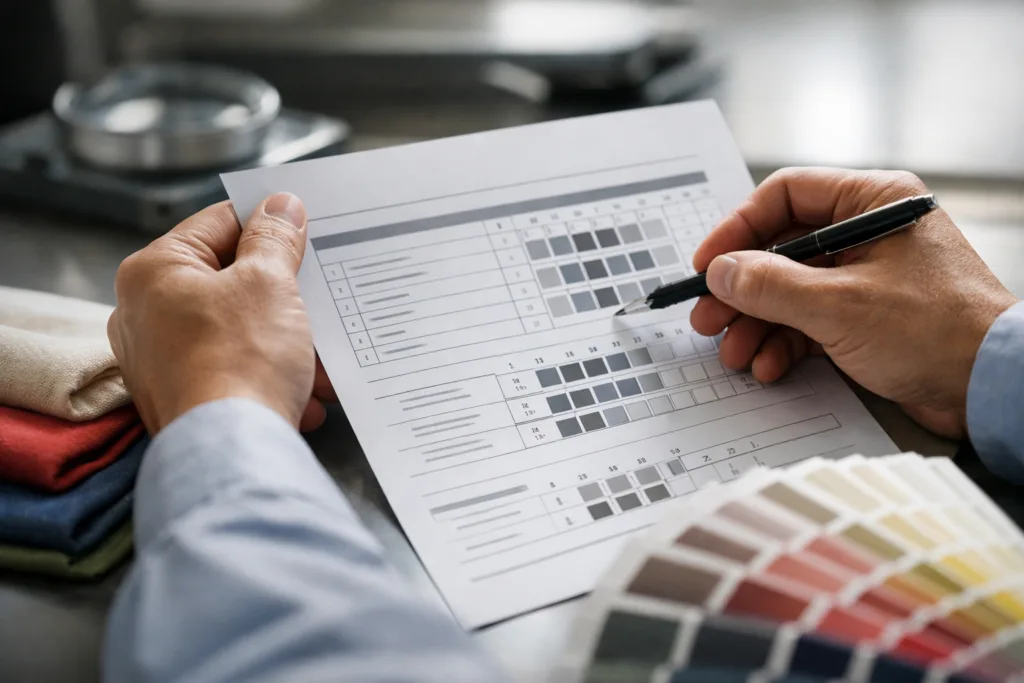
Interpreting Colorfastness Reports (What to Look For)
- Find the type of test (washing, rubbing, light, sweat, etc.)
- Review rating scale (usually 1–5, with 5 = perfect, 1 = total failure)
- Note two separate scores for some tests: color change (fading) vs. staining/transfer
- Common brand standard: 4 or above for all critical colorfastness tests
Sample Table: Colorfastness Ratings & Interpretation
| Test | Score | Result |
|---|---|---|
| Wash Fastness | 4–5 | Very good |
| Rub Fastness | 3–4 | Acceptable for darks |
| Light Fastness | 3 | Minimum for outdoor wear |
Common Mistakes Buyers Make with Testing
- Assuming supplier certificates meet all needs; always set your own standards
- Only testing lab dips, not production yardage
- Ignoring retest after dye/finish formula changes
- Accepting “pass” with no details; always ask for raw data
The Role of Lab Selection: In-House vs Accredited 3rd Party
Third-party accredited labs (like SGS, Bureau Veritas, Intertek) offer neutrality, ensuring no “fudging.” Some buyers accept trusted mill in-house labs for early development but always require 3rd party checks before shipment. For a practical approach, the Clothing Factory Audit Checklist breaks down best practices on lab audits.
How Test Results Impact Apparel Sizing and Grading
Fit and grading charts are built on “after wash” measurements. Reliable shrinkage results allow patternmakers to apply accurate shrinkage allowances, protecting fit integrity for end customers—critical for premium and online-first brands where returns are costly. For tips on fit strategy, review the Big and Tall Hoodies: Size Grading & Fit Challenges post.
Shrinkage Allowances: Setting Spec Sheet Tolerances
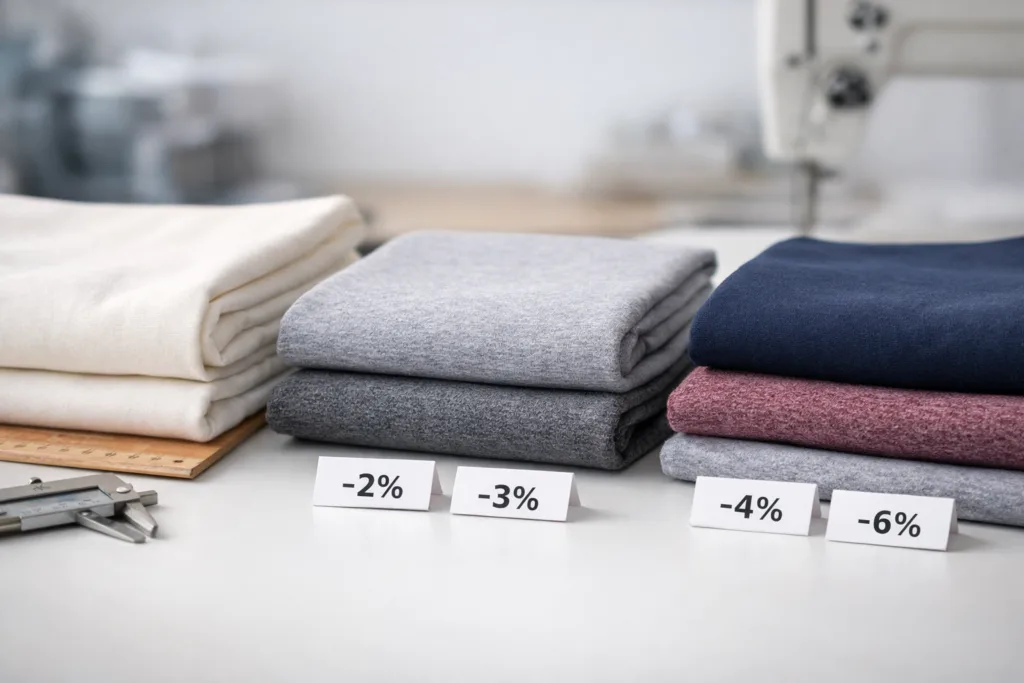
- Know industry norms: 2–3% for knits, 1–2% for woven, up to 5% for specialty finishes
- Apply shrinkage offset in patterns before bulk cutting
- Always update specs after lab results, not before
Shrinkage Standards for Different Fabric Types
Shrinkage can vary drastically:
- Cotton: Prone to 2–5% or more unless pre-shrunk
- Polyester: Typically under 2%
- Blends: Expect values between components
- Specialty/Stretch: Check both dimensions, as recovery may differ
Industry Best Practices: Test Scheduling in Modern Supply Chains
Tight timelines demand upstream testing and overlapping approvals. Ninghow’s experience: Running trial shrinkage/colorfastness tests on pilot lots flushes out issues ahead of time. For dual or multi-country sourcing, test every origin. A structured SOP—as mapped in guides like Supplier Communication SOP for Apparel Production—helps everyone align on test timing.
How to Select Which Tests Are Needed (Checklist for Buyers)
- Regulatory compliance (market law requirements)
- Product use-case (sports, outdoor, kids require stricter tests)
- Dye type (reactive, disperse, pigment, etc.)
- Customer expectations (premium vs. entry-level)
- Supplier history (new or known)
How to Instruct Factories and Labs for Testing Orders
Always provide:
- Exact test methods (AATCC/ISO, version)
- Accepted limits (e.g. less than 3% shrinkage, colorfastness ≥ 4)
- Care label reference (intended wash cycle)
- Sample size and lot-breakdown instructions
- Who pays for testing and who interprets results
Reading and Using Reports for Production Decisions
Read beyond Pass/Fail to spot:
- Consistent borderline values (asks for production adjustment)
- Variance between batches (flag upstream supply chain instability)
- Wildly different lab vs internal results (double-check sampling and procedures)
Real Factory Experiences: Coping with Out-of-Spec Results
Veteran teams have a playbook for out-of-spec events: root cause analysis, redyeing, changing wash methods, or isolating non-conform batches. At Ninghow, out-of-tolerance shrinkage triggers a pattern re-adjust before production—or a halt for technical investigation. Colorfastness failures may result in wash or dye tweaks, with urgent retesting.
Special Considerations: Eco, Recycled & Performance Fabrics
Recycled polyester, organic cotton, and performance finishes sometimes react unpredictably. Always test every new mix. When working with technical finishes (antimicrobial, DWR, etc.), include additional colorfastness-to-chemicals/abrasion as these finishes may interact unexpectedly.
What To Do If Test Results Don’t Meet Buyer Standards
- Negotiate with supplier on remediation (reprocessing, downgrading, or replacement)
- Flag learning in purchase order records for next season
- If critical: Never approve shipment without confirmation the issue is fixed
Sample Test Request Template for Sourcing Teams
- Product/fabric description & color
- Test methods required
- Acceptable limits/ratings
- Required report format
- Delivery timeline & receiving contact
Final Checklist: Fabric Shrinkage & Colorfastness Tests Buyers Ask For
- Specify all test methods and limits by style
- Time tests before bulk cut
- Always read full report—don’t rely on summary
- Log and compare batch trends for future improvement
Conclusion: Staying Ahead with Testing
Fabric shrinkage and colorfastness testing are not just compliance hurdles—they’re quality control tools that protect your brand and reduce costly surprises. When buyers specify the right tests, interpret reports accurately, and foster good communication with their suppliers, the result is more predictable sizing, fewer headaches, and higher customer satisfaction. Consistent testing—especially as fiber blends and finishing technologies evolve—is the best practical defense against product returns and reputational risk. In a fast-moving apparel industry, attention to these details builds trust throughout the supply chain.
Frequently Asked Questions
What is a fabric shrinkage test?
A fabric shrinkage test measures how much a textile’s dimensions change after washing, drying, or cleaning. It helps predict garment fit after real-world use.
How do you interpret a colorfastness report?
Check the test method, the rating score (typically 1–5), and ensure results meet brand standards. Ratings of 4 or 5 are usually required for good performance.
When should shrinkage and colorfastness tests be done?
Tests should be done at the fabric sourcing stage, before sampling, before mass production, and randomly during bulk production for consistent results.
What happens if fabric fails shrinkage or colorfastness tests?
The supplier or manufacturer must investigate the cause, correct the problem (reprocessing, re-dyeing), and retest before production approval continues.
Do all fabrics have the same shrinkage standards?
No, standards vary by fiber. Cotton generally allows 2–5%, polyester usually under 2%, and blends or special finishes require their own specific standards.
Are third-party labs always required for testing?
Third-party labs are commonly used for final checks, but in-house mill labs may be used during development. Final shipment should be certified externally.
Related Reading
- Apparel Materials, Labels, and Testing Compliance: The Full Checklist
- Inline QC or Final Inspection? Making the Right Call for Consistent Quality
- On-Site & Remote: The Modern Clothing Factory Audit Checklist
- Big and Tall Sizing: How to Ensure Consistent Fit in Challenging Apparel Lines
- Smooth Apparel Production: Mapping Out Supplier SOPs That Prevent Mistakes
