

A beach shorts manufacturer should be evaluated on its ability to develop the requested fabric, fit, waistband, styling, branding and production specifications, not only on a catalogue image. Before requesting a quote, buyers should define the wearer, intended use, men’s or women’s fit, fabric requirements, decoration, size range, packaging, target quantity and sample expectations. Ninghow’s current capabilities, minimum order requirements, lead times, testing options and available materials should be confirmed for each project. For a related process overview, review custom apparel manufacturing planning.
What to Define Before Choosing a Beach Shorts Manufacturer
The first contact should contain enough product information for the manufacturer to distinguish a basic repeat style from custom swim shorts production. A buyer does not need every decision finalised before an initial discussion, but unresolved choices should be identified rather than left to assumption. This makes supplier responses easier to compare and shows which items require a sample, quotation or technical confirmation.
Start with the intended wearer and use case. A resort retail style, a surf-oriented product and a multipurpose holiday short may require different priorities for coverage, movement, lining, pocket design and appearance. State whether the product is for men’s, women’s or unisex merchandising, because a shared concept does not mean that the pattern block, rise, grading or measurement chart will be identical.
Prepare a reference image, sketch, existing garment or tech pack where available. Include the intended size range, size breakdown if known, preferred leg shape, rise, waistband construction, pocket requirements, closure details and any lining expectation. A manufacturer can then identify which specifications are clear and which need development. General guidance on sequencing these decisions is available in custom apparel manufacturing planning, but the beach-short brief still needs product-specific measurements and approvals.
| Decision area | Options or examples to define | Buyer information required | Ninghow confirmation needed |
|---|---|---|---|
| Intended product | Resort, beach, swim or multipurpose use | Wearer, use case and coverage goal | Relevant development and production scope |
| Fabric direction | Composition, weight, stretch, lining or mesh | Hand feel, appearance and care priorities | Available qualities, composition and applicable testing |
| Fit and construction | Rise, leg shape, waistband, drawcord and pockets | Tech pack, measurements or reference sample | Pattern, grading and construction options |
| Branding and packing | Labels, artwork, hangtags and packaging | Artwork files, label copy and retail requirements | Decoration, trim and packing methods |
| Order planning | Target quantity, size breakdown and destination | Quantity assumptions and required timing | Project MOQ, quote inputs and timing guidance |
When comparing suppliers, assess how clearly they separate confirmed options from items requiring review. A custom beach shorts manufacturer should be able to discuss the product brief, sample decisions and bulk approval requirements without turning generic category language into a promise. Buyers evaluating private-label or wholesale beach shorts can also use choosing a custom clothing manufacturer for private-label and bulk production as a broader supplier-selection reference, while keeping this product’s fabric, fit and construction questions specific.
Fabric and Quick-Dry Options for Beach Shorts
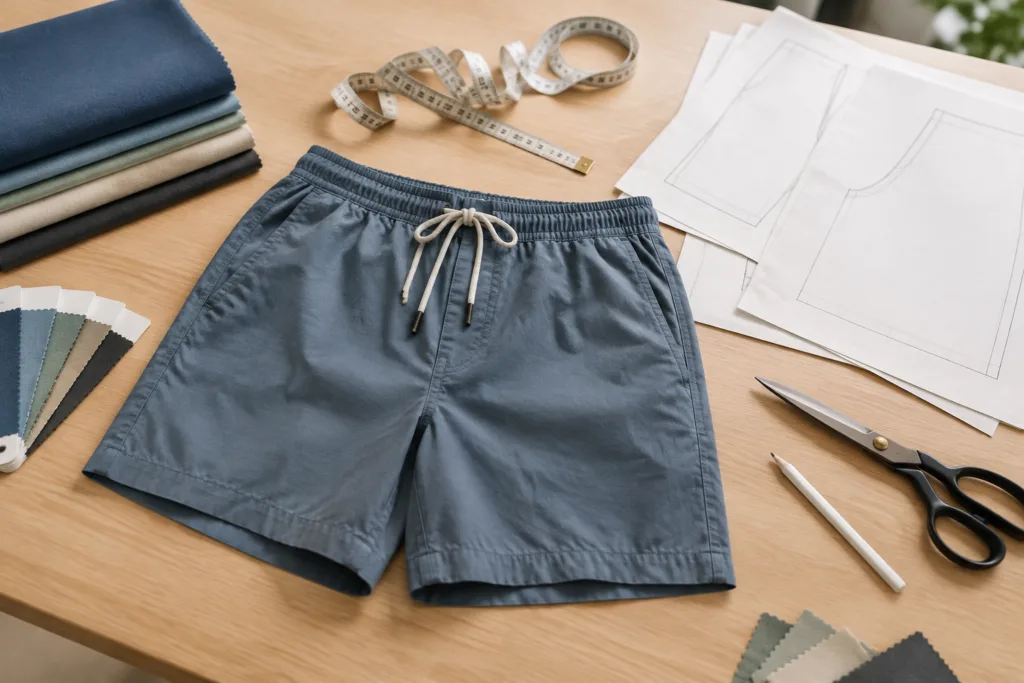
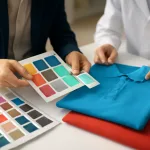
Fabric selection should be discussed as a set of measurable and practical requirements, not as a universal performance label. Ask the manufacturer to identify the proposed fibre composition, fabric construction, weight, stretch level, surface appearance, colour options and care requirements. These details affect hand feel, drape, opacity, packability and how the garment behaves in use. They also affect quotation and sample decisions.
Quick-dry beach shorts require particular care in wording. Drying behaviour can vary with fibre, fabric weight, construction, finish, lining, garment coverage and test method. A buyer should state whether faster drying is a product requirement and ask what fabric options and supporting documentation are available for that specific style. Do not treat a fabric described as suitable for beachwear as proof of a defined drying time or moisture-management result.
Clarify whether the short needs stretch, a separate lining or mesh, and a balance between coverage and airflow. A lining may change opacity, comfort, drying behaviour and the amount of fabric used. Mesh may affect the internal feel and construction process. These are design choices to sample and review rather than automatic features of every beach short.
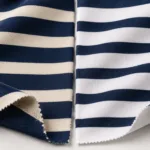
Colour and surface design should also be specified early. Solid colours, repeat prints, geometric artwork, tropical motifs, florals, stripes or abstract patterns may require different artwork files and approval steps. Ask how colour references will be supplied and approved, and whether the proposed decoration is suitable for the selected fabric. If care guidance is important for the product, request wording based on the final garment and materials rather than copying a generic care instruction.
Waistband, Fit and Construction Decisions
Translate comfort goals into construction language. Specify whether the waistband should be elastic, fixed, adjustable or combined with a drawcord, then define the intended rise, waistband height, cord exit, pocket placement, closure and leg opening. Each choice affects appearance, movement, security and the measurement chart. A sample is needed to judge the combined result; individual features cannot establish the final fit on their own.
For men’s beach shorts, buyers should provide the intended body measurements, rise and leg proportions rather than relying on a generic size label. The product-specific reference on men’s beach shorts manufacturing and custom sourcing can support that discussion, but the final block, grading and construction options still require project confirmation. Women’s styles likewise need a separately reviewed block and measurement set where the target fit requires it. In both cases, approve a measurement chart and sample before bulk production, and record any revisions so the approved version is unambiguous.
The next decision is how the sample will be assessed: measurements, waistband recovery, pocket position, seam appearance, lining coverage, artwork placement and overall balance. The manufacturer should confirm which of these can be developed, what the buyer must supply and which points are checked at each approval stage.
Men’s and Women’s Beach Shorts: Product Direction
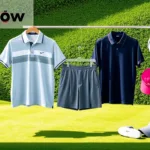
Men’s and women’s beach shorts should be briefed as related products, not automatically as 1 shared pattern. Define the intended wearer, coverage, rise, waist position, leg shape and ease of movement for each style. A common print or collection theme can be maintained while the block, grading, pocket placement and measurement chart are developed separately where the fit requires it.
For a coordinated range, provide a reference garment, technical sketch or measurement chart for each fit. Identify which details must remain consistent across the range, such as fabric direction, artwork, waistband concept or branding, and which details may change by wearer. Ask the manufacturer to confirm whether the requested blocks, size range and grading can be developed for the project rather than assuming that a men’s block can be adapted without review.
Customization and Private-Label Details
Private-label beach shorts require decisions beyond the garment itself. Prepare the brand name, logo artwork, label copy, care information, country-of-origin requirements where applicable, hangtag content, barcode information and packaging direction. The placement, dimensions, colours and application method should be documented before approval. Buyers can use this guide to private-label labels, hang tags and packaging while keeping the final trim specification specific to the beach-short style.
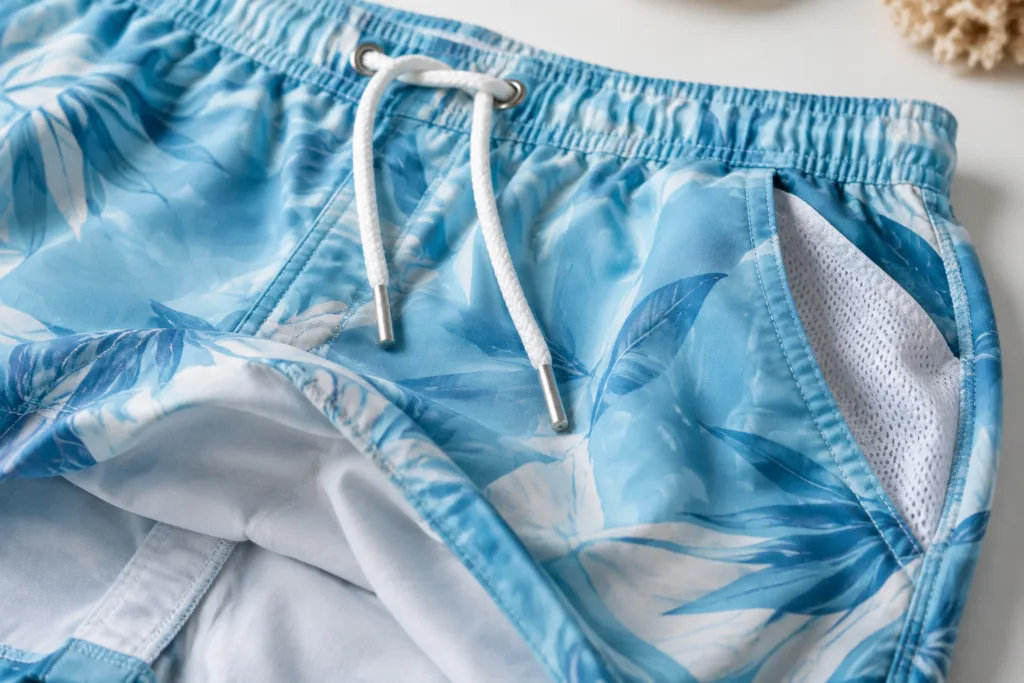
Decoration may include a print, repeat artwork, transfer, embroidery or another method, but availability and suitability must be confirmed for the selected fabric and construction. Ask how artwork should be supplied, which file formats are accepted, how colour references are approved and whether the decoration is reviewed on the actual fabric. For printed beach shorts, confirm the repeat size, placement, seam alignment and any areas that may affect visual continuity.
Packaging should be treated as part of the production brief. State whether each garment requires an individual bag, folded presentation, barcode, size sticker, carton mark or other retail instruction. Ninghow should confirm the available methods, buyer-supplied materials and approval responsibility for each item.
Sampling, Quality Control and Production Approval
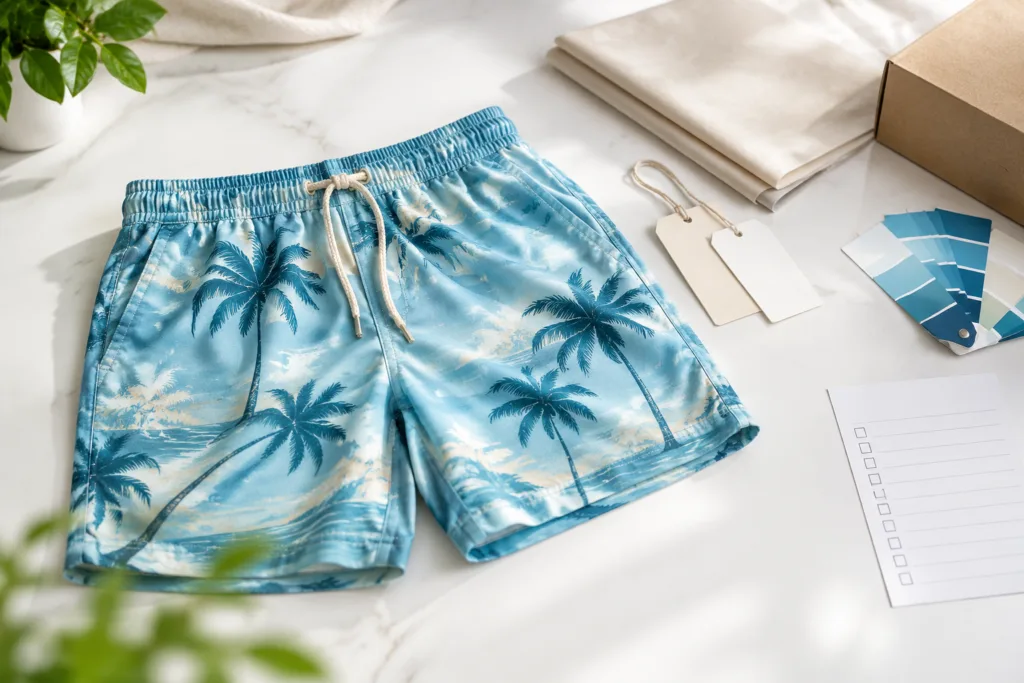
Sampling should convert the brief into an approved physical reference. Ask the manufacturer to explain which stage covers pattern development, which sample shows the intended fabric and trims, how revisions are recorded and when the final sample becomes the bulk-production reference. The documented apparel sampling and product development process can help buyers organise these questions, but the exact stages and charges should be confirmed for the project.
Review the sample against the approved measurement chart, not only its appearance on a model or hanger. Check waist measurement, rise, inseam or outseam as applicable, leg opening, pocket position, waistband height, drawcord placement, lining coverage and overall balance. Also inspect seam appearance, thread security, puckering, raw-edge control, print or artwork placement, label position and packaging presentation.
Before bulk approval, record the accepted fabric, colour, artwork, trims, measurements, construction details and care information in 1 controlled specification. Ask what tolerance system or inspection records will be used, and whether any colour, dimensional, care or performance checks are available for the final product. Do not treat a general factory statement as evidence of a project-specific result. Any failed or revised point should be documented and resolved before production is released.
MOQ, Pricing Inputs and Order Planning
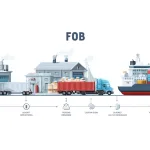
MOQ and quotation requirements are project-specific. They may depend on the selected fabric, colour or print, size range, number of styles, decoration, labels, packaging, sampling needs and order breakdown. Destination, shipping assumptions, payment terms and any buyer-supplied materials can also affect the quotation. Request these inputs in writing rather than comparing a headline unit price.
Provide a target quantity by style and colour, size breakdown if available, expected destination, required packaging and intended launch timing. Ninghow should confirm the applicable MOQ, sample fees, quotation assumptions, production timing and logistics terms after reviewing the brief. Avoid treating an unconfirmed estimate as a commitment, especially when custom fabric, artwork or multiple fit blocks are involved.
How to Send a Beach Shorts Manufacturing Inquiry
A useful first message should let the manufacturer identify the product, unresolved decisions and required next step. Include:
- Product type, intended use, target wearer and men’s, women’s or unisex direction.
- Reference images, sketches, tech packs or existing garments, with measurements where available.
- Fabric composition, weight, stretch, lining or mesh preference, colour direction and any quick-dry requirement.
- Waistband, rise, leg shape, pocket, drawcord, closure and coverage requirements.
- Size range, estimated quantity by style and colour, and an expected size breakdown.
- Artwork files, decoration placement, label copy, hangtag details, care information and packaging needs.
- Destination, target timing, sampling expectations and any required documentation or checks.
This format helps separate confirmed specifications from items that need sampling or quotation. It also gives the manufacturer enough context to identify whether the request is a repeatable product, a new development or a range requiring separate fit approval.
To begin a project review, contact Ninghow with the product brief, intended use, quantity, material direction, decoration and sampling requirements.
What should I send to a beach shorts manufacturer for an accurate quotation?
Send the product concept, target wearer, measurements or tech pack, fabric direction, size range, estimated quantity, artwork, branding, packaging, destination and required timing. Mark any unresolved points so the quotation can state its assumptions.
Can beach shorts be developed in both men’s and women’s fits?
They may be developed as separate fits, but the manufacturer must confirm the available blocks, grading approach, size range and development requirements for each project. Provide separate measurement goals where the intended fits differ.
What should be approved during the beach shorts sampling process?
Approve the fabric, colour, measurements, rise, leg shape, waistband, pockets, lining, construction, artwork, labels, care information and packaging. Record revisions and identify the sample or specification that will control bulk production.
How is the MOQ for private-label beach shorts determined?
MOQ is determined project by project and can be affected by fabric, colours, styles, decoration, size breakdown, labels, packaging and buyer-supplied materials. Request the applicable MOQ after the manufacturer reviews the complete brief.
Can a manufacturer add custom labels, hangtags and packaging to beach shorts?
These options require confirmation for the requested project. Provide artwork, copy, dimensions, barcode or carton requirements and packaging preferences, then ask the manufacturer to confirm available methods and approval responsibilities.