
To build a budget-aware apparel RFQ template, have AI ask about intended use, quantity, and budget before drafting the inquiry. Then separate confirmed specifications from preferences and unanswered questions. As you prepare for manufacturer discussions, use AI to organize the handover—not to invent fabric details, calculate a binding price, or approve technical decisions.
Start Your Apparel RFQ with Budget, Use, and Quantity—not Fabric Guesswork
A useful clothing manufacturer inquiry starts with the commercial objective. State the garment category, intended use, target customer, sales channel, destination market, and desired delivery window. These details give technical recommendations a purpose.
Ask AI to clarify whether you have a target unit cost, a total project budget, or a budget range. Identify what that budget covers and which requirements cannot change. An unknown budget should remain unknown, not become an AI-generated price target.
Copyable commercial starting brief
| Field | Buyer entry |
|---|---|
| Product and use | [Garment, wearer, activity, sales channel, market] |
| Budget | [Amount or range, currency, unit/project basis, inclusions] |
| Quantity | [Style → color → size → units; mark estimates] |
| Timing and destination | [Desired delivery window, delivery location] |
| Decision priorities | [Must-haves, preferences, unknowns] |
Consider 2 hypothetical buyer profiles: a startup testing 1 private-label style with little budget flexibility, and a uniform buyer allocating a defined program budget across several colors and size groups. The startup needs to establish product viability; the uniform buyer needs to protect the total program cost. Neither should send only a combined unit total and ask for the “best price.”
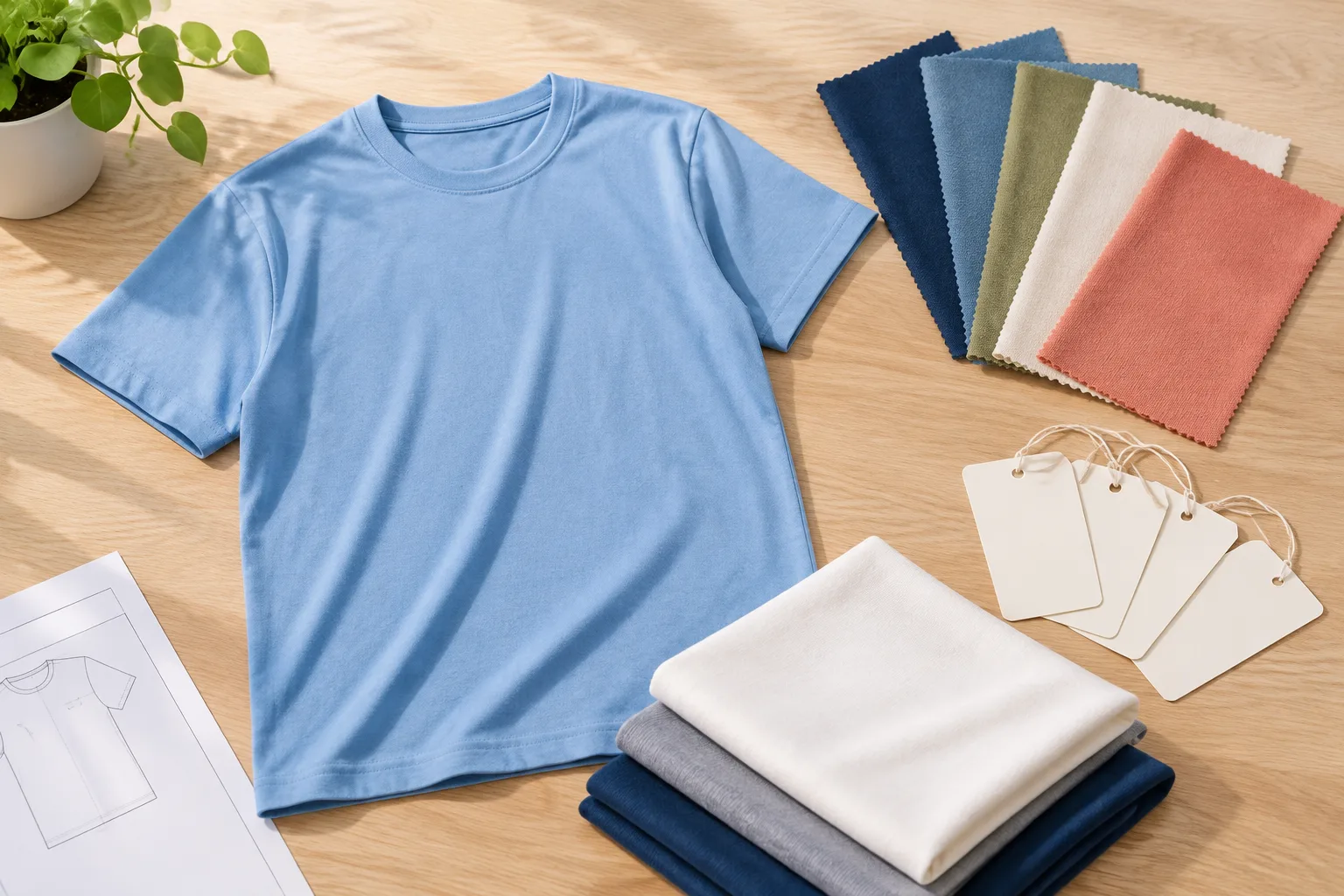
Set Quantity, Color, Currency, and Quote Basis Before Asking for a Price
Before requesting a price, specify the number of styles, units per style, units per color, and size breakdown. State whether repeat orders are anticipated, but distinguish a forecast from a committed purchase.
Color quantities affect fabric purchasing, dyeing or color matching, decoration planning, and size allocation. A combined total hides those decisions; it does not establish a supplier’s production minimums.
Define what the price includes
State the quote currency, delivery destination, and requested quote basis. If using ex-works, FOB, or a delivered basis, confirm that both parties mean the same thing and identify the relevant place or port. A trade term alone is not a complete cost breakdown.
Should your budget include shipping? Include it when your budget is intended to cover delivery, but separate freight from garment cost. Request visibility into sampling, decoration, labels, packaging, freight, duties, taxes, inspection, and other applicable costs. Mark each as included, excluded, or awaiting confirmation.
For the hypothetical startup, a target unit cost helps assess product viability. For the uniform buyer, a landed-cost view helps assess the end-customer contract. Ask suppliers to identify estimates and exclusions so both buyers can compare quotations on the same basis. The RFQ is a reviewable handover, not an automatic price calculator.
Turn Missing Fabric and Product Details into AI Questions
If you do not know your fabric GSM, say so. Describe the intended use, hand feel, weight preference, opacity, stretch, drape, climate, and target cost. Ask the manufacturer to recommend suitable options and explain the trade-offs before you select one.
GSM describes mass per unit area. It does not independently establish quality, opacity, breathability, drape, warmth, or durability. Evaluate those properties separately against the intended use rather than treating a higher GSM as an automatic upgrade.
Make uncertainty visible
Ask AI to flag missing composition, fabric construction, GSM or weight preference, usable width, shrinkage assumptions, color standard, measurements, tolerances, and relevant washing or performance expectations. Assign each item a status: confirmed, preferred, unknown, or manufacturer recommendation requested.
AI can suggest questions and clearly labeled options; it cannot turn missing specifications into facts. A proposed fabric remains an option until reviewed and approved.
Do not estimate fabric consumption from garment weight alone. Request an estimate based on the actual pattern, usable width, size mix, stripe or plaid matching, shrinkage, and waste assumptions. Keep net consumption separate from purchasing allowances. If those inputs are unavailable, ask what is needed before the estimate can be refined.
Build a Manufacturer-Readable Apparel RFQ Specification Brief
Build the RFQ around identifiable files and decisions. Ninghow’s sampling guidance asks for garment specifications, measurements, tolerances, and decoration details. Use those as preparation categories, not as a universal list of contractual requirements.
Organize the technical handover
Group the brief into garment category and construction; fabric and color; fit and measurements; trims; decoration; labels and packaging; quantity and destination; and approval status. Include measurement drawings, available graded size information, tolerances, composition, GSM or a requested fabric alternative, construction details, and artwork files.
Separate must-haves from negotiable options. A required measurement or logo placement should not be treated like a preferred fabric weight or optional packaging upgrade. Where decoration is undecided, supply artwork, dimensions, and placement, then ask the manufacturer to flag feasibility questions for embroidery, screen printing, heat transfer, patches, or another proposed method.
State label, hangtag, folding, polybag, carton, barcode, and packing-list needs rather than assuming they are included. Record unresolved details explicitly.
Connect specifications to approvals
Identify the document version and authorized approver. Define applicable checkpoints: development sample, written revision notes, size-set review, or pre-production approval. Ask the manufacturer which reviews the project needs. Keep one controlled file version so an older measurement sheet or artwork file cannot silently override an approved change.
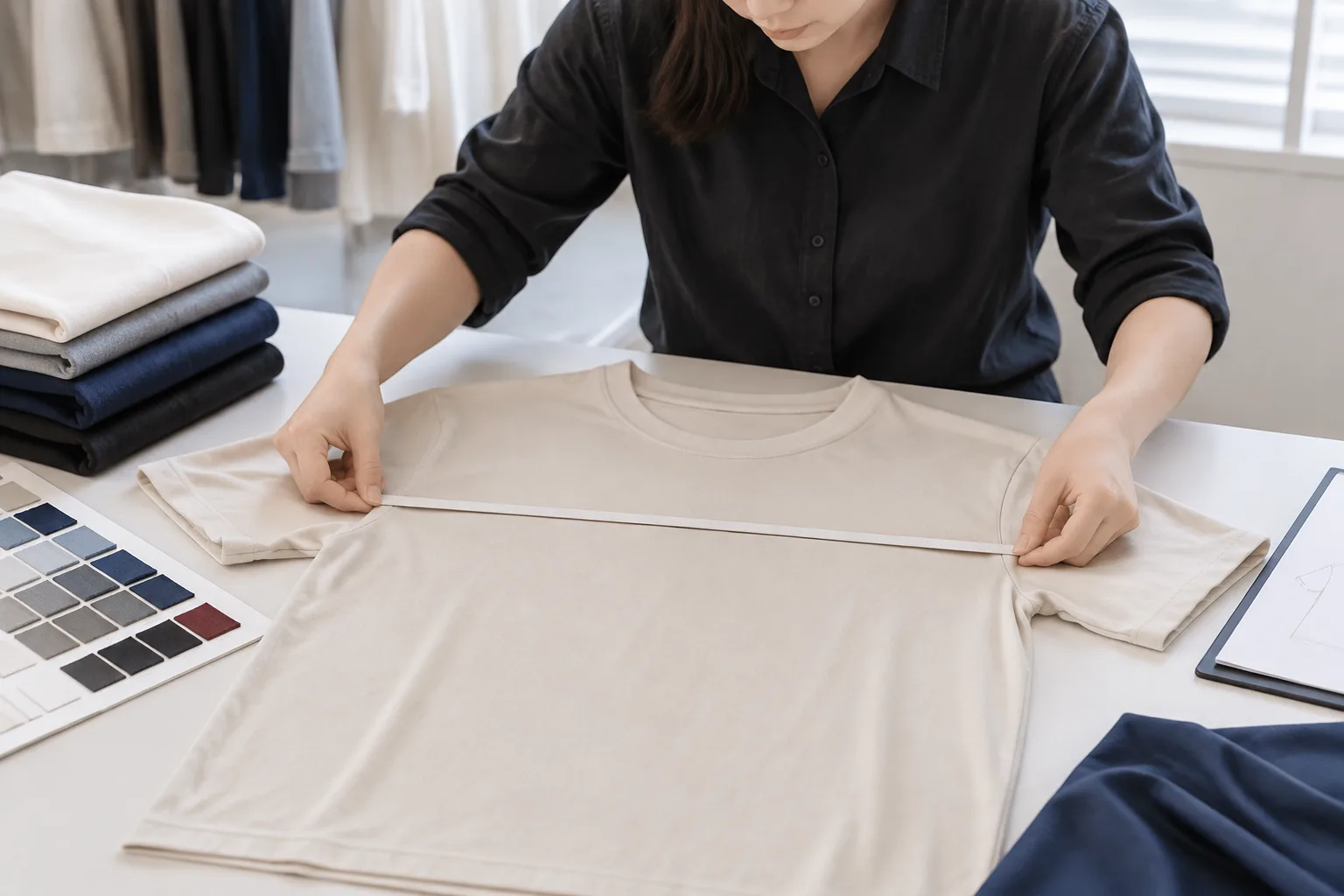
Use a ChatGPT RFQ Prompt That Separates Facts, Assumptions, and Questions
With the file version and approver identified, use AI to turn the remaining information into a controlled manufacturer inquiry. A useful ChatGPT RFQ prompt should separate what you know from what you prefer, what remains unknown, and what the manufacturer must recommend.
Give the tool this context before asking it to draft:
- Product goal, intended use, target market, and wearer or user requirements
- Styles, quantities by style, color and size, currency, destination, and quote basis
- Confirmed fabric, measurements, artwork, decoration, labels, packaging, and approval requirements
- Budget definition, including whether it covers product only, sampling, packaging, freight, or a landed-cost target
- Unknown fields and the decision-maker who will approve changes
If budget, intended use, or quantity is missing, instruct AI to ask questions first. It should not draft a confident specification around an unconfirmed target. Require the output to contain a buyer-ready summary, a specification table, an assumptions and unknowns list, manufacturer questions, and a final review checklist.
A practical prompt pattern is:
Act as an apparel RFQ gap checker. Use only the facts supplied below. Label each item confirmed, preferred, unknown, or manufacturer recommendation requested. If budget, intended use, quantity, currency, or quote basis is missing, ask questions before drafting. Do not invent GSM, composition, tolerances, certifications, test results, prices, MOQ, capacity, lead time, or compliance conclusions. Produce: 1) an RFQ summary, 2) a specification table, 3) assumptions and unknowns, 4) questions for the manufacturer, 5) a review checklist. Use neutral wording where a recommendation is needed.Then paste the project brief below the instruction. Ask AI to use language such as “please recommend suitable options” for unresolved fabric, construction, trim, decoration, or packaging choices. Review every generated line against the source files before it becomes part of a clothing manufacturer inquiry. AI can organize uncertainty; it cannot approve a material, quotation basis, sample, or production specification.
Request Comparable Alternatives Without Losing Control of the Budget
Cost-conscious alternatives are easier to evaluate when the RFQ distinguishes essential requirements from adjustable variables. Mark intended use, fit, logo appearance, required size coverage, and other business-critical outcomes as non-negotiable where appropriate. Mark items such as fabric composition, GSM preference, trim type, decoration method, packaging level, color count, or construction detail as adjustable only when the buyer can accept the related trade-off.
Do not ask only for “the cheapest option.” Ask the manufacturer to compare alternatives against intended use, appearance, hand feel, fit, durability expectations, decoration, packaging, and the information still needed for review. A lower-cost option may change more than the line-item price, so each proposal needs a clear description and a separate quote basis or assumption.
| RFQ comparison field | Buyer should record |
|---|---|
| Requirement | What must remain unchanged |
| Proposed alternative | Material, trim, decoration, construction, or pack-out change |
| Expected trade-off | Possible effect on use, appearance, hand feel, fit, or durability expectations |
| Information needed | Missing composition, measurements, artwork, quantity, or packaging detail |
| Review status | Unknown, recommendation requested, sample required, or approved |
For example, a startup may keep the fit, logo appearance, and intended use fixed while requesting fabric or packaging options. A uniform buyer may keep durability and size coverage priorities fixed while comparing decoration, trim, color, or pack-out choices. These are planning examples, not price or capability claims.
Request each alternative as a separately identified option. That keeps quotations comparable and makes approval easier. Ask the manufacturer to state which assumptions changed, whether sampling or additional review is needed, and which buyer decision is required before the option can be treated as confirmed.
Review the AI-Drafted RFQ Before Sending It to a Manufacturer
Before sending the AI-drafted document, check the complete apparel RFQ against the source files and the commercial decision it needs to support. The final version should state:
- Product purpose, style count, quantity by color and size, destination, currency, and quote basis
- Whether the budget is product-only, includes sampling and packaging, or represents a landed-cost target
- Fabric information, measurements, tolerances, artwork, decoration, labels, packaging, and sample expectations
- Required attachments, file versions, approval owner, and unresolved questions
For shipping, write the basis explicitly. A product-only budget is different from a target that includes sampling, packaging, freight, duties, taxes, or other import costs. Ask the manufacturer to identify exclusions and assumptions rather than treating freight or import charges as included. Do not convert an incomplete total into a guaranteed landed cost.
Use clear filenames and matching version labels for the RFQ, measurement chart, artwork, color references, and packaging instructions. Check that the attachments agree with the written brief. Keep the original AI draft separate from the confirmed buyer specification so assumptions are not mistaken for approvals.
In the response, ask the manufacturer to identify feasibility questions, missing inputs, recommended alternatives, and assumptions. A manufacturer quotation remains project-specific; public company descriptions and general technical guidance do not replace quotation review, sample approval, or test documentation where those are needed.
Once the fields and attachments are checked, send the controlled brief through the approved route. The goal is a qualified inquiry that gives the manufacturer enough context to review the project without asking AI, the buyer, or the supplier to hide uncertainty.
Ready to request a project review? Send the confirmed garment purpose, style and quantity breakdown, color and size details, destination, budget basis, fabric or material information, artwork, measurements, decoration, packaging needs, and relevant attachments through Ninghow’s contact page. Mark unknown fields clearly so the inquiry can be assessed on the information actually available.
Frequently Asked Questions
What if I do not know my fabric GSM?
If you do not know the GSM, label it unknown rather than guessing. State the garment’s intended use, desired hand feel, opacity, drape, and other priorities, then ask the manufacturer to recommend suitable fabric options. Request the composition and mass-per-area basis for each option and review samples before treating a choice as confirmed.
Should my budget include shipping?
State exactly what your budget covers. It may be product-only, include sampling and packaging, or represent a landed-cost target that also considers freight and import charges. Ask the manufacturer to identify exclusions and assumptions. This makes responses more comparable and prevents an incomplete total from being treated as a guaranteed delivered cost.
Can AI fill missing specifications?
AI can identify missing fields, organize supplied information, and draft questions, but it should not invent specifications. It cannot confirm GSM, composition, tolerances, certifications, test results, price, MOQ, lead time, or compliance conclusions without reliable project evidence. Mark unknowns clearly and obtain manufacturer review, samples, approvals, or documentation where needed.
How should I state quantity when I have several colors and sizes?
List quantity by style, color, and size instead of giving only one total. Include planned size distribution, color count, and whether the figures are committed quantities or a forecast. If the breakdown is not final, label it as an estimate and ask how the quote basis changes when the approved mix is available.
What should an apparel RFQ include besides fabric and measurements?
Include intended use, target market, quantity breakdown, currency, destination, quote basis, budget definition, measurements and tolerances, artwork, decoration, labels, packaging, sample expectations, approval timing, and file versions. Also identify unknowns and requested alternatives. These details help a manufacturer review the inquiry without treating assumptions as approved requirements.
How can I ask a clothing manufacturer for lower-cost alternatives?
Separate non-negotiable requirements from adjustable choices, then request named alternatives rather than simply asking for the lowest price. Ask for each option’s assumptions, expected trade-offs, quote basis, information gaps, and sample or approval needs. Compare fabric, trim, decoration, construction, color, and packaging changes against the garment’s intended use.