




A clothing manufacturer handover checklist should do more than list files: it should connect each asset to its version, approval status, usage permission and receiving check. If you are already assessing a supplier change, prepare a controlled technical package before asking a new factory to assess an existing style or order. That package lets the receiving team distinguish usable specifications from gaps that need clarification, sampling, redevelopment or revalidation.
Think of the handover as a transfer of both product information and current responsibilities. Include what is approved, what remains open, who can authorize decisions, and what must happen before materials are purchased or bulk production is released. Ownership and file-release rights depend on the relevant agreements; payment for development alone should not be treated as proof that every file or design can be transferred.
What to Include in a Clothing Manufacturer Handover Pack Before the First Review
Send a version-controlled technical package, not an unlabelled folder. The aim is to give the prospective manufacturer enough information to review the product and identify missing inputs without guessing which file or sample is current.
| Asset | Preferred format or reference | Status and access to record | Risk if missing | Receiving-factory check |
|---|---|---|---|---|
| Style overview and production status | Style list, target quantities, size range, current order stage | Owner, date, confirmed or provisional | Scope and next action are unclear | Confirm style count, variants and requested outcome |
| Tech pack and construction details | Editable or readable specification files with version history | Approval date, decision owner, permission status | Measurements, construction or finishing may be assumed | Check consistency across pages, sizes and samples |
| Patterns and measurement history | Pattern files, grading information, measurement charts and fit comments | Format, units, version, sample association and access rights | Files may not open or may not match the approved fit | Open files and compare them with measurements and reference sample |
| Approved samples and materials | Labeled physical sample, fabric and trim swatches or cuttings | Sample identity, approval date and known changes | Appearance or construction benchmark is uncertain | Identify the reference and reconcile it with written specifications |
| Artwork, labels and packaging | Artwork files, placement instructions, label copy and packing brief | Version, style variant, approval and authorization | Incorrect logo, placement, label or pack-out may be developed | Match each version to the relevant style and receiving workflow |
| Quality and production history | Inspection records, reports, defect log, photos and corrective actions | Date, article or material tested, status and sharing permission | Recurring issues or unverified claims may be missed | Confirm applicability and assign unresolved actions |
Mark each item as confirmed, buyer decision required, or redevelopment or revalidation required. Keep confidentiality terms, file-release rights, design or artwork permissions, and any restrictions on sharing with a prospective supplier tied to the actual contract and authorization—not assumptions about who paid a development fee.
A structured handover also needs a short status summary. Guidance from the UK Health and Safety Executive on transferring tasks between teams emphasizes preparation, information exchange and receiving-side cross-checking. Applied here as a general process principle, a file manifest and an explicit open-action list help the new team verify what it has received instead of treating delivery as acceptance.
Transfer Graded Patterns, Measurement History, and Fit Decisions
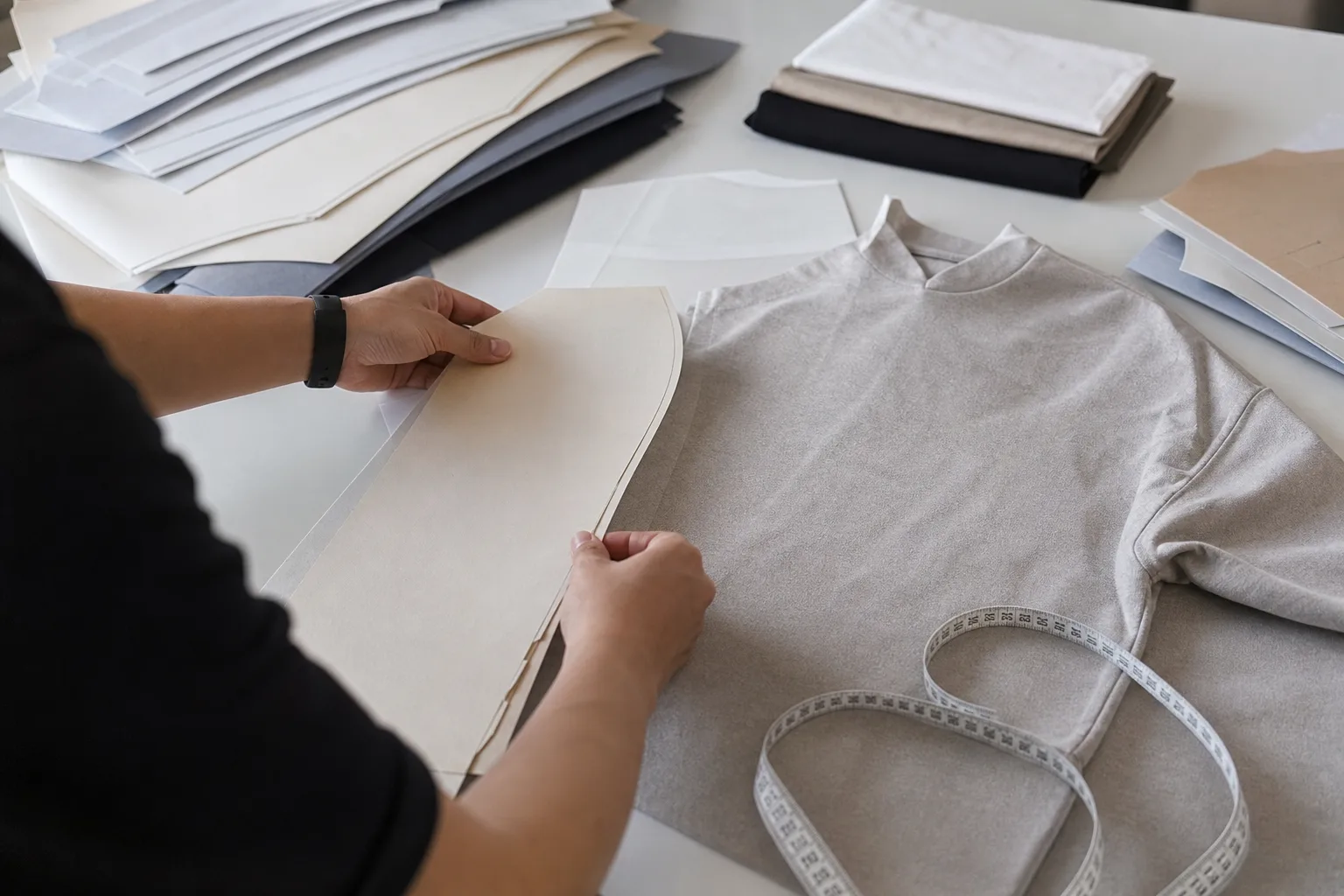
A base pattern is only one part of a usable pattern handover. Ask for the transferable pattern files, graded sizes or grading rules, units, pattern measurements, construction notes and, where available and authorized, relevant marker or cutting references. Record the file format and software compatibility for the receiving factory to confirm. A file that opens successfully is not automatically production-ready.
Pair the pattern package with the latest measurement chart, points of measure, tolerances, size range, fit comments and the history of approved or rejected samples. Identify which sample corresponds to each pattern version. If a fit comment was resolved in a later sample, note whether that change was also incorporated into the pattern and specification.
Before bulk planning, have the receiving team compare key pattern measurements and garment measurements with the approved physical reference and construction details. The check should flag differences for a buyer decision rather than silently “correct” them. Ninghow’s sampling guidance identifies specifications, measurements, tolerances and decoration details as useful development inputs; its custom clothing requirements guide can help buyers organize those inputs.
Can a new factory use existing patterns? It may be possible if the buyer has the right to use and share the files and the new factory can verify the format, grading, construction and fit. If the old supplier will not release files, first check the contract and any confidentiality or ownership terms, then request the specific transferable assets through the authorized parties. If files cannot be obtained, treat missing pattern work as a feasibility question: the new supplier may need an authorized physical reference and enough specifications to assess redevelopment. Do not assume a sample grants permission to reproduce protected design elements, marks or artwork.
Reconcile the Tech Pack With the Approved Physical Sample
The tech pack and approved sample answer different questions. The sample gives a physical benchmark for features such as appearance, hand feel and construction. The tech pack can communicate details that a single garment cannot, including grading, tolerances, internal construction, material information, artwork specifications and packaging instructions. An approved sample therefore does not replace a complete specification.
Compare the latest tech pack, sample, pattern, measurement chart, construction notes and buyer comments as separate records. Look for conflicts in measurements, seams, stitch details, label placement, artwork location, fit feedback and changes requested after approval. Identify the controlling reference for each unresolved point; do not let a sample-room note or an old file silently override a later written decision.
Use a discrepancy log with fields such as: issue; affected size or component; source documents and versions; proposed resolution; decision owner; approval date; and revised file reference. Label the physical sample with its style, version and approval status, and record who approved it and when. Ninghow’s order-process guidance describes sample approval and order confirmation before bulk material purchasing. As a buyer control, freeze the resolved handover version in writing before committing to bulk materials or production.
For color, retain an approved physical reference or a traceable digital standard and state the review conditions. A color identifier alone cannot guarantee a physical match: perceived color can change with lighting and material. X-Rite’s explanation of metamerism describes how a color pair can appear to match in one lighting condition and differ under another. Record how color was assessed and have the buyer approve any difference against the applicable project standard.
Preserve Fabric, Color, Trim, Decoration, and Packaging Standards
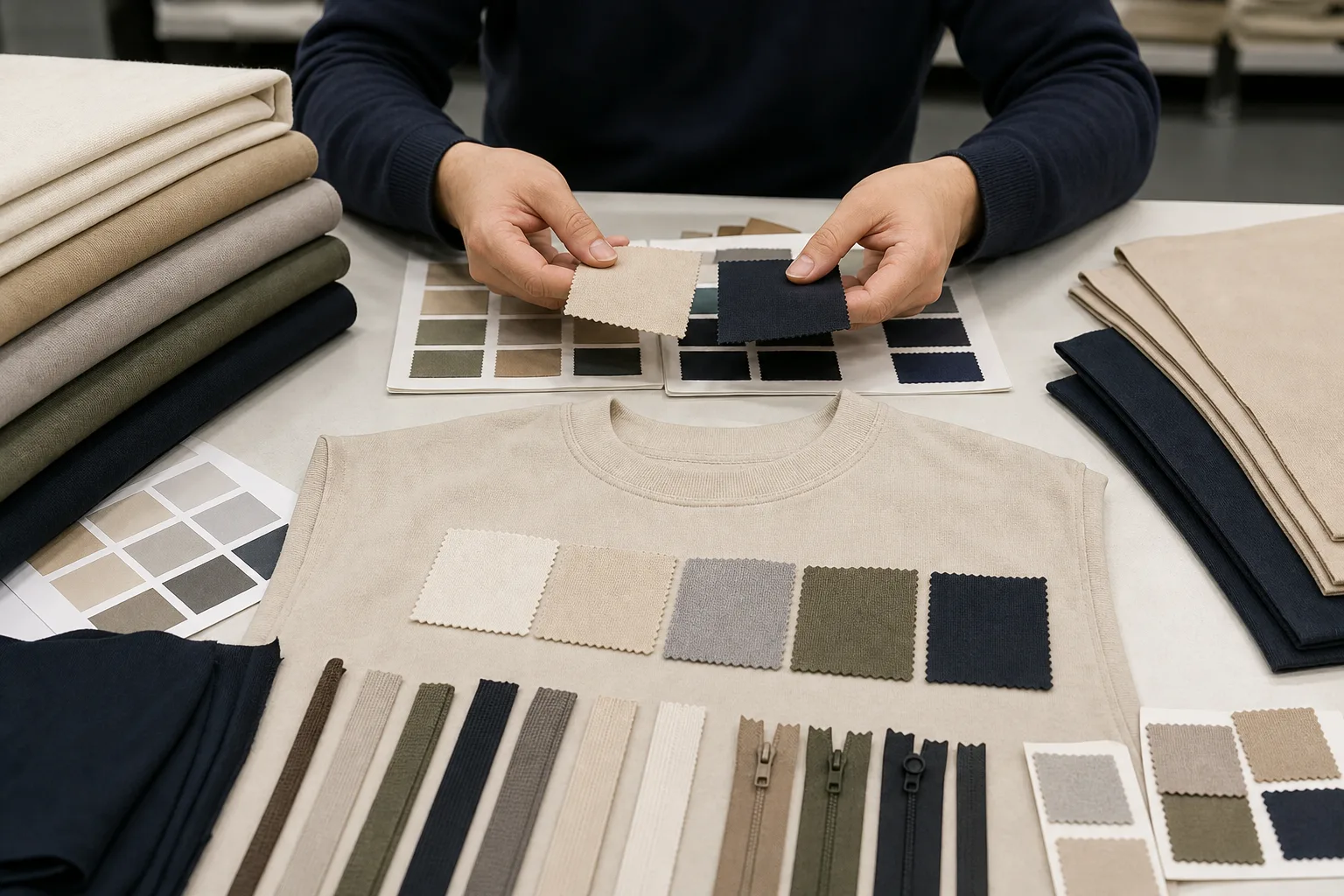
Transfer material facts and physical references together. For fabric, include composition, construction, weight or GSM where documented, finish, wash-care information, shrinkage history and supplier or lot references when available. Include approved swatches or cuttings and identify the sample or production version they represent. For trims, record the relevant specifications and references for thread, elastic, zippers, buttons, labels, hangtags and patches.
For printing or embroidery, provide authorized artwork files, color references, placement dimensions, decoration instructions and the approval tied to each style or variant. If a program has multiple logos, make an artwork matrix that links every version to its garment style, size range, location, color and approval status. Confirm authorization to share and use each mark or design.
Packaging is part of the product handover when it affects buyer receiving or allocation. Specify individual folding, size stickers, barcode data, carton marks, assortment or open-size packing, and any receiving workflow requirements. If the buyer needs pre-packs for distribution or open sizes for flexible replenishment, state the choice and approve a packing sample or other suitable confirmation. Do not leave the pack-out to inference.
Treat a material substitution as a controlled change, not an automatic equivalent. Compare the original and proposed material against affected appearance, fit, processing and required performance checks. Matching composition or GSM alone does not establish interchangeability. Record the difference, the checks needed, the decision owner and written approval before adopting a substitute.
Document Open Defects, Tests, and Production History Before the Transfer
Give the receiving factory a candid view of unresolved issues. An open-issues register can capture the defect description, affected component or size, where and when it was observed, documented frequency, suspected cause, previous corrective action, current status and decision owner. If the cause is uncertain, label it as a hypothesis rather than a finding.
Share inspection records, rejected samples, relevant production photos, corrective-action records, wash feedback or wearer-trial notes when available and permitted. For a wearer trial, record the intended user group, size, activity and feedback questions where relevant. Separate personal preference from a measurable specification defect or a product requirement; informal feedback is useful context, not automatically a test result.
Before relying on a test report, match it to the actual article, material, color, sample or lot, preparation method, test method, result, acceptance basis and date. A report for a different material or earlier version may not establish anything about the transferred product. A laboratory logo or previous supplier statement is not a substitute for checking applicability.
After a factory change, identify which product elements have changed and recheck the affected risks. If materials, construction, decoration or fit have changed, the buyer and receiving factory should decide whether additional sampling or testing is needed for the relevant requirement. Do not assume every item needs a full redesign, or that old evidence automatically applies unchanged. Record the rationale, approvals and evidence for the specific version.
Run a New-Factory File, Sample, and Material Acceptance Review
Use staged decisions so the team does not confuse an initial review with approval for production. First check that files are readable, versions are consistent, access permissions are addressed and physical samples have arrived and are identified. Then review pattern compatibility, measurements, construction, material availability, decoration, labels, packaging and open issues. Finally, assess a replacement or pre-production sample against the approved reference and resolved specification.
For each asset or decision, choose a status: accepted, accepted with clarification, redevelopment required, revalidation required, or blocked pending buyer documentation. Confirm the final version and changes in writing. Ninghow’s published sampling inputs include measurements, tolerances, composition, GSM, structure, artwork and packaging; these are practical fields for a receiving review, not a guarantee that every project has identical requirements. Material readiness and approvals can also affect planning, so agree milestones only after the transfer scope is understood.
Worked hypothetical scenario 1 — established apparel brand. The buyer has a graded pattern file, current measurement chart, approved sample, material references and a recent tech pack. Evidence available: versions appear consistent and the buyer can document permission to share the files. Evidence gap: the factory has not yet confirmed file compatibility or reconciled the pattern to the physical sample. Outcome: Clarify. Send the package for technical intake, request the receiving comparison and resolve any differences before approving a replacement sample. If those checks agree, the assets may be accepted for the next development gate; bulk release still needs written specification approval.
Worked hypothetical scenario 2 — uniform or team buyer. The buyer has several size groups, different logo versions and location-specific packaging rules, but only some historical files and an unlabeled sample. Evidence available: the buyer can supply current logo artwork and a list of variants. Evidence gap: sample identity, grading history, earlier approvals and artwork-to-style mapping are incomplete. Outcome: Pause. Label and identify the reference sample, establish the variant matrix, confirm artwork authorization and recover or recreate the missing specifications. Treat unverified pattern, color and fit details as development questions rather than accepted standards.
For either situation, a short acceptance record should name the item, reviewed version, status, open question, owner and next approval gate. This makes “received” distinct from “verified” and “approved for production.”
Prepare the Final Handover Brief for a Manufacturing Feasibility Review
Before submitting a project, complete this copyable checklist and attach a file manifest. Use “not available” where information is missing; an explicit gap is easier to assess than an implied specification.
- Project: style numbers, garment categories, quantities or quantity ranges, size range, target market and current production status.
- Requested outcome: reproduce an approved product, correct a documented issue, adapt an existing pattern or redevelop missing elements.
- Files: name, type, version, date, approval status, owner or permission status, and any format or access restriction.
- Physical references: sample identity and approval status; fabric and trim references; color standard and review conditions.
- Execution details: construction, labels, decoration versions and placement, packaging, barcode and carton requirements.
- History: open defects, corrective actions, relevant inspections or reports, and feedback linked to the actual article or sample where possible.
- Decisions: unresolved buyer choices, required checks, decision owners, target handover timing and approval deadlines.
- Control: transfer and use permissions checked, versions reconciled, samples labeled, artwork authorized and final approval recorded.
Ask the receiving manufacturer to return a feasibility view that identifies usable assets, file or material questions, likely sampling or revalidation needs, decoration and packaging concerns, and the approvals needed before bulk purchasing or production. Ninghow presents OEM production from buyer specifications and ODM assistance with product-development choices; for either route, state which decisions and development tasks the buyer expects to own and which are being requested from the supplier. You can also review buyer preparation points for clothing sourcing.
If you are ready for a project-specific review, send Ninghow the style count, quantity and size range, existing file list, available samples and material references, known issues, and planned handover timing through the Request a Quote page. A complete brief helps identify what can be reviewed, what needs clarification and what may require new development; it does not predetermine feasibility or production timing.
Frequently Asked Questions
Can a new factory use my existing patterns?
Possibly, if you have the right to share and use them and the receiving factory can open and verify the files, grading, construction and fit. Confirm these points against the physical reference and current measurement history before treating the patterns as production-ready.
What if the old factory will not release files?
Check the applicable agreement and permissions, then request release through the appropriate parties. Do not assume that payment for development automatically transfers every file or right. If files remain unavailable, ask the prospective factory what authorized references and specifications it needs to assess redevelopment.
Does an approved sample replace a tech pack?
No. A sample is a physical benchmark, but it may not communicate grading, tolerances, internal construction, material specifications, artwork details or packaging. Transfer both and resolve differences in writing.
What must be revalidated after a factory change?
Review the elements affected by the transfer, including pattern and fit, materials, color, construction, decoration and any required product checks. Decide what to recheck based on actual changes and applicable buyer requirements; do not assume old reports apply to a different version.
What should be included in a garment supplier transfer package?
Include the tech pack, patterns and grading, measurement and fit history, approved samples, fabric and trim references, artwork and permissions, labels and packaging instructions, production status, open defects, relevant records and a versioned file manifest.
How should a brand transfer graded patterns and measurement history?
Provide the authorized pattern files, format and units, grading information, version and sample association, plus measurement charts, tolerances and fit comments. Have the receiving factory compare the files with the approved physical sample before acceptance.