








Choosing the right clothing HS code is not just a paperwork task. It directly affects import duty, customs clearance speed, document accuracy, and the risk of inspections or post-entry corrections. For apparel buyers, sourcing teams, and brand owners, the challenge is that two garments that look similar at first glance can fall under different codes because of fabric content, knit or woven construction, gender category, or end use.
If your project involves overseas production, this is where early import clothing sourcing guidance becomes useful. From our manufacturing perspective, the right HS code depends on having accurate garment specifications before shipment, including composition, construction, labeling details, and use category. We support buyers by clarifying product specs during development, checking fabric and trim details, aligning private label requirements, and reducing avoidable errors before customs documents are prepared.
What an HS code is and how apparel classification works in practice
An HS code is a standardized tariff classification number used in international trade. For apparel importers, it helps customs authorities identify what the product is, how it should be taxed, and whether special rules or documentation apply.
In practice, apparel classification is not based on a marketing description such as “fashion hoodie” or “premium polo.” Customs classification usually follows product facts: what the garment is, what fibers dominate the fabric, whether the fabric is knit or woven, who the garment is made for, and whether the garment has a special use.
That is why a correct clothing HS code starts with a technical product description, not a sales description. A customs team or broker needs measurable details, not broad category names.
Key takeaway: If the garment specification is unclear, the HS code is usually uncertain too.
What changes a clothing HS code most often

The biggest drivers are garment type, fiber content, fabric construction, gender or age category, and use. These factors often work together, so one change in design or material can shift the classification result.
- Garment type: T-shirt, polo, dress shirt, hoodie, trousers, jacket, shorts, and other categories are classified differently.
- Fiber content: Cotton, polyester, wool, man-made fibers, and blends may fall under different headings or subheadings.
- Knit or woven construction: This is one of the most common reasons similar-looking garments receive different codes.
- Gender or age: Men’s, women’s, boys’, girls’, and babies’ apparel may be separated for customs purposes.
- Use category: Sportswear, workwear, uniforms, or protective garments may not be classified the same way as general casualwear.
From our apparel production work, classification problems often start when one of these details is assumed rather than verified. Buyers may know the style name, but customs needs the underlying construction facts.
How garment type affects the clothing HS code
Garment type is usually the first sorting step. A T-shirt is not classified the same way as a collared knit polo, and a hoodie is not automatically treated the same as a jacket just because it has long sleeves and a zipper.
T-shirts and basic tops
T-shirts are often classified as simple upper-body knit garments, but the exact code still depends on fiber and gender category. A crew neck short-sleeve jersey top made from cotton can fall differently from a similar top made from polyester or a blend dominated by synthetic fibers.
Problems happen when a style is called a T-shirt commercially but includes design features that move it into another category. Ribbed fashion tops, thermal tops, or performance tops may require a closer review.
Polos and collared knit shirts
A polo shirt may look like a T-shirt with a collar, but customs classification may treat it differently because of styling and garment identity. Collar construction, placket design, and intended category all matter.
For buyers developing custom polos, we usually recommend locking the style description early and keeping technical sheets consistent across sampling, purchase orders, and shipping documents. That reduces confusion between a polo, a knitted shirt, and a casual top.
Hoodies, sweatshirts, and jackets
Hoodies are a common source of HS code mistakes. Some are treated as sweatshirts, while others move closer to outerwear depending on construction, lining, closure type, and fabric weight. A full-zip fleece hoodie with heavy brushed fabric and pockets may raise different classification questions than a lightweight pullover french terry hoodie.
Jackets also require care because outerwear classification can depend on whether the garment is meant for weather protection, insulation, or general layering. Surface fabric, lining, padding, and design intent all matter.
Pants, shorts, and lower-body garments
Trousers, joggers, woven shorts, and knit training shorts can all separate into different code paths. Elastic waist details alone do not define classification. Construction, fabric, intended use, and styling category must be reviewed together.
This is especially important in teamwear and sportswear, where buyers may group multiple lower-body styles under one product family even though customs may not.
How fabric material changes the code
Fiber content matters because apparel tariff schedules usually distinguish between cotton, wool, man-made fibers, and other materials. The dominant fiber by weight is often the first thing customs reviewers want to see after garment type.
| Fabric factor | Why it matters for classification | Buyer note |
|---|---|---|
| Cotton | Often classified differently from man-made fiber garments | Confirm actual composition, not just fabric feel |
| Polyester or other synthetics | May move the garment into man-made fiber categories | Performance styles often fall here |
| Wool | Usually has separate tariff treatment | Check blend percentages carefully |
| Blends | Dominant fiber may control the code | A small composition change can alter classification |
| Special fabrics | Coatings, laminated layers, or bonded constructions may affect classification | Do not rely only on face fabric description |
In manufacturing, composition errors often come from using old fabric descriptions after development changes. A sample may start as 100% cotton, then switch to a cotton-poly blend for cost or performance reasons. If the commercial invoice still reflects the original idea, the classification may be wrong.
This is one reason we advise buyers to align lab dips, fabric booking sheets, bulk test reports, and export documents before final shipment. The garment that ships must match the garment that was classified.
Why knit vs. woven is often more important than appearance
Knit versus woven construction is one of the most important classification splits in apparel. Many import issues happen because a buyer identifies the style by silhouette while customs focuses on fabric construction.
A knit shirt and a woven shirt may look similar on a product page, but their fabric structures are different. Knit fabrics are formed by interlocking loops and usually offer more stretch. Woven fabrics are formed by interlacing yarns and usually have a more stable structure.
- Knit examples: jersey T-shirts, pique polos, fleece sweatshirts, knit joggers
- Woven examples: poplin shirts, woven shorts, twill trousers, shell jackets
From a factory perspective, this difference shows up in pattern allowance, seam behavior, finishing, and fit handling. From a customs perspective, it can change the classification path entirely.
Key takeaway: Never classify by appearance alone when the true divider may be fabric construction.
How gender and age category can change the result
Many clothing codes separate garments for men or boys from those for women or girls. Baby garments may also have their own categories. This means a similar style can land in different tariff lines depending on size range, intended wearer, and how the product is presented commercially.
Unisex garments need extra care. In production, unisex often means one design sold across multiple users. In customs classification, the item may still need to be assigned based on sizing, cut, presentation, or the applicable tariff rule used by the importing country.
For buyers creating private label collections, size specs and fit intent should be clear before shipping. A vague description such as “oversized streetwear top” is not enough for classification review.
How use category affects apparel HS code
End use matters most when the garment crosses from ordinary casualwear into activewear, workwear, uniforms, or special-purpose apparel. The key question is whether the garment is simply styled for a theme or genuinely constructed for a specific use.
A basic polyester T-shirt sold for gym use may still classify as a general knit top, while a specialized sports garment with distinct technical features may require a different review. The same applies to workwear. A shirt in a company color is not automatically workwear in customs terms unless its construction and purpose support that identity.
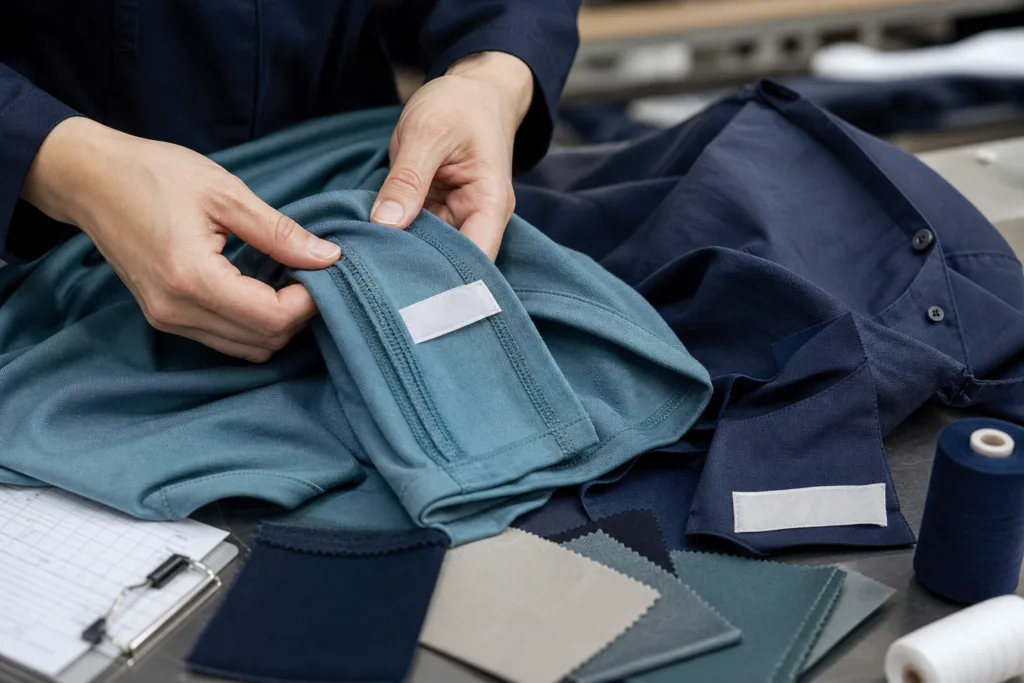
When buyers ask us to support product development, this is where accurate use descriptions help. Performance panels, reflective trims, reinforcement, weather resistance, or protective design details should appear clearly in the product file and not only in marketing copy.
Before shipment, importers should also review apparel labeling checks for imported garments so the physical garment presentation matches the declared product identity.
How to identify the correct clothing HS code from a product specification sheet
The most reliable method is to work from a full spec sheet, not from photos or a product nickname. If the specification file is complete, classification becomes much easier.
- Start with the garment category: top, shirt, sweatshirt, jacket, trousers, shorts, or other.
- Confirm whether the main shell fabric is knit or woven.
- Check fiber composition by percentage, especially the dominant fiber by weight.
- Identify whether the garment is men’s, women’s, boys’, girls’, baby, or clearly unisex with supporting size and fit notes.
- Review design features that may shift category, such as collar type, placket, lining, padding, coating, or weather-protection elements.
- Confirm end use if the garment is specialized, such as sports, uniform, or workwear.
- Match the final production version, not an outdated sample version.
At this stage, having Ninghow or another manufacturer provide a clear bill of materials, fabric details, and construction notes can prevent confusion between development language and customs language.
Examples of similar garments that may fall into different codes
Apparel classification becomes easier when buyers compare similar-looking products side by side. The differences below are common in sourcing and import documentation.
| Garment example | Looks similar to | What may change the code |
|---|---|---|
| Cotton jersey crew neck T-shirt | Polyester performance tee | Fiber content |
| Pique knit polo | Woven casual shirt | Knit versus woven construction |
| Fleece pullover hoodie | Light outerwear jacket | Outerwear features, lining, closure, use |
| Women’s woven shorts | Girls’ woven shorts | Age and gender classification |
| Basic jogger | Training pant | Construction and specialized use details |
| Corporate uniform shirt | General casual shirt | Functional use and garment presentation |
These differences may look small in product development, but they can affect duty rates and customs review. That is why we encourage buyers to treat classification as part of product setup, not just shipping paperwork at the end.
Common clothing HS code mistakes importers make
The most common mistake is relying on supplier shorthand instead of technical product data. Terms like “tee,” “fashion top,” or “sports jacket” are not precise enough for customs classification.
- Using the same code for multiple styles in one order without checking garment-level differences
- Ignoring knit versus woven construction because the silhouette looks the same
- Failing to update the code after changing fabric composition during development
- Calling a garment unisex without confirming how it should be classified in the destination market
- Describing a garment as sportswear or workwear without true functional construction details
- Copying an old HS code from a previous style that is only visually similar
Another avoidable issue is separating tariff classification from label and documentation review. Buyers should align classification with country-of-origin label rules for apparel imports and packing documents so product identity is consistent across the shipment.
What product details to prepare before shipping
Before a shipment is booked, importers should be able to hand a customs broker a clean technical summary. If key product facts are missing, the chance of delay increases.
- Garment type and style description
- Fiber composition by percentage
- Main fabric construction: knit or woven
- Fabric weight or GSM when useful for product clarity
- Gender or age category
- End use or special-purpose function if relevant
- Lining, padding, coating, or bonded layer details
- Trim and closure notes such as zipper, buttons, hood, rib, reflective tape, or pockets
- Size range and fit intent
- Labeling and packaging notes
From a production control viewpoint, this information should match the approved sample and the bulk order file. If the shipment includes a design revision, the classification should be rechecked rather than assumed.
Buyers with complex programs often benefit from structured apparel manufacturing compliance considerations before production closes, especially when styles vary by fabric, labeling, and destination market.
How incorrect HS code selection affects cost and timing
A wrong code can change duty, trigger document questions, slow release, or lead to post-entry corrections. Even when the shipment is eventually cleared, the process may create extra broker work, port storage, or internal reclassification effort.
For apparel importers, the landed cost risk is often underestimated. If the code carries a different duty rate than expected, the margin on the style can change after goods are already on the water. That is especially painful for seasonal items, uniforms tied to an event date, or launch orders for a new collection.
Incorrect classification can also attract extra scrutiny if the garment description, invoice wording, labels, and physical goods do not line up. Customs teams notice inconsistency quickly.
When to re-check the HS code during development or production
You should re-check the code any time the product changes in a way that affects customs logic. Small development decisions can have a bigger classification impact than buyers expect.
- Fabric changed from cotton to polyester or to a new blend
- Construction changed from knit to woven or vice versa
- A sweatshirt style gained outerwear features such as lining or weatherproof shell fabric
- Target market changed from men’s to women’s, youth, or baby sizing
- The garment was repositioned from casualwear to uniform or performance use
- The approved sample and bulk version are not technically identical
In our order management work, these are the moments when order workflow support for clothing buyers helps keep production, documentation, and shipping aligned. Classification works best when development, sourcing, and logistics are talking to each other before final export papers are issued.
How buyers can verify HS code accuracy before import
The safest approach is to verify the proposed code with a qualified customs broker, tariff database, or import compliance specialist in the destination country. Manufacturers can provide the technical inputs, but importers should confirm the final declaration standard required by their market.
We recommend giving the reviewer a concise product package that includes spec sheet, composition, construction, use description, photos, and any special features. A broker can only classify accurately if the product data is accurate.
This is also why sample approval matters. If the approved pre-production sample establishes the real product identity, the customs review has a stronger factual basis than if everyone is working from concept descriptions.
Key takeaway: The more specific the product file, the less guesswork is left in HS code selection.
A practical checklist before you confirm the clothing HS code
Before shipment, buyers should pause and confirm that the code matches the actual garment, not the original concept. This final review is simple, but it prevents expensive surprises.
- Is the garment category stated clearly and consistently?
- Is the shell fabric composition confirmed by the final bulk material?
- Is the fabric knit or woven, and is that stated correctly on documents?
- Does the gender or age category match the intended product line?
- Does the declared end use reflect real construction features?
- Have design changes during sampling or bulk prep been reviewed for classification impact?
- Do labels, invoice wording, and packing records describe the same product?
For buyers importing custom garments, this step is easier when the factory file is organized from the beginning. At Ninghow, we see the strongest results when product development, private label details, QC preparation, and shipping documents are built from one consistent specification set.
Conclusion

The right clothing HS code comes from accurate garment knowledge. Garment type, fiber content, knit or woven construction, gender category, and intended use all influence classification, and even small product changes can alter the result.
For apparel brands, sourcing teams, and import managers, the practical goal is not to memorize every tariff line. It is to build a repeatable process: define the garment correctly, confirm the technical facts, re-check the code after material or design changes, and verify the final result with customs support before shipment. That approach reduces duty surprises, customs delays, and preventable compliance problems.
FAQs
Why is the clothing HS code sometimes different for garments that look almost the same?
The clothing HS code can differ because customs looks at technical details, not just appearance. Fiber content, knit versus woven construction, gender category, lining, closures, and end use can all change classification even when two garments have a similar silhouette.
Can I use the same HS code for all styles in one apparel shipment?
No, you should not assume one HS code fits every style in the shipment. Each garment should be reviewed based on its own type, composition, construction, and intended wearer, especially when an order mixes tops, bottoms, outerwear, or different fabric groups.
Does changing fabric composition during sampling affect the HS code?
Yes, a fabric change can affect the HS code if it changes the dominant fiber or the nature of the garment. A style that starts as cotton but moves to a polyester-rich blend should be reviewed again before shipping documents are finalized.
How do I classify a unisex garment for customs?
Unisex garments need careful review because customs systems may still require a men’s, women’s, boys’, or girls’ category. The final treatment often depends on sizing, cut, presentation, and the import rules used in the destination country, so it is wise to confirm with a customs broker.
What documents help confirm the correct clothing HS code?
The most helpful documents are the product specification sheet, bill of materials, fabric composition details, sample photos, and any notes about use or special construction. When those records match the final bulk garment, customs classification becomes more accurate and easier to defend.
When should I re-check the clothing HS code before import?
You should re-check the clothing HS code whenever fabric, construction, garment function, size category, or key styling features change. It is also smart to review it again before shipment if the approved sample and the bulk production version are not exactly the same.