








Choosing the best clothing products for startups is not mainly about trend chasing. It is about selecting a category that fits your customer, your budget, and your ability to move from sample to repeatable bulk production without getting trapped by avoidable complexity. For new brands, the first product line often sets the pattern for pricing, fit standards, supplier communication, and how quickly you can test market response.
If your launch plan depends on practical startup-friendly clothing manufacturing options, it helps to begin with a product category that can be developed, sampled, customized, and reordered without excessive fabric risk or hidden construction problems. We support this kind of early-stage product planning through fabric selection, fit refinement, logo application advice, private label setup, sample development, and bulk production preparation, which is why category choice should happen before you lock in artwork, packaging, or inventory quantities.
Why the first apparel category can make or break a new clothing brand
Your first category matters because it affects almost every downstream decision. A simple knit T-shirt and a compression activewear set may both look commercially attractive, but they behave very differently in fabric sourcing, sampling, fit tolerance, decoration, and quality control.
Founders often focus on visual identity first, but a manufacturer usually starts with risk. We look at whether the garment can be graded consistently, whether fabric supply is stable, whether the decoration method matches the fabric, and whether the expected selling price supports the real production cost.
A strong first category usually has four qualities:
- Clear customer demand that matches your brand position
- Manageable fit and construction requirements
- Reasonable MOQ pressure on fabric, trims, and colors
- A simple path from first sample to repeat order
Key takeaway: The right first product is usually not the most exciting category on paper. It is the one that gives your brand the cleanest path to market validation and consistent reordering.
The two filters that matter most: market fit and manufacturing difficulty
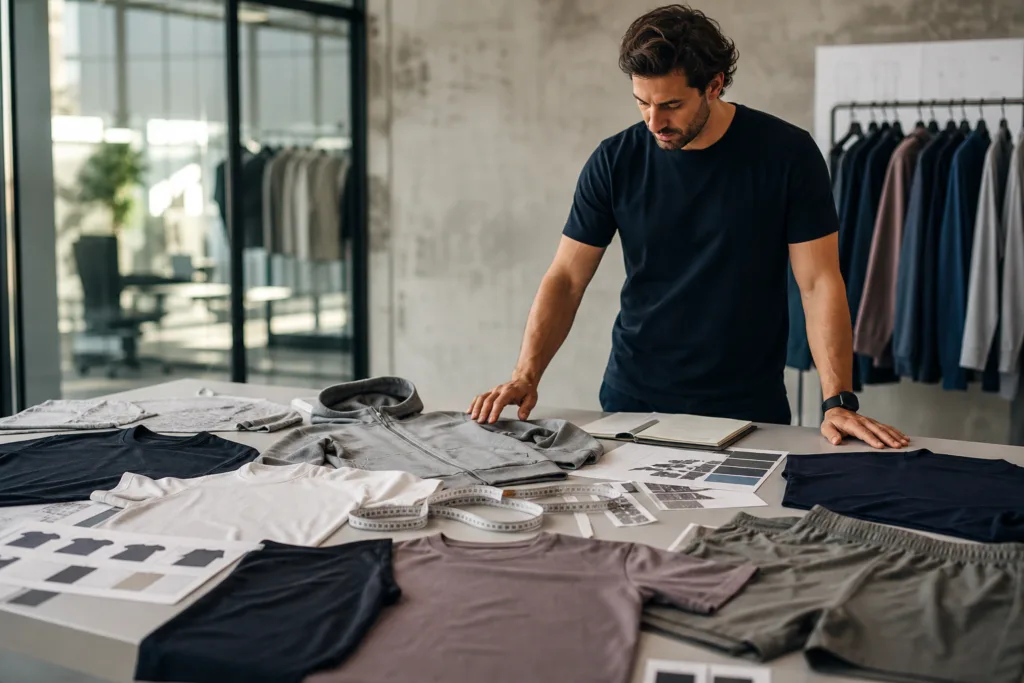
When startup founders compare categories, two filters should come first: will people buy it, and can you produce it reliably? If one side is weak, the launch becomes fragile. High demand cannot save a product with unstable fit or high defect risk, and easy production will not help if the product does not match your customer.
What market fit really means for a first launch
Market fit means more than broad category popularity. It means your specific customer understands why your brand is offering this item, at the price point you need, with the styling and function they expect.
For example, a lifestyle streetwear startup may do well with oversized tees and hoodies because customers already understand the format. A club, school, or corporate supplier may be better served by polos because the use case is clearer and reorder behavior is often more stable.
What manufacturing difficulty actually includes
Manufacturing difficulty is not just about sewing. It includes fabric behavior, shrinkage risk, color consistency, trim sourcing, print or embroidery compatibility, pattern complexity, grading, and how many checkpoints are needed before bulk production.
Even basic categories still need compliance attention. For U.S.-bound products, beginner brands should understand that labeling, safety, and product classification can create hidden launch risk, especially if they move into children’s products or specialty garments, which is outlined in the U.S. apparel and household textiles guide.
| Filter | Low Risk Signal | Higher Risk Signal |
|---|---|---|
| Market fit | Clear customer use case and price acceptance | Trend-dependent demand with unclear repeat orders |
| Fabric sourcing | Common stock fabrics or widely available yarns | Specialty blends, custom dyeing, or performance finishes |
| Fit complexity | Relaxed or forgiving silhouettes | Body-contoured, compression, or technical fit |
| Decoration | Simple one-position print or embroidery | Multi-location, stretch-sensitive, or mixed decoration |
| QC burden | Basic measurement and appearance checks | Stretch recovery, opacity, seam performance, shrinkage testing |
Quick comparison of T-shirts, hoodies, polos, shorts, and activewear for startup launches
For most startup brands, T-shirts are the easiest starting point, hoodies offer strong demand but higher cost, polos are stable for structured markets, shorts can work well with good seasonal planning, and activewear carries the highest technical barrier.
| Category | Market Demand Potential | Manufacturing Difficulty | MOQ Pressure | Fit Risk | Startup Suitability |
|---|---|---|---|---|---|
| T-shirts | High | Low | Low to moderate | Low to moderate | Very strong |
| Hoodies | High | Moderate | Moderate | Moderate | Strong with budget control |
| Polos | Moderate to high | Moderate | Moderate | Moderate | Strong for uniform and premium casual brands |
| Shorts | Moderate | Moderate | Low to moderate | Moderate | Good if seasonality is planned |
| Activewear | High | High | Moderate to high | High | Better after process experience |
The early body of your collection should usually focus on the category that gives you the simplest proof of demand. If you need a lower-risk entry, our experience is that custom T-shirt manufacturing options often make sense because fabric sourcing, size grading, and decoration planning are easier to control than in more technical categories.
T-shirts: the easiest category to launch, test, and scale
T-shirts are often the best clothing products for startups because they combine broad demand with manageable production complexity. They are easier to sample, easier to fit across size ranges, and easier to reorder if the brand gets traction.
The biggest reason T-shirts work well is tolerance. A regular-fit or oversized knit tee has more forgiveness in body shape, shoulder balance, and wearing preference than a fitted polo or stretch activewear garment. That does not mean quality is automatic, but it does mean the path to an acceptable first launch is usually smoother.
Why T-shirts are manufacturing-friendly
Most startup tees use common cotton or cotton-rich jersey fabrics. Plain knit structures are widely used in apparel basics, though even simple knits still need proper shrinkage, skewing, and print-compatibility checks. Basic CPSC clothing guidance is also useful when comparing knit product types and surface fabric characteristics across categories such as tees, polos, and activewear through the CPSC clothing FAQ.
From our production perspective, the main variables are GSM, fabric composition, silhouette, neck rib quality, and decoration method. If those are controlled early, startup tees usually move through development faster than more structured garments.
What to compare before approving a T-shirt sample
- Fabric composition such as 100% cotton, cotton polyester, or cotton elastane
- GSM level and the resulting hand feel
- Shrinkage after washing
- Collar rib recovery and neckline shape
- Print hand feel, opacity, and placement
- Measurement tolerance across graded sizes
| T-shirt Option | Typical Use | Pros | Watchouts |
|---|---|---|---|
| 160 to 180 GSM cotton jersey | Entry basics | Lower cost, easy layering | Can feel light if brand targets premium segment |
| 200 to 240 GSM cotton jersey | Premium streetwear | Better drape and perceived value | Needs good neck construction and shrink control |
| Cotton polyester blend | Promotional or active casual | Better shape retention, lower cost in some programs | Print behavior and hand feel vary by ratio |
Key takeaway: If your brand needs the fastest and most forgiving first launch, a well-specified T-shirt is usually the safest place to start.
Hoodies: strong consumer demand, but higher fabric and fit complexity
Hoodies can be an excellent first category if your customer expects comfort, streetwear styling, or cool-weather layering. The challenge is that hoodies look simple from the outside but require more decisions on fabric weight, brushing, shrinkage control, hood shape, pocket construction, and trim consistency.
Compared with tees, hoodies create higher MOQ and cash pressure because fabric consumption per piece is much greater. They also involve more sewing operations, which increases labor cost and opportunities for inconsistency.
Brands considering fleece programs often benefit from reviewing hoodie production support for new brands early, especially when deciding between lightweight French terry, brushed fleece, oversized silhouettes, and different logo applications.
Where startup brands misjudge hoodie difficulty
The most common mistake is underestimating how much fabric quality influences the final result. Two hoodies with similar weight on paper can feel very different depending on yarn quality, brushing, compactness, and how the cuff and hem rib hold shape after washing.
Another common issue is fit balance. A hoodie is not just chest width and body length. The hood opening, shoulder drop, sleeve volume, and rib tension all change how premium or awkward the garment feels.
- Heavier fleece improves structure but raises material cost
- Oversized fits need deliberate grading, not just added width
- Embroidery on fleece needs backing and placement planning
- Large prints can change fabric drape and hand feel
Polos: a stable choice for corporate, team, and premium casual brands
Polos are often a smart first category for brands selling into golf, hospitality, schools, clubs, events, and premium casual markets. Demand may be narrower than fashion tees, but the use cases are clearer and repeat ordering behavior can be more predictable.
Polos sit in the middle of the complexity scale. They are not as easy as T-shirts because collars, plackets, and fabric stability matter more. But they are usually less technically demanding than high-performance activewear.
For founders targeting uniforms or elevated casualwear, polo shirt manufacturing paths for brand launches can help frame decisions around pique versus jersey, moisture-focused blends, embroidery placement, and private label finishing details.
What makes polos different from tees
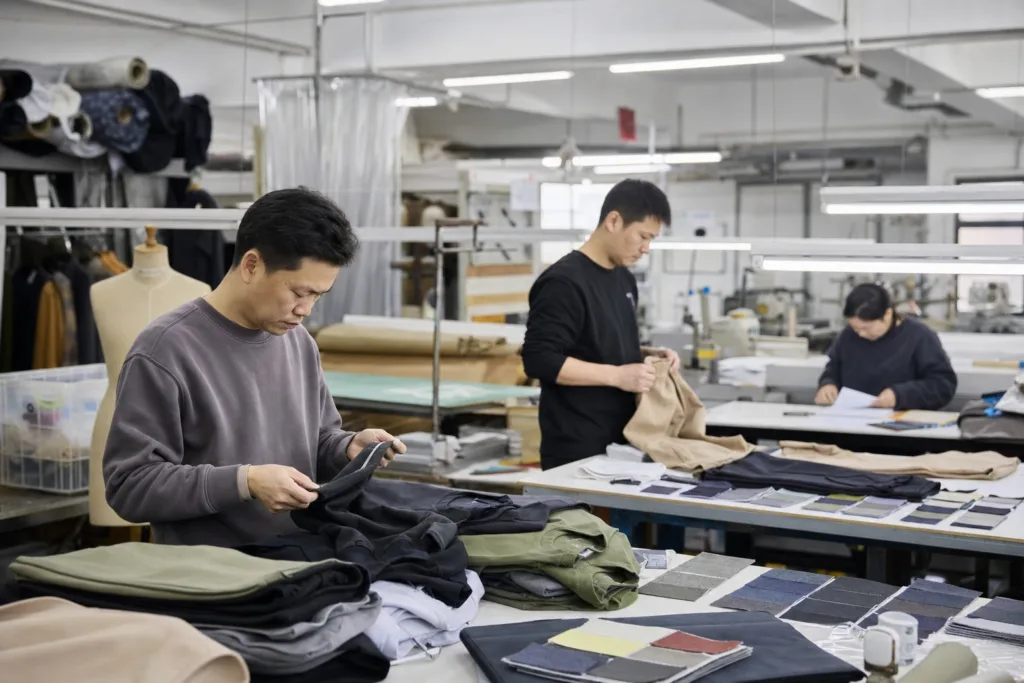
The collar immediately raises buyer expectations. If the collar rolls badly, twists, or loses shape after laundering, the whole garment looks cheaper. Placket construction also has to stay balanced, especially if the polo is intended for repeated corporate or team use.
Fabric matters as much as construction. Pique offers a classic texture and stronger identity, while smoother knits may feel more modern or performance-oriented. The right choice depends on whether the brand is selling premium casual, golf-inspired, schoolwear, or company uniform programs.
| Polo Factor | Easier Choice | Higher Complexity Choice |
|---|---|---|
| Fabric | Basic cotton or cotton blend pique | Technical moisture-managing knit |
| Branding | Left chest embroidery | Multiple placements or mixed techniques |
| Fit | Regular fit | Athletic fit with tighter tolerance |
| Trim details | Standard dyed-to-match buttons | Custom buttons, tipping, contrast collar details |
Shorts: lower fabric cost, but seasonality and sizing need careful control
Shorts can be a practical startup category, especially for summer programs, gym-adjacent brands, resort collections, and casual basics. They usually use less fabric than hoodies, but they are not automatically easier because waistband construction, inseam decisions, pocket shape, and rise balance affect comfort and sell-through.
The category also carries stronger seasonality in many markets. That does not make shorts a poor choice, but it means launch timing and reorder planning need more discipline.
Startup buyers who want a simpler bottoms program often review shorts manufacturing options for starter collections to compare elastic-waist casual shorts, woven training shorts, and knit shorts with custom trims and private label details.
Where shorts can create hidden fit problems
Bottoms are more sensitive to body variation than tops. Waist stretch, rise, hip allowance, thigh opening, and outseam length all influence whether the product feels relaxed, athletic, or restrictive.
Shorts also create more styling choices than many founders expect. A five-inch inseam, seven-inch inseam, and longer casual short can effectively serve different customers, even if the branding looks similar.
- Elastic quality affects comfort and durability
- Pocket construction influences bulk and shape
- Liner decisions matter in sport-focused shorts
- Woven fabrics need attention to seam stress and mobility
Activewear: the strongest growth potential, but the highest technical and QC barrier
Activewear has strong commercial appeal, but it is the highest-risk first category for most new brands. If the product depends on compression, squat-proof opacity, moisture management, flat seams, recovery, and precise body fit, the sampling and QC process becomes much more demanding.
At Ninghow, we usually advise founders to enter activewear first only if they already understand the customer use case very clearly or if they are prepared to invest more time in development. The category can succeed, but it leaves less room for vague specifications or casual sample approval.
Why activewear is technically harder
Stretch fabrics require better control over composition, weight, recovery, dye consistency, and cutting behavior. Small changes in elastane ratio or fabric finishing can affect support, opacity, and how seams react during wear.
Decoration also becomes more sensitive. Some print methods can crack on high-stretch zones, and bulky embroidery can reduce comfort. Labels, seams, and bonding choices all matter more when garments sit close to the body.
Before scaling a first activewear order, startups should treat performance testing seriously. Fabric durability, shrinkage, colorfastness, and seam-related performance checks are not just large-brand issues; they directly affect return rates and reputation, and foundational textile testing concepts are covered in textile testing and reporting guidance.
| Activewear Requirement | Why It Matters | Production Risk |
|---|---|---|
| Stretch and recovery | Affects support and fit retention | Bagging, distortion, poor wear life |
| Opacity | Critical for leggings and fitted shorts | Customer rejection after wear test |
| Seam construction | Impacts comfort and strength | Popping seams or chafing |
| Moisture performance | Important for training use | Mismatch between branding and wear experience |
Key takeaway: Activewear can be a strong second or third category, but it is rarely the lowest-risk first launch unless your team already has technical product experience.
How to choose the best first category based on your brand model, budget, and customer type
The right answer depends on how you plan to sell. A direct-to-consumer streetwear brand, a golf-inspired label, and a school uniform supplier should not choose the same first category by default.
From our manufacturing perspective, founders should decide based on three practical questions: who is the customer, how complex can the product be, and how much inventory risk can the brand carry in the first round. This is also the stage where a conversation with Ninghow or another real manufacturer becomes useful, because a concept that looks simple in design software may be expensive or unstable in production.
Category match by business model
- Streetwear startup: Start with heavyweight or standard tees, then add hoodies after fit approval and demand validation.
- Corporate or team supplier: Start with polos because repeat use cases and embroidery programs are easier to position.
- Seasonal casual brand: Start with tees or shorts, depending on climate and launch calendar.
- Fitness-focused startup: Consider a simpler tee or relaxed short before compression-based activewear.
- Premium basics label: Start with tees or polos where fabric hand feel and finishing can justify price.
| Brand Situation | Recommended First Category | Why |
|---|---|---|
| Small budget, low technical experience | T-shirts | Fast testing, easier sourcing, lower error risk |
| Higher average selling price, colder market | Hoodies | Strong demand if budget covers better fleece |
| B2B, club, school, or company market | Polos | Stable use case and easy logo positioning |
| Summer or resort focus | Shorts | Good category if fit and season timing are planned |
| Performance-led identity | Simple active top first, not full technical range | Reduces development risk while preserving brand direction |
Manufacturing checklist before sampling: fabric, fit, decoration, MOQ, and lead time
Before you request samples, narrow your product idea into production-ready decisions. The cleaner your brief, the faster the sample cycle and the lower the chance of misunderstanding.
- Define your target customer and use scenario
- Choose fabric composition and estimated GSM range
- State the intended fit: regular, slim, relaxed, or oversized
- Prepare artwork files and preferred logo method
- List private label needs such as neck labels, woven labels, hangtags, and packaging
- Confirm target quantity by color and size
- Ask about MOQ logic for fabric, trims, and decoration
- Clarify sample timeline and expected bulk lead time
A startup tech pack does not need to be perfect, but it should answer basic production questions. If you are unsure about details, we usually suggest locking the category, silhouette, and fabric direction first, then refining the trim and branding package around that base.
Common startup mistakes when choosing a first apparel category
The biggest mistake is choosing a category because it looks aspirational, not because it fits the brand’s current capability. A strong-looking product line can still fail if the fabric is wrong, the fit is unstable, or the MOQ forces too much inventory too early.
Mistakes that increase first-launch risk
- Starting with highly technical activewear without enough sample testing
- Using too many colors, fabrics, or silhouettes in the first order
- Ignoring shrinkage, wash response, or print durability
- Approving samples without checking graded size consistency
- Choosing custom trims before confirming commercial demand
- Expecting hoodie or polo fit to behave like a basic tee
- Building a first launch around low-volume categories with weak repeat demand
Another mistake is treating MOQ as a single number. Real MOQ pressure comes from the combination of fabric type, color count, print setup, embroidery count, custom trims, and packaging complexity. A simple 2-color T-shirt program can be realistic at a small scale, while a multi-trim hoodie or technical activewear set may become costly even at the same nominal quantity.
Key takeaway: Startup brands usually reduce risk faster by simplifying the first category than by aggressively negotiating price on an overcomplicated product.
How we would shortlist a first-launch category in practice
If we were helping a new brand make this decision from scratch, we would usually reduce the options to two categories, not five. That keeps development focused and makes sample feedback easier to interpret.
The first shortlist would typically compare a lower-risk staple against a more brand-defining option. For example, tees versus hoodies for streetwear, or polos versus tees for a premium casual program. Then we would score both options on demand clarity, fit complexity, decoration compatibility, MOQ pressure, and reorder confidence.
- Choose the category your customer already understands
- Favor fabrics that are commercially available and stable
- Keep size range realistic for the first run
- Use one or two decoration methods only
- Leave advanced trims for version two if needed
Conclusion
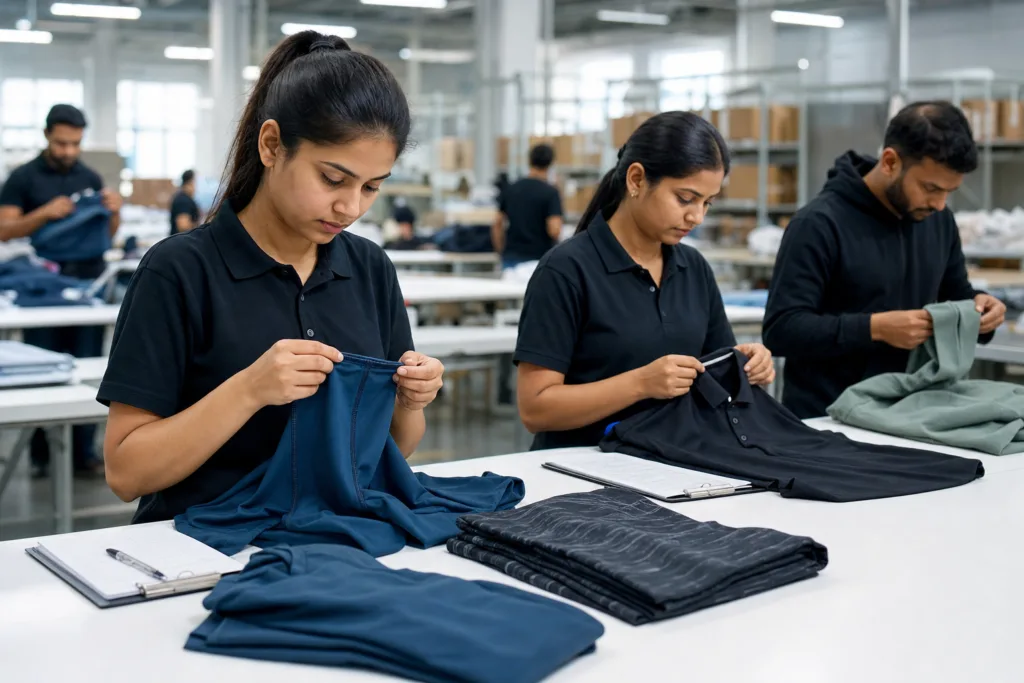
For most new brands, the best clothing products for startups are the categories that balance demand with operational control. In practical terms, that usually means T-shirts first, hoodies next for the right budget and market, polos for structured B2B or premium casual use, shorts for well-timed seasonal launches, and activewear only when the team is ready for a higher technical standard.
The smartest first launch is rarely the broadest collection. It is the category that lets you validate customer response, refine fit, control production, and place a second order with more confidence. Once that foundation is working, expanding into more complex products becomes much easier.
FAQs
Which apparel category is usually safest for a startup brand to launch first?
T-shirts are usually the safest first category because they combine broad demand with relatively manageable fabric sourcing, fit development, decoration, and MOQ planning. They also let startups test branding, pricing, and customer response without taking on the higher technical risk that comes with more structured or performance-driven garments.
Are hoodies a bad first product for new clothing brands?
Hoodies are not a bad first product, but they do require more budget and tighter control than T-shirts. Fabric consumption, fleece quality, hood shape, rib performance, and wash behavior all affect the final result, so hoodies work better when the brand can support a more careful sample and costing process.
Why do polos work well for some startup brands?
Polos work well when the customer has a clear use case such as uniforms, golf-inspired apparel, schoolwear, hospitality, or premium casual dressing. Their demand is often more structured than fashion basics, which can make repeat orders more predictable if the fit, collar shape, and embroidery quality are handled properly.
What makes activewear harder to manufacture than basic apparel?
Activewear is harder because the product depends more heavily on stretch recovery, opacity, seam performance, body-contoured fit, and decoration compatibility on technical fabrics. Small mistakes in fabric choice or construction can create comfort, durability, or transparency problems that are much less forgiving than those in standard tees or hoodies.
How should a startup evaluate MOQ before choosing a product category?
A startup should evaluate MOQ by looking beyond the final piece count and checking the full package of fabric type, color variety, trims, labels, logo method, and packaging. A simple garment with common materials is often more realistic at small scale than a technically complex style with multiple custom components.
What should be prepared before asking for the first sample?
Before asking for the first sample, a startup should prepare the target customer profile, garment category, fit direction, fabric preference, logo files, measurement expectations, quantity estimate, and branding details such as labels or hangtags. This makes supplier communication faster and reduces the chance that the sample looks acceptable visually but fails commercially or technically.