





Custom clothing manufacturing works best when buyers treat it as a product development process, not just a price request. For B2B brands, teams, retailers, and distributors, the real decisions happen before bulk production starts: garment purpose, fabric performance, fit standards, customization method, sample approval, MOQ logic, and production control. When these points are clear early, custom apparel projects move faster, cost surprises decrease, and the final garments are more consistent from sample to shipment.
If your project is still in the planning stage, it helps to evaluate low MOQ clothing manufacturing options before locking in fabric, trims, and packaging. This is especially useful for startups, test collections, teamwear programs, and seasonal launches where order flexibility matters. At Ninghow, we usually help buyers compare MOQ reality against fabric availability, logo application, sampling needs, and bulk repeatability so the development plan fits both budget and growth potential.
What custom clothing manufacturing means for brands and bulk buyers
The simplest definition is this: custom clothing manufacturing means developing garments to your own product requirements instead of buying standard blanks. Those requirements may include your own fit, fabric composition, GSM, color, logo method, labels, packaging, or construction details.
For some buyers, custom means minor changes such as private labels and logo embroidery. For others, it means full OEM or ODM development with custom patterns, fabric sourcing, trim matching, and specific finishing standards. The right path depends on your target customer, order volume, launch timeline, and how different the product needs to be from standard market options.
Key takeaway: The earlier you define product purpose and technical requirements, the easier it becomes to control cost, quality, and lead time in custom clothing manufacturing.
Who should consider custom manufacturing
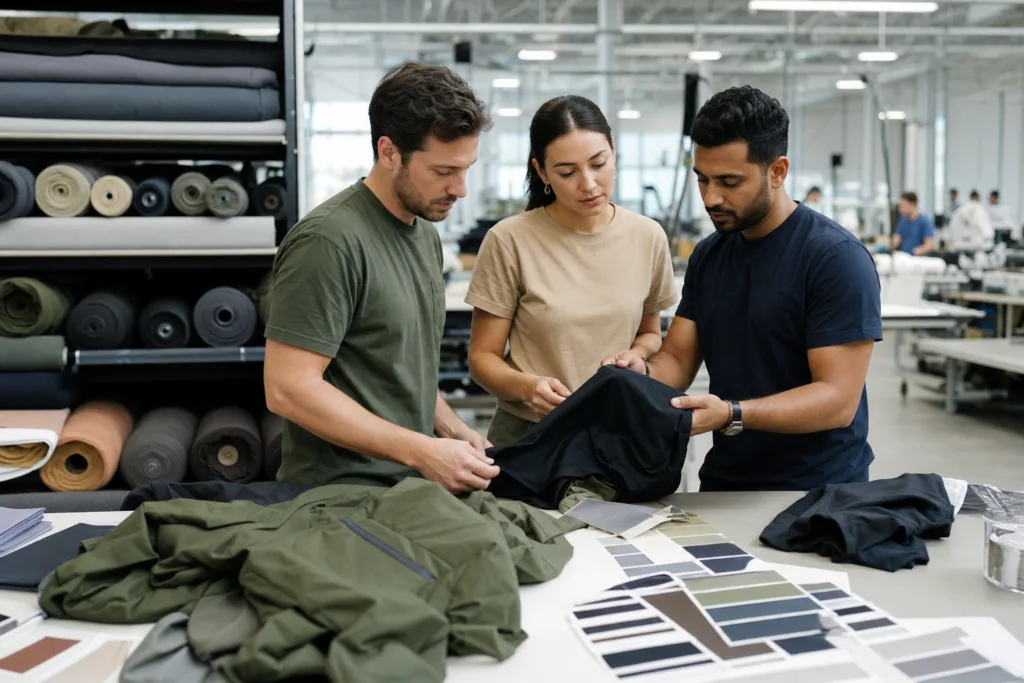
Custom production is not only for large fashion labels. In our manufacturing work, we see strong demand from newer brands, sportswear companies, golf apparel labels, schools, clubs, distributors, and retailers that need better control over branding and product consistency.
- Startups that want private label products without holding excessive inventory
- Growing brands that need repeatable sizing and quality across reorders
- Teams and clubs that require coordinated logos, colors, and size runs
- Retailers that want exclusive products instead of commodity basics
- Distributors that need scalable bulk production with stable workmanship
Custom manufacturing becomes especially valuable when blank garments cannot meet your fit, hand feel, color standard, or brand presentation goals.
Choose the garment type and product purpose first
The first technical decision is not logo placement. It is product purpose. A training T-shirt, a corporate polo, a golf mid-layer, and a school hoodie may look similar on paper, but each requires different fabric behavior, fit tolerance, decoration planning, and finishing priorities.
Buyers should define where the garment will be worn, how often it will be washed, what movement it must support, and what price band it needs to hit. These answers shape the correct development path much more accurately than visual inspiration alone.
| Garment Type | Primary Use | Typical Fabric Priorities | Key Production Focus |
|---|---|---|---|
| T-shirt | Casual, promo, retail | Soft hand feel, stable GSM, printability | Neck shape, shrinkage, print surface |
| Polo shirt | Uniform, golf, corporate | Breathability, collar recovery, structure | Placket balance, collar quality, embroidery setup |
| Hoodie | Streetwear, school, team | Warmth, weight, brushed interior | Panel matching, rib quality, bulk consistency |
| Sportswear top | Training, performance | Stretch, moisture control, light weight | Fit mobility, seam durability, logo method |
| Jacket | Outerwear, teamwear | Protection, lining choice, structure | Zippers, pattern accuracy, finishing details |
A clear garment brief helps buyers avoid a common problem: selecting materials and trims based on appearance while ignoring wear conditions and production practicality.
How to select fabrics, GSM, composition, and finishing based on use case
Fabric choice has the biggest effect on how a garment feels, performs, and costs. Buyers should not approve fabric based only on color or a supplier description like light, premium, or soft. The useful questions are composition, GSM, knit or weave type, stretch behavior, finishing, shrinkage risk, and intended use.
GSM matters because it affects drape, opacity, warmth, and perceived value. A 160 GSM jersey T-shirt and a 240 GSM jersey T-shirt may share the same fiber content, but they will not feel or wear the same. In technical sourcing, measuring fabric GSM and weight is more reliable than using subjective weight descriptions.
Composition should match use. Cotton can offer softness and natural comfort. Polyester can support durability, colorfastness, and performance use. Cotton-poly blends often balance comfort and stability. Spandex or elastane adds stretch, but too much can change recovery, cost, and logo application behavior.
What buyers should compare when reviewing fabric options
- Composition percentage and fiber blend
- GSM or fabric weight tolerance
- Knit or woven construction
- Stretch and recovery
- Surface texture and hand feel
- Breathability and moisture behavior
- Colorfastness and wash durability
- Shrinkage expectations after washing
For color-critical programs, fabric development may need dye lot planning instead of stock fabric selection. In those cases, custom fabric dyeing for color-dependent orders can make sense when a brand requires stronger color control across uniforms, teams, or retail collections.
Key takeaway: Buyers should specify fabric in measurable terms, not mood-board language. Composition, GSM, finish, and expected performance should all be confirmed before sample approval.
Fit, sizing, and grading: what buyers need to confirm before sampling
Fit problems are one of the most expensive issues to correct late. Before sampling, buyers should define target wearer, fit direction, body measurement logic, and the size range for production. A relaxed hoodie block for youth retail cannot simply be scaled into a slim golf mid-layer or a corporate uniform polo.
From our perspective, size approval should start with standardized body measurement thinking, then move into garment measurements and grading rules. References such as Body measurements for sizing and fit are useful because they clarify how measurement definitions support more consistent size development.
Once the target fit is clear, graded specs should show how chest, body length, shoulder width, sleeve length, waist, hip, and opening measurements change between sizes. Without this, a sample can look correct in one size while the size set performs poorly in bulk production.
| Fit Planning Item | Why It Matters | What Buyers Should Provide |
|---|---|---|
| Target wearer | Sets the body shape baseline | Gender, age range, market, use scenario |
| Fit direction | Changes garment measurements | Slim, regular, relaxed, oversized |
| Base size | Controls first sample review | Sample size and fit comments |
| Size range | Affects grading and MOQ | Planned production size breakdown |
| Tolerance | Supports QC consistency | Critical measurements and acceptable variance |
Clear fit comments are better than general feedback like make it better or slightly bigger. Buyers should mark exactly which measurement needs adjustment and whether the issue is related to body ease, garment length, opening width, or balance.
What customization methods work best for different apparel projects
The right logo and branding method depends on fabric type, order quantity, design complexity, wash expectations, and garment use. The cheapest option is not always the best production choice, especially if the garment needs long-term durability or a premium retail appearance.
| Method | Best For | Strengths | Watch Outs |
|---|---|---|---|
| Embroidery | Polos, caps, jackets, uniforms | Durable, premium look | Can add weight or puckering on light fabric |
| Screen printing | T-shirts, hoodies, bulk logo work | Good durability, cost-effective in volume | Setup cost for multi-color artwork |
| Heat transfer | Names, numbers, small runs | Flexible for personalization | Depends heavily on application quality |
| Sublimation | Polyester sportswear | All-over color and graphics | Best on suitable synthetic fabrics |
| Woven labels and hangtags | Private label branding | Brand identity and retail finish | Needs accurate artwork and placement approval |
Customization should be planned together with the garment, not added at the end. A heavy chest embroidery may pull lightweight jersey. A large print over seam lines may distort. A heat transfer on a high-stretch panel may crack if the transfer type is wrong.
For fully original silhouettes and panel layouts, buyers often need cut-and-sew production setup for custom styles instead of trying to modify stock templates too far. This matters most when your design includes unique seam lines, contrast panels, shape changes, or a custom fit block.
How the sampling workflow should really work
Sampling should answer specific technical questions before bulk production starts. A useful sample is not just for photography or investor review. It should test fit, fabric behavior, trim compatibility, color direction, logo placement, workmanship, and overall construction logic.
A practical workflow usually includes tech pack review, material confirmation, pattern development, first sample making, buyer comments, revision rounds, and final approval for bulk. Buyers who need sampling support before scaling production should expect clearer timelines when comments are organized and measurement changes are prioritized.
- Share artwork files, size specs, and target fabric details early
- Confirm whether the first sample is for style, fit, or full pre-production review
- Consolidate comments in one file instead of multiple message threads
- Separate cosmetic comments from critical fit or construction issues
- Approve only after checking measurements, workmanship, and branding details together
Too many delays come from unclear sample objectives. If the first sample is made in substitute fabric, it should not be treated as final proof of drape or shrinkage. If logo artwork is temporary, placement should still be approved before bulk.
MOQ planning and how minimum order quantity affects cost and flexibility
MOQ is not a single fixed number. It depends on fabric source, color count, trim customization, logo method, size range, and production complexity. Buyers often ask for a low MOQ without realizing that custom dyeing, custom labels, and multiple colorways can raise the practical minimum even when the garment itself is simple.
At Ninghow, we usually advise buyers to ask which part of the project drives the MOQ: fabric mill minimums, trim production, printing setup, embroidery efficiency, or sewing line balance. Once that is clear, it becomes easier to adjust the product plan without losing the branding intent.
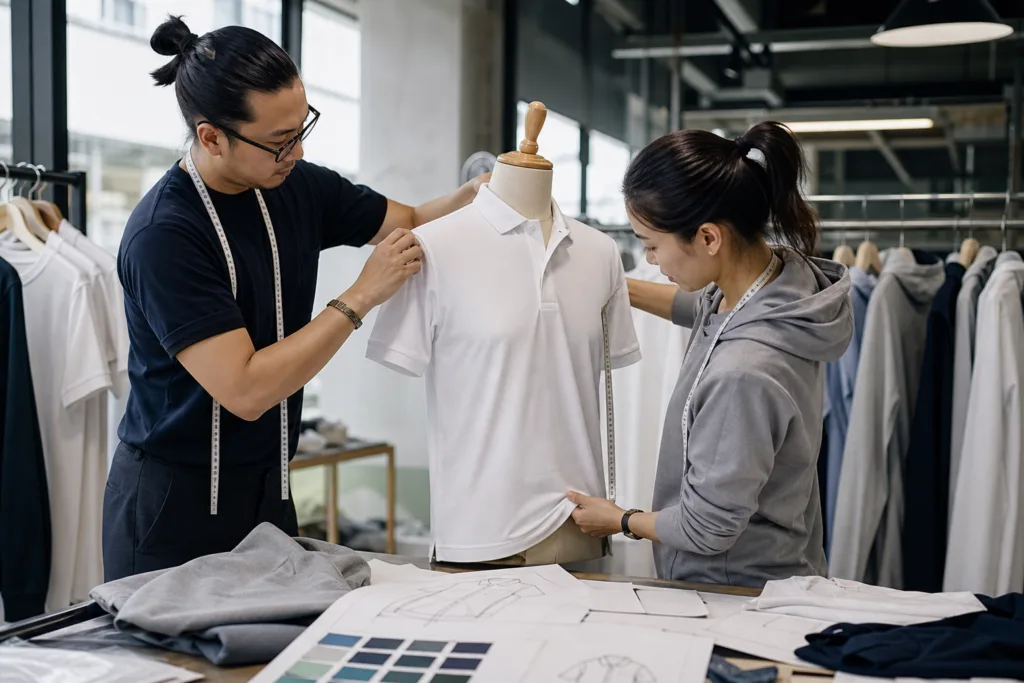
| MOQ Factor | Lower MOQ More Realistic When | MOQ Usually Increases When |
|---|---|---|
| Fabric | Stock fabric is available | Custom knit, custom dye, special finish |
| Colorways | One or two core colors | Many small color splits |
| Customization | Simple label or basic logo | Complex trims, multiple placements |
| Size range | Focused size run | Wide size spread with low totals |
| Packaging | Standard packaging | Fully custom retail packaging |
MOQ planning should support scale, not block it. A smart first order may use fewer colors, standard trims, and one reliable fabric while keeping the fit and branding foundation strong for future repeats.
What affects production lead time from sample to bulk order
Lead time is shaped by decisions, not just factory capacity. Fabric sourcing, lab dips, strike-offs, trim procurement, sample revision rounds, artwork confirmation, and shipping method all influence the calendar.
In practice, the slowest stage is often waiting for approvals. When buyers send complete comments, confirm materials quickly, and avoid late design changes, the production plan becomes much easier to control. This is why strong apparel order planning for first-time buyers can prevent timeline drift before bulk even begins.
- Fabric availability or custom development time
- Number of sample revisions
- Print strike-off or embroidery approval timing
- Custom trims and labels procurement
- Production line scheduling
- Inspection and packing requirements
- Shipping mode and destination
Key takeaway: The fastest bulk order is usually the one with the fewest unresolved variables before production starts.
Quality control checkpoints before, during, and after production
Quality control should not start at final inspection. It needs checkpoints from development through finishing. If only the finished cartons are checked, many preventable problems have already become expensive to correct.
We prefer to control quality in stages: material review, pre-production confirmation, in-line sewing checks, decoration verification, measurement checks, finishing review, and final packing inspection. This is especially important for programs with multiple sizes, colorways, or private label details.
What buyers should expect in a practical QC flow
- Fabric and trim verification against approved standards
- Pre-production review of measurements, artwork, and construction points
- In-line checks for seam quality, panel matching, and workmanship
- Decoration checks for position, adhesion, or stitch quality
- Final measurements against approved tolerance
- Packing checks for labels, polybags, assortment, and carton marks
Consistent QC also depends on good approvals. If the approved sample, measurement chart, artwork file, and packing instructions do not match, even a careful production team can follow the wrong reference.
Common mistakes buyers make when ordering custom apparel
The most common mistake is requesting a quote before the product is defined enough to price accurately. That usually leads to vague assumptions about fabric, printing, labeling, and packaging, which later become change requests or cost disputes.
Another frequent issue is approving a sample visually without checking measurement details, wash performance, and logo durability. A product can look right in photos but still fail in wear, fit consistency, or post-wash stability.
- Using inspiration images instead of a clear tech pack
- Changing fabric or fit after sample approval
- Ignoring shrinkage and measurement tolerance
- Splitting a small order into too many colors and sizes
- Adding custom packaging too early in a trial order
- Giving sample comments across scattered chat messages
Most of these problems can be reduced by defining priorities: what must be custom now, what can wait until reorder, and what standard option is acceptable for the first run.
How to evaluate a clothing manufacturer for communication and reliability
Buyers should judge a manufacturer by process clarity, not just quoted price. Good communication means the supplier asks the right technical questions, explains what is still unknown, and helps separate optional custom features from production-critical ones.
In evaluation, look for whether the factory can explain sample stages, MOQ drivers, fit development, decoration limits, and QC checkpoints in practical terms. A reliable manufacturing partner should also be honest about what is realistic for your timeline and order size.
Useful evaluation questions include:
- How do you handle tech pack review and missing information?
- What sample stages do you recommend for this product?
- Which parts of this design affect MOQ most?
- How do you control size consistency in bulk?
- What approvals are required before production starts?
- How are logos, labels, and packaging checked before shipment?
From our manufacturer perspective, the best projects come from buyers who share target price, target use, and target quality level honestly. That allows both sides to build a realistic product instead of forcing hidden compromises late.
How to balance price, fabric quality, and workmanship
The best cost-performance decision is usually not the cheapest unit price. It is the product combination that meets the intended use, target market, and reorder strategy without creating hidden quality risk.
For example, reducing GSM may lower fabric cost but increase transparency or weaken shape retention. Choosing a very low-cost trim can save cents while causing zipper failures or weak presentation. Cutting sample stages may seem efficient but can increase bulk correction cost later.
| Cost Decision | Short-Term Benefit | Possible Trade-Off |
|---|---|---|
| Lower GSM fabric | Lower material cost | Less structure, opacity, or durability |
| Fewer sample rounds | Faster approval | Higher bulk fit risk |
| Cheaper decoration method | Lower unit price | Shorter logo life or lower retail appearance |
| Wide customization at low volume | Strong first impression | Higher MOQ pressure and complexity |
| Standard packaging first | Better budget control | Less branded presentation initially |
A practical approach is to protect the product fundamentals first: fit, fabric, and workmanship. Branding layers such as custom inserts or premium packaging can often be phased in once sales are proven.
A practical checklist before placing a bulk custom apparel order
Before confirming production, buyers should make sure the entire reference set is aligned. Many factory delays come from missing or conflicting details, not sewing speed.
- Approved sample with final comments closed
- Confirmed fabric composition, GSM, and color standard
- Measurement chart with tolerance and graded sizes
- Final logo artwork and placement confirmation
- Label, hangtag, and packaging requirements
- Size breakdown and color ratio by order
- Bulk production timeline and shipping plan
- QC expectations and inspection checkpoints
If any of these are still open, it is better to resolve them before bulk cutting starts. That discipline protects both delivery timing and final product consistency.
Conclusion: move from idea to production with fewer surprises
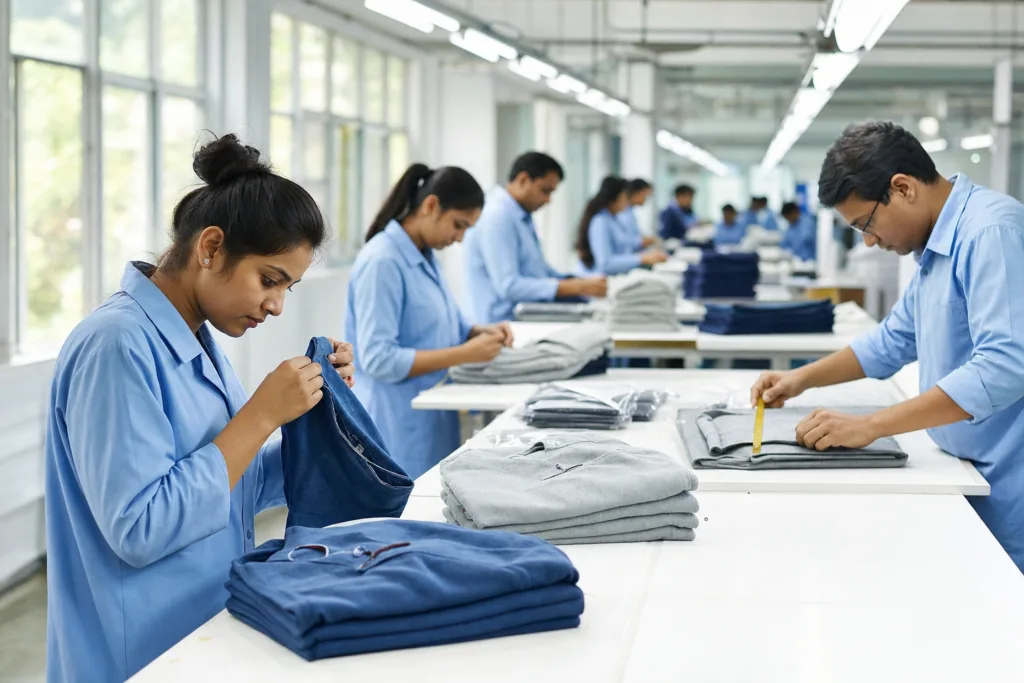
Custom clothing manufacturing becomes much easier to manage when buyers plan the product around use, fit, material, and production reality instead of only visual concept. The strongest bulk orders usually come from a clear brief, realistic MOQ strategy, disciplined sample review, and early alignment on quality expectations.
For brands and buyers comparing manufacturing partners, the right question is not only who can make the garment. It is who can help translate your requirements into a stable production plan. When fabric, fit, customization, lead time, and QC are connected properly, the result is a more scalable product and a smoother reorder path.
FAQs
What is the difference between private label clothing and custom clothing manufacturing?
Private label clothing can be as simple as adding your brand labels to an existing style, while custom clothing manufacturing usually means developing more of the product specification yourself. In practice, custom work may include your own fit, fabric, color, trims, packaging, and logo method, which gives more brand control but also requires more planning before bulk production.
How much information should I prepare before asking for a manufacturing quote?
You should prepare enough information to define the garment clearly, even if every detail is not final yet. At minimum, buyers should provide product type, estimated quantity, target fabric direction, artwork, size range, customization needs, and target market so the manufacturer can identify the biggest cost and MOQ variables accurately.
When is a low MOQ realistic for custom apparel?
A low MOQ is most realistic when you use available fabrics, limited colorways, simple trims, and straightforward branding methods. If the project includes custom dyeing, many sizes, special packaging, or complex decoration, the practical minimum usually rises because the order has to absorb more development and material setup cost.
Why do fit issues still happen after a sample looks good?
Fit issues can still happen if the sample was approved only by appearance and not by measurement logic, grading, and tolerance control. A single approved sample size does not guarantee that the full size set will work well, so brands should confirm base size specs, grading rules, and critical measurement points before bulk production starts.
What usually causes delays between sample approval and bulk production?
The most common delays come from unresolved materials, artwork changes, trim sourcing, or late comments after approvals were supposed to be final. Production moves faster when the approved sample, measurement chart, logo files, labels, packaging, and shipping plan all match before bulk materials are booked and cutting begins.
How can I compare clothing manufacturers beyond price?
You should compare manufacturers by how clearly they manage development, communication, and production control, not just by unit cost. A stronger partner will explain sample stages, MOQ limits, fit review, QC checkpoints, and timeline risks in a way that helps you build a repeatable product instead of only offering a low opening quote.
Related Reading
- quality control checks that affect final order consistency
- how production lead time changes across different order types
- why some low MOQ clothing orders start at 10 pieces or 100
- how the clothing manufacturing process moves from design to delivery
- how first-time buyers can find the right clothing manufacturer