

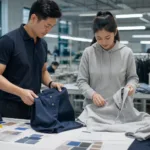
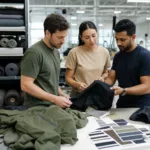

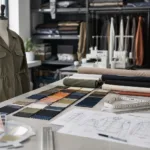


Custom apparel production works best when buyers make key decisions early: what the garment needs to do, how it should feel, how consistent sizing must be, what customization methods are required, and what level of quality control is realistic for the budget. For brands, teams, retailers, and sourcing managers, the biggest production problems usually do not start on the sewing line. They start earlier, when fabric, fit, labeling, logo application, or MOQ assumptions are not clearly defined.
If your project needs apparel sourcing support for sample development and production planning, it helps to work from a manufacturing-based plan rather than only a design idea. At Ninghow, we support buyers with fabric selection, fit refinement, private label details, sampling coordination, MOQ assessment, and bulk production preparation so the order can move forward with fewer revisions and clearer expectations.
What custom apparel production means for brands and buyers
In practical terms, custom apparel production means developing garments to your own requirements instead of buying standard ready-made stock. That can include original fabric choices, custom colors, logo decoration, labels, hangtags, packaging, sizing adjustments, pattern changes, or full private label development.
Some buyers need a simple OEM process based on an existing garment block. Others need ODM support, where a factory-proven style is adapted with new branding, fabric, or trim details. The right route depends on your timeline, quantity, product complexity, and how differentiated the final garment needs to be.
Key takeaway: The more original your product is, the more important it becomes to control specs, sampling, and approval checkpoints before bulk production starts.
Who this guide is most useful for
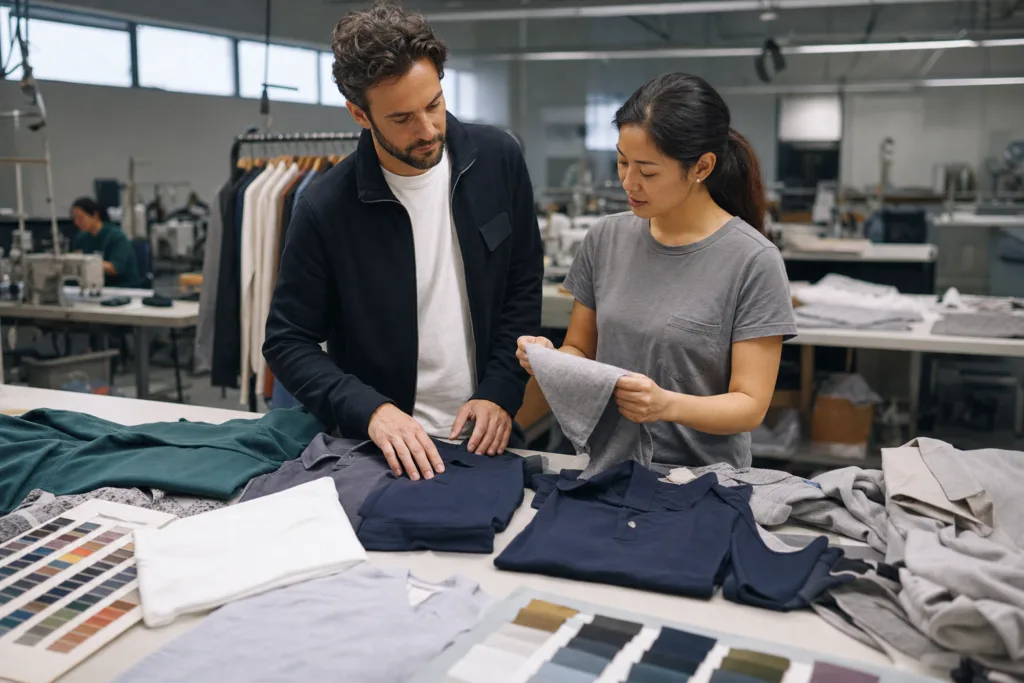
This guide is written for buyers who need clear production decisions, not just design inspiration. From our manufacturing perspective, the most successful projects usually come from teams that align commercial goals with technical details before order confirmation.
- Startup clothing brands preparing a first collection
- Established brands expanding into new categories or suppliers
- Sportswear, golf, athleisure, and teamwear buyers
- Schools, clubs, and organizations ordering custom uniforms
- Procurement teams comparing OEM, ODM, and private label suppliers
- Merchandisers and product developers managing fit, materials, and delivery risk
How to define the product goal before development begins
Start with the use case, not the decoration method. A promotional cotton T-shirt, a golf polo for repeated washing, and a performance training top may all look similar in a sketch, but they require different decisions in fabric, GSM, stitching, and finishing.
Before development, buyers should define:
- End use: retail, teamwear, workwear, event wear, or active use
- Target customer: men, women, youth, plus size, unisex, or mixed market
- Expected price position: entry, mid-range, or premium
- Performance needs: stretch, moisture management, durability, softness, shape retention
- Brand priorities: logo visibility, private label identity, packaging, or low starting MOQ
When these points are unclear, sample rounds tend to increase because each stage becomes a re-decision rather than a refinement.
How to choose the right garment category and construction level
Garment category affects nearly every downstream cost and production variable. A basic jersey T-shirt is simpler to source and produce than a bonded jacket, lined hoodie, or sublimated sports set.
| Garment Type | Typical Complexity | Main Buyer Focus | Common Risk |
|---|---|---|---|
| T-shirt | Low to medium | Fabric hand feel, shrinkage, print quality | Inconsistent fit after washing |
| Polo shirt | Medium | Collar shape, placket quality, embroidery placement | Collar distortion or color mismatch |
| Hoodie/Sweatshirt | Medium | GSM, fleece quality, rib, print durability | Bulkiness, pilling, uneven measurements |
| Sports jersey | Medium to high | Breathability, stretch, sublimation quality | Color inconsistency or poor seam recovery |
| Jacket | High | Construction, trims, lining, functional testing | Long lead time and trim coordination issues |
Construction level matters too. The same hoodie can be made with basic single-needle finishing or with stronger seam reinforcement, neater tape finishing, and better rib recovery. Buyers should decide where appearance, durability, and budget need to meet.
How to select fabric for performance, hand feel, cost, and durability
Fabric choice is usually the most important decision in custom apparel production because it influences comfort, appearance, fit behavior, logo application, and cost at the same time. Buyers often focus first on composition, but in production we also look closely at knit or weave structure, weight, stretch recovery, shrinkage, dye consistency, and surface suitability for printing or embroidery.
For example, 100% cotton can offer a natural hand feel and strong casual appeal, but not every cotton fabric performs the same way. A compact combed cotton jersey feels very different from an open-end cotton jersey. A cotton-poly blend may hold shape better and reduce cost pressure, while spandex blends improve movement in fitted sports or golf garments.
| Fabric Option | Best For | Advantages | Trade-Offs |
|---|---|---|---|
| 100% Cotton Jersey | Casual T-shirts, lifestyle basics | Soft, breathable, familiar hand feel | Can shrink or twist if not controlled well |
| Cotton/Poly Blend | Uniforms, promo wear, hoodies | Better shape retention, cost balance | Less natural hand feel than pure cotton |
| Polyester Interlock | Sportswear, teamwear | Smooth face, good print performance | Heat sensitivity in some applications |
| Poly/Spandex | Activewear, fitted performance tops | Stretch, recovery, mobility | Needs tighter pattern and sewing control |
| CVC or TC Pique | Polo shirts | Structured appearance, practical durability | Collar and placket balance is important |
When buyers are unsure, we usually recommend narrowing fabric options by use scenario first, then comparing swatches side by side for hand feel, drape, opacity, and expected wash performance.
What GSM and fabric composition really tell you
GSM matters, but it should never be treated as a standalone quality rating. Heavier fabric is not automatically better. The right GSM depends on the garment type, the climate, the intended silhouette, and whether the buyer wants a lightweight, structured, drapey, or substantial feel.
As a general guide, lightweight T-shirts may sit around 140 to 180 GSM, while premium casual tees may move into the 190 to 240 GSM range. Sweatshirts and hoodies can run much higher depending on whether the fabric is loopback, brushed fleece, or a more structured blend.
Composition also changes how GSM behaves. A 200 GSM cotton jersey and a 200 GSM polyester interlock will not feel or perform the same. Polyester may feel lighter in wear and dry faster, while cotton may feel softer and more natural depending on yarn quality and finishing.
Key takeaway: Use GSM to guide weight expectations, but evaluate it together with composition, fabric structure, finish, and end use.
How to plan fit, sizing, and grading for your market
Fit issues are one of the most common causes of delayed approvals. Many buyers assume size labels such as S to XXL mean the same thing across markets, but that is rarely true. Fit depends on the base block, customer expectations, garment category, and grading logic.
The practical starting point is a clear size spec sheet with points of measure, tolerance rules, and target fit comments. Consistent measurement methods reduce disputes during sampling and bulk inspection. For technical alignment, buyers can refer to garment measurement standards when building or reviewing spec sheets.
In our production work, we encourage buyers to define these points early:
- Target fit: slim, regular, relaxed, oversized, or athletic
- Core market: US, EU, UK, Asia, or a brand-specific size standard
- Base size to approve first
- Critical measurements: chest, body length, shoulder, sleeve, waist, hip, inseam
- Tolerance expectations for bulk production
Grading should also reflect garment function. A relaxed hoodie and a fitted golf polo should not use the same grade logic. If the fit is central to the brand identity, pattern refinement deserves extra time before bulk confirmation.
Buyers who want to understand the sample development workflow before bulk orders often find that most avoidable fit problems come from incomplete size comments, missing reference measurements, or unclear target market expectations.
Which customization methods fit the product best
Customization should match fabric type, logo style, order volume, and wash expectations. The best-looking method on paper may not be the most practical one in manufacturing.
| Method | Best Use | Strengths | Production Considerations |
|---|---|---|---|
| Embroidery | Polos, caps, uniforms, premium branding | Durable, textured, elevated look | Can add bulk on light fabrics |
| Screen Printing | T-shirts, hoodies, large volume basics | Cost-effective for larger runs | Artwork separation and color count affect price |
| Sublimation | Polyester sportswear | All-over color, no heavy print hand feel | Works mainly on polyester-based fabrics |
| Heat Transfer | Names, numbers, short-run graphics | Flexible for personalization | Application durability depends on material and process |
| Woven/Printed Labels | Private label garments | Brand identity and product clarity | Must be approved carefully before bulk |
Logos should be confirmed not only by artwork but also by placement, size, stitch or print tolerance, and interaction with seams or plackets. A left-chest embroidery on a polo is simple in concept, but final placement can shift depending on garment size, placket width, and fabric stability.
For private label projects, labeling and packaging are also part of production planning, not afterthoughts. Care labels, fiber content, country-of-origin marking, and brand presentation should be checked before bulk packing. Buyers selling into the US market should understand care labeling requirements as part of final approval.
Why a clear tech pack saves time and cost
A good tech pack reduces assumptions. It does not need to be overly complicated, but it should be complete enough for pattern making, quotation, sample development, and bulk execution.
- Flat sketches or clear reference images
- Fabric composition and target GSM
- Color references or Pantone guidance when needed
- Size chart and points of measure
- Logo files and placement instructions
- Label, hangtag, and packaging requirements
- Construction notes such as stitching, rib, pocket, zipper, or seam details
If a buyer does not have a formal tech pack, a factory can still help structure the information. At this stage, Ninghow often helps buyers convert concept ideas into workable production specs, especially when the project includes multiple trims, private label components, or fit revisions.
How sampling works before bulk production
Sampling is where the product becomes real. It is also where many hidden decisions surface for the first time. A development sample may confirm shape and basic construction, but later sample stages often need to validate fit, logo execution, color, wash behavior, and finishing quality.
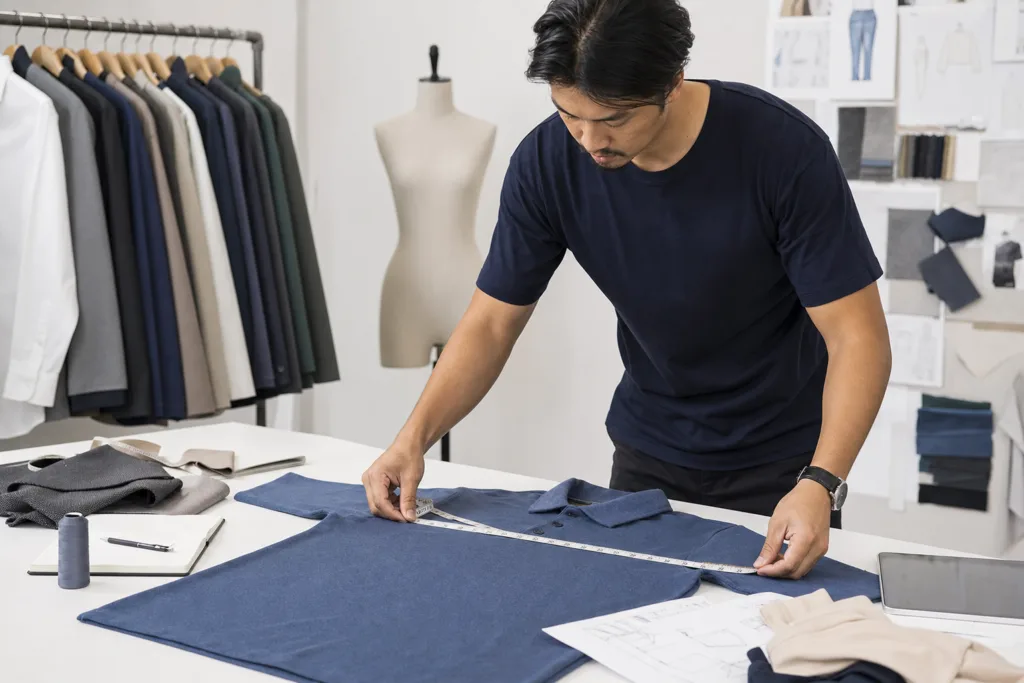
Most projects move through some version of these checkpoints:
- Pattern development based on the approved concept or reference sample
- First sample to review shape, balance, and basic construction
- Fit comments and revisions
- Logo, trim, or color adjustments
- Pre-production approval before bulk cutting
Bulk production should not start just because the sample is close enough. It should start when the sample reflects the agreed product standard, including measurements, materials, branding details, and finishing requirements. Buyers comparing suppliers should ask how the factory documents revisions and confirms final approvals.
To understand what happens after sample sign-off, it helps to review the step-by-step clothing manufacturing process so expectations stay realistic from cutting through finishing and packing.
How MOQ planning and cost structure affect your order
MOQ is rarely just one number. It depends on fabric availability, dyeing requirements, trim customization, color count, size breakdown, and whether the style uses a standard factory capability or a highly customized setup.
For example, low MOQ may be realistic when using in-stock fabric colors, standard trims, and a straightforward construction. MOQ may rise quickly when buyers request custom-dyed fabric, unique zipper colors, multiple logo applications, or many colorways with small quantities per size.
| Cost Driver | Why It Matters | Typical Effect |
|---|---|---|
| Custom fabric dyeing | Requires minimum fabric commitment | Raises MOQ and lead time |
| Multiple colorways | Splits quantity across smaller lots | Increases complexity and risk |
| Special trims | Custom labels, zippers, drawcords, packaging | Adds sourcing time and setup cost |
| Complex construction | More operations and more QC points | Raises unit price |
| Short timelines | Less buffer for approvals and material issues | Can increase planning pressure |
Key takeaway: If a low MOQ is essential, simplify variables first. Standardize fabric, reduce colorways, and confirm which brand details are truly required in the first run.
What to expect from production lead time
Lead time should be divided into stages, not treated as one delivery promise. Before bulk sewing begins, there is usually time needed for material booking, trim approval, labeling setup, pre-production review, and line scheduling.
After that comes cutting, sewing, decoration, finishing, inspection, packing, and shipment preparation. Delays often come from changes after approval, missing artwork files, unconfirmed labels, or material substitutions that were not settled early.
Buyers planning launches should review typical production timelines after sample approval and build in buffer for shipping, customs, and any retailer intake requirements.
What buyers should check in quality control
Quality control should begin before bulk output is complete. Waiting until the end makes corrections more expensive and more limited. In our apparel production work, we look at QC as a sequence of control points rather than a final pass-or-fail event.
- Fabric inspection for shade, defects, weight, and hand feel consistency
- Pattern and marker checks before cutting
- Inline sewing checks for measurement, seam quality, and workmanship
- Logo placement checks for print or embroidery consistency
- Final inspection for measurements, finishing, stains, loose threads, labeling, and packing
Buyers should also remember that compliance is part of risk control. Fabric and trims may need additional review depending on the market and garment category. For projects with market-specific requirements, official apparel safety and compliance guidance can help buyers understand why production readiness is more than visual approval.
For a practical view of in-factory inspection points, buyers can review quality checks that help prevent bulk production issues before placing a larger order.
Common mistakes that create delays or inconsistent results
The most common mistake is approving too many variables at once without locking the critical ones first. Buyers may change fabric, fit, print size, and labels across sample rounds, then expect the bulk order timeline to stay unchanged.
Other avoidable mistakes include:
- Using inspiration photos instead of clear specifications
- Not defining target market sizing
- Approving artwork without placement measurements
- Ignoring shrinkage and wash effects on fit
- Adding custom trims late in the process
- Expecting very low MOQ with highly customized materials
- Skipping pre-production confirmation before bulk cutting
Most of these issues can be reduced with clearer decision sequencing. Lock the product goal, fit direction, fabric, and branding standards before pushing for speed.
How to evaluate a clothing manufacturer before placing an order
Buyers should evaluate a manufacturer based on production fit, not only price. The right supplier for a basic event T-shirt may not be the right partner for a private label golf line or a custom sportswear program.
Useful evaluation points include:
- Relevant experience in your garment category
- Ability to explain fabric and construction trade-offs clearly
- Sampling process discipline and revision tracking
- Transparency around MOQ, lead time, and customization limits
- Quality control checkpoints during production
- Communication quality, especially on approvals and changes
A strong supplier does not simply say yes to every request. They should explain what is realistic, what affects cost, and what needs to be approved before bulk commitment.
When OEM, ODM, or private label development makes the most sense
OEM is often the best choice when buyers have a clear design, tech pack, and brand requirements. ODM can work well when speed matters and the buyer is comfortable adapting an existing factory style. Private label development usually sits in between, combining proven base products with customized branding, fabric choices, fit adjustments, and packaging.
From our manufacturing perspective, private label is often a practical route for brands that want product identity without the time and cost of fully reinventing every pattern from zero. It allows buyers to focus on the parts that shape brand perception most, such as hand feel, fit, trims, logos, labels, and final presentation.
Final checklist before bulk production begins
Before giving final production approval, buyers should confirm that all key decisions are documented and aligned. This is especially important when multiple people are involved across design, sourcing, and merchandising.
- Approved sample or pre-production sample on file
- Final size chart and tolerance rules confirmed
- Fabric, color, and GSM approved
- Logo method, artwork, and placement confirmed
- Labels, hangtags, and packaging approved
- MOQ, unit price, and delivery schedule aligned
- Inspection expectations agreed before shipment
This stage is where a stable order is built. If any of these points are still uncertain, bulk production should wait.
Conclusion: how to move from idea to a reliable production order
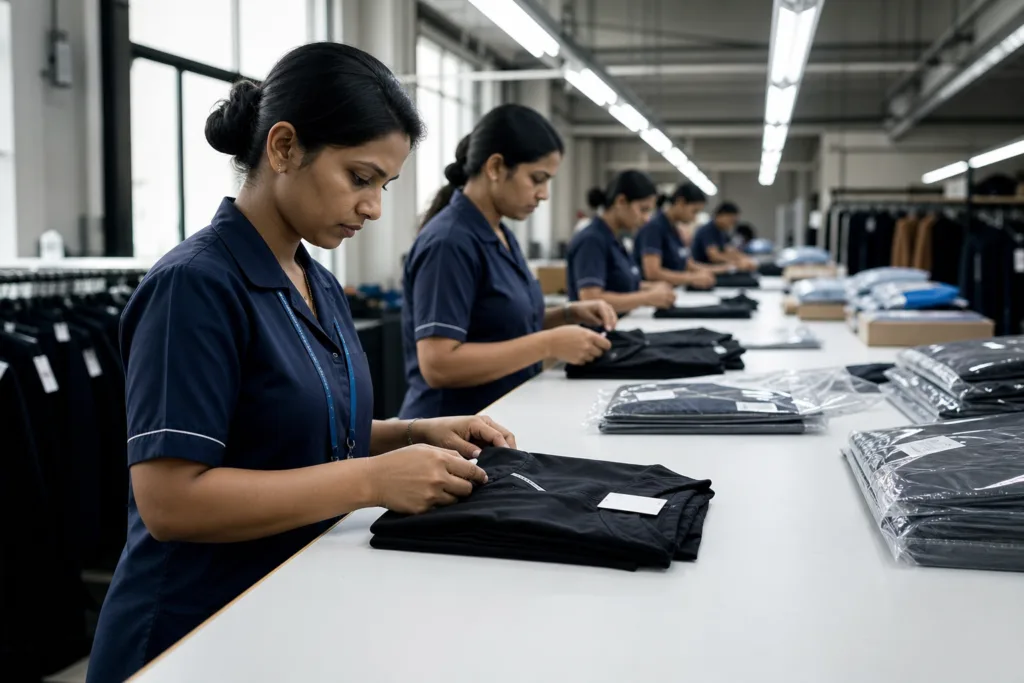
Reliable custom apparel production comes from clear decisions, controlled sampling, realistic MOQ planning, and active quality management. Fabric, fit, labels, logo methods, and packaging are not separate details. They are connected parts of the same production system.
For brands and buyers, the safest path is to simplify early, document well, and approve carefully. When the product goal is clear and the manufacturing plan is specific, bulk production becomes more predictable in cost, timing, and quality.
FAQs
What is the most important first step in custom apparel production?
The most important first step is defining the product goal and use case clearly. Before choosing fabric or logo methods, buyers should know who the garment is for, how it will be used, what price level it needs to reach, and what quality standard the market expects.
How do I choose the right fabric for a custom clothing order?
The right fabric should match the garment function, target hand feel, durability needs, and budget. Buyers should compare composition, GSM, stretch, opacity, shrinkage behavior, and how well the surface supports printing or embroidery instead of choosing by fiber content alone.
Why does MOQ vary so much between custom apparel projects?
MOQ varies because material sourcing and production setup are different for each style. Custom-dyed fabric, multiple colorways, special trims, and complex construction usually increase minimums, while standard materials and simpler designs often make smaller starting quantities more realistic.
How many sample rounds are normal before bulk production?
One to three sample rounds are common, but the exact number depends on product complexity and how complete the original specifications are. Straightforward styles with clear tech packs may move quickly, while garments with fit issues, custom trims, or multiple revisions usually need more development time.
What quality control points should buyers ask about before placing an order?
Buyers should ask about fabric inspection, measurement checks, inline sewing inspection, logo placement control, final finishing review, and packing inspection. It is also useful to confirm how defects are recorded, how tolerances are handled, and when the buyer will receive approval updates during production.
Should I choose OEM, ODM, or private label for my first order?
The best choice depends on how original the product needs to be and how much development time you can support. OEM is suitable for clear custom specifications, ODM is useful for faster development from existing styles, and private label is often a balanced option for buyers who want customized branding and product adjustments without starting from zero.