





Should You Move Your Clothing Production Out of China? A Practical Checklist
The apparel industry is at a crossroads. Over the past two decades, China has been the juggernaut of global clothing manufacturing. But recently, more brands and buyers are reevaluating their supply chains. Rising costs, shifting global policies, and concerns over reliability are all forcing companies to ask: should you move your clothing production out of China?
If you’re facing this question, you’re not alone. From high-volume fashion retailers to niche sportswear brands, the conversation about moving manufacturing outside China is evolving rapidly. Let’s break down the critical factors you must consider—and give you a practical checklist to make a smart, risk-aware decision.
Why Are Brands Considering Moving Clothing Production Out of China?
Multiple forces are driving brands to reconsider their China-centered apparel sourcing strategy:
- Cost Pressures: China’s wages and compliance costs have steadily increased over the past decade, squeezing margins on base-level and price-sensitive products.
- Geopolitical Risk and Policy Shifts: Tariffs, import restrictions, and “China plus one” strategies have become the norm amid ongoing trade tensions.
- Supply Chain Resilience: COVID-19 and port disruptions exposed vulnerabilities in over-concentrated sourcing, pushing brands to diversify their supply base.
- Poor Supplier Experience: Frequent quality issues, missed deadlines, and inflexible negotiation terms prompt brands to reconsider long-standing suppliers.
Still, leaving China isn’t a simple move. A well-structured apparel sourcing checklist is essential to minimize risk and truly benefit from any shift.
When Moving Production Out of China Makes Sense
Certain scenarios make a China exit more logical:
- Basic Styles & Commoditized Products: Simple t-shirts, polos, and basics can often be sourced at lower cost and similar quality from Vietnam, Bangladesh, or India.
- Extreme Price Sensitivity: For customers who choose suppliers solely on price—even at the expense of consistency—a move might make sense.
- Need for Geographic Diversification: Brands targeting risk reduction may split orders across multiple countries to ensure stability during unforeseen disruptions.
Consider integrating an apparel sourcing checklist into your decision process to identify the right timing and triggers for shifting production.
When It’s Smarter to Stay in China
Despite rising costs, China still outpaces competitors in several areas—especially when apparel needs are nuanced:
- Complex Construction & Intricate Craftsmanship: China’s supply chain depth, technical know-how, and mature factories support consistent quality for complicated items like jackets, activewear, and fashion designs.
- Frequent Sampling and Design Modifications: If your product requires rapid prototyping and agile changes, China’s speed and communication fluency offer real advantages.
- Consistency & Refill Orders (“Top-Ups”): For brands needing on-demand replenishment, China’s logistical networks and flexible suppliers keep shelves full and lead times predictable.
If you want more insights into China’s ongoing appeal, why China’s apparel supply chain is still the most stable choice in 2026 offers a candid view.
The Hidden Costs of Quick Relocation
Switching countries isn’t just about labor costs. Brands underestimate “soft” costs such as:
- Longer Product Development Cycles: Onboarding new vendors means education, approval, and fixing mistakes the old supplier already “knows” to avoid.
- Weaker Support for Trims and Accessories: Developing unique labels, zippers, or specialty trims may be slower or even unavailable depending on the new country’s supply environment.
- Communication & Organizational Friction: Language barriers, time zone gaps, and unfamiliar production logic often introduce errors that offset projected savings.
- Total Cost of Ownership is Often Unchanged (or Higher): Missed deadlines, longer logistics times, additional travel, and rework can erase the “headline” savings of a lower sewing fee.
It’s crucial to analyze all direct and hidden costs—the true trade-offs are rarely obvious from quotes alone.
Should You Move Your Clothing Production Out of China? A Practical Checklist
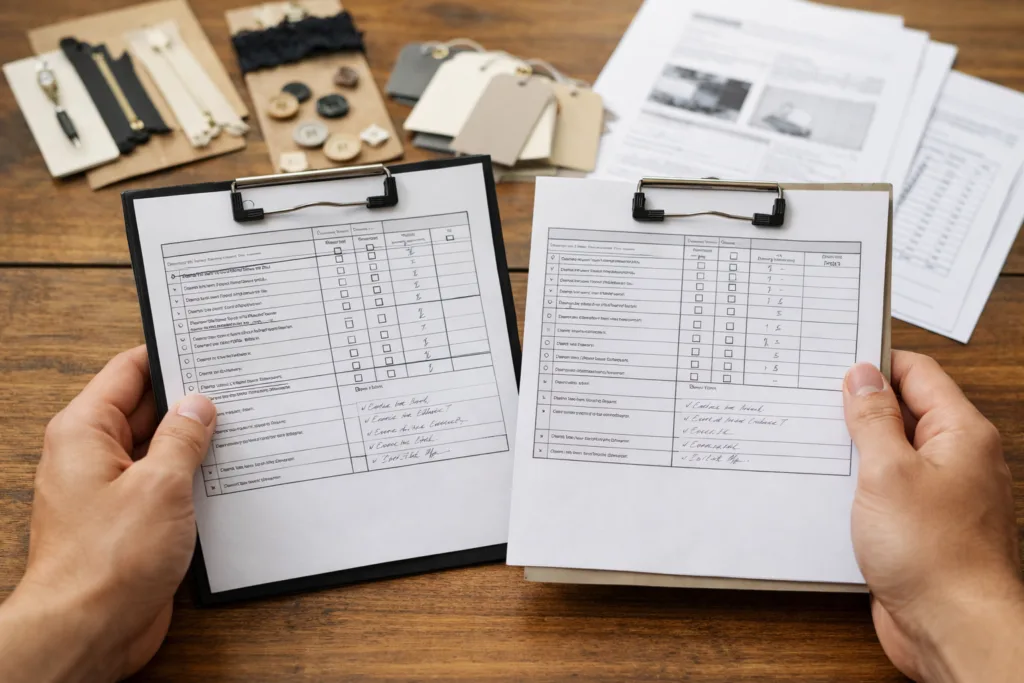
Before making a decision, walk through the following apparel sourcing checklist. Each criterion forces you to weigh real-world factors affecting cost, quality, and operational risk:
| Consideration | What to Assess | Risk if Neglected |
|---|---|---|
| Product Complexity | Are sewing techniques or trims advanced? | Poor quality, failed launches |
| Sampling Frequency | How often do you change designs or fit? | Slow, inflexible development |
| Replenishment Needs | Do you require frequent ‘top-up’ orders? | Stock-outs, delays |
| Trim & Accessory Sourcing | Do trims come from diverse suppliers? | Limited choice, long lead time |
| Root Cause of Problems | Are issues with the factory or the country? | Switching doesn’t solve past pains |
| Supplier Experience | Does the partner understand your standards? | Time lost on retraining |
| Actual Landed Cost | Did you calculate all duties, transport, and fees? | Surprise costs, margin erosion |
| Compliance & Certifications | Are required audits and labels available? | Shipments blocked or rejected |
Rooting your decision in operational realities protects your business from disruption—and costly surprises.
China Plus One: A Realistic Sourcing Approach
Rather than a dramatic exit, many brands now pursue a “China Plus One” strategy. This model keeps core (often complex) production in China while shifting simple, cost-sensitive styles to second countries. Benefits include:
- Diversified risk without losing China’s technical strengths
- Faster response to geopolitical or logistics shocks
- Ability to nurture new supply chains at a controlled pace
For long-term stability, this hybrid solution makes more sense than abrupt relocation.
What Issues Are Really Country-Specific vs. Factory-Specific?
One of the most overlooked mistakes: blaming “China” for what may be a single factory’s shortcomings. Between poor QC, late shipments, and communication slip-ups, it’s essential to know if switching suppliers within China could fix the issue—without taking on extra complexity abroad.
To see how to qualify and monitor a dependable source, the reliable clothing manufacturer guide offers hands-on steps to ensure you’re addressing the true root problem.
Ninghow’s Perspective: Smart Sourcing Setup for Brands
Ninghow, as a practical OEM garment manufacturer, often helps brands analyze their real needs before any shift in sourcing setup. For styles with frequent sample adjustments or detailed fit corrections, staying in China preserves flexibility and time-to-market. Conversely, for repeated, basic silhouettes where trim and branding are fixed, exploring production outside China (for part of the catalog) does make sense—but only alongside careful onboarding and preserved QC standards. The real goal is a tailored solution, not a rushed migration.
Key Takeaways: Assess, Don’t Assume
To summarize, here’s what you need from this guide:
- Don’t move just because “everyone is”—evaluate with a clear, honest apparel sourcing checklist.
- “China Plus One” balances risk and preserves core strengths.
- Hidden costs often offset apparent savings—be especially wary when chasing purely low prices.
- Often, changing factories (not countries) solves repeated issues.
- Leverage manufacturers like Ninghow for realistic advice on fit, trims, and onboarding outside China.
The right sourcing decision is rarely black and white, but an informed, step-by-step approach protects your brand’s longevity.
Frequently Asked Questions
What is the main reason brands consider leaving China for clothing production?
Rising costs, policy regulations, and supply chain risk are the top drivers behind brands reconsidering production outside China.
Is moving clothing production out of China always cheaper?
Not always. Additional costs like onboarding, trims support, communication challenges, and longer development cycles often erase headline savings.
What products make sense to shift out of China first?
Basic, price-driven, or high-volume styles, such as standard T-shirts, polos, and sweatshirts, can often be produced competitively elsewhere.
What risks come with a quick sourcing shift?
You may face longer development times, weak trim options, more errors, and overall supply chain delays during a hasty move.
How do I know if my sourcing issue is the country or just the factory?
Assess if problems are repeated across all partners in China, or just one. Often, switching factories within the country solves performance gaps.
What is the China Plus One strategy in apparel sourcing?
This model keeps core items in China and moves simpler, cost-sensitive styles to another country, balancing risk and stability.
Related Reading
- When It Makes Sense to Stay: Pros & Cons of Clothing Manufacturing in China
- Expanding Your Team Apparel Lineup: Smart Tips Beyond The Simple T-Shirt
- The Step-by-Step Blueprint: Measuring Garments for Accurate Production
- How to Balance Cost vs. Quality in Apparel Manufacturing Decisions
- 21 Steps to Real Sustainability in Clothing Manufacturing