


Introduction: Custom Team Clothing vs Ready-Made Teamwear—What’s at Stake for Your Brand?
Looking to choose between custom team clothing and ready-made teamwear for your organization, club, or business? This decision isn’t just about selecting fabrics or colors—it’s a strategic move that shapes your brand identity, team spirit, long-term cost, and even delivery deadlines. In this hands-on guide, we’ll compare all critical factors—brand recognition, flexibility, minimum order quantity (MOQ), delivery times, cost per unit, and long-term value—so you’ll know exactly when custom or ready-made is the right pick. Whether you’re a startup team, established club, or private label, your choice could have a significant impact on both team morale and your bottom line.
Essential Definitions: What Are Custom Team Clothing and Ready-Made Teamwear?
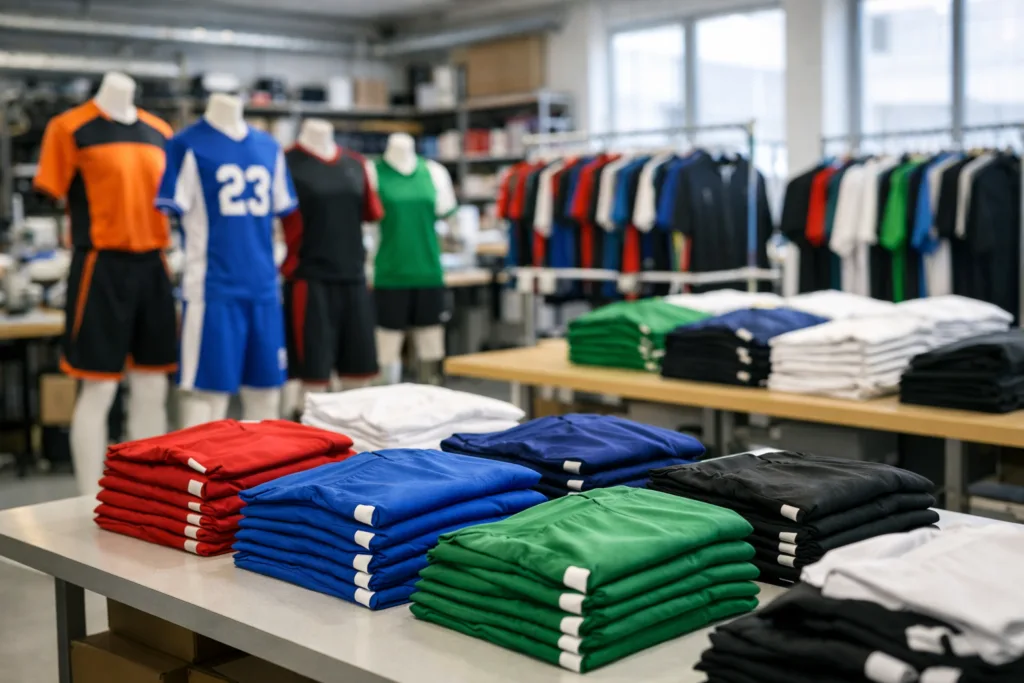
First, let’s clarify each option. Custom team clothing means apparel designed and manufactured for your team from scratch—think personalized colors, logos, trims, and fit. Ready-made teamwear refers to standardized garments made in bulk, available “off-the-rack” in fixed sizes, styles, and colors, sometimes branded after purchase. The difference affects branding power, order process, and overall value.
Brand Identity Power: Standing Out with Custom vs. Ready-Made
Your team’s visual identity often starts with its uniforms. Custom options let you create signature apparel that perfectly matches your brand colors, logo placement, and even unique trims. Ready-made teamwear usually offers limited customization—often just a printed or embroidered logo. If standing out on the field, court, or workplace matters, custom is hard to beat.
Flexibility and Control: Which Gives You More Freedom?
Flexibility means getting exactly what you want—from fabrics (like recycled polyester or technical blends) to measurements and trims. Custom team clothing offers nearly unlimited freedom, but demands more planning and decision-making. Ready-made teamwear is typically limited to what suppliers have in stock, though some may allow minor adjustments. If brand consistency is critical, custom is the go-to; if speed and simplicity win, ready-made works. For a step-by-step process of apparel customization, check out this manufacturer’s guide to custom vs private label clothing.
MOQ (Minimum Order Quantity): Scaling and Budgeting Realities
MOQ refers to the lowest number of pieces you must order. Most factories set higher MOQs for custom team clothing—to cover unique design, pattern making, and setup costs—sometimes from 50–100+ pieces per style/color. Ready-made teamwear often has lower MOQs or even no minimums, since inventory is pre-produced. Startups or small groups should weigh this carefully. If flexibility on order size matters, this might push you toward ready-made, or researching low-MOQ factories.
Pricing Breakdown: Cost per Unit and Hidden Trade-Offs
On the surface, ready-made teamwear appears cheaper per piece, thanks to mass-production and fewer custom steps. However, the value of custom clothing rises for established teams or brands, allowing you to build equity, prevent uniform “clashes,” and even command higher resale pricing. Custom’s investment pays off if unique design is mission-critical; otherwise, ready-made offers a fast and budget-friendly route. To better understand how costs trade off with quality, see this in-depth cost vs quality breakdown for apparel.
Delivery Times (Lead Time): From Design Table to Doorstep
Time pressure? Ready-made wins for speed—stocked inventory ships in days. Custom team clothing usually runs 2–8+ weeks depending on sampling, approvals, and production queue. Important considerations: urgent events favor ready-made; annual launches or branding refreshes are ideal for custom. Misestimating delivery can mean missed tournaments or launches, so check timelines early. To keep orders on track, round up your sizing, packaging, and delivery with a workflow like this guide to bulk teamwear order planning.
Long-Term Value: Quality, Durability, and Team Cohesion
Custom team clothing lets you control fabric grade, stitching, trims, and fit for repeated wear. That often results in fewer replacements, better comfort, and stronger team identity over time. Ready-made can be hit or miss—buying quality from trusted teamwear suppliers is key, but options can be limited. If your team is growing or playing intensely, consider lifetime garment value, not just initial cost.
Customization Options: From Logo Placement to Material Choice
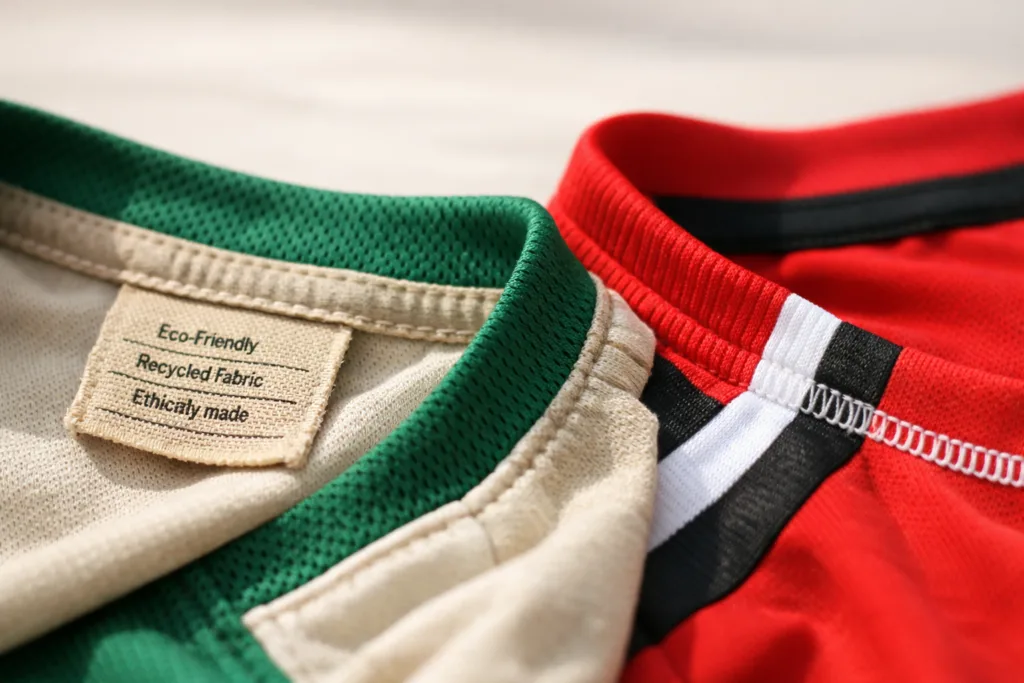
Custom uniforms provide more than name/number printing. Teams can select mesh panels for breathability, moisture-wicking fabrics, team-specific fits, or even eco-friendly materials like bamboo or Sorona. Ready-made teamwear usually restricts options to what’s pre-selected. For those interested in sustainable material choices, you can review this practical sustainable fabrics guide for apparel buyers.
Quality Assurance: Consistency and Reliability
One of Ninghow’s core principles as a manufacturer is quality consistency—custom jobs require precise sampling, measurement, and QC to ensure every piece meets client expectations. Ready-made teamwear, mass-produced in set runs, can offer stable quality if sourced from a trusted supplier. However, inventory rollovers might create subtle style or color changes, threatening team unity over multiple seasons.
Order Process Complexity: Which Path Suits Your Workflow?
The path for custom orders is more involved: you’ll go through tech pack approvals, fabric sampling, logos, and fit samples. Communication is crucial to prevent rework and delays. Ready-made orders are streamlined—pick your sizes, add details, go! Consider your resources: larger organizations might enjoy the creative control of custom; smaller teams or seasonally changing lineups may benefit from ready-made’s simplicity.
Brand Storytelling and Sponsorship Appeal
A custom uniform helps broadcast your brand narrative—sponsors can integrate seamlessly, and the story follows the team everywhere. Ready-made limits branding to fixed areas and shrinks storytelling potential. Customizing down to fabric or stitch type signals professionalism, which can impress both sponsors and fans, and gives brands an edge in fundraising or visibility campaigns.
Sizing Range and Fit Accuracy
Every team wants a great fit. Custom manufacturing allows you to build expanded size ranges, alter lengths, or adjust for youth/senior fits. Ready-made teamwear restricts options to a supplier’s size chart, which can leave certain team members underserved. Over time, a poor fit affects comfort, confidence, and even performance—so consider your roster’s diversity.
Sustainability and Material Traceability
Sustainability-minded teams will find custom options open more doors: you choose factory certifications, recycled/organic fabrics, and audit chains. Ready-made might only offer ‘standard’ poly or cotton, but leading suppliers are improving. For a hands-on sustainability roadmap, check out this practical 21-step sustainable manufacturing guide.
Sampling and Approval Cycles
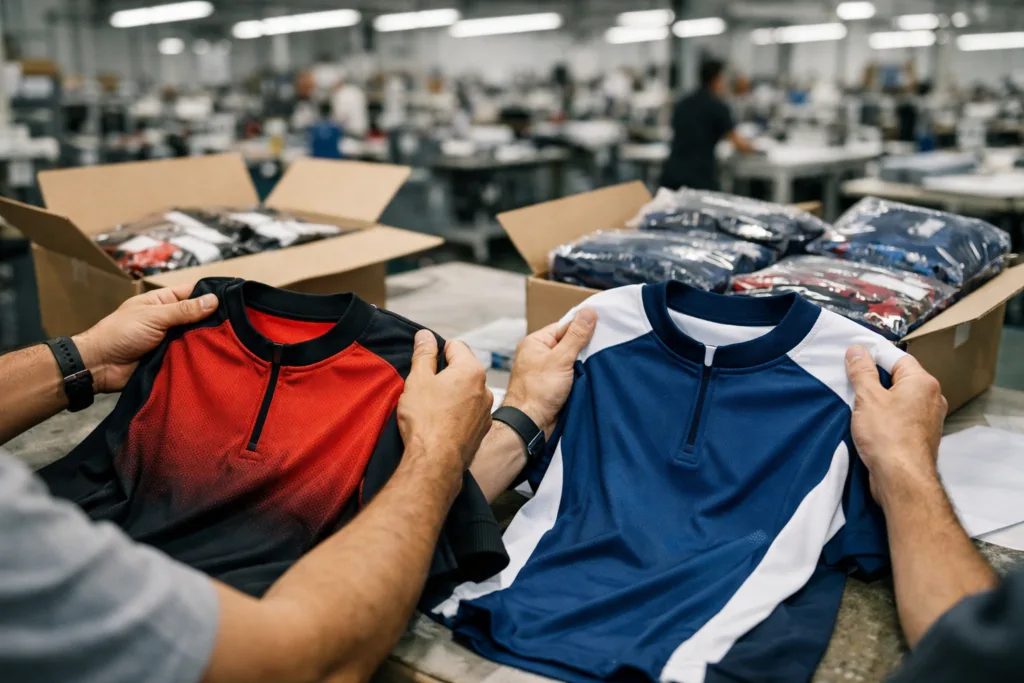
Custom teamwear often requires several sampling rounds for logos, colors, and fit. Real factories like Ninghow recommend setting sampling deadlines—and following up with production updates weekly—to keep projects moving. Ready-made options can be “what you see is what you get,” with sampling only for pre-purchase verification or branding tests.
Packaging, Delivery, and After-Sale Support
For custom team clothing, garment manufacturers usually offer branding opportunities even in packaging, with custom hangtags or polybags. Ready-made typically means standard packing and bulk shipping. Good after-sale support—whether for exchangeable sizes, warranty on print, or stitching quality—is a mark of a reliable supplier in either path.
Case Study: When Does Custom Team Clothing Make Sense?
If you’re launching a brand extension, outfitting a representative team for high-visibility tournaments, or preparing annual uniform drops, custom apparel’s long-term value shines—it supports growth, sponsorship, and identity. If you’re testing an idea or solving a one-off need, ready-made makes financial and operational sense. Use our earlier metrics (branding, MOQ, timeline, etc.) as a checklist for your specific decision.
When to Choose Ready-Made Teamwear
For rapid team outfit changes, budget-limited runs, or starting small, ready-made options reduce risk and cost. They’re a practical choice for practice kits, one-day events, or short-term squads. But plan for the possibility of size/color limitations or shifting styles over time.
Common Mistakes to Avoid When Deciding
- Ignoring lead time—rushing custom projects may mean compromise.
- Overlooking size and fit diversity—standard teamwear isn’t always inclusive.
- Assuming low MOQ fits your whole team—double-check supplier details.
- Chasing lowest price only—poor durability could cost more long-term.
Smart Decision Framework: How to Choose the Right Path
Build a quick scoring sheet: Rank your needs for branding, MOQ, cost, style control, sustainability, and delivery date. Whoever wins on the most critical factors likely points you to custom or ready-made. Remember: your choice isn’t forever—many brands upgrade as their reputation and roster grow.
Summary Table: Custom vs Ready-Made Teamwear at a Glance
| Feature | Custom Team Clothing | Ready-Made Teamwear |
|---|---|---|
| Brand Identity | High (Fully Customizable) | Low–Moderate |
| MOQ | High (50+) | Low (1–12) |
| Unit Cost | Moderate–High (economies of scale) |
Low |
| Delivery Time | 2–8+ weeks | 1–7 days |
| Material Choice | Wide (including eco options) | Limited to stock |
| Fit Range | Customizable | Standard only |
| Long-Term Value | High (unique assets) | Variable |
Straight from the Manufacturing Floor: Practical Experience and Tips
At Ninghow, we see how small detail misses—a few millimeters on sleeve width, too-shiny fabric, or mismatches of logo color—can make or break large teamwear orders. Custom production means critical checkpoints: tech pack review, pre-production sampling, and in-line QC. Don’t just trust digital mockups; get real samples and verify fit on different team members. Garment trims and packaging are also “attention-to-detail” tests for true custom jobs.
PROMPT
Custom Team Clothing vs Ready-Made Teamwear: Which Is Better for Your Brand? The answer depends on your timeline, order size, branding ambition, and budget—plus how much personalization and story-building matter to your group. Custom brings front-loaded effort and investment, rewarded by unity, durability, and recognition. Ready-made delivers speed, cost wins, and simplification. Knowing your team’s future plans helps align every uniform with your larger vision.
Conclusion: Making Your Choice with Confidence
You now have a clear, practical framework for picking between custom team clothing and ready-made teamwear. If top-tier brand identity, long-term team value, and unique stories matter—prepare for the custom journey. Prioritizing speed, price, or lower risk? Ready-made teamwear could be your strategic ally. Trust your workflow, do the detail checks, and your team’s look (and spirit) will get the boost it deserves—whichever path you take.
Frequently Asked Questions
What’s the best way to decide between custom and ready-made teamwear?
Assess your team’s needs for branding, timeline, budget, and order size. If branding and fit are crucial, custom is strongest. For speed or cost, ready-made is ideal.
Can small teams or startups order custom team clothing?
Yes, but check minimum order quantities upfront. Some factories offer low MOQ custom, but others require 50+ pieces per style/size.
Is custom team clothing always higher quality than ready-made?
Not always, but custom allows for more control over fabrics, stitching, and finishing. Quality depends on the manufacturer and your approval process too.
How can I speed up the production of custom teamwear?
Prepare clear tech packs, approve samples quickly, and communicate openly with your supplier. Pre-planning and timely feedback prevent delays.
Is there a cost advantage to choosing one over the other?
Ready-made usually wins on initial price, but custom can be cost-competitive for larger orders or when higher durability reduces replacements over time.
Are eco-friendly options available for both types?
Custom team clothing offers more sustainable material choices, but some suppliers provide eco-friendly ready-made options if you request them specifically.
Related Reading
- How to Vet a Reliable Team Clothing Manufacturer
- The Full Guide to Garment Measurement for Accurate Teamwear Production
- China Clothing Manufacturing: Factory Pros, Cons, and Risk Control
- Finding Your Ideal Clothing Manufacturer: 25 Essential Steps & Key Quality Checks
- Recycled Fabrics Uncovered: Your Playbook for Truly Sustainable Teamwear