







Introduction: Why Compare French Terry Hoodies vs Fleece Hoodies?
If you’re searching for the perfect hoodie, you’ll likely encounter two top contenders: French Terry Hoodies vs Fleece Hoodies. Each fabric offers unique benefits, and the differences matter whether you’re curating an apparel line, outfitting a team, or simply shopping for everyday comfort. This guide goes beyond basics—we’ll break down their construction, practical performance, fit scenarios, and deeper manufacturing insights, so you can confidently choose the right hoodie for your needs.
Fabric Fundamentals: What Is French Terry?
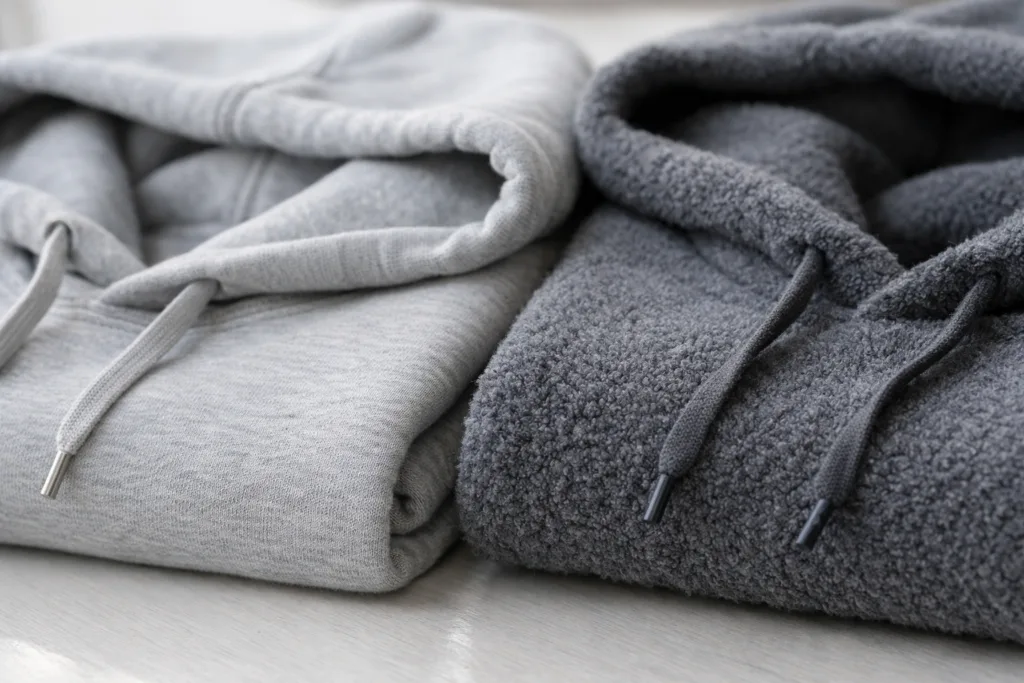
French terry is a cotton-based knit fabric known for its soft looped backing and smooth exterior. Unlike heavy fleece, French terry strikes a balance between breathability and warmth, making it a versatile choice. It’s commonly used in lighter hoodies and sweatshirts ideal for mild climates or layering.
Understanding Fleece Hoodies: What Sets Them Apart?
Fleece hoodies typically refer to a sweatshirt fabric with a brushed inner surface, creating a plush, insulating effect. Fleece can be cotton, polyester, or a blend, and is engineered for maximum warmth. These hoodies shine in colder weather and environments where comfort and heat retention are priorities.
French Terry Hoodies vs Fleece Hoodies: A Side-by-Side Comparison
| Feature | French Terry | Fleece |
|---|---|---|
| Texture Inside | Soft loops | Brushed fleece (pulled fibers) |
| Weight | Light-medium | Medium-heavy |
| Warmth | Moderate | High |
| Moisture Wicking | Good | Fair |
| Best For | Layering, spring/fall, active wear | Cold climates, lounging, winter |
| Feel | Breathable, flexible | Super soft, cozy |
| Pilling Risk | Lower | Higher |
Scene-Based Recommendations: Where Each Hoodie Excels
Active Lifestyles and Layering
For workouts or outdoors in mild weather, French terry hoodies are a top pick. Their moisture-wicking loops and lightweight structure keep you cool and comfortable.
Cold-Weather Comfort and Relaxation
When it’s chilly or you want to curl up at home, fleece hoodies deliver. The plush lining traps warmth, making these hoodies ideal for winter runs, commuting, or lazy Sundays.
Travel, Teamwear, and Daily Use
Both do well, but French terry suits those who need a reliable, breathable layer for travel or team outfits. Not sure on sizing or how these fabrics impact fit? Check out this guide on bulk teamwear orders for sizing and delivery insights.
Manufacturing Insights: GSM, Durability, and Quality Control
Fabric Weight (GSM) Matters
In hoodie manufacturing, GSM (grams per square meter) is key. French terry usually starts around 200–250 GSM; fleece can reach 280–350 GSM. Higher GSM often means warmer, heavier garments—good for fleece, but French terry purposely stays lighter. For a deeper look at GSM’s impact, see how GSM affects hoodie manufacturing.
Durability and Construction Features
French terry’s looped back resists pilling and offers longer-lasting wear, especially helpful in active or repeated-use scenarios. Fleece’s brushed surface feels softer but can develop pilling, which impacts appearance over time. A practical guide to fabric sourcing is available here.
Fit and Style Differences: How Fabric Influences Cut
French Terry Hoodies: Popular Fits
French terry allows for flexible, athletic designs. You’ll find slimmer, tailored fits and breathable shapes, perfect for fitness or transitional weather. For buyers, sample types and fit specs are nuanced—Ninghow’s experience shows French terry offers less shrinkage and predictable stretch, easing pattern making and approvals.
Fleece Hoodies: Roomier and Cozy
Fleece usually supports classic, relaxed silhouettes. The heavier fabric drapes well and adds bulk, which is great for winter layering but can lead to looser fits. Smart brands double-check measurements in production; see garment measurement guides on this page.
Sustainability and Material Selection
Eco-Friendly Options
Both fabrics offer sustainable alternatives like organic cotton or recycled polyester. Certifications matter—look up OEKO-TEX, GRS, or GOTS when sourcing materials for private label hoodies. Knowing what each certification covers can help avoid hidden risks.
Sourcing Challenges Noted by Ninghow
Ninghow, a garment manufacturer, cautions buyers to verify source documents for sustainable claims. Mislabeling and mixed-fiber confusion can lead to compliance gaps. Always confirm your material’s certifications and test reports before finalizing an order.
Care and Maintenance: Keeping Hoodies Looking New
French Terry Hoodie Care
Wash in cool water, avoid harsh detergents, and air dry to prevent overstretching or fading. French terry resists pilling but can lose shape if handled roughly.
Fleece Hoodie Care
Machine wash with gentle cycles; avoid heat drying as it accelerates pilling. Fleece should be washed inside out to preserve the plush surface.
Customization Potential: Printing, Embroidery, and Branding
French Terry: Smooth Surface for Prints
French terry hoodies are ideal for screen printing due to their flat exterior. Embroidery is also possible, but designs work best on lighter GSM.
Fleece: Dense Surface for Embroidery
Fleece supports embroidery and classic logo applications but may not suit fine, crisp prints. Brands often use bold logos or large graphics for high visual impact.
Hoodie Manufacturing: Critical Process Breakdown
Sampling and Prototyping
Sampling is essential before bulk orders. For French terry, pattern adjustments are minimal due to fabric stability. Fleece requires more attention to shrinkage and piling risks; manufacturers often run pre-production tests. If you’re new to manufacturing, understanding sample types and workflow can be critical.
Quality Control and Assurance
Factories like Ninghow focus on consistent double-stitching, seam durability, and visible QC checkpoints for both fabrics. Stitching standards may vary based on GSM and material density. Learn more about factory QC here: garment factory capabilities explained.
Choosing the Right Hoodie for Your Brand or Use Case
Buyer Checklists
- Confirm climate and end-use scenario
- Match fabric weight to user activity
- Check for sustainability and certifications
- Request accurate samples
- Review care instructions
- Assess customization needs
Scenario Examples
- Spring teamwear: Choose French terry for athletic layering
- Winter merchandise: Opt for fleece for warmth
- Retail/private label: Mix both for seasonal collections and appeal
French Terry Hoodies vs Fleece Hoodies: Which Should You Pick?
Your choice depends on climate, comfort, purpose, and brand goals. If you prioritize lightweight layering and active use, French terry wins. For maximum warmth and coziness in cold weather, fleece outperforms. Smart buyers and brands often offer both, tailoring fit, style, and embellishment choices to their target audience.
Conclusion: Key Takeaways from French Terry Hoodies vs Fleece Hoodies

Both French terry and fleece hoodies bring strengths to the table. French terry excels at breathability and layering, while fleece shines in warmth and softness. Manufacturing insights—like GSM selection, QC, fit accuracy, and sustainable sourcing—are crucial for apparel buyers and brands. Thoughtful scene-based recommendations make the hoodie selection process smarter and better suited for your specific needs. Look for honest information and ensure QC in production, and you’ll end up with hoodies that match your goals—whether for sport, leisure, or retail.
Frequently Asked Questions
Which is warmer: French Terry or Fleece?
Fleece hoodies are warmer than French terry, thanks to their brushed and insulating inner surface. French terry offers moderate warmth and is better for layering in milder conditions.
Does French Terry shrink less than fleece?
Yes, French terry typically shrinks less due to its stable looped knit. However, all fabrics should be properly pre-shrunk during manufacturing to avoid surprises.
Are fleece hoodies suitable for sports?
Fleece hoodies work for light outdoor activities but may feel too hot for intense workouts. French terry is preferred for active wear due to its breathability and moisture handling.
How can I prevent pilling on fleece?
Wash fleece hoodies inside out, avoid high heat drying, and use gentle laundry cycles. Choosing higher-quality fleece also reduces pilling issues.
Can both fabrics be sustainably sourced?
Yes. French terry and fleece offer eco-friendly options like organic cotton and recycled polyester. Always check certifications (e.g., OEKO-TEX, GRS, GOTS) for genuine sustainable claims.
What’s the best choice for custom prints?
French terry is ideal for crisp screen prints due to its smooth face. Fleece works well for embroidery and bold graphic applications.
Related Reading
- The 29-Point Private Label Clothing Checklist for Reliable Hoodie Production
- Balancing Men’s Hoodies and Sweatshirts: What to Know About Fabric Choices
- Complete Buyer’s Guide to Hoodie & Sweatpants Sets—Fabric, Fit, and Quality
- Reduce Returns: How to Spot Production Defects Before Shipping Apparel
- Fast-Track New Hoodie Development: Timeline and Risk Control Essentials