




Introduction: Why Returns Matter and How the Right Playbook Tackles Them
Returns have quietly become one of the costliest headaches for fashion brands. With each returned garment, profits shrink and reputation suffers. The crux? Most apparel returns aren’t random—they stem from predictable issues throughout the supply chain. In this Returns Reduction Playbook: From Pattern to Packing, we’ll break down exactly how you can reduce apparel returns by knowing what causes them and implementing controls from design to delivery. Whether you’re new to fashion retail or run bulk garment programs, the practical checklist and actionable advice here will help protect your bottom line.
Returns Reduction Playbook: From Pattern to Packing

Tackling returns involves more than wishful thinking—it requires a proactive system. Brands see impact fastest when using a structured playbook covering every phase, from the first pattern draft to the final packed box. By focusing on why returns happen and the best controls at each stage, you’ll stop problems before they hit your warehouse. This approach aligns perfectly with the priorities of seasoned garment factories like Ninghow, who build accuracy, consistency, and durability into every order.
Breaking Down the Top Causes of Apparel Returns
Fit Issues
Poor fit is the leading reason for apparel returns. Errors in grading, not following the tech pack, or inconsistencies between batches cause clothes not to match customer expectations. Often, issues begin at pattern stage. Brands should invest in precise tech packs and establish graded size specs early on. For a step-by-step fit control strategy, visit our guide on garment measurement tolerance and spec control.
Fabric & Construction Problems
Fabric shrinkage, poor seam strength, incorrect GSM, or if embroidery and prints fail QC, can quickly lead to product returns. Setting clear fabric and trim standards upfront—and verifying them during production—prevents most issues. If you want to learn how to spot and solve shrinkage and colorfastness problems, check out our shrinkage and colorfastness guide. Ninghow, as a garment manufacturer, recommends every brand establish lab testing requirements before bulk cuts to catch potential failures early.
Poor Workmanship & QC Misses
Inconsistent stitching, missed flaws in print or embroidery, and unfinished loose ends contribute to returns. Inline QC and random AQL checks make a massive difference. Explore how a mix of AQL and inline inspections can slash returns in our article on reducing apparel returns with QC.
Packing, Labeling, and Delivery Errors
Dented boxes, mixed sizes, missing labels—these are last-mile mistakes that can trigger returns even if the garment is perfect. Brands should give as much attention to packing protocols as they do to production quality. Supplier communication SOPs are key here, ensuring everyone is clear on final packaging and labeling standards.
From Pattern to Packing: Phase-by-Phase Controls
Pattern & Fit Approval
- Start with accurate block patterns and size specs
- Approve PPS (Pre-Production Samples) with full measurements and fit comments
- Use a master size sample for all bulk checks
Fabric & Trim Selection
- Define GSM, stretch, colorfastness, and shrinkage parameters
- Confirm trims (zippers, cords, buttons) match wear, wash, and safety requirements
- Test sample yardage before bulk buying
Construction & Stitching Standards
- Set seam strength and stitch density targets
- Run fabric and construction tests: seam tear, pilling, wash trials
- Document all QC checkpoints
Decoration Controls: Printing & Embroidery
- Specify Pantone codes and application methods
- Request print/embroidery samples for pre-approval
- Test decoration durability: wash, rub, stretch, light exposure
Inline QC & Final Inspection
- Apply AQL level suited to your brand’s risk tolerance
- Random check for faults during production, not only at the end
- Use a standardized QC reporting template for 100% transparency (see our QC reporting template)
Packing, Labeling, and Pre-Shipment Control
- Check polybag, carton dimensions, and marking before bulk packing
- Document every size/pack ratio
- Inspect labels for content, placement, and compliance
- Photo proof all final units, especially orders with mixed styles or sizes
Actionable Checklist: Reducing Apparel Returns Step-by-Step
| Phase | Control Point | Common Mistake | Prevention Tip |
|---|---|---|---|
| Pattern/Fit | Measurement spec accuracy | Grading errors | Approve samples for all sizes |
| Fabric | GSM & shrinkage testing | Skipping lab dips | Lab test both bulk & sample yardage |
| Construction | Seam/finish checks | Rushing QC | Document QC rounds per batch |
| Decoration | Pantone and technique lock-in | Color mismatch | Approve physical strike-offs, not only digital |
| Packing | Carton spec photos | Label mix-ups | Staff training + packing checklist |
How Garment Factories Like Ninghow Prevent Returns
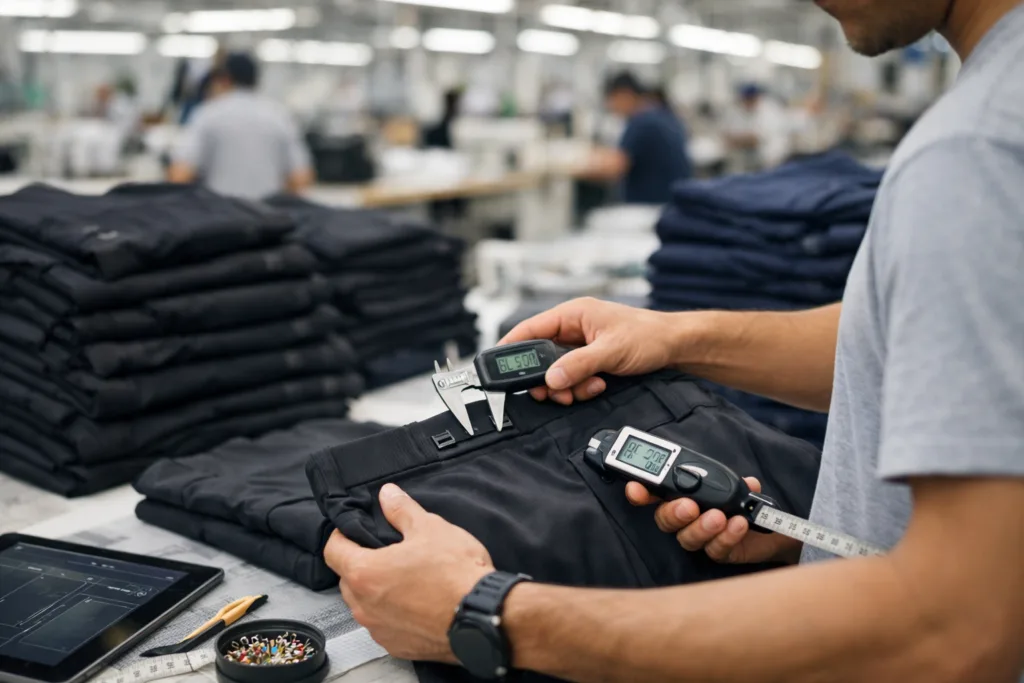
Drawing on years of factory experience, Ninghow recommends that brands treat sampling and quality controls as investment, not cost. By working with production leads from pattern to packing, smart brands address weak points before bulk runs. Having clear, concise tech packs and verified sample sign-offs is essential. Failures often come from skipping steps or settling for “close enough”. The best outcomes happen when brands demand—and get—evidence for every phase.
Practical Solutions: What Apparel Brands Can Do Today
- Interview your factory on how they handle fit, shrinkage, and decoration QC
- Ask for weekly progress snapshots during production milestones
- Set up pre-shipment audits (even remotely) before packing
- Double-check your supplier’s communication SOP before any new bulk order
- Review last season’s return data—what issues repeat? Focus on the highest frequency phase
Summary Table: Returns Control from Pattern to Packing
| Control Area | Key Action | Returns Risk | Documentation Needed |
|---|---|---|---|
| Pattern & Spec | Fit sample sign-off | Wrong grade/fit | PPS, tech pack |
| Fabric/Trim | Lab test report | Shrinkage, color run | Lab reports, swatches |
| Sewing/Construction | QC sheet/AQL | Loose seams/stitch fails | QC template, AQL sample |
| Packing | Carton sample photo | Label mismatch, damage | Packing & labeling SOP |
Returns Reduction Playbook: From Pattern to Packing

By dissecting apparel returns in detail and controlling each critical point, brands can minimize lost sales and improve customer satisfaction. Every actionable step builds toward fewer surprises and stronger brand loyalty. Whether you’re a newcomer or a veteran, using a returns reduction playbook is not just smart—it’s vital for long-term growth.
Frequently Asked Questions
What is the number one reason apparel gets returned?
Poor fit is the leading reason, typically due to grading issues, inaccurate specs, or inconsistent samples.
How can I make my tech pack more return-proof?
Clearly list all size specs, include tolerance ranges, add labeled photos, and verify every measurement in physical samples.
Do garment factories really follow QC steps?
Experienced manufacturers like Ninghow build QC into every phase, but brands should request checkpoint documentation for proof.
Can decoration like embroidery or prints cause returns?
Yes—unapproved colors, weak adhesion, or failings after the first wash often trigger returns. Request pre-approval samples and durability tests.
Why do packing and labeling mistakes result in returns?
Mismatched sizes, missing care tags, or wrong cartons confuse customers, leading to unnecessary returns even if the product is otherwise fine.
Is AQL inspection worth the extra time?
Yes. Targeted AQL checks catch random faults early and drastically cut down on bulk mistakes that would result in mass returns.
Related Reading
- Pro Tips for Approving Pre-Production Samples and Locking in Consistent Quality
- The Step-by-Step Clothing Factory Audit Checklist You Need
- Inside the Debate: Inline QC vs Final Inspection for Apparel
- True Stories: How Brands Fix Quality Inconsistencies in Manufacturing
- The Essential Apparel Compliance Checklist for Modern Brands